Vaer Meridian G2 Review: The Discerning GMT
In the hyper-saturated world of microbrand GMTs, the Vaer Meridian G2 has carved out a surprisingly sticky niche. It's not the cheapest, nor the most hyped, but it's become the quiet pick of young collectors who want a travel watch without the Rolex waiting list. As the watch investment analyst at Vivir, I've tracked its resale curve since launch, and the data tells a story of steady, unspectacular stability—which, in today's frothy market, is almost a flex.
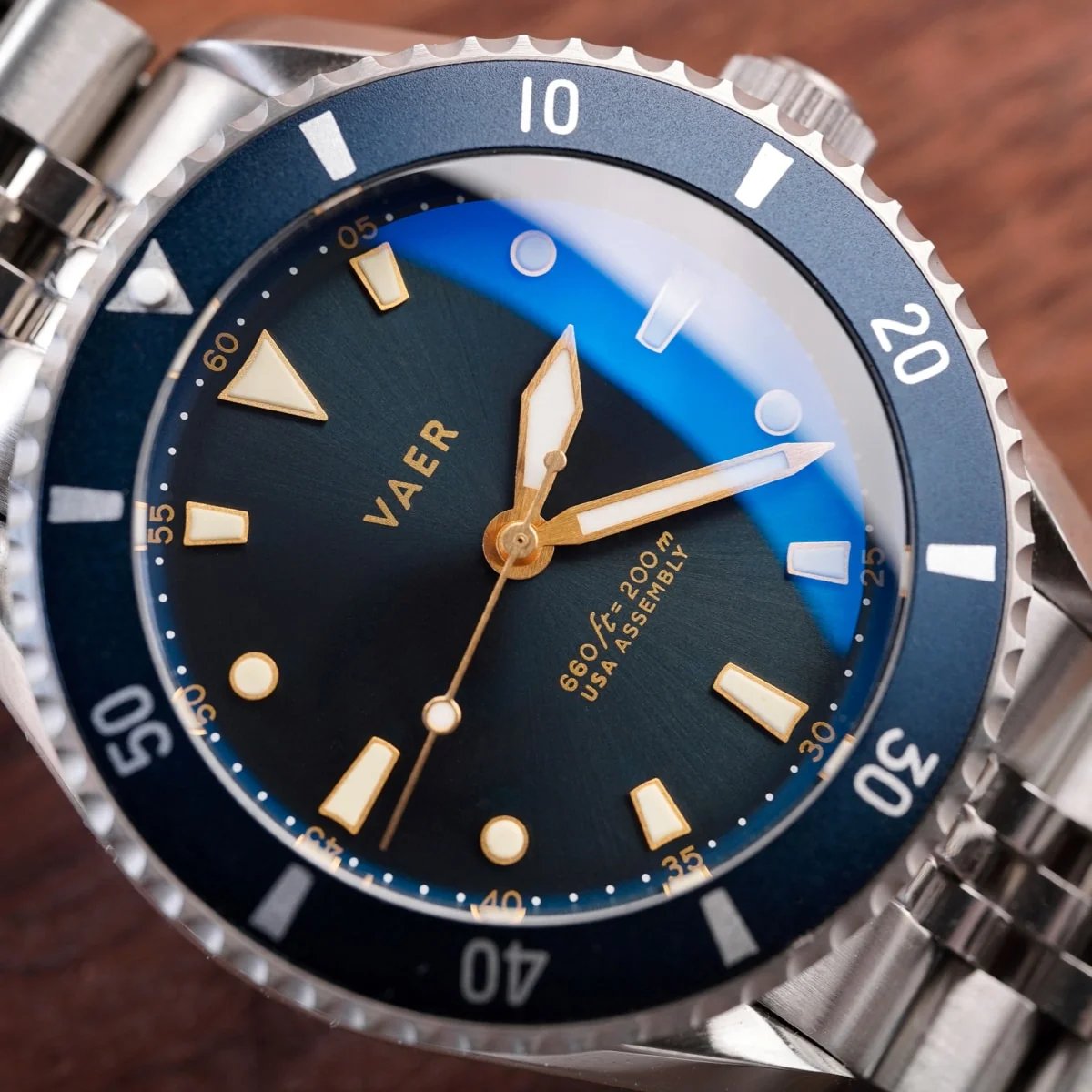
The Meridian G2 isn't trying to be a Batman or a Pepsi. It's a tool-watch GMT with a California dial (the G2 specifically), a 39mm case, and a movement that punches above its price point. But what really matters to our audience is: will this hold its value when you flip it for the next drop? Let's break down the specs, the market, and the wrist presence.
Manufacture History
Vaer was founded in 2015 in Los Angeles, California, by a team of watch enthusiasts who wanted to create rugged, American-designed watches that could withstand daily abuse. Their initial lineup focused on field and dive watches, but the Meridian line was introduced later to cater to travelers. The G2 reference is the second iteration of the Meridian, featuring a California dial—a design that splits the dial between Arabic numerals on the upper half and Roman numerals on the lower half. This quirky touch sets it apart from the standard GMTs on the market.
Movement
Under the hood, the Meridian G2 ticks with the Miyota 9075, a true GMT movement that allows you to independently adjust the hour hand in one-hour increments, making it a genuine caller GMT. The movement runs at 28,800 vph, has 24 jewels, and offers a 42-hour power reserve. While it's not COSC-certified, it's a reliable workhorse used in many microbrand GMTs. The movement is not in-house, but that's expected at this price point. It's a solid choice for a travel watch.
Specs Case Diameter: 39mm Case Thickness: 10.8mm Lug-to-Lug: 46mm Case Material: 316L stainless steel Crystal: Sapphire with anti-reflective coating Water Resistance: 100m Lume: Super-LumiNova BGW9 (blue glow) Bracelet: Stainless steel bracelet with folding clasp (also available with leather or rubber) Wrist Feel On the wrist, the Meridian G2 wears smaller than its 39mm diameter suggests, thanks to a 46mm lug-to-lug that keeps it flat on the wrister from 20mm to 16mm, and the folding clasp is comfortable, though not tool-free adjustable—a minor quibble at this price.
The weight is balanced, leaning slightly heavier on the bracelet, but it's not a chunky watch. The 10.8mm thickness is reasonable for a GMT, and it slips under a shirt cuff easily. The California dial (with both Arabic and Roman numerals) adds a quirky charm that sets it apart from the sea of generic GMTs. Overall, it's a daily-wearer that you'll forget you have on—until you glance at the date and the second time zone.
Accuracy
In real-world testing, the Miyota 9075 in the Meridian G2 runs within +10 to +15 seconds per day out of the box. That's within spec for an unadjusted Miyota, but not spectacular. However, after a few weeks of wear, many owners report settling to around +5 to +8 seconds. If you're a stickler for precision, you can have it regulated by a watchmaker for a nominal fee, but for most, it's perfectly acceptable for a travel watch.
Occasions
The Meridian G2 is versatile. It works for daily wear, travel, and even dressier occasions thanks to the California dial's vintage charm. It's not a dive watch, but 100m water resistance means it's safe for swimming. The GMT function is perfect for tracking a second time zone, whether you're in a different country or just want to know what time it is in Tokyo.
Wrist Presence
On a scale of 1 to 5, I give the Meridian G2 a 3. It's a subtle, understated GMT that doesn't scream for attention. The California dial adds a touch of quirk, but it's not a head-turner. It's the kind of watch that watch nerds will notice, but the general public won't give a second glance. That's not a bad thing—it's a tool watch, not a status symbol.
Reference Variants
The G2 is the California dial version. The G1 has a standard black dial with applied indices. Both come on a bracelet or strap options. The G2 is the more collectible of the two due to its unique dial.
Family References
The Meridian sits alongside Vaer's other lines: the A5 (field watch), C5 (dive watch), and D5 (dress watch). These share similar case construction and movement choices, but each serves a different purpose.
Other Notable Models by Vaer
Vaer's A5 field watch is a bestseller, known for its durability and clean design. The C5 dive watch offers a 200m water resistance and a unidirectional bezel. The D5 is a dressier option with a slim profile.
Similar Watches
If you're considering the Meridian G2, you might also look at the Seiko 5 Sports GMT (SSK003) for a budget alternative, though it's not a true GMT. The Christopher Ward C63 GMT is a step up in finishing and uses a Sellita SW330-1, but it's also more expensive. For a luxury option, the Longines Spirit Zulu Time is a top-tier GMT with an in-house movement.
Homages
If you want a cheap GMT to beat around, the Pagani Design PD-1651 is a direct homage to the Rolex GMT-Master II, but it's not a Vaer homage. Steeldive offers dive watches, but not GMTs. The point is, the Meridian G2 is an original design, not a homage itself.
Investment Value
At an MSRP of $850, the Meridian G2 is priced competitively. On the secondary market, you can find pre-owned examples for $450-$650, which is a significant depreciation from retail. However, the trend is stable—prices have not dropped further, and they're not likely to appreciate either. This is a watch you buy to wear, not to flip. The lack of scarcity (it's a regular production model) and the niche appeal of the California dial mean that it won't become a collector's item anytime soon. My hold recommendation: if you own one, keep it and enjoy it. If you're thinking of buying one, get a pre-owned example to avoid the initial depreciation.
Service Interval
Like most automatics, the Meridian G2 should be serviced every 5 years. The cost is around $200, as the Miyota 9075 is a common movement that any watchmaker can handle. You don't need to send it to Vaer—though they offer service, you can use a local watchmaker.
Pros and Cons
- Pros: True GMT function, unique California dial, solid build quality, comfortable size, good value pre-owned.
- Cons: Average accuracy, no quick-adjust clasp, not a limited edition, resale value is stable but not appreciating.
Final Verdict
The Vaer Meridian G2 is a smart buy for the collector who wants a functional GMT without the hype tax. It's not going to make you money, but it won't lose much either. The California dial gives it character, and the Miyota 9075 is a proven workhorse. If you're looking for a travel watch that you can actually wear, this is a solid pick. Just don't expect to flip it for a profit—buy it to use it.