Zara Man 2000

In this review
In the grand tapestry of perfumery, certain threads, though not woven from the most precious gold, are nonetheless essential for understanding the complete picture. These are the fragrances that define an era not through opulent rarity, but through their pervasive presence and cultural resonance. Zara Man 2000, a creation from the dawn of the new millennium, is precisely such a composition. It represents a pivotal moment when the world of fast fashion, led by the Spanish behemoth Inditex, began to democratize scent, translating the ephemeral trends of the runway into accessible olfactory statements for the modern man. To dismiss it as merely a budget-friendly trifle would be to overlook its significance as a harbinger of the 'masstige' (mass-prestige) movement that would come to dominate the fragrance counters of the 21st century.
Launched at the symbolic cusp of the year 2000, this fragrance was more than a mere product; it was a declaration. It captured the prevailing mood of optimistic futurism, tempered with a comfortable, familiar masculinity. Positioned within Zara's ever-expanding lifestyle offerings, Zara Man 2000 was not designed to compete with the hallowed creations of Guerlain or the avant-garde statements of niche ateliers. Instead, its purpose was to complete the Zara look—to be the final, invisible accessory for the style-conscious yet pragmatic young professional who curated his wardrobe from their minimalist, well-tailored collections. It offered an olfactory analogue to their clothing: contemporary, clean-lined, and exceptionally well-priced, providing a touch of sophistication without the commensurate financial burden of a traditional luxury brand.
The conceptual inspiration behind Zara Man 2000 is a study in commercial shrewdness. It drew from the dominant masculine fragrance trends of the late 1990s—the aquatic freshness of Acqua di Giò (1996), the crisp fruitiness of Hugo by Hugo Boss (1995), and the clean woods of Issey Miyake's L'Eau d'Issey Pour Homme (1994). The objective was not to innovate radically but to synthesize these successful archetypes into a singular, versatile, and appealing formula. The result was a scent that felt instantly recognizable yet possessed its own distinct, albeit subtle, character. It was the scent of the new office culture, of burgeoning dot-com aspirations, and of a generation that valued practicality and style in equal measure.
Within the fragrance community, Zara Man 2000 holds a peculiar and often nostalgic reputation. For many, it was a gateway, a first foray into the world of personal scent beyond a gifted deodorant set. It is remembered with a certain fondness, often cited in discussions of 'forgotten gems' or 'best budget fragrances of all time'. While it never garnered the critical acclaim of its designer inspirations, its cultural impact was arguably more widespread, gracing the pulse points of millions of men across the globe. It stands today as a fascinating artifact—a testament to a time of transition, capturing the essence of millennial masculinity in a simple, elegant, and profoundly accessible bottle.
The Nose Behind the Scent
The perfumer for Zara fragrances is often uncredited, a standard practice for the brand to maintain focus on its own identity. However, the composition of Zara Man 2000 is widely believed to have been developed by perfumers within the Puig group, the Spanish fragrance giant that manages Zara's perfume portfolio. Its structure suggests a seasoned nose, adept at creating commercially successful yet balanced fragrances, possibly a talent like Jérôme Epinette in his earlier years, known for clean, legible compositions.
Accords
Notes Pyramid
Scent Journey
A brisk and clean opening dominated by the zesty brightness of bergamot and mandarin. A subtle, cool spice from cardamom prevents it from being overly sharp, establishing a professional and invigorating first impression.
The fragrance evolves into an aromatic heart where a clean, almost soapy lavender takes center stage. This is complemented by the gentle warmth of nutmeg and a distinctive, crisp green apple note that adds a touch of modern fruitiness and bridges the opening to the base.
The final phase is a smooth and comforting blend of classic woods. Dry cedarwood and creamy sandalwood create a soft foundation, while clean white musk and a hint of sweet tonka bean provide a warm, skin-like finish that lingers subtly for hours.
Performance Dashboard
Lasts a respectable 5-6 hours on skin, sufficient for a standard workday or a casual evening.
Projects at arm's length for the first 1.5-2 hours before settling into a more personal scent bubble.
Leaves a modest, clean scent trail that is noticeable in close proximity but is not overwhelming.
When to Wear
Pros & Cons
- ✅ Outstanding value for its price point
- ✅ Extremely versatile for daily wear and office settings
- ✅ A clean, fresh, and universally pleasing scent profile
- ✅ Holds nostalgic value as a significant early 2000s fragrance
- ❌ Can feel somewhat generic compared to modern designer offerings
- ❌ The performance, while decent, is not exceptional
- ❌ Discontinued and has become difficult to find for purchase
Price & Value
“An exceptional value proposition. The quality of the composition far exceeded its modest price tag, making it a worthwhile purchase for anyone seeking a reliable daily scent.”
Who It's For
Ideal For
- Men aged 20-40
- Individuals seeking a versatile and inoffensive daily scent
- Those who appreciate clean, aromatic, and classic fragrance profiles
- Professionals in an office environment
Not Recommended For
- Connoisseurs seeking unique or complex niche fragrances
- Those who desire powerful, room-filling projection
- Wearers who dislike the 'fresh out of the shower' scent archetype
Explore More
Similar Fragrances
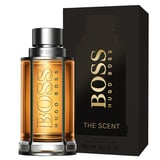 Hugo
Hugo Boss
Hugo
Hugo Boss
A similar '90s icon with a green, spicy, and lavender-forward profile aimed at a mass audience.
 Versace Blue Jeans
Versace
Versace Blue Jeans
Versace
Clone Alternatives
Often compared to Acqua di Giò, it shares the same fresh, spicy, and citrus DNA that inspired Zara Man 2000.
While more aquatic, it captures the same spirit of an affordable, fresh, and clean 'dumb reach' fragrance with a prominent apple note.
You May Also Enjoy
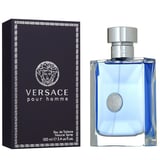 Versace pour Homme
 Prada l'Homme
 Montblanc Legend Spirit
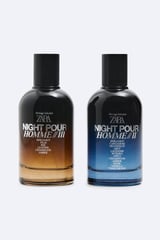 Y Collection Night
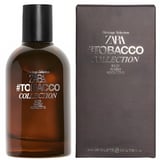 Tobacco Collection (various)
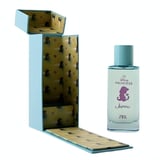 Disney Princess Collection
 Other Limited Editions
 fragrances
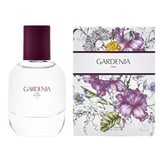 Gardenia (various annual editions)
Layering Ideas
- A single-note sandalwood fragrance to amplify the creamy woodiness in the base.
- Molecule 01 (Iso E Super) to enhance projection and add a cedar-like depth.
- A light, non-gourmand vanilla scent to add a touch of warmth and sweetness to the drydown.
Final Verdict
Zara Man 2000 deserves its place in olfactory history as a pivotal artifact of the 'masstige' movement. It masterfully synthesized the prevailing trends of its era into an affordable, versatile, and profoundly likable composition. While it may not possess the intricate artistry of a niche creation or the powerhouse performance of a designer icon, its strength lies in its intelligent design and its role in democratizing style. It is the scent of pragmatic elegance, a reliable and clean olfactory signature that served a generation of men exceptionally well. For those seeking a nostalgic journey or a case study in successful commercial perfumery, Zara Man 2000 remains a benchmark of accessible sophistication.
More fragrances we love
Sponsored picks
Ready to experience Zara Man 2000?
Buy on AmazonAs an Amazon Associate, Vivir earns from qualifying purchases.