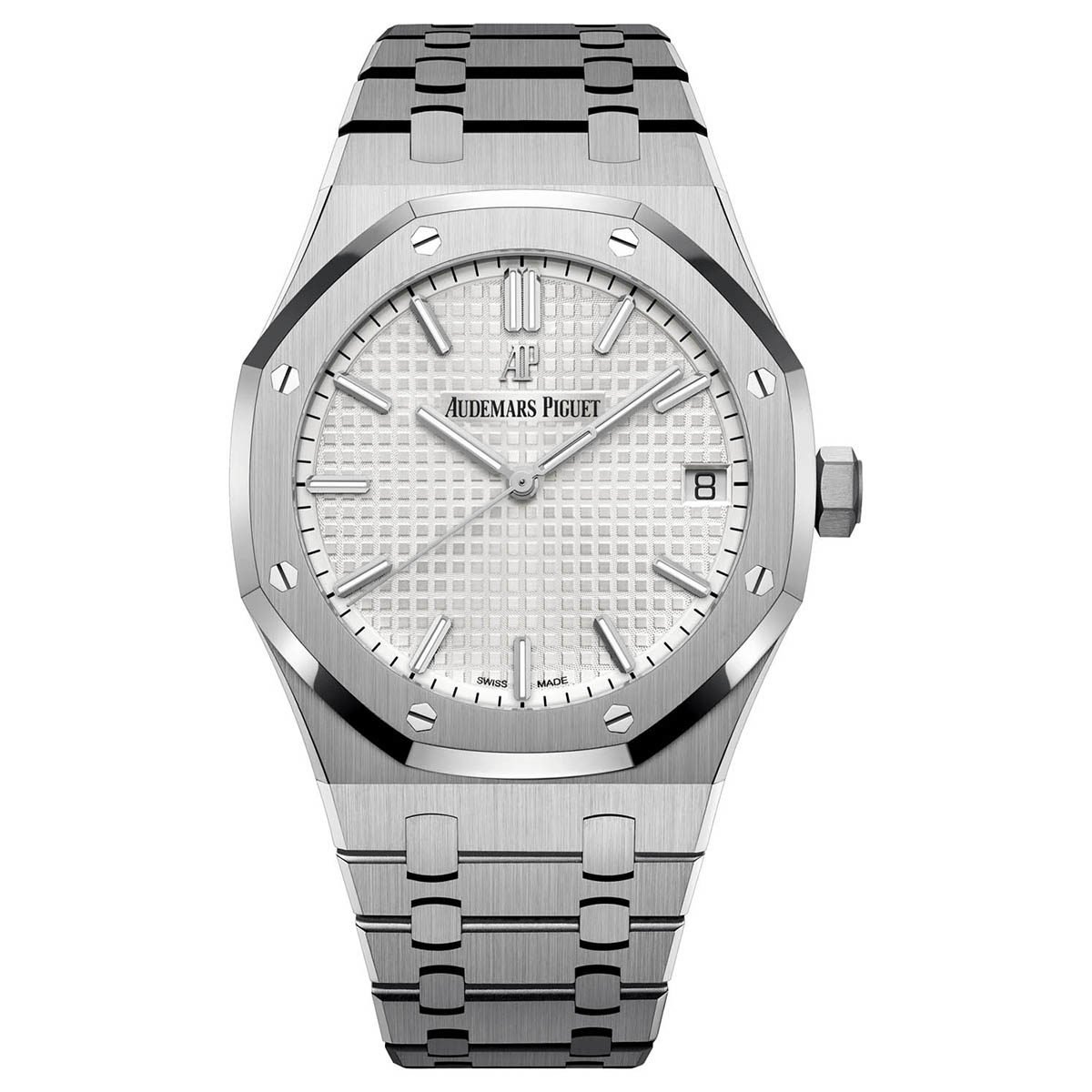
Technical Review: Audemars Piguet Royal Oak Selfwinding 41mm (15500ST)
By Vivir, Horology Editor
The Audemars Piguet Royal Oak 41mm, reference 15500ST, stands as the contemporary benchmark for the luxury sports watch category. Introduced in 2019, this iteration refined the proportions of the 39mm predecessor, offering a slightly larger case that commands more wrist presence without sacrificing the iconic geometric harmony designed by Gerald Genta. It represents the perfect calibration of tool-watch heritage and high-horology finishing. The 15500ST is not merely an update; it is a consolidation of the Royal Oak's identity for the modern era.
Manufacture History and Heritage
Audemars Piguet operates from Le Brassus in the Vallée de Joux, maintaining a legacy of independent manufacturing since 1875. The brand's identity is inextricably linked to the Royal Oak, launched in 1972, which revolutionized the luxury watch industry by introducing stainless steel as a premium material. At the time, steel was considered a utilitarian metal, yet Genta and Audemars designed it with the finishing of a precious metal. The 15500ST is the latest evolution of this lineage, preserving the core design language while updating internal mechanics.
The Royal Oak has survived economic cycles, design fads, and shifts in taste because it transcends trends. The 15500ST inherits the legacy of the 15400ST, which was itself a refinement of the original 1972 model. The transition to the 41mm case in 2019 was a calculated move to address collector requests for a slightly larger footprint while maintaining the 12.55mm thickness. This ensures the watch retains its ability to slide under cuffs, a critical factor for a dress-sport hybrid.
Movement Architecture: Caliber 4302
At the heart of this timepiece lies the Caliber 4302, a significant evolution in movement architecture over the previous generation. With a 70-hour power reserve and improved winding efficiency, it addresses long-standing user requests while maintaining the strict acoustic signature and finishing standards expected of the Manufacture. The 4302 is based on the robust 3120 but features a new automatic winding system with two barrels and a silicon balance spring.
The movement's frequency is 21,600 vph (3 Hz), which provides a smooth sweep of the seconds hand. While higher frequencies like 28,800 vph are often marketed as superior, the 21,600 vph offers better resistance to shocks and requires less lubrication, contributing to the longevity of the movement. The 70-hour power reserve is a practical upgrade, allowing the watch to be rested over the weekend without losing time. The rotor is massive, crafted in gold with a skeleton design that allows visibility of the movement through the exhibition case back.
Finishing includes Côtes de Genève on the main plate and polished bevels on the bridges, adhering to strict Geneva Seal criteria. The bridge architecture is sturdy, with the rotor bridge acting as a structural support for the movement. The date mechanism is positioned at 3 o'clock, protected by a cyclops lens on the sapphire crystal, though the date wheel itself is visible from the front through the dial design.
Case Design and Specifications
The case of the 15500ST is a masterclass in mixed finishing. The 41mm stainless steel case features an octagonal bezel secured by eight hexagonal white gold screws, a signature element that remains consistent across all Royal Oak iterations. The bezel is polished, creating a stark contrast with the brushed middle of the case and the integrated bracelet.
Dimensions are precise: 41mm in diameter, 12.55mm in thickness, and a lug-to-lug distance of 48mm. The lug-to-lug measurement is crucial; it determines how the watch sits on the wrist. At 48mm, the 15500ST fits comfortably on wrists ranging from 6.5 inches to 8 inches. The lugs are designed to curve naturally to the wrist, reducing the gap often seen between the bracelet and the skin.
The water resistance is rated at 50 meters. While this limits the watch's utility for serious diving, it is sufficient for swimming and daily exposure to rain. The sapphire crystal is domed and treated with an anti-reflective coating on the underside, ensuring legibility in bright conditions. The dial features the iconic Grande Tapisserie pattern, a guilloché-style texture that creates a play of light depending on the angle of observation.
Wrist Feel and Ergonomics
The 15500ST wears larger than its dimensions suggest due to the extended lugs and integrated bracelet design. The 41mm diameter provides a robust presence on average to large wrists, filling the space between the 39mm and 42mm benchmarks. However, the 12.55mm thickness keeps it relatively low profile, allowing it to slide under dress shirt cuffs with surprising ease for a sports watch.
The integrated bracelet is a work of engineering in itself. The links are articulated to follow the curve of the wrist, and the folding clasp is secure and easy to operate. The clasp features a micro-adjustment mechanism, allowing for fine-tuning of the fit. The weight is substantial, providing a sense of quality and durability. The polished surfaces, while beautiful, require maintenance to avoid scratches. The brushed surfaces are more forgiving but show wear patterns over time.
Market Position and Investment Value
Current MSRP is approximately $27,800 USD. Secondary market values fluctuate based on dial color, with the blue dial commanding the highest premiums. The trend is currently stable, having corrected from the peaks of 2022. For collectors, the 15500ST represents a strong hold recommendation, particularly in blue. Black and grey variants remain more accessible for entry-level collectors.
Service intervals are recommended every 10 years by the manufacturer, though active daily wearers often benefit from servicing every 5 to 7 years. The approximate cost for a service is around $1,200 USD. While authorized service is preferred, independent watchmakers can handle basic maintenance, though the complexity of the movement requires skilled horologists.
Comparisons and Alternatives
Primary competition comes from the Patek Philippe Nautilus 5711/1A, which offers similar integration but with a different aesthetic philosophy. The Vacheron Constantin Overseas provides a similar integrated bracelet design with a focus on travel utility. For those seeking traditional luxury, the Rolex Datejust 41 remains a benchmark, though it lacks the integrated bracelet of the Royal Oak.
Final Verdict
The Audemars Piguet Royal Oak 41mm (15500ST) solidifies its status as the quintessential luxury sports watch of its generation. It balances the iconic aesthetics of Gerald Genta with modern mechanical improvements, offering a robust daily wearer that maintains high resale value. For collectors seeking a definitive steel luxury watch, this model remains the standard against which all others are measured. The 15500ST is not just a timepiece; it is a statement of horological dedication and aesthetic timelessness.
Pros include the Caliber 4302's 70-hour power reserve, refined 41mm case proportions, and high-quality Grande Tapisserie dial finishing. Cons include the 50m water resistance limitation for serious diving, susceptibility of polished surfaces to scratches, and high secondary market demand that can inflate pricing. Despite these minor drawbacks, the 15500ST stands as a pinnacle of modern watchmaking.