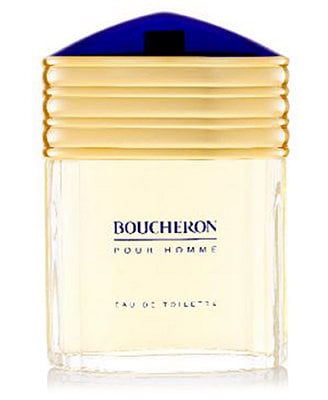
Boucheron pour Homme
In this review
In the annals of French perfumery, certain creations transcend their era to become benchmarks of style and sophistication. Boucheron Boucheron Pour Homme, launched in 1991, stands as one such pillar. Its arrival marked a significant moment for the House of Boucheron, a jeweler of unparalleled renown since its founding in 1858 by Frédéric Boucheron. The move into fragrance was a natural extension of the brand's ethos—capturing light, luxury, and artistry in a different medium. This fragrance was not merely a scent; it was the olfactory embodiment of the Boucheron man: confident, elegant, and possessing a quiet, magnetic power that eschews ostentation for intrinsic quality.
Positioned within the upper echelon of designer offerings, Boucheron Pour Homme occupies a unique space. It is neither a brash, attention-seeking powerhouse of the late 80s nor the transparent, aquatic fare that would dominate the 90s. Instead, it is a masterclass in balance—a chypre-fougère hybrid that speaks to a man of discernment. In the brand's lineage, it serves as the foundational masculine pillar, a counterpart to the iconic feminine Boucheron (1988) with its flacon inspired by the Hôtel de la Païva's dome. Its reputation is that of a connoisseur's choice, often discovered by those who have moved beyond mainstream bestsellers and seek a fragrance with genuine character and heritage.
The inspiration is unequivocally the archetype of the Parisian gentleman. One envisions the refined galleries of the Place Vendôme, the weight of a perfectly tailored wool overcoat, and the glint of a discreet timepiece. The concept is an olfactory portrait of contrasts: the crispness of citrus against the warmth of leather, the freshness of herbs grounded by profound woods. It is a scent that suggests intellect and experience, a fragrance that is worn, not merely applied. It speaks of libraries lined with leather-bound books, polished mahogany, and the subtle spice of a fine cigar enjoyed in a private club.
Culturally, Boucheron Pour Homme has maintained a steadfast, if somewhat niche, reverence within the fragrance community. It is frequently cited in discussions of "underrated gems" and "forgotten classics." Its longevity in the market, absent of major flanker pandemonium or viral marketing campaigns, is a testament to its inherent quality. For the discerning wearer, it represents a badge of olfactory literacy—a choice that signals an appreciation for composition over trend, for subtlety over scream. It is a fragrance that has gracefully aged, its formula largely intact, continuing to offer a sophisticated alternative in a market increasingly saturated with derivative sweet-ambroxan bombs.
The Nose Behind the Scent
Jean-Pierre Béthouart. A master perfumer for Givaudan renowned for sophisticated, well-structured compositions. His notable works include the original Boucheron Eau de Parfum (1988), Jacomo de Jacomo (1980), and Van Cleef & Arpels Pour Homme (1978).
Accords
Notes Pyramid
Scent Journey
A brisk, aromatic burst of high-quality citrus (bergamot, lemon) immediately grounded by classic lavender and anise-like artemisia. Evokes a traditional, premium wet shave—confident, clean, and impeccably groomed.
The citrus recedes, revealing a warmer, spicier heart. Carnation and earthy patchouli intertwine with creamy sandalwood, while lavender persists as a bridge. The fragrance becomes more intimate and personal, losing initial sharpness for a compelling, warm aura.
A sublime, skin-scent harmony of soft suede-like leather, velvety oakmoss, and clean musk. Dry cedar and vetiver provide elegance, while amber and tonka bean add a subtle, vanillic warmth. The result is a discreet, comforting, and profoundly sophisticated drydown reminiscent of a wood-paneled library.
Performance Dashboard
Excellent longevity, consistently lasting 8 to 10 hours on skin, with the intimate drydown lingering on clothing for 12+ hours.
Moderate and polite projection. Creates a personal bubble of about an arm's length for the first 2-3 hours before receding gracefully to a skin scent.
Leaves a gentle, elegant trail. It is a fragrance of whispers, not announcements, leaving a faint, intriguing scent in its wake.
When to Wear
Pros & Cons
- ✅ Timeless, sophisticated composition
- ✅ Excellent longevity & quality materials
- ✅ Versatile for formal & business settings
- ✅ Discreetly magnetic drydown
- ❌ May be perceived as mature/classic
- ❌ Moderate projection/sillage (not a beast-mode scent)
- ❌ Not ideal for hot weather
Price & Value
“An unequivocal bargain for the quality offered. One of the best value propositions in the designer canon for a sophisticated, lasting scent.”
Reformulation History
Underwent adjustments post-2010s for IFRA regulations (notably oakmoss). The current formulation is smoother, with a slightly sweeter, ambery drydown compared to the vintage's sharper mossy-leather character. It is considered a respectful and successful reformulation. Batch variations are not a significant concern.
Accords
Notes Pyramid
Scent Journey
A refined and smooth citrus accord, led by lemon and verbena, that avoids the sharpness often found in this family. It is immediately perceived as elegant and composed.
The heart transitions into a classically soapy and powdery phase, where the initial citrus brightness is softened by subtle florals like rose and carnation. This clean, luxurious character defines the fragrance for several hours.
A rich, complex base emerges, revealing smoky vetiver, incense, and a prominent oakmoss. The drydown is deeper and more resinous than the Eau de Toilette, with sandalwood and tonka bean providing a warm, enduring finish.
Performance Dashboard
Excellent longevity, lasts 10-13 hours on skin.
Moderate but persistent projection for the first 3-4 hours, creating a noticeable but not overwhelming aura.
Leaves a sophisticated and memorable trail that is distinct yet not overpowering.
When to Wear
Pros & Cons
- ✅ Richer, deeper scent profile than the EDT
- ✅ Superior longevity and performance
- ✅ Classic and timeless elegance
- ✅ Excellent value at discounter prices
- ❌ May be perceived as too mature or 'old-school' for some
- ❌ Less versatile for high heat than the EDT
- ❌ Can be harder to find in retail than the EDT
Price & Value
“The price is justified by its superior depth, complexity, and performance compared to the Eau de Toilette.”
Reformulation History
No significant reformulations specific to the Eau de Parfum are widely reported; primary variations exist between the EDP and EDT concentrations.
Who It's For
Ideal For
- Men aged 30+ (or mature younger men)
- Individuals with classic, tailored style
- Connoisseurs seeking understated elegance
- Professionals in conservative fields
Not Recommended For
- Those seeking loud, sweet, or ultra-modern club scents
- Individuals who prefer fresh/aquatic/gourmand exclusivity
- Wearers in consistently hot, humid climates
The Family
Explore More
Similar Fragrances
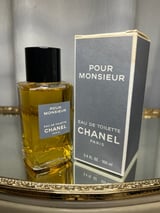 Pour Monsieur
 Bel Ami
 Van Cleef & Arpels pour Homme
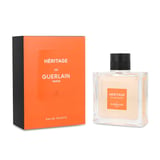 Heritage Eau de Toilette
Clone Alternatives
Some users note its metallic-woody-citrus drydown has a passing resemblance to cleaner facets of Boucheron's structure.
An affordable Middle Eastern blend of citrus, woods, and leather capturing a similar vibe of dry warmth.
You May Also Enjoy
 Eau Sauvage Parfum (2017)
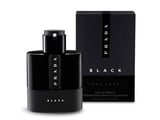 Luna Rossa Black
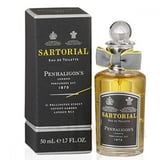 Sartorial
 Boucheron for Women (1988)
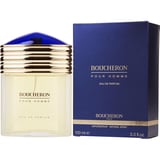 Homme Parfum
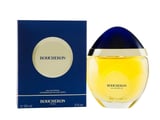 Pour Femme Eau de Toilette
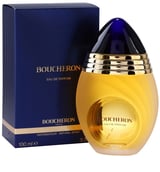 Boucheron Femme
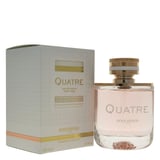 Boucheron Quatre Parfum
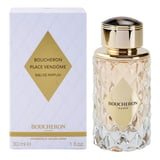 Place Vendôme EDP
Layering Ideas
- A Citrus-Centric Cologne (e.g., 4711) to amplify the opening
- A Vanilla or Amber Solinote to soften and sweeten the drydown
- A Clean Musk Fragrance (e.g., Kiehl's Original Musk) to highlight the skin-scent base
Final Verdict
Boucheron Boucheron Pour Homme Eau de Parfum is not merely a purchase; it is an investment in a particular philosophy of masculinity. In a world of fleeting trends and olfactory hyperbole, it stands as a monument to enduring taste. It offers the rare opportunity to own a piece of perfumery history that remains utterly relevant and wearable today. Its value proposition is nearly unmatched, delivering the complexity, longevity, and material quality of a niche fragrance at a designer price point.
One should buy it to cultivate an aura of quiet confidence. To own a fragrance that feels like a well-kept secret among gentlemen. To experience the pleasure of a scent that evolves beautifully throughout the day, revealing new facets like a cherished conversation. It is the olfactory equivalent of a perfectly tailored suit or a mechanically exquisite watch: it may not be the loudest statement in the room, but to those who recognize quality, it speaks volumes. For the man who has come to understand that true luxury lies in refinement, not recognition, Boucheron Pour Homme EDP is an essential cornerstone of the wardrobe.