Diptyque Virgilio

In this review
In the esteemed annals of modern perfumery, diptyque occupies a singular, revered position. Founded in 1961 by three artistic friends—Christiane Gautrot, Desmond Knox-Leet, and Yves Coueslant—the Parisian house began its journey not with fragrances, but with printed fabrics and decorative objects, quickly evolving into a purveyor of exceptional scented candles and, eventually, a distinctive collection of eaux de toilette. From its inception, diptyque has championed an artistic, almost painterly approach to scent, eschewing transient trends in favour of timeless, evocative compositions that often draw directly from nature and art history.
Amongst their early, highly distinctive olfactory creations, 'Virgilio' stands as a testament to this foundational philosophy. Launched in 1990, it emerged into a fragrance landscape often dominated by more opulent or overtly floral compositions, offering instead a refreshingly verdant, almost ascetic interpretation of the natural world. Virgilio was positioned as an olfactory journey to a sun-drenched Mediterranean garden, a fragrance that celebrated the raw, unadulterated beauty of leaves, herbs, and the earth itself, rather than conventional blossoms or fruits. Its very name, evocative of the Roman poet Virgil, renowned for his pastoral verses, hinted at its deep connection to bucolic landscapes and classical serenity.
The inspiration behind Virgilio is deeply rooted in diptyque's characteristic reverence for botanical realism. It sought to capture the essence of a garden not merely as a collection of flowers, but as a living ecosystem—a place where the crispness of green leaves, the pungent aroma of crushed herbs, and the earthy richness of soil coalesce into a harmonious symphony. This vision resonated with a discerning clientele seeking authenticity and a departure from the more conventional perfumery tropes of the era. Its understated elegance and profound naturalism allowed it to carve a niche, appealing to connoisseurs who appreciated its artistic integrity and sophisticated simplicity.
While Virgilio may not possess the widespread commercial recognition of some of diptyque's later, more ubiquitous offerings, it has, over the decades, cultivated a fervent cult following. Its unique and uncompromising green profile has cemented its status as a benchmark for naturalistic herbaceous fragrances. Despite its eventual discontinuation, a decision often lamented by its devotees, Virgilio remains a touchstone within the fragrance community, frequently referenced for its pioneering use of specific green notes and its enduring influence on subsequent compositions that seek to capture the essence of a sun-drenched, wild garden. It is, in essence, a whispered secret amongst those who truly understand the art of perfumery, a cherished memory of a verdant masterpiece.
The Nose Behind the Scent
While diptyque's earlier fragrances, including Virgilio, were often created by an uncredited in-house team or a perfumer whose identity was not widely publicized at the time of release, the house is renowned for collaborating with esteemed noses. For Virgilio, the focus was squarely on the naturalistic interpretation of notes, characteristic of diptyque's artistic direction. Esteemed perfumers who have since contributed to diptyque's legacy include Olivia Giacobetti (Philosykos), Fabrice Pellegrin (Do Son, Eau Capitale), and Olivier Pescheux (Tam Dao, L'Ombre dans l'Eau), though Virgilio predates some of these well-known collaborations or was crafted by a different, often uncredited, artisan aligning with the brand's early ethos of collective artistic creation.
Accords
Notes Pyramid
Scent Journey
The initial impression of diptyque Virgilio is an immediate, invigorating burst of verdant freshness. One is greeted by the distinct, almost photorealistic aroma of crushed tomato leaves, sharply green and slightly metallic, intertwined with the peppery, anise-like zest of fresh basil and the dry, herbaceous whisper of thyme. A delicate, bright citrus zest lifts these earthier notes, creating an opening that is both startlingly natural and wonderfully clean, evoking the very first moments of a sun-drenched morning in a Mediterranean herb garden.
As the initial effervescence gracefully recedes, Virgilio transitions into its verdant heart. The signature fig leaf emerges, not with the creamy sweetness of the fruit, but with the milky, slightly bitter, and intensely green facets of the leaf itself. This is expertly supported by a cool, refreshing hint of mint and the sharp, resinous greenness of galbanum, which lends a sophisticated, slightly retro elegance. A subtle undertone of lavender adds a touch of aromatic serenity, grounding the more assertive green elements and creating a harmonious, herbaceous core that feels both wild and refined.
The drydown of Virgilio is a testament to its naturalistic depth, settling into a beautifully composed, earthy green base. The initial sharpness softens, allowing the elegant, dry earthiness of vetiver to shine, complemented by the clean, pencil-shaving warmth of cedarwood. A whisper of classic oakmoss adds a touch of chypre-like sophistication and longevity, while a clean, ethereal musk provides a subtle, comforting anchor. The lingering impression is one of a sun-warmed garden at dusk, where the green leaves have settled, and the rich earth exhales its final, comforting breath of the day.
Performance Dashboard
As an Eau de Toilette from its era, Virgilio offers a respectable longevity, typically lasting between 6 to 8 hours on the skin. Its naturalistic profile means it fades gracefully rather than abruptly, leaving a subtle, comforting trace.
The projection is moderate during the first two hours, creating a pleasant, discernible aura around the wearer without being overwhelming. It maintains a polite distance, suitable for closer encounters.
Virgilio leaves a gentle, elegant sillage—a verdant whisper rather than a booming pronouncement. It is noticeable to those within arm's length, suggesting an understated sophistication rather than demanding attention.
When to Wear
Pros & Cons
- ✅ Possesses a truly unique and naturalistic green, herbaceous scent profile.
- ✅ Evokes a vivid, authentic sense of a Mediterranean garden.
- ✅ Offers a sophisticated and elegant alternative to more conventional fragrances.
- ✅ Highly versatile for spring and summer daytime wear.
- ✅ Exemplifies diptyque's artistic integrity and botanical realism.
- ✅ Its discontinuation has made it a coveted collector's item.
- ❌ Now discontinued, making it exceedingly difficult and expensive to acquire.
- ❌ Its distinct green profile may not appeal to all palates, potentially polarizing.
- ❌ Moderate performance (longevity and sillage) might disappoint those seeking stronger projection.
- ❌ The premium pricing, especially on the secondary market, can be prohibitive.
Price & Value
“For the discerning collector or ardent admirer of diptyque's historical output, Virgilio represents a significant investment. Its value is now primarily derived from its rarity and its status as a cult classic. For those who cherish its unique profile, it is deemed worth the considerable price, but it is certainly not a 'value' purchase in the traditional sense.”
Reformulation History
Given its discontinuation, discussions of batch variations are less common. However, as with many vintage fragrances, one might encounter slight differences in scent profile due to degradation over time or storage conditions rather than intentional reformulation. Early bottles are generally considered the most authentic representation of the original composition.
Who It's For
Ideal For
- Individuals aged 30 and above who appreciate sophisticated, naturalistic green fragrances.
- Those with a refined aesthetic, a love for botany, and a preference for understated elegance.
- Wearers who seek unique, non-mainstream scents that evoke nature and tranquility.
Not Recommended For
- Those who prefer overtly sweet, gourmand, or heavily floral fragrances.
- Individuals seeking strong, clubbing-style projection or mass-appealing 'compliment-getter' scents.
- Very young wearers who might find its herbaceous complexity too mature.
Explore More
Similar Fragrances
 Premier Figuier
 Un Jardin sur le Nil
 Eau de Campagne
 Eau de Lierre
You May Also Enjoy
 Figment Man
 Eau de Gentiane Blanche
 French Lover (Bois d'Orage)
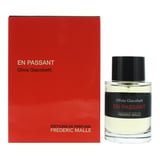 En Passant
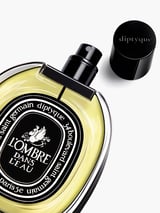 L'Ombre dans l'Eau
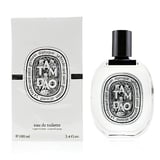 Tam Dao
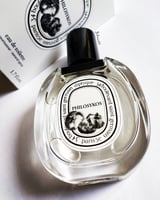
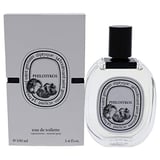 Philosykos
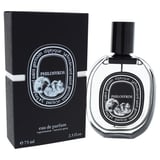 Philosykos Eau de Parfum 2012
 Impossible Bouquet Do Son
 Eau de Sens
Layering Ideas
- A light, clean musk (e.g., Narciso Rodriguez Pure Musc)
- A subtle citrus cologne (e.g., Acqua di Parma Colonia)
- A sheer vetiver essence (e.g., Encre Noire by Lalique, sparingly)
Final Verdict
diptyque Virgilio, though regrettably absent from contemporary shelves, remains an indelible testament to the Parisian house's early genius and unwavering commitment to botanical artistry. It is not merely a fragrance; it is an olfactive portal to a specific moment and place—a sun-drenched Mediterranean garden at dawn, alive with the scent of crushed leaves and aromatic herbs. For those who appreciate perfumes as works of art, as evocative narratives rather than mere adornments, Virgilio offers a masterclass in green naturalism.
Its unique blend of tomato leaf, fig leaf, basil, and thyme creates a profile that is both invigoratingly fresh and profoundly grounding, a sophisticated simplicity that speaks volumes without ever raising its voice. While the quest to acquire a bottle today may entail navigating the labyrinthine pathways of vintage markets and considerable investment, the reward is a piece of fragrance history—a verdant jewel that continues to inspire and enchant. To wear Virgilio is to embrace a quiet luxury, a connoisseur's secret, and a timeless connection to the earth's most exquisite aromas. For the true aficionado, it is not merely a purchase; it is an acquisition of heritage, a bottle filled with the very essence of a bygone, yet eternally cherished, garden dream.