H. Moser & Cie. Pioneer Centre Seconds Review
In a market saturated with beige dials and safe choices, the H. Moser & Cie. Pioneer Centre Seconds stands out as a declaration of independence. It is not just a watch; it is a signal flare for collectors who value distinctiveness over brand recognition. For the sophisticated young collector navigating the fine line between classic horology and modern edge, this piece bridges the gap perfectly. It captures the spirit of the 1970s while maintaining the finish quality of a 2024 manufacture, all without the inflated pricing of the top tier.
This review cuts through the hype to examine the wearability, the movement architecture, and the investment reality of the Pioneer. We are looking at a watch that wears smaller than its diameter, sits flush on the wrist, and carries an inherent coolness that rivals the biggest names in Swiss watchmaking. If you are tired of the same old faces on the wrist, the Pioneer Centre Seconds demands your attention.
The Brand Story: A Revival of Excellence
H. Moser & Cie. was revived in 2004 by Eduard Moser, a descendant of the historic brand founder, in Schaffhausen. The company quickly established a reputation for high complications and distinctive dials, moving from the quirky 'Funky' dials to the more refined 'Streamlined' aesthetic. The Pioneer collection, launched later, solidified the brand's position as a serious competitor in the luxury segment. It represents the brand's ability to balance heritage with contemporary design sensibilities.
What makes Moser stand out in the current landscape is the vertical integration. They manufacture their own movements, dials, and cases. This level of control is rare in the $10,000+ price bracket and explains the high quality of finishing you see on the dial surface. The Pioneer is the entry point to this ecosystem, offering the full Moser experience without the astronomical price of the Perpetual Calendar models.
Movement Architecture: The HMC 203
Under the sapphire case back lies the HMC 203 automatic movement. This is a fully in-house caliber, COSC certified, which is a significant achievement for a brand of this size. The movement operates at 21,600 vph (2.5Hz), which offers a smooth sweep of the seconds hand that feels more traditional than the staccato beat of 28,800 vph movements. While some modernists might prefer the higher frequency, the 21,600 vph beat provides a classic mechanical rhythm that is soothing to the eye.
The power reserve is a robust 72 hours. This means you can take the watch off on Friday night, and it will still be running when you put it back on Monday morning. The finishing on the movement is exemplary, featuring Glashütte-style perlage on the base plate and chamfered bridges. The rotor is a solid gold bidirectional winding rotor, which is a nice touch for a watch in this price range. The bridge design is open and readable, allowing you to appreciate the engineering without obstruction.
Design and Dial: The Streamlined Aesthetic
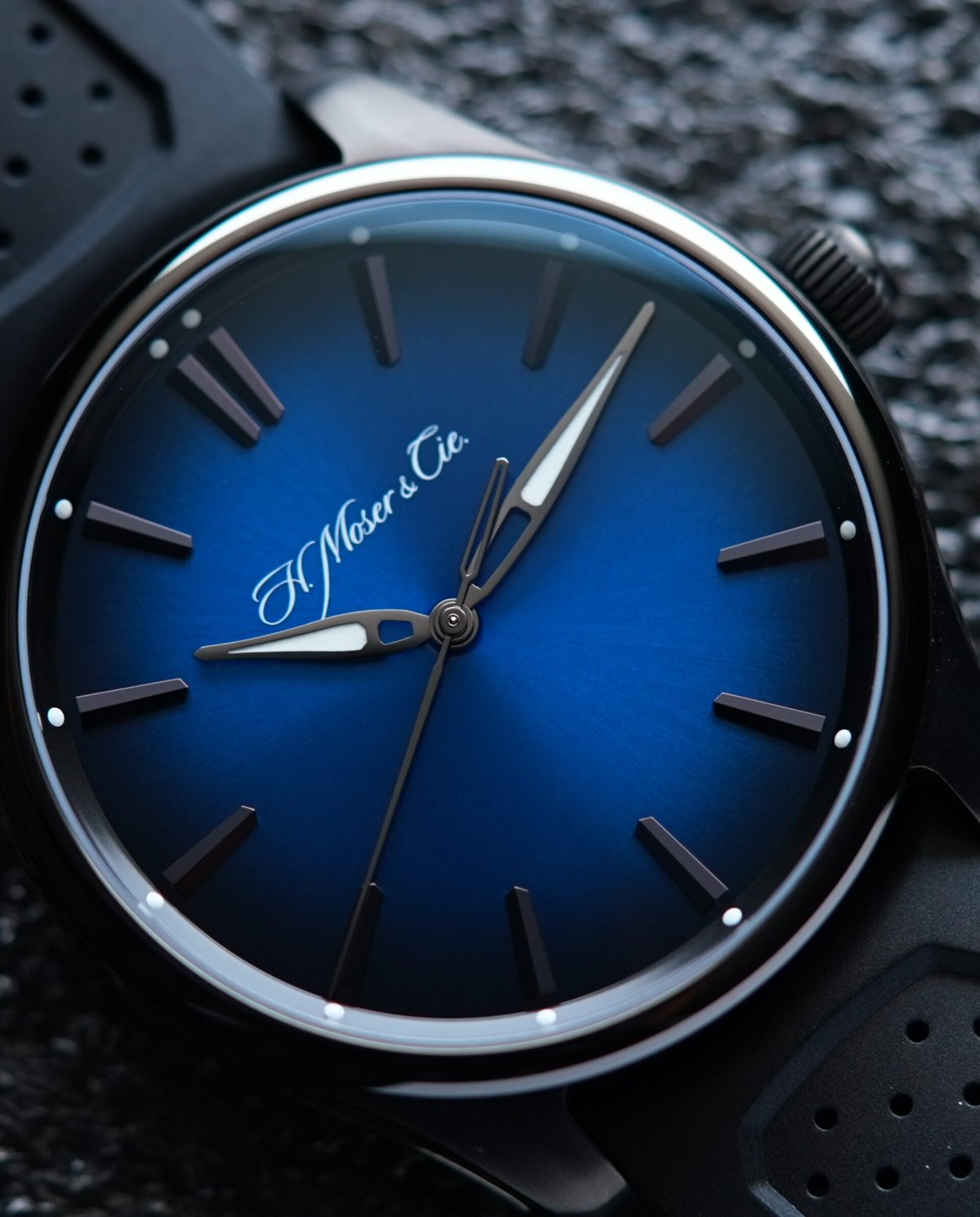
The Pioneer Centre Seconds dial is the star of the show. It features the signature 'Streamlined' dial texture, which is a pattern of concentric circles that catch the light differently depending on the angle. This creates a depth that flat dials simply cannot replicate. The indices are applied and polished, providing a high contrast against the dial background. The hands are dauphine shaped, with a luminescent coating that glows brightly in the dark.
The case is 38mm in diameter, which is the sweet spot for modern watch collecting. It is large enough to be visible but small enough to slide under a shirt cuff easily. The thickness is 12.5mm, which keeps the profile sleek. The lug-to-lug distance is 48mm, ensuring it sits flush on the wrist without overhang. This is a crucial metric for wearability that often gets overlooked in favor of diameter alone.
Wrist Presence and Comfort
The 38mm case is deceptive; it wears with a presence that belies its size. The lug-to-lug distance of 48mm ensures it sits comfortably on a 6.5-inch wrist without overhang, a rarity for modern watches. The case is heavily brushed with polished bevels, creating a tactile contrast that feels substantial without being heavy. It balances perfectly with the leather strap, feeling like a tool watch that has been dressed for a gallery opening.
The crown is easy to grip, and the lugs curve gently to hug the wrist, eliminating any gap at the 12 o'clock position. The strap quality is high, with a smooth leather that softens over time. The deployant clasp is solid and secure, with a micro-adjustment feature that allows for fine-tuning the fit. Overall, the wrist feel is one of comfort and confidence. You forget you are wearing a watch, which is the ultimate compliment in the luxury space.
Accuracy and Reliability
Expect a variance of -4 to +6 seconds per day. As a COSC certified movement, it is reliable enough for daily wear without constant adjustment. The 72-hour power reserve means you can take it off on Friday night and wind it up Monday morning without the seconds hand stopping. The movement is robust and can withstand the rigors of daily life, including minor bumps and temperature changes. It is a watch you can wear to the office, to the gym, or to a dinner party without worry.
Investment Value and Market Position
The MSRP is $12,700 USD, which places it firmly in the luxury segment. However, the market for independent watches is different from the big five brands. The Pioneer Centre Seconds is not an investment piece in the traditional sense. It will likely depreciate slightly upon purchase, settling into a stable secondary market value. The pre-owned range is typically $10,000 to $11,500 depending on condition and box/paper.
Buy this watch for the love of the design and movement, not the ROI. It holds value better than most mass-produced luxury watches but will not appreciate significantly. The brand's reputation is growing, but it is not yet a blue-chip asset like a Patek Philippe or a Rolex. For the collector who wants to own a high-quality independent watch without the volatility of the secondary market, this is a solid choice.
Comparison to Competitors
When comparing to the Nomos Glashütte Tangomat Classic, the Pioneer offers more robust finishing and a more distinct dial texture, though Nomos is often more affordable. Against the A. Lange & Söhne 1815, the Pioneer shares the high-end finishing and traditional dial layout but at a significantly lower price point. The Oris Aquis Date offers comparable water resistance and tool-watch utility but with a more casual aesthetic that lacks the dress watch elegance of the Pioneer.
The most direct competitor is the H. Moser & Cie. Endeavour Centre Seconds. The Endeavour is slightly more formal with a different case shape, while the Pioneer has a sportier, more integrated look. Both share the same movement and finishing quality, making the choice a matter of style preference rather than performance.
Final Thoughts: Who is this for?
The H. Moser & Cie. Pioneer Centre Seconds is a masterclass in understated luxury. It delivers the finishing quality of a grand complication watch in a package that is actually wearable for daily life. For the collector who wants to stand out without screaming for attention, this is the definitive choice of the year. It signals a knowledge of horology that goes beyond the brand logo on the dial.
It is a watch for the person who knows what they want, understands the value of independent watchmaking, and isn't afraid to step outside the standard five-minute watch group circles. If you are looking for a watch that will last a lifetime and hold its own in a collection of serious timepieces, the Pioneer Centre Seconds delivers on every front.