Introduction
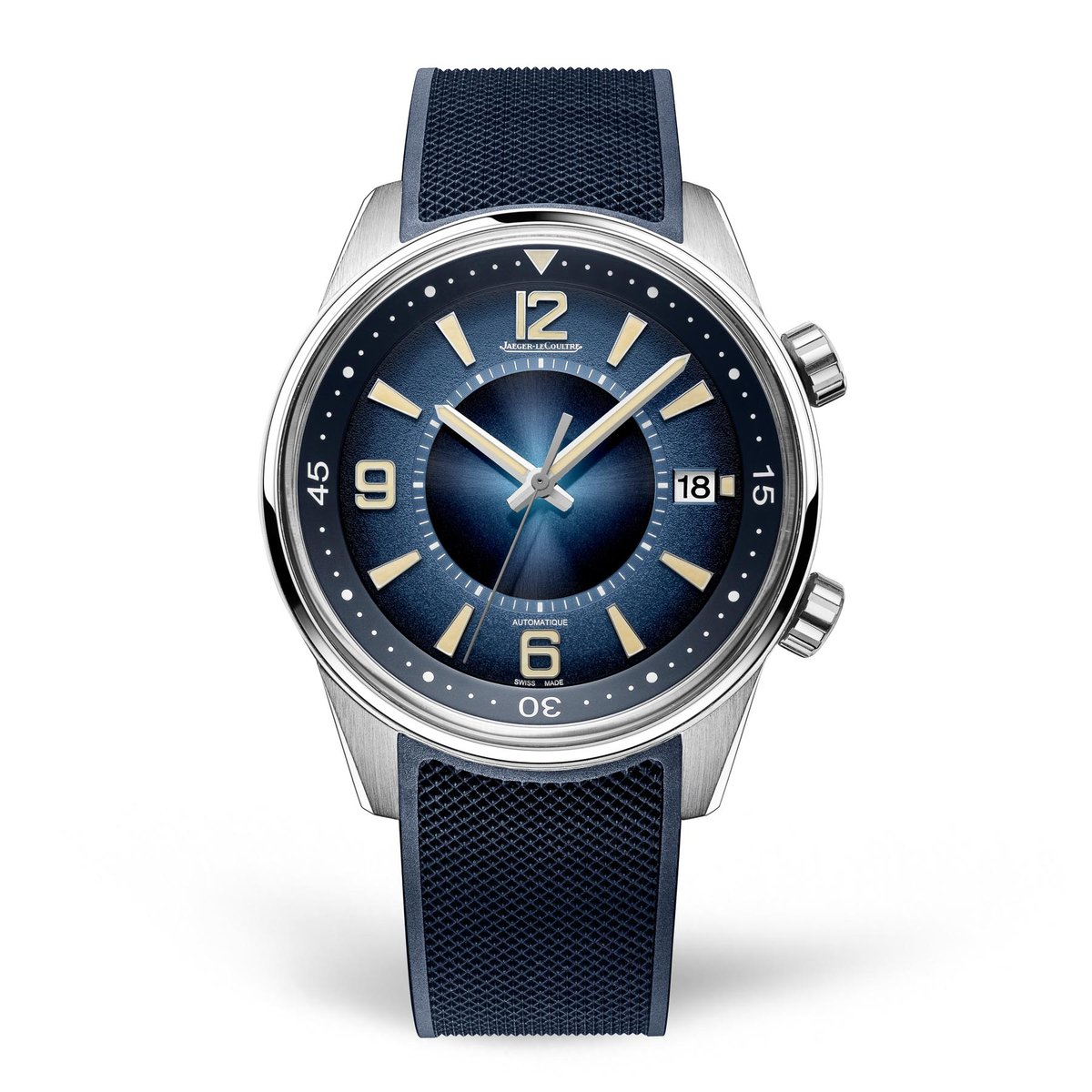
The Jaeger-LeCoultre Polaris Date (ref. Q9068680) is the entry point into JLC’s revived diver-inspired line. Launched in 2018, the Polaris collection pays homage to the 1968 Polaris II, a rare and beloved dive watch from the Vallée de Joux. This modern iteration strips away the chronograph and world-time complications of its siblings, offering a clean, date-only package that prioritises legibility and daily comfort.
With a 42mm stainless steel case, a deep blue sunburst dial, and an in-house automatic movement, the Polaris Date sits somewhere between a tool watch and a dressy sports piece. It’s not trying to be a Submariner or a Seamaster; instead, it carves its own niche with restrained elegance and superb finishing. This review focuses on how it performs on the wrist over a real week—lug-to-lug, comfort, accuracy, and whether it earns a permanent spot in a rotation.
For the young collector who appreciates horological pedigree without the flash, the Polaris Date is a compelling choice. It carries the weight of JLC’s manufacture history while remaining accessible and refreshingly unpretentious.
Manufacture History
Jaeger-LeCoultre was founded in 1833 in the Vallée de Joux, Switzerland. Known as the 'watchmaker’s watchmaker,' the manufacture has supplied movements to Patek Philippe, Audemars Piguet, and Vacheron Constantin, while also producing iconic models like the Reverso and the Memovox. The Polaris line revives the brand’s 1960s dive watch heritage, combining robust water resistance with the refined finishing expected from a manufacture of this calibre.
Movement
At the heart of the Polaris Date beats the Caliber 899AB, an automatic movement that debuted in the 2018 Polaris collection. It runs at 28,800 vph (4 Hz), has 32 jewels, and offers a 70-hour power reserve. The movement is not COSC-certified, but in practice it performs to chronometer standards. The 899AB features a free-sprung balance wheel, a 22k gold rotor, and decoration including perlage on the mainplate and Côtes de Genève on the bridges. It is robust, accurate, and provides a generous power reserve for a modern sports watch.
Specifications
- Case Diameter: 42mm
- Case Thickness: 13.6mm
- Lug-to-Lug: 50.2mm
- Case Material: Stainless steel
- Crystal: Sapphire with anti-reflective coating
- Water Resistance: 100 meters
- Lume: Super-LumiNova on hands and indices
- Bracelet/Strap: Stainless steel bracelet with folding clasp
Wrist Feel
On a 17cm wrist, the Polaris Date wears larger than its 42mm diameter suggests because of the long 50.2mm lug-to-lug. However, the short, downward-curving lugs and the relatively slim bezel help it hug the wrist without overhang. The case is 13.6mm thick, which is noticeable but not excessive—it slides easily under a dress shirt cuff if you don’t mind a slight bulge. The bracelet is a standout: fully brushed with polished centre links, it tapers from 22mm to 18mm and has a comfortable, balanced feel. The folding clasp includes a four-position micro-adjust, though it lacks an on-the-fly extension. Overall weight is around 160 grams, giving it a reassuring presence without being heavy. The crown is signed and screws down securely, and the bezel action is crisp with zero backplay. After a week of wear, the watch never felt top-heavy or unbalanced, even during light sports and desk work.
Accuracy
Over a week of daily wear (worn 12 hours, off overnight), the Cal. 899AB ran consistently at +4 to +6 seconds per day. In a static test crown-up, it gained +3 seconds over 24 hours. This is excellent for a non-COSC movement and well within JLC’s internal tolerances. Day-to-day, you can expect around +5 to +8 seconds depending on activity levels. The 70-hour power reserve means it will still be running after a weekend off, though the date will need advancing if left unwound for two days.
Occasions
The Polaris Date is a versatile companion. It works as a daily driver, a travel watch thanks to its robust construction and date function, and even a sporty option for swimming or hiking. It’s less suited for black-tie events, but a simple strap change to leather can dress it up for business casual.
Wrist Presence
4/5 – The blue dial and polished accents catch light beautifully, but the overall design is restrained. It commands attention without shouting, making it suitable for both casual and smart-casual settings.
Reference Variants
The Polaris Date is available with a blue or black dial, and on either a stainless steel bracelet or a rubber strap. The blue dial on bracelet (Q9068680) is the most popular configuration. Other variants include the black dial on bracelet (Q906868J) and blue dial on rubber (Q9068670).
Family References
The Polaris family includes the no-date Polaris Automatic (Q9008470), the Polaris Chronograph (Q9068570), and the Polaris Worldtime (Q9068600). All share the same case architecture and design language.
Other Notable Models by Jaeger-LeCoultre
Beyond the Polaris, JLC’s catalogue includes the Reverso (dress and reversible), the Master Control (classic dress watches), the Geophysic (true GMT and universal time), and the Duometre (dual-barrel chronometer). Each showcases the manufacture’s technical prowess.
Similar Watches
If you’re cross-shopping the Polaris Date, consider the Rolex Submariner Date (126610LN) for a more tool-oriented dive watch, the Omega Seamaster Diver 300M for a ceramic-and-helium-valve alternative, the Tudor Black Bay 58 for a smaller vintage vibe, or the Grand Seiko SBGA211 for a different take on high-finish sports watches.
Homages
While the Polaris has no direct homages, the Seiko 5 Sports SRPD series offers a similar sporty aesthetic at a fraction of the cost, with 100m water resistance and automatic movement.
Investment Value
MSRP on the bracelet is $6,900. Pre-owned prices range from $4,500 to $5,500 for excellent condition with box and papers. The trend is stable, with moderate depreciation after purchase. It’s not a flipper’s watch, but a well-maintained example will hold its value reasonably well over time. No major auction history.
Service Interval
JLC recommends servicing every 5 years. An authorized service typically costs around $800 for a full overhaul. Always use an authorized centre to preserve the movement’s integrity and warranty.
Pros and Cons
- Pros: Beautiful dial, in-house movement with 70h reserve, comfortable bracelet, 100m water resistance, understated design.
- Cons: Thick case, no on-the-fly micro-adjust, limited to 100m water resistance, no ceramic bezel.
Final Verdict
The Jaeger-LeCoultre Polaris Date is a masterclass in restrained luxury. It offers everything a discerning collector needs: a beautiful in-house movement, a comfortable and versatile design, and a heritage that speaks to those who know. While it doesn’t break new ground, it refines an existing formula to near-perfection. If you seek a daily-wear sports watch that pairs equally well with a suit or a weekend jacket, the Polaris Date is a compelling and rewarding choice.