A Legacy of Precision and Innovation: The Longines Heritage
Founded in 1832 in Saint-Imier, Switzerland, Longines has forged a distinguished path in the world of horology. From its early days, the brand was synonymous with precision, earning numerous awards and establishing itself as a pioneer in sports timing and aviation instruments. By the mid-20th century, Longines had cultivated a reputation for producing elegant dress watches and robust tool watches, solidifying its place among the elite Swiss manufactures.
However, the 1970s ushered in a period of intense experimentation across the watch industry. While the Quartz Crisis loomed, many traditional brands, including Longines, explored new avenues of mechanical expression. It was within this vibrant crucible of creativity that the Comet was conceived. It represented a departure from the brand's more conservative designs, showcasing a playful yet technically sophisticated side that resonated with the era's forward-thinking spirit.
The Heart of the Comet: Longines Caliber 706
At the mechanical core of the Longines Comet lies the in-house manual-wind Longines Caliber 706. This movement is not merely a time-telling engine; it is the ingenious mechanism that orchestrates the Comet's signature 'mystery dial' display. Comprising 17 jewels and beating at a frequency of 21,600 vibrations per hour (3 Hz), the Caliber 706 provides a power reserve of approximately 40 hours.
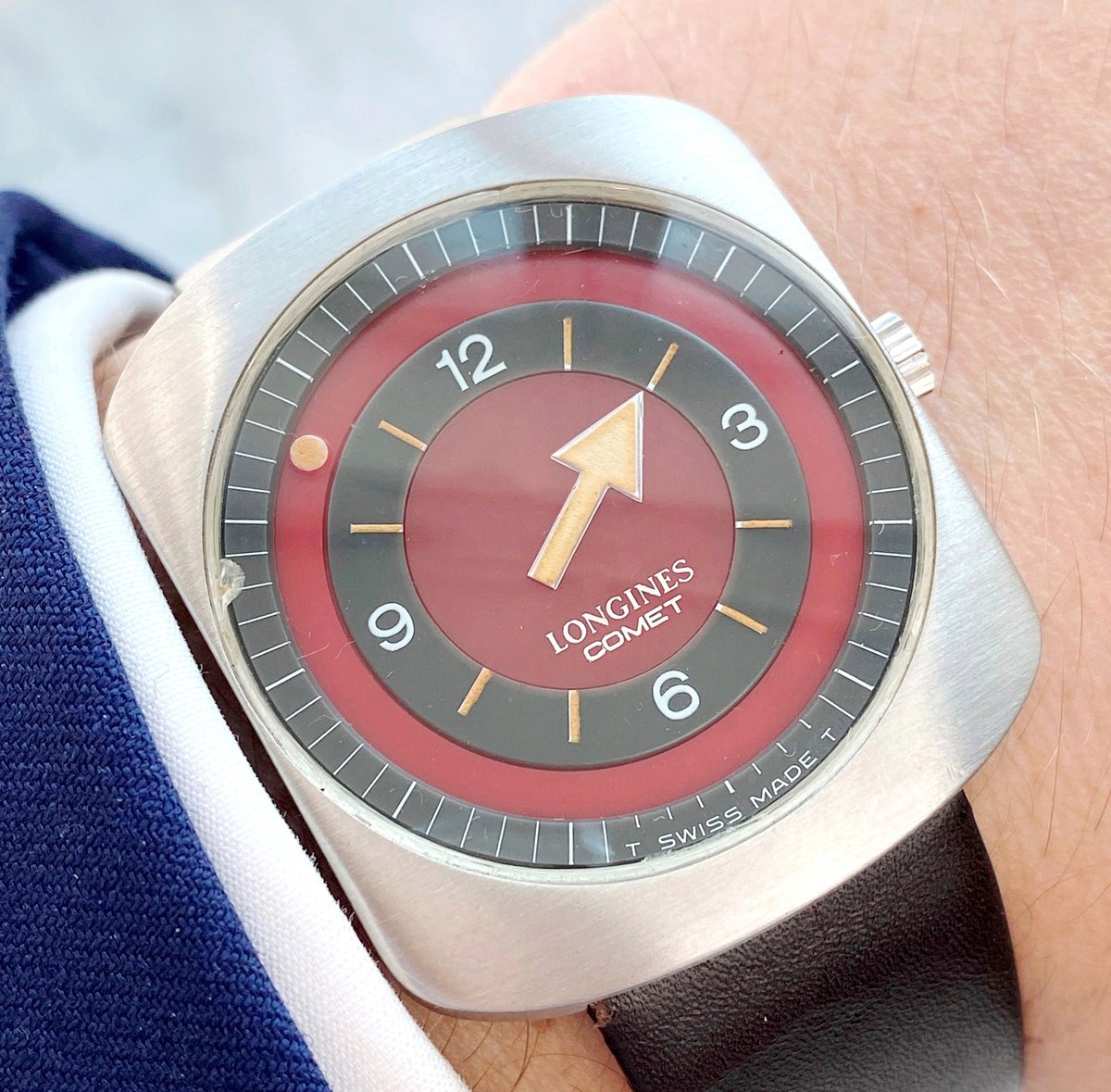
What truly sets the Caliber 706 apart is its bespoke design for the mystery display. Unlike conventional movements that drive hands directly from a central pinion, the 706 is configured to rotate two transparent discs positioned above the main dial. The hour is indicated by a discreet dot or small circle printed on the lower disc, while the minute is often represented by a larger dot or a stylized star on the upper disc. These discs are driven by a series of gears subtly integrated into the movement's perimeter, creating the illusion that the time indicators float freely without any physical connection to the movement below. This seemingly simple effect required precise engineering and meticulous calibration to achieve, a testament to Longines' profound mechanical expertise. The finishing of the Caliber 706, while industrial in its execution, is robust and designed for longevity, reflecting the pragmatic excellence typical of Longines movements from this period.
Design and Dimensions: A 70s Aesthetic
The Longines Comet's aesthetic is unmistakably rooted in the 1970s, an era characterized by bold lines, unusual case shapes, and a futuristic sensibility. The typical case diameter measures 35mm, with a thickness of approximately 10.5mm. The lug-to-lug measurement is around 40mm, ensuring a comfortable and well-proportioned fit on most wrists. While these dimensions might appear modest by contemporary standards, they are perfectly in keeping with vintage sizing and contribute to the watch's understated elegance.
The case material is predominantly stainless steel, though gold-plated variants also existed. Many Comets feature a distinctive cushion-shaped case or a subtly integrated tonneau form, often with a brushed or polished finish that highlights its geometric contours. The crystal is acrylic, a common material for watches of this period, known for its warm optical qualities and ease of polishing to remove minor scratches. Water resistance is rated at a modest 30 meters, typical for a vintage dress or novelty watch, suggesting that it should be kept away from significant moisture exposure.
The dial itself is a canvas for the mystery. Available in colors such as classic black, brushed silver, or vibrant blue, it often features minimal branding to allow the floating indicators to take center stage. There is no traditional lume on the indicators themselves, as they are printed elements on transparent discs. The bracelet or strap typically consisted of a simple leather strap with a pin buckle, though some rare variants were offered on integrated stainless steel bracelets that further emphasized the era's design language.
On the Wrist: A Singular Experience
Despite its vintage dimensions, the Longines Comet wears with a distinctive presence. The 35mm case, often presented in a cushion or slightly tonneau shape, sits comfortably on the wrist, its modest thickness ensuring it slips easily under a cuff. The true marvel, however, is the visual experience. The absence of traditional hands and the ethereal dance of the hour and minute markers transform the act of time-telling into a captivating spectacle, drawing the eye without ever feeling ostentatious.
The watch's balance is excellent, a characteristic of well-proportioned vintage pieces. Its lightweight nature, owing to the stainless steel construction and manual-wind movement, contributes to its remarkable comfort, making it an ideal companion for extended wear. The Comet is not merely a watch; it is a conversation starter, an wearable piece of horological art that feels both historically significant and refreshingly unconventional. Its wrist presence, while not overtly bold in size, is undeniably unique, earning it a solid 4 out of 5 for its ability to command attention through sheer ingenuity.
Real-World Performance and Expectations
As a vintage manual-wind movement from the 1970s, the Caliber 706, when properly serviced, can be expected to perform within reasonable parameters for its age – typically +/- 15-30 seconds per day. While not COSC-certified, its robust construction ensures reliable timekeeping for daily wear. Owners should anticipate periodic winding and appreciate its mechanical heartbeat as part of its charm. The Comet is best suited for occasions ranging from daily wear to more formal gatherings or as a distinctive statement piece. Its unique display makes it an excellent conversation starter at casual events or a subtle nod to horological eccentricity in a business setting.
Variants and Connections
The Longines Comet primarily comes in a few key reference variants, distinguished by dial color and case finish. The most common is the reference 8479, featuring a classic black dial with the iconic floating hour dot and minute star. Reference 8617 offers a silver-brushed dial, providing a lighter, more ethereal aesthetic. Rarer still are models like reference 8618, which may feature a blue dial and, in some instances, an integrated stainless steel bracelet, reflecting the integrated design trends of the 1970s.
While the Comet stands as a unique entity, it belongs to a broader family of Longines 'Mystery Dial' watches from the period, showcasing the brand's penchant for innovative time displays. Within the wider Longines portfolio, it shares the spirit of adventurous design with models like the Ultra-Chron, known for its high-frequency movements, and the Conquest, a line that often pushed boundaries in both design and technical specifications. For collectors seeking similar horological ingenuity, contemporary brands like Cartier offer their own interpretations of the 'mystery' display with models like the Rotonde de Cartier Mysterious Hour, albeit at a significantly different price point. Vintage Jaeger-LeCoultre also produced mystery dial watches, demonstrating that the concept captivated multiple manufactures.
Direct homages to the Longines Comet are rare due to its intricate and specific display mechanism. However, watches like the vintage Hamilton Pulsar P2, while digital, share the Comet's 1970s ethos of unconventional time display and a futuristic, bold aesthetic, appealing to collectors who appreciate period-specific design innovation.
Investment Value and Service
The Longines Comet occupies an interesting niche in the vintage watch market. With pre-owned prices generally ranging from $1,500 to $4,000, depending on condition and rarity, it represents a relatively accessible entry point into unique, historically significant horology from a prestigious brand. The market trend for the Comet is stable; its distinctiveness ensures it maintains a steady appeal among collectors of vintage Longines and those who appreciate avant-garde designs. For collectors of unique horological designs, the Comet represents a fascinating and relatively accessible piece of history. Its distinctiveness ensures enduring appeal, making it a worthy hold recommendation. There is no significant auction history for the Comet, as it tends to trade through private sales and specialized vintage dealers.
Regarding service, the manual-wind Caliber 706 is a robust movement, and its maintenance is well within the capabilities of independent watchmakers specializing in vintage timepieces. A service interval of approximately 5 years is recommended, with an approximate cost of $400. This flexibility in servicing means owners are not solely reliant on authorized service centers, which can be a significant advantage for vintage pieces.
Final Verdict: A Star That Still Shines
The Longines Comet is a horological marvel, a daring expression of design and mechanical ingenuity from an era of bold experimentation. It stands as a testament to Longines' expansive capabilities, offering collectors a unique opportunity to own a piece of watchmaking history that continues to captivate and inspire. For those who appreciate the unconventional, the Comet remains a shining star, a profound statement of mechanical artistry that transcends mere time-telling. Its blend of historical significance, technical intrigue, and compelling aesthetics makes it an exceptional value for the discerning collector.