Brand Heritage: A Century of Practical Innovation
To truly understand the Mido Multifort Powerwind, one must appreciate the brand's foundational ethos. Founded in 1918 by Georges Schaeren in Switzerland, Mido's name, derived from the Spanish 'Yo mido' ('I measure'), perfectly encapsulates its mission: precise timekeeping. While not as loudly celebrated as some of its peers, Mido has quietly, consistently pushed boundaries in practical watchmaking.
The Multifort line, first introduced in 1934, was a groundbreaking collection for its era. It was one of the first watches to combine automatic winding, water resistance (thanks to Mido's innovative Aquadura cork sealing system), anti-magnetism, and shock resistance in a single timepiece. This commitment to durability and functionality resonated with consumers who needed reliable watches for everyday life, not just for special occasions. This history isn't just trivia; it's the DNA of the Powerwind Chronometer. It tells us that Mido isn't about fleeting trends; it's about enduring quality and performance. For the collector, this translates to a brand with a strong, authentic narrative, even if it doesn't command the same auction premiums as others. It's a testament to Mido's focus on engineering over pure marketing fluff, a quality that savvy investors recognize.
The Engine Room: Mido Caliber 80 (ETA C07.611 base)
At the heart of the Mido Multifort Powerwind Chronometer lies the Mido Caliber 80, based on the robust ETA C07.611. For those unfamiliar, this is Swatch Group's workhorse movement, a highly optimized evolution of the venerable ETA 2824-2. But don't let the 'ETA base' fool you; this isn't just a generic off-the-shelf movement. Mido, as part of the Swatch Group, benefits from exclusive access and significant customization, transforming it into a COSC-certified chronometer.
The headline feature here is the 80-hour power reserve. In an age where many movements still offer a paltry 38-42 hours, an 80-hour reserve means you can take the watch off on Friday evening and pick it up Monday morning, and it’ll still be ticking. This is a massive practical advantage for anyone rotating multiple watches, eliminating the need for constant winding or a watch winder. For the busy professional, it's a convenience that subtly elevates the daily experience, freeing up mental bandwidth for more important things, like strategizing your next venture.
Then there's the COSC certification. This isn't just a fancy stamp; it means each movement has undergone rigorous testing by the Contrôle Officiel Suisse des Chronomètres, guaranteeing an accuracy of -4/+6 seconds per day. In real-world performance, many of these movements far exceed these minimums, often running within a few seconds a day. For a watch at this price point, COSC certification is a serious flex, a tangible mark of precision engineering that sets it apart from countless non-certified alternatives. It's a quantifiable metric of quality, something any data-driven collector should appreciate.
The movement operates at a frequency of 21,600 vibrations per hour (3 Hz), a deliberate choice by ETA to extend the power reserve. While some purists might prefer the smoother sweep of a 4 Hz movement (28,800 vph), the slightly lower beat rate doesn't detract from its accuracy, thanks to advanced escapement technology. With 25 jewels, it's a reliable, low-maintenance engine designed for longevity. The movement’s finishing is industrial but clean, visible through the display case back, showcasing a decorated rotor that adds a touch of aesthetic appeal without pretence. This is a movement built for performance and durability, not elaborate hand-finishing, aligning perfectly with the Multifort's robust heritage.
On the Wrist: Ergonomics, Aesthetics, and Understated Flex
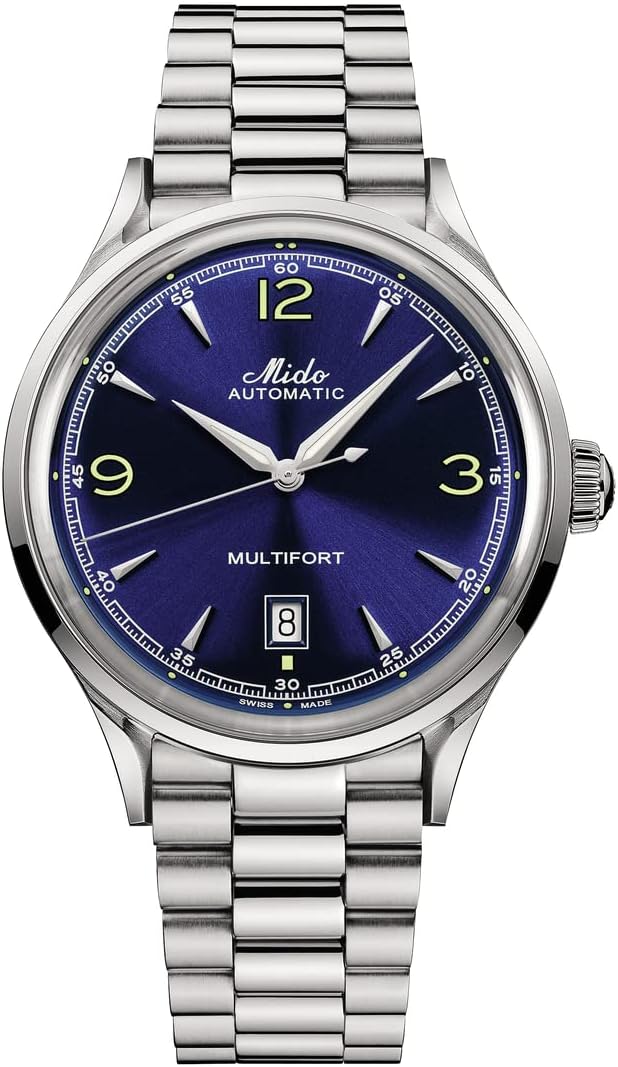
Let's talk about how this piece actually plays out in the real world, beyond the spec sheet. The Mido Multifort Powerwind Chronometer (M040.408.16.097.00) nails the sweet spot with its 40mm stainless steel case. This diameter is universally appealing, neither too large to be ostentatious nor too small to feel insignificant. It's the Goldilocks zone for a modern, versatile watch, fitting comfortably under a shirt cuff, making it boardroom-ready, yet substantial enough for a casual weekend outing.
The case thickness of 11.9mm is commendable for an automatic with 100m water resistance. It’s slim enough to avoid snagging on sleeves, a crucial detail for daily wear. The lug-to-lug measurement, approximately 47mm, ensures the watch sits beautifully on most wrists without any awkward overhang. This attention to proportion is key to its wearability and contributes significantly to its understated elegance. It’s a watch that looks good on you, rather than wearing you.
The dial is where this particular reference truly shines. A silver sunray brushed dial provides a dynamic play of light, shifting from bright silver to deeper grey depending on the angle. This subtle texture adds depth and visual interest without being overly flashy. Applied indices, polished to a high sheen, catch the light beautifully, enhancing legibility and lending a premium feel. The date window at 3 o'clock is well-integrated, and the hands, filled with Super-LumiNova, ensure readability in low-light conditions – a practical feature often overlooked in dressier pieces. The overall aesthetic is clean, balanced, and timeless, avoiding any design fads that might quickly date the watch.
The watch comes paired with a high-quality brown leather strap, secured by a deployant clasp. This choice of strap elevates the watch, giving it a sophisticated, dressier appeal. While some might argue a 'Multifort' should be on a bracelet, this leather option makes it incredibly versatile, easily transitioning from a formal dinner to a casual brunch. The deployant clasp not only offers security but also extends the life of the leather strap by preventing excessive bending and creasing, a detail that speaks to practical luxury. The balance on the wrist is excellent; it feels solid and well-made without being overly heavy, embodying that 'set it and forget it' comfort that makes a watch truly enjoyable to own and wear. Its wrist presence is a solid 3/5 – not shouting for attention, but undeniably there, exuding a quiet confidence.
Market Dynamics & Investment Angle: Beyond the Hype
Let’s be brutally honest: Mido watches, while horologically sound, are not appreciation plays. If you're looking for a piece to flip for a quick profit, this isn't it. The Mido Multifort Powerwind Chronometer (M040.408.16.097.00) falls squarely into the 'buy-to-wear' category, a distinguished daily driver that offers immense value for its retail price, but will likely see typical depreciation on the secondary market.
With an MSRP around $1200 USD and current retail prices often hovering slightly below that, around $1050, you're getting a lot of watch for your money. A COSC-certified automatic with an 80-hour power reserve from a reputable Swiss brand is a compelling package. However, Mido's brand recognition, while growing, doesn't yet command the same secondary market premiums as its Swatch Group siblings like Longines, let alone the independent darlings or the 'Holy Trinity' brands.
On the pre-owned market, you can expect to find this reference in the range of $600-$900, depending on condition, box, and papers. This represents a significant depreciation from retail, typically 30-50%. For the savvy buyer, this means the secondary market is where the true value lies. Acquiring a well-preserved example pre-owned offers an even more attractive entry point into chronometer-grade Swiss watchmaking without taking the initial retail hit.
The trend for this model is firmly in the 'depreciating' category. This isn't a flaw of the watch itself, but a reflection of its market positioning and the brand's current perception. This means it's an excellent choice for a discreet, high-performing 'understated flex' watch. It shows you appreciate horological substance without needing to broadcast your wealth with an obvious status symbol. It’s a watch for those who know, rather than those who show.
My hold recommendation is clear: this is a long-term keeper for its utility and inherent quality. Don't buy it expecting it to fund your next yacht. Buy it because you appreciate a well-made, accurate Swiss automatic that can withstand the rigors of daily life and look good doing it. There's no major auction history to speak of, reinforcing its position as a tool for timekeeping rather than a speculative asset. Its value lies in its reliable performance and the enjoyment it brings, not in its potential for capital gains.
Comparison & Alternatives: Positioning Your Portfolio
Understanding where the Mido Multifort Powerwind Chronometer sits in the broader market is crucial for any collector. It occupies a competitive segment, offering chronometer-level performance at a price point where many brands deliver only standard-grade movements.
Direct Competitors (Same Price Tier, Similar Specs):
- Tissot Gentleman Powermatic 80 Silicium: This is arguably the Mido's closest rival, also from the Swatch Group. It features the same base Powermatic 80 movement, often with a silicon balance spring for enhanced anti-magnetism. The Gentleman offers a slightly more dressy-sporty aesthetic, often with integrated bracelet options. Choosing between the two often comes down to specific design preferences – the Mido leans more into a classic, slightly vintage-inspired aesthetic, while the Tissot is more contemporary. Both offer incredible value for a COSC-certified movement.
- Hamilton Jazzmaster Performer Automatic: Hamilton, another Swatch Group brand, brings its own distinct American-inspired design language. While not all Jazzmaster models are COSC-certified, many use variations of the Powermatic 80. The Performer line offers a more athletic, yet refined, look. Hamilton often excels in unique dial textures and case finishing, providing an alternative for those seeking a different stylistic flavour within the same quality tier.
- Certina DS Action Diver Powermatic 80: While a diver and a different aesthetic category, Certina's offerings with the Powermatic 80 highlight the pervasive value of this movement within the Swatch Group. It demonstrates that you can get robust, reliable, and accurate Swiss watchmaking at this price point, regardless of the specific style.
Stepping Up (Higher Price, Enhanced Brand Perception):
- Longines Conquest Classic: If your budget allows for a slight uptick, Longines, Mido's more premium Swatch Group sibling, offers the Conquest Classic line. While not all models are COSC-certified, they often feature higher-grade ETA movements and benefit from Longines' stronger brand recognition and perceived luxury. This is for the collector willing to pay a premium for a more established 'luxury' name, even if the underlying movement technology is similar.
- Oris Aquis Date: Oris, an independent Swiss brand, offers compelling value. Their Aquis Date models, while typically divers, provide excellent build quality, unique designs, and often utilize Sellita movements with extended power reserves. It's a different aesthetic but offers a similar 'value for money' proposition, appealing to those who want to stray from the Swatch Group umbrella.
Value Alternatives (Lower Price, Different Pedigree):
- Seiko Presage Cocktail Time 'Manhattan': For those who appreciate a beautiful, textured dial and a reliable automatic movement at a significantly lower price point, the Seiko Presage line is a strong contender. While not COSC-certified, Seiko's in-house movements offer excellent performance for their price. It's an aesthetic homage to classic dress watches, offering a similar sophisticated vibe without the Swiss premium.
- Orient Star Classic Semi Skeleton: Orient Star, the premium arm of Orient (itself part of the Seiko Epson group), offers well-finished in-house movements and distinctive designs, often with power reserve indicators and open-heart dials. These provide a compelling Japanese alternative for those who prioritize mechanical integrity and unique aesthetics over brand cachet or COSC certification.
The Mido Multifort Powerwind positions itself brilliantly by offering COSC-certified performance at a price point typically reserved for standard-grade automatics. It's a choice for the collector who values substance over superficial brand appeal, a shrewd acquisition for building a diverse and high-performing collection without overextending the budget.
Servicing & Longevity: Maintaining Your Asset
Even the most robust timepiece requires regular maintenance to ensure its longevity and continued accuracy. For the Mido Multifort Powerwind Chronometer, with its Mido Caliber 80 (ETA C07.611 base), servicing is a straightforward affair, which is a significant practical advantage.
Mido, like other Swatch Group brands, recommends a service interval of approximately 5 years. This aligns with industry standards for modern automatic movements. During a typical service, the movement is disassembled, cleaned, lubricated, reassembled, regulated, and critical components like gaskets are replaced. The case and bracelet (if applicable) are also cleaned and refinished if desired.
The approximate cost for an authorized Mido service can be around $800 USD. While this might seem substantial, it's a necessary investment to protect the watch's performance and value over decades. It's also important to note that because the Mido Caliber 80 is based on a widely used ETA architecture, it is not an 'authorized service only' movement. Competent independent watchmakers with access to ETA parts and the right tools can also service this movement effectively, often at a lower cost (though always vet your independent watchmaker carefully). This flexibility in servicing options is another practical benefit, offering alternatives for maintenance without compromising quality.
Proper servicing ensures that the watch continues to meet its COSC specifications and remains a reliable companion. For the collector, understanding and budgeting for service costs is part of responsible ownership, ensuring that your horological assets continue to perform as intended and retain their intrinsic value.
Final Verdict: A Smart Play for the Savvy Collector
The Mido Multifort Powerwind Chronometer (M040.408.16.097.00) is a genuinely smart play for the discerning collector. It delivers certified chronometer accuracy and an impressive 80-hour power reserve in a classically styled package that won't break the bank. While it won't appreciate like a Daytona, its intrinsic value, everyday wearability, and undeniable horological merit make it an excellent choice for a sophisticated daily driver or a foundational piece in a diverse collection, proving that true value isn't always about the hype.
This Mido is more than just a watch; it's a statement of informed taste. It's a nod to quality and performance without the need for ostentation, a piece that quietly asserts your appreciation for genuine craftsmanship. Don't chase the fleeting trends; invest in pieces that offer enduring value and uncompromising performance. The Multifort Powerwind is precisely that – a strategic acquisition for a well-rounded portfolio.
Pros and Cons: The Quick Take
Pros:
- COSC-certified chronometer accuracy
- Excellent 80-hour power reserve, highly practical
- Versatile 40mm case size and classic, timeless design
- Strong value proposition for a Swiss automatic chronometer
- Robust and reliable ETA-based movement, easy to service
Cons:
- Brand recognition lags behind some peers, impacting secondary market value
- Typical depreciation on the secondary market; not an investment piece for capital gains
- Standard industrial finishing, not haute horlogerie levels of decoration
- Leather strap may not appeal to all users for a 'Multifort' branded watch, some prefer bracelet