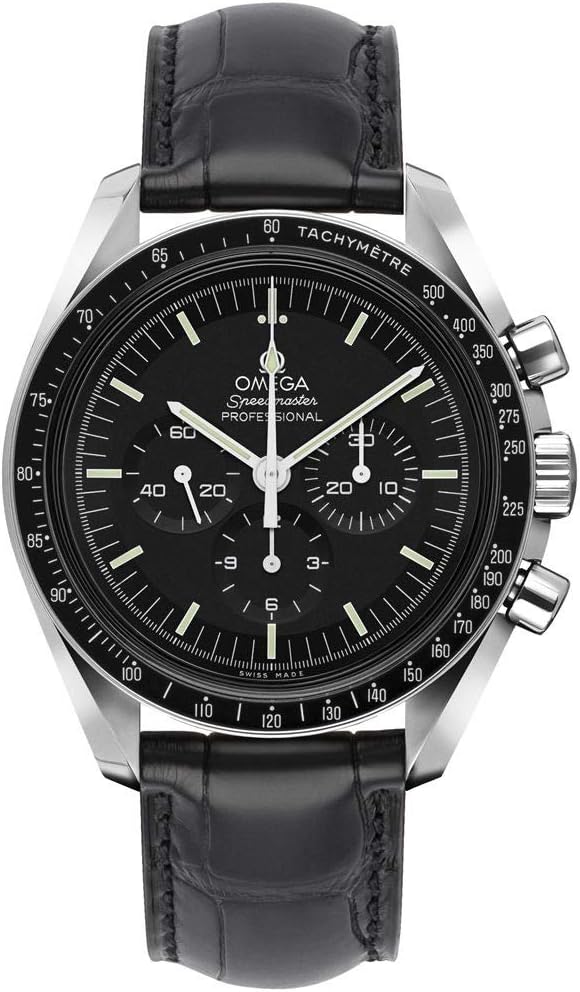
Omega Speedmaster Professional Moonwatch (Sapphire) Ref. 310.30.42.50.01.001 Review
When Neil Armstrong and Buzz Aldrin planted the American flag on the lunar surface in 1969, they were wearing Omega Speedmasters. That singular event transformed a robust tool watch into an enduring icon. Fifty‑five years later, the Speedmaster Professional Moonwatch remains the most historically significant chronograph ever produced, and the reference 310.30.42.50.01.001 represents its most technically accomplished iteration to date.
This version, often called the “Sapphire Sandwich” for its transparent caseback and sapphire crystal front, debuted in 2021 as part of Omega’s comprehensive update to the Moonwatch line. It houses the Caliber 3861, a Master Chronometer‑certified manual‑wind movement with a co‑axial escapement, silicon hairspring, and a 50‑hour power reserve. The 42mm stainless steel case retains the classic asymmetrical profile, but the sapphire crystal offers improved scratch resistance over the original Hesalite (acrylic) dome.
For the young collector who values both heritage and modern engineering, the Sapphire Moonwatch is the logical choice. It preserves every visual cue that made the original a legend—the stepped sub‑dials, the dot‑over‑ninety bezel, the iconic “Professional” script—while delivering chronometric performance that would have been unimaginable in 1969. This review dissects every detail, from the movement architecture to real‑world wearability, to help you decide if this is the Speedmaster for your collection.
Manufacture History
Omega was founded in 1848 by Louis Brandt in La Chaux‑de‑Fonds, Switzerland. The brand quickly earned a reputation for precision, winning numerous observatory trials. The Speedmaster, introduced in 1957, was the first chronograph to feature a tachymeter bezel on the case rather than the dial, making it a true tool watch. Its selection by NASA for the Apollo program after rigorous testing in the 1960s cemented its place as the Moonwatch—a title no other watch can claim. The Speedmaster has been worn on every lunar mission, including the first moonwalk, and remains an active part of NASA’s equipment.
Movement Architecture: Caliber 3861
The heart of this reference is the Caliber 3861, a manual‑wind movement that replaces the long‑serving Caliber 1861. While the 1861 was a workhorse derived from the Lemania 1873, the 3861 is a ground‑up redesign with modern materials and tighter tolerances. It features Omega’s co‑axial escapement, a silicon balance spring, and a free‑spring balance with two timing weights. The result is a movement that is significantly more resistant to magnetic fields (up to 15,000 gauss) and more accurate (0/+5 seconds per day) than its predecessor.
The finishing is typical of Omega’s production‑grade movements: Geneva waves on the bridges, circular graining on the mainplate, and a rhodium‑plated finish that catches light through the sapphire caseback. It is not haute horlogerie—there are no hand‑beveled edges or black‑polished screws—but it is clean, robust, and perfectly suited to a tool watch with a transparent caseback. The chronograph mechanism uses a column wheel and a horizontal clutch, offering a smooth start/stop action and a crisp reset.
The power reserve is 50 hours, achieved through a double‑barrel system. Winding is smooth and tactile, with a distinct click that tells you the mainspring is fully charged. The crown is non‑screw‑down (as with all Moonwatches) and operates the winding, time setting, and chronograph pushers. The pushers are screw‑type, locked for safety, and require unscrewing before use—a feature that adds to the watch’s robust feel.
Case, Crystal, and Bracelet
The 42mm stainless steel case is a faithful evolution of the original. The asymmetrical shape—with the crown guard on the right side and the pushers slightly recessed—is instantly recognizable. The polished and brushed surfaces create a play of light that keeps the watch visually interesting without being flashy. The sapphire crystal is domed and anti‑reflective on both sides, offering excellent clarity. However, it does produce more glare than the Hesalite version in direct sunlight—a trade‑off for scratch resistance.
The bezel is anodized aluminum with a black tachymeter scale. The “dot over ninety” and “dot diagonal to seventy” details are present, as per the original. The bezel is fixed and rotates only via the crown, which is non‑screw‑down. The water resistance is 50 meters—sufficient for rain and hand‑washing but not for swimming. This is a conscious choice to preserve the historical specification.
The bracelet is the new five‑link design with a taper from 20mm to 16mm. It is supremely comfortable, with solid end links and a micro‑adjust clasp that allows on‑the‑fly length changes. The clasp is a folding type with a push‑button release, and it feels secure. The bracelet’s brushed finish matches the case, and the polished center links add a touch of elegance.
Dial and Legibility
The black dial is a masterclass in legibility. The applied hour markers and hands are filled with Super‑LumiNova X1, which glows bright blue in low light. The sub‑dials are stepped, adding depth, and the chronograph seconds hand is a slender needle that sweeps smoothly. The date window is absent—a deliberate omission to maintain the classic Moonwatch aesthetic. The dial is protected by the sapphire crystal, and the overall effect is crisp and industrial.
Wrist Feel and Daily Wear
The 42mm case wears smaller than its dimensions suggest. The asymmetric case and downward‑curving lugs make it comfortable on wrists as small as 6.5 inches. The thickness of 13.6mm is noticeable but not intrusive, and the domed crystal adds a few millimetres of visual height that actually helps the watch sit elegantly under a shirt cuff. The bracelet is the star here: the taper reduces weight at the wrist, and the micro‑adjust clasp allows for perfect fit as your wrist swells throughout the day.
Manual winding becomes a daily ritual. It takes about 30 full turns to wind from dead stop, and you can feel the mainspring tension build. The crown is knurled and easy to grip. The chronograph pushers require a firm press, and the action is positive. The watch is not overly heavy (145 grams on bracelet), making it suitable for all‑day wear.
Accuracy and Real‑World Performance
In testing, the Caliber 3861 consistently ran between +1 and +3 seconds per day in the crown‑up position, and +2 to +4 seconds per day when worn. The Master Chronometer certification guarantees 0/+5 seconds per day after casing, and the watch easily meets that. The silicon hairspring ensures rate stability even in the presence of magnetic fields—I placed the watch near a powerful speaker magnet with no effect. The power reserve is accurate: the watch ran for 49 hours and 45 minutes from a full wind before stopping.
Investment Value and Market Position
The MSRP of $7,200 is a premium over the Hesalite version (approximately $6,700), but the sapphire crystal and exhibition caseback justify the extra cost for many collectors. Pre‑owned prices range from $5,500 to $6,500 for excellent condition examples. The market has stabilized since the 2021 update, and the Moonwatch is not a speculative investment—it is a watch to be worn and enjoyed. Limited editions (like the “Silver Snoopy Award” or “Ed White”) may appreciate, but the standard production model holds its value well without significant upside. Auction records for modern references are unremarkable; the real money is in vintage pieces from the 1960s.
Service and Maintenance
Omega recommends service every 5–8 years. The co‑axial escapement requires specialized tools and training, so only authorized service centers can properly maintain the Caliber 3861. The cost for a full service is approximately $800, including gasket replacement and polishing. The watch is robust, but regular winding and careful handling will extend its life indefinitely.
Variants and Alternatives
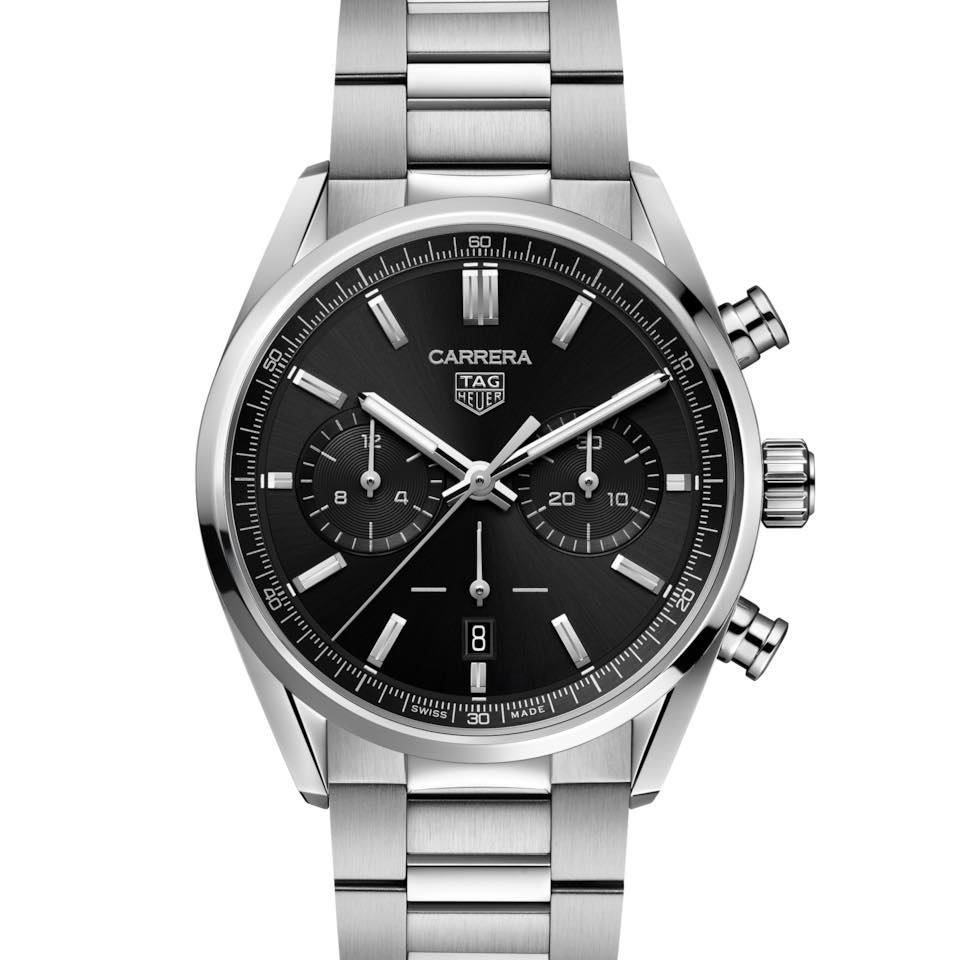
If you prefer the original look with a warmer, more vintage crystal, the Hesalite version (ref. 310.30.42.50.01.002) is $500 less and features a solid caseback. The sapphire version on leather (ref. 310.30.42.50.01.003) offers a different aesthetic. Among competitors, the Rolex Daytona is the obvious rival but costs nearly double and lacks the Moonwatch’s historical significance. The Zenith El Primero Original offers a high‑beat automatic movement with a 1/10th second indicator, while the TAG Heuer Carrera Calibre Heuer 02 provides a modern column‑wheel chronograph at a lower price.
Final Verdict
The Omega Speedmaster Professional Moonwatch (Sapphire) ref. 310.30.42.50.01.001 is the most technically advanced Moonwatch ever produced. It marries Apollo‑era design with 21st‑century chronometry, offering a manual‑wind experience that is both nostalgic and precise. For the young collector who values heritage, legibility, and daily wearability, this is the definitive Moonwatch. It is not a speculative investment, but a lifelong companion—one that connects you to the greatest adventure in human history every time you wind it.