The Patek Philippe Nautilus 5711/1A: A Market Analysis
The Patek Philippe Nautilus reference 5711/1A is not merely a timepiece; it is a cultural phenomenon that transcends horology to become a tangible asset class. For the sophisticated collector, the question is no longer about acquisition, but about timing, liquidity, and the psychological weight of holding a discontinued icon. This review cuts through the marketing noise to analyze the steel Nautilus from a strictly investment-grade perspective, distinguishing between the hype cycle and genuine value retention.
As of 2021, Patek Philippe quietly ceased production of the 5711/1A, creating an immediate supply vacuum that sent secondary market prices into hyperbolic territory. For the trust-fund-baby investor, this model represents the apex of the luxury sports watch category—a blue chip stock in a volatile market. We will dissect the movement architecture, the physical ergonomics, and the hard resale data to determine if the current entry point offers a viable return on investment or if you are buying into a narrative that has already peaked.
Manufacture History: The Legacy of Geneva
Patek Philippe was founded in Geneva in 1839 and has long been synonymous with the pinnacle of horological complication and exclusivity. The brand operates independently, owned by the Stern family since 1932, which allows for long-term strategic planning that aligns with its investment value proposition. The Nautilus collection, designed by the legendary Gérald Genta, was launched in 1976 to redefine the luxury sports watch, blending robustness with high-end finishing.
The 5711/1A represents the culmination of this lineage before its abrupt discontinuation. It was the most accessible entry point into the brand, yet it maintained a level of craftsmanship that justified its premium positioning. The brand's refusal to produce more units, even during the height of demand, was a calculated move to preserve scarcity. This scarcity is the primary driver of its current valuation, making it a unique case study in supply-demand dynamics within the watch industry.
Movement Analysis: Caliber 324 S C
The heart of the 5711/1A is the Caliber 324 S C, an automatic movement that exemplifies Patek Philippe's engineering philosophy. It is a self-winding movement featuring the Gyromax balance and a Spiromax balance spring, both proprietary technologies that ensure precision and reliability. The movement beats at 28,800 vibrations per hour, providing a smooth sweep that is characteristic of Patek's aesthetic.
With a power reserve of 45 hours, the watch can comfortably survive a weekend without winding, making it practical for daily wear. The 29 jewels reduce friction within the gear train, ensuring longevity and stability over decades. It is certified as a Patek Philippe Seal, guaranteeing accuracy within -3/+2 seconds per day. Unlike competitors who outsource movements, Patek produces this entirely within their Geneva facilities, ensuring strict quality control and a higher resale value due to the 'in-house' designation.
Specifications and Design
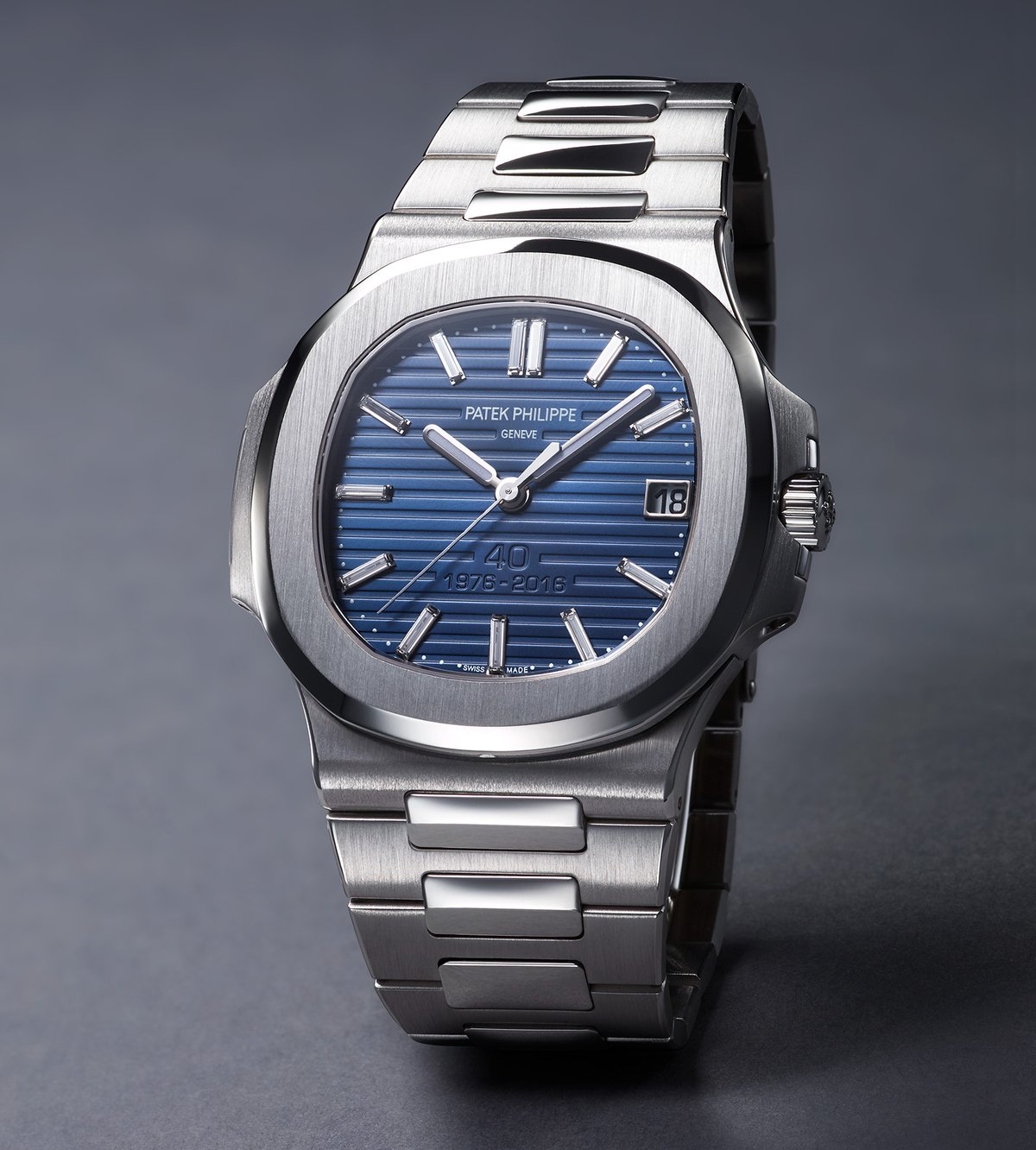
The case measures 40mm in diameter and 12.5mm in thickness, housed in 316L stainless steel. This dimensions strike a balance between modern trends and classic proportions. The bezel features the signature porthole design with horizontal embossed lines, which catch the light beautifully. The lugs are integrated seamlessly into the case, a design choice that enhances comfort and reduces snagging on clothing.
The crystal is sapphire on both front and rear, offering excellent scratch resistance and clarity. While Patek uses a proprietary luminescent coating rather than the industry-standard Super-LumiNova, the glow is consistent with modern expectations, providing legibility in low light. The water resistance is rated to 120 meters, which is sufficient for swimming and snorkeling, though it should not be used for high-impact water sports.
The bracelet is crafted from the same steel and features a folding clasp with micro-adjustments. This allows the wearer to fine-tune the fit, ensuring the watch sits comfortably regardless of wrist temperature changes. The brushed finishes on the bracelet links contrast with the polished bevels on the bezel, creating a sophisticated play of light that avoids looking too flashy.
Wrist Feel and Ergonomics
The 5711/1A wears significantly more substantial than its 40mm diameter suggests. The integrated bracelet creates a seamless line from lug to wrist, distributing weight evenly and eliminating the heavy clunk associated with traditional steel dress watches. Despite its luxury status, the profile is low enough to slide under a cuff, making it versatile for business attire, though the 12.5mm thickness can catch on sweater cuffs occasionally.
On the wrist, the balance is exceptional. The lugs are curved to follow the contour of the wrist, ensuring a secure fit without the need for excessive tightening. The brushed steel clasp features micro-adjustments, allowing for a custom fit that accommodates wrist swelling during the day. It feels solid and expensive, lacking the hollow resonance of lesser steel watches, confirming its status as a top-tier tool. For the collector who values both aesthetics and function, the ergonomics are among the best in the category.
Investment Value and Market Dynamics
The most critical aspect of this review for the investor is the financial data. The original retail price upon discontinuation was approximately $34,800. However, the current secondary market presents a stark reality. Prices for the blue dial variant in excellent condition range from $90,000 to $140,000. This represents a multiplier of nearly 4x the retail price, a figure that is rare in the luxury goods market.
The trend remains appreciating, primarily due to the discontinuation. Patek Philippe has not confirmed a replacement for the steel 5711, though rumors persist. This uncertainty fuels speculation and drives prices higher. However, collectors should be aware that liquidity may be lower than entry-level luxury sports watches. Selling a 5711/1A takes time because the pool of buyers is smaller and more discerning.
For the trust-fund-baby investor, this model offers a hedge against inflation. Unlike gold or real estate, it is portable and does not incur maintenance costs beyond servicing. However, the market is cyclical. While prices are currently high, a correction is always possible if economic conditions worsen. The hold recommendation is to keep this watch for a minimum of five years to avoid transaction costs eating into returns. If you are looking for a quick flip, the spread between buying and selling prices may not justify the risk.
Service and Maintenance
Maintenance is a cost to factor into the total cost of ownership. Patek Philippe recommends a service interval of 5 to 10 years. An authorized service typically costs between $800 and $1,000. This is higher than most competitors but includes a full overhaul, gasket replacement, and polishing of the case and bracelet.
Service availability is restricted to authorized dealers or the Manufacture in Geneva. Third-party watchmakers can service the watch, but doing so may void any remaining warranty or affect resale value. For a watch of this caliber, sticking to the authorized network is advised to preserve its integrity. The movement is robust, so if the watch is kept running regularly, major issues are rare.
Comparables and Alternatives
When considering alternatives, the Audemars Piguet Royal Oak is the only true peer. The Royal Oak 15500 shares the same status as a luxury sports icon and commands similar secondary market premiums. However, the Royal Oak has a more aggressive design that may not appeal to all tastes. The Omega Seamaster Diver 300M offers a more accessible entry point with excellent reliability, though it lacks the investment-grade scarcity of the Patek.
Homages exist, such as the Invicta Pro Diver, which mimic the aesthetic at a fraction of the cost. These are suitable for casual wear but lack the finishing and movement quality of the original. For the serious collector, the 5711/1A stands alone in its ability to balance everyday wearability with high-end status.
Final Verdict
The Patek Philippe Nautilus 5711/1A remains the undisputed king of the luxury sports watch sector, representing a rare convergence of design, heritage, and market performance. For the investor, it offers a solid hedge against inflation, provided one can navigate the opaque acquisition channels. While the premium is steep, the combination of discontinuation and cultural cachet ensures it will remain a benchmark for the next decade.
Ultimately, this watch is a statement of wealth and taste. It signals that you understand the market and are willing to pay for exclusivity. If you are in a position to acquire one at a reasonable premium, it is a smart addition to a diversified portfolio. If you are chasing the hype at peak prices, exercise caution. The long-term value is secure, but short-term volatility remains a factor.