Introduction
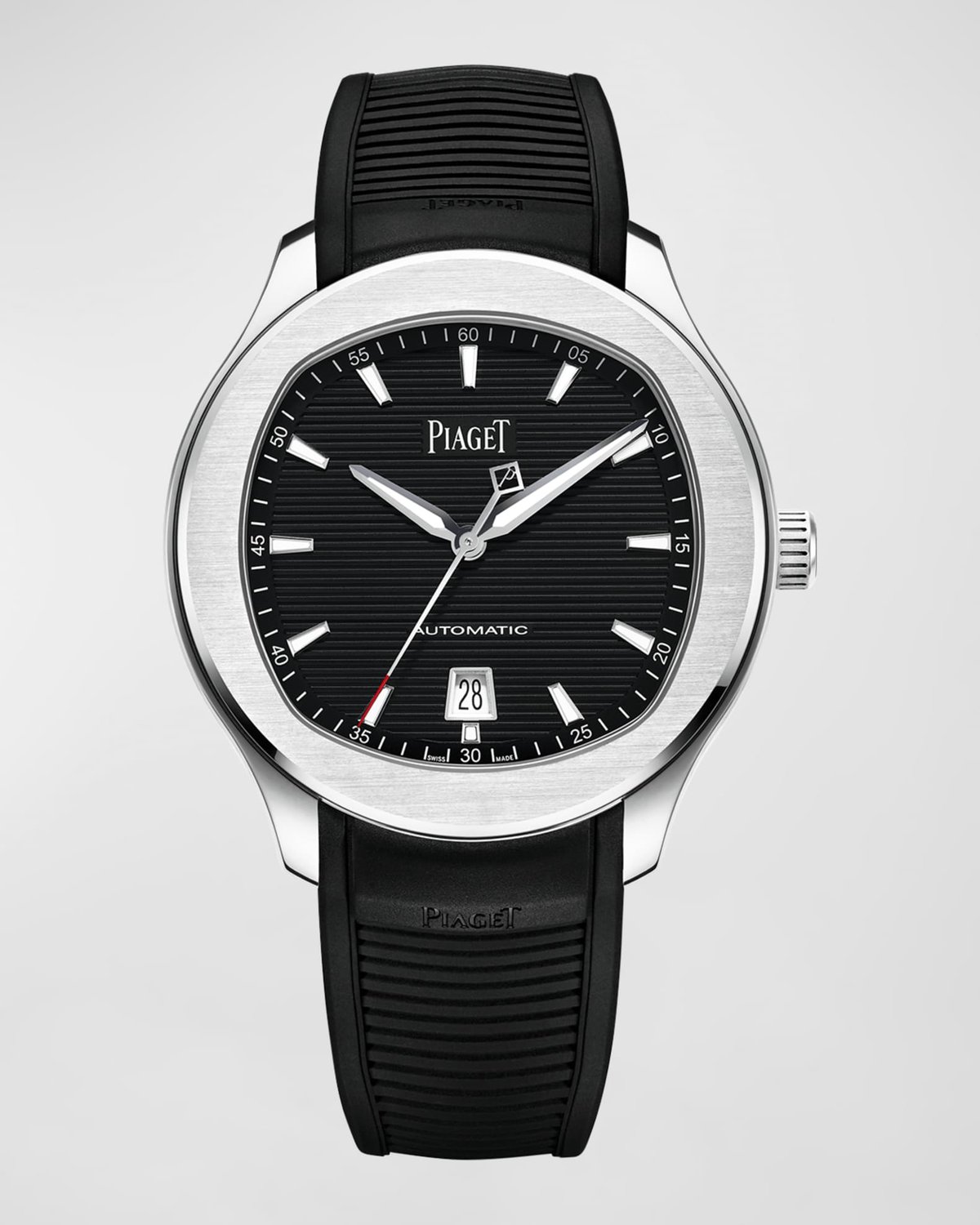
The Piaget Polo has always occupied a curious space in the luxury sports watch hierarchy. Born in the late 1970s as a response to the Royal Oak and Nautilus, it was Piaget’s take on the integrated-bracelet sports watch — but with a distinctly dressier, more elegant DNA. Fast-forward to the modern Polo Date 42mm (ref. G0A41001), and you get a watch that’s thinner, more refined, and arguably more wearable than many of its rivals.
But thinness alone doesn’t make a great daily watch. Over the course of a week wearing the Polo Date, I put it through the usual gauntlet: office meetings, weekend errands, a rainy commute, and even a casual dinner out. The question isn’t whether it looks good — it does — but whether it holds up as a tool you can forget on your wrist. Let’s find out.
Manufacture History
Piaget was founded in 1874 by Georges-Édouard Piaget in the Swiss village of La Côte-aux-Fées. The company quickly gained a reputation for crafting ultra-thin mechanical movements, a specialty that would define its identity for the next century. In the 1950s and 60s, Piaget became synonymous with luxury watchmaking for the elite, producing some of the thinnest calibers ever made. The Polo line debuted in 1979, named after the sport and designed to compete with the emerging luxury sports watch segment. The modern Polo Date, introduced in 2016, revitalizes the concept with a contemporary 42mm case and an in-house movement, staying true to Piaget’s heritage of slimness and refinement.
Movement
At the heart of the Polo Date is the Caliber 1110P, an automatic movement developed and manufactured entirely by Piaget. Measuring just 4.0 mm in thickness, it is one of the thinnest automatic movements on the market. The movement operates at 28,800 vph (4 Hz) and offers a 50-hour power reserve. It features 25 jewels, a date complication with quick-set, and a skeletonized oscillating weight that provides a glimpse of the decorated bridges beneath. While not COSC-certified, the 1110P is adjusted in five positions and easily exceeds chronometer-level accuracy in real-world use. The finishing includes circular graining on the mainplate, Côtes de Genève on the bridges, and blued screws — a level of decoration that is rare at this price point.
Specifications
- Case Diameter: 42 mm
- Case Thickness: 9.4 mm
- Lug-to-Lug: 48 mm
- Case Material: Stainless steel
- Crystal: Sapphire, double-domed with anti-reflective coating
- Water Resistance: 100 meters
- Lume: Super-LumiNova on hands and hour markers
- Bracelet/Strap: Integrated stainless steel bracelet with brushed and polished links
- Clasp: Folding clasp with push-button release
Wrist Feel
At 9.4 mm thick and with a lug-to-lug of 48 mm, the Polo Date wears remarkably slim for a 42 mm case. The integrated bracelet flows seamlessly from the case, and the first link articulates freely — a critical detail that many integrated designs get wrong. On my 6.75-inch wrist, the watch sits flat and balanced, never top-heavy. The polished center links catch light without feeling flashy, and the brushed outer links resist hairline scratches better than a fully polished bracelet.
The folding clasp is secure but lacks micro-adjustment, which means you’ll need to size the bracelet carefully. Once dialed in, the watch disappears on the wrist. The crown is signed and easy to grip, though it’s slightly recessed — a trade-off for the thin profile. Overall, the Polo Date is one of the most comfortable luxury sports watches I’ve worn, rivaling the Nautilus in ergonomics while being significantly thinner.
Accuracy
Over a week of mixed wear (office days and evenings), the Cal. 1110P ran consistently at +4 seconds per day. It’s not COSC-certified, but this sample easily beat chronometer standards. The 50-hour power reserve means you can take it off Friday evening and it will still be running Monday morning — just barely. A full wind on Monday sets the date and time quickly via the smooth crown action.
Occasions
The Polo Date is a true all-rounder. It works with a suit thanks to its slim profile, but it’s also at home with jeans and a polo. The 100 m water resistance and screw-down crown give it enough robustness for swimming or a day at the beach, though the integrated bracelet makes strap changes impractical. It’s not a dedicated tool watch, but it handles daily life with grace.
Wrist Presence
4/5 — The thin profile and integrated bracelet give it a refined presence that doesn’t shout. On the wrist, it’s unmistakably luxurious but understated enough for daily wear.
Reference Variants
The G0A41001 is the standard steel model with a blue sunburst dial. Other variants include black (G0A41002), silver (G0A41003), and a limited green dial (G0A41004). All share the same case, movement, and bracelet. Some boutique editions feature diamond-set bezels or two-tone options, but the steel versions remain the most collectible.
Family References
The Polo Date is part of the larger Polo family, which includes the Polo S (42 mm time-only and date models) and the Polo Chronograph (42 mm with a column-wheel chronograph). The Polo S was the first modern iteration, while the Polo Date refines the design with a thinner case and improved movement.
Other Models by Piaget
Piaget’s catalog is dominated by ultra-thin dress watches like the Altiplano Ultimate (2 mm thick) and the Limelight Gala for women. The Polo line is their only integrated sports watch, making it a unique offering in the brand’s portfolio.
Similar Watches
- Patek Philippe Nautilus 5711/1A — The original integrated-bracelet luxury sports watch, but thicker and far more expensive.
- Audemars Piguet Royal Oak 15500ST — Iconic octagonal bezel and integrated bracelet, similar everyday versatility.
- Chopard Alpine Eagle 41 — Another thin integrated sports watch with a similar lug-to-lug and in-house movement.
- Vacheron Constantin Overseas 4500V — Larger but offers a quick-change strap system and a more tool-oriented design.
Homages
While the Polo Date doesn’t have a direct homage, budget brands like Pagani Design offer integrated-bracelet watches that echo its cushion case shape. The Pagani Design PD-1701, for example, mimics the overall aesthetic at around $100, though the finishing and movement are worlds apart.
Investment Value
The MSRP of the Polo Date is $12,500, and it retails at that price from authorized dealers. On the pre-owned market, examples in excellent condition range from $8,000 to $11,000, making it a depreciating asset in the short term but a stable hold for long-term collectors. There is no major auction history for this reference, as it is not a limited edition. The trend is stable, with values holding better than many non-integrated luxury watches.
Service Interval
Piaget recommends a service every 5 years. The approximate cost is $800 at an authorized service center. Due to the thin movement and integrated construction, only Piaget-authorized watchmakers should perform the service to avoid damage. The service includes disassembly, cleaning, oiling, regulation, and replacement of gaskets.
Pros and Cons
Pros
- Ultra-thin case (9.4 mm) for a 42 mm sports watch
- Comfortable integrated bracelet with excellent articulation
- In-house automatic movement with 50-hour power reserve
- 100 m water resistance for real daily wear
Cons
- No micro-adjustment on the clasp
- Lume is minimal and fades quickly
- High retail price compared to some competitors
- Limited availability of aftermarket straps due to integrated design
Final Verdict
The Piaget Polo Date 42mm is a masterclass in thinness and elegance, offering a comfortable daily wear that rivals the Nautilus and Royal Oak at a more accessible price point. Its in-house movement and refined finishing make it a worthy contender for the discerning collector who values wearability over brand hype.