The Geometry of an Icon: A Week with the Monaco CBL2111
To wear a TAG Heuer Monaco is to embrace a certain level of architectural defiance. In a world of round divers and circular dress watches, the Monaco stands as a blocky, unapologetic tribute to the era of the 'Le Mans' racing circuit and the sheer audacity of 1960s design. The reference CBL2111.FC6453 is not merely a reissue of the past; it is a fundamental modernization of the platform. By housing the in-house Heuer 02 movement, TAG Heuer has finally given this legendary silhouette a mechanical heart that matches its visual ambition.
The Case: More Than Just a Square
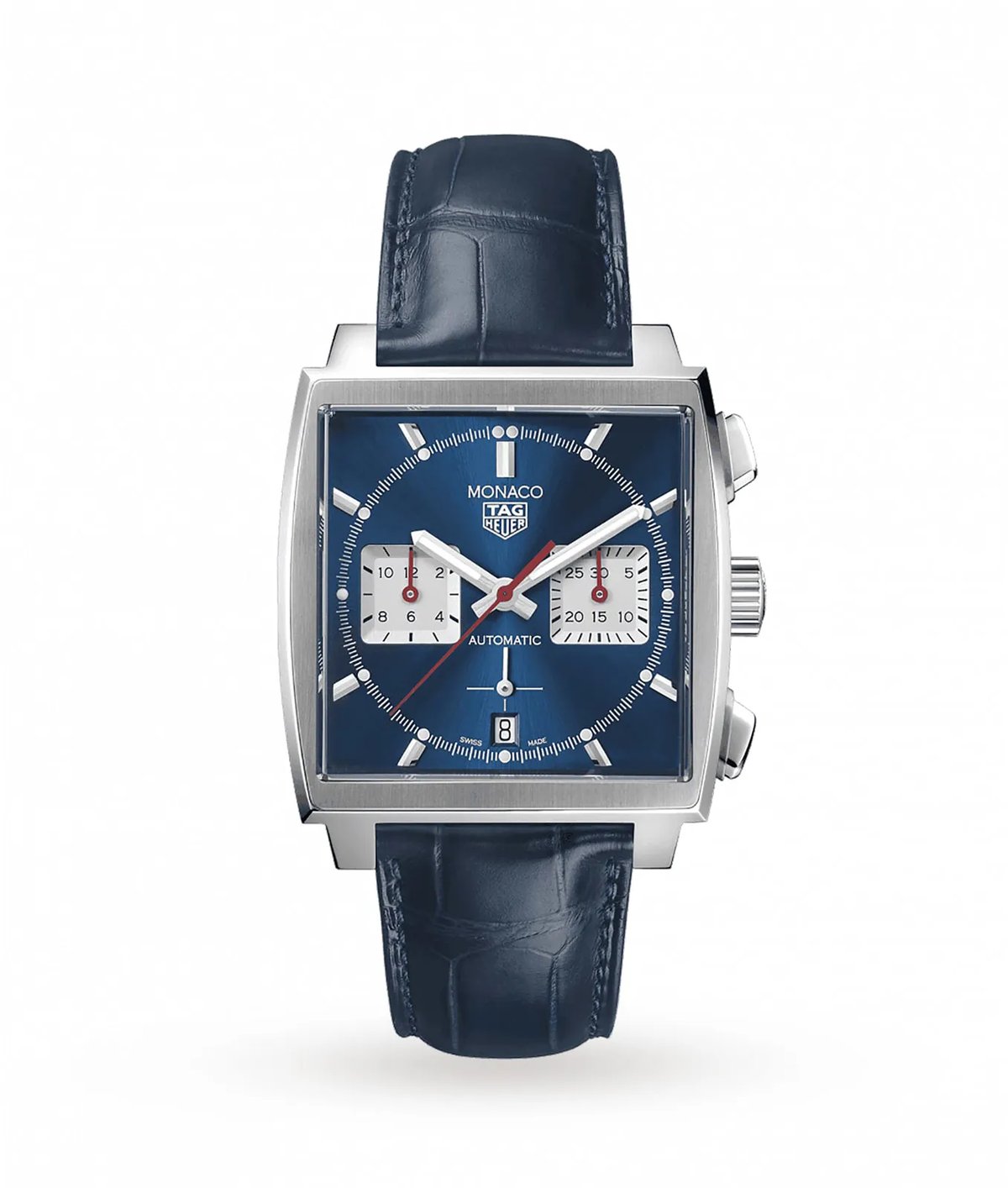
On paper, 39mm sounds modest. In practice, the Monaco wears like a 41mm or 42mm round watch. Because the area of a square is significantly greater than a circle of the same diameter, the Monaco occupies a substantial amount of real estate on the wrist. During my week of testing, the first thing I noticed was the weight distribution. The stainless steel case is dense and sits high, thanks to the 15.2mm thickness. However, the short, stubby lugs are the watch's saving grace. At 47.4mm lug-to-lug, it fits comfortably on my 6.75-inch wrist without any unsightly overhang.
The finishing on the case is a masterclass in contrasting surfaces. The top of the case features a linear brushing that flows toward the lugs, while the bezel and case sides are polished to a mirror finish. This interplay of light is crucial for a watch with such flat surfaces; it prevents the piece from looking like a simple steel brick. The star of the show, however, is the sapphire crystal. It is highly domed and beveled at the edges, creating a 'hall of mirrors' effect when viewing the dial from an angle. While this can occasionally obscure the tachymeter scale, the vintage aesthetic it provides is well worth the trade-off.
The Dial: A Study in Sunray Blue
The CBL2111 features a blue sunray dial that is significantly more dynamic than the matte finishes found on the Calibre 11 'McQueen' editions. In direct sunlight, the dial shifts from a deep navy to a vibrant electric blue. The layout is classic 'bi-compax' in appearance, though it technically features a third sub-dial for the running seconds at 6 o'clock. This small seconds hand is cleverly integrated without a border, making it almost invisible at a glance and preserving the iconic two-register look of the original 1969 model.
The silver sub-dials for the chronograph minutes and hours are slightly recessed and feature a circular-grained finish. This adds layers of texture that catch the eye. The red accents—found on the central chronograph seconds hand and the tips of the sub-dial hands—provide the necessary racing DNA. Legibility is generally excellent, though the polished hands can occasionally disappear against the blue dial in low-light conditions before the Super-LumiNova kicks in.
The Heuer 02 Movement: A Modern Powerhouse
For years, the Monaco was powered by modular movements (the Calibre 11 or Calibre 12). While functional, they lacked the prestige and performance of a fully integrated chronograph. The Heuer 02 changes everything. This movement is a vertical clutch, column-wheel chronograph with a staggering 80-hour power reserve. During my week with the watch, the utility of that power reserve was evident. I took the watch off on Friday evening and when I picked it up again on Monday morning, it was still ticking accurately.
The pusher feel on the CBL2111 is crisp and mechanical. Thanks to the column wheel, there is a distinct 'click' when starting or resetting the chronograph, and the vertical clutch ensures the seconds hand starts moving instantly without the shudder often seen in lateral clutch movements. Flipping the watch over reveals the movement through a sapphire caseback. The skeletonized black rotor is shaped like a steering wheel, a tasteful nod to the brand's automotive heritage, and the Côtes de Genève finishing on the bridges is executed to a high standard for this price point.
Daily Wearability: The Real World Test
What is it like to live with a square watch for seven days? On Monday and Tuesday, I wore the Monaco with a standard button-down shirt and a blazer. This is where the 15.2mm thickness becomes a factor. It does not slide effortlessly under a cuff; rather, it sits outside or requires a bit of 'encouragement' to hide. However, the blue alligator strap is of exceptional quality. It starts stiff but breaks in beautifully by day three, molding to the wrist. The deployant clasp is secure, though it adds significant thickness to the bottom of the wrist, which can be annoying when typing on a laptop.
By Wednesday, I took the watch into a more casual environment. Paired with a denim jacket and a white tee, the Monaco truly shines. It is a 'statement' watch that doesn't feel out of place in a creative office or a weekend brunch. The 100 meters of water resistance provided peace of mind during a sudden torrential downpour, though I wouldn't recommend taking the alligator strap into a pool.
The Verdict for the Young Collector
The TAG Heuer Monaco CBL2111.FC6453 is a watch for someone who values design history but refuses to compromise on modern specs. It is not a 'safe' choice like a Submariner or a Speedmaster. It is a choice for the collector who wants to be asked, 'What is that on your wrist?' It is a conversation starter, a piece of wrist-bound architecture, and a highly capable timekeeper. At an MSRP of $7,800, it sits in a competitive space, but few rivals can offer the same blend of cinematic history and in-house mechanical prowess. If you can handle the height and the 'loud' geometry, the Monaco is a rewarding companion that only gets better the more you wear it.