The Strategic Play: Why the Tudor Royal 41mm Matters
In the current market, 'value' is a term often thrown around to justify compromises. However, when we look at the Tudor Royal 41mm (ref. M28600-0005), we aren't looking at a compromise; we are looking at a strategic play. For the sophisticated young collector—the individual who balances their Robinhood dividends with a keen eye for aesthetic heritage—the Royal represents a bridge between the 'hype' world of tool watches and the 'old money' world of classic horology.
Tudor has spent the last decade establishing itself as the king of the sub-$5,000 category. While the Black Bay line captured the hearts of those yearning for vintage Submariner vibes, the Royal line was launched to capture a different demographic: the urban professional. The M28600-0005, with its striking blue sunray dial, is the flagship of this effort. It doesn't try to be a diver. It doesn't try to be a pilot's watch. It tries to be the only watch you need for a 72-hour trip to Zurich or a weekend in the Hamptons.
Design Language: Borrowing from the Best
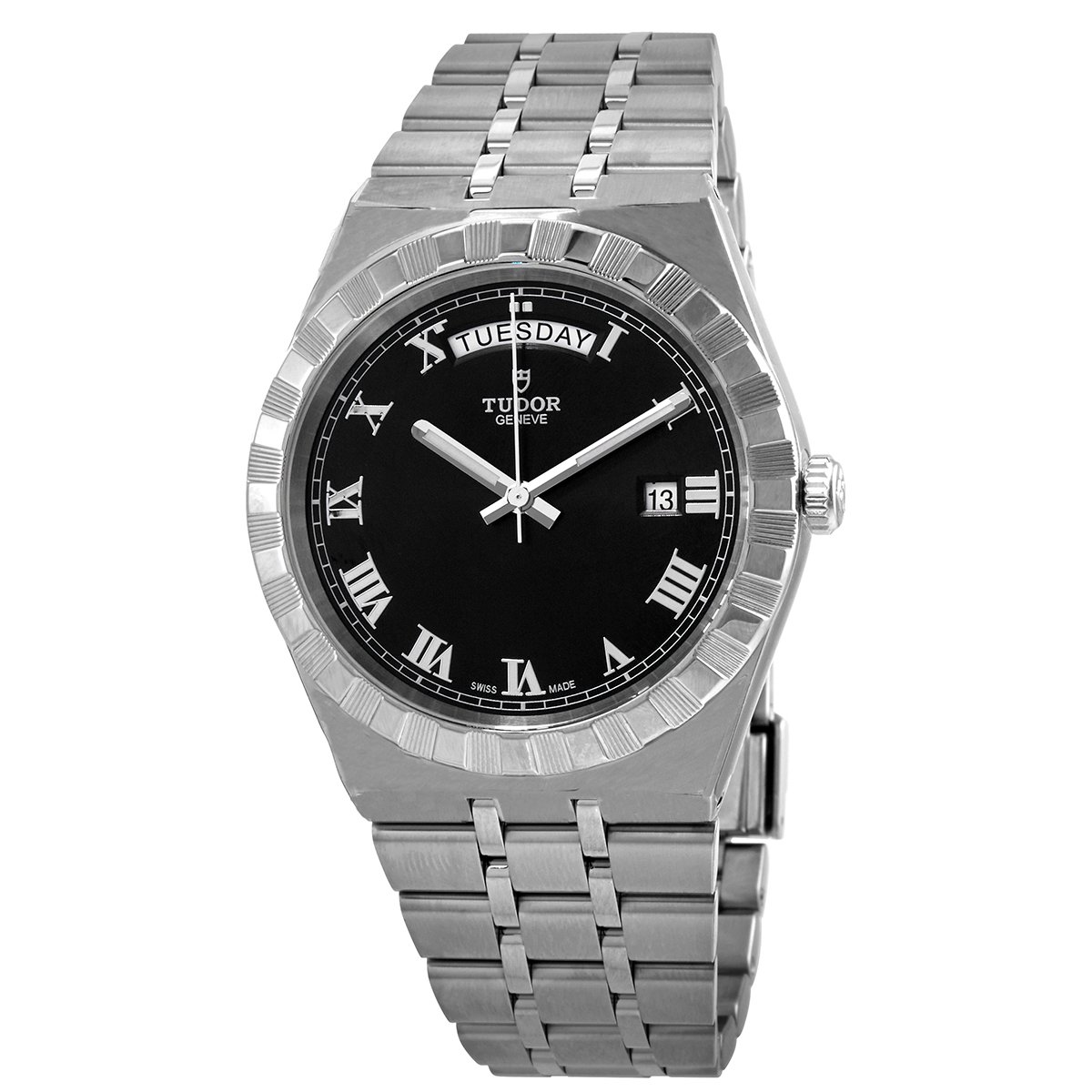
The first thing that strikes you about the Royal is the bezel. Often referred to as a 'notched' or 'engine-turned' bezel, it alternates between polished grooves and satin-finished surfaces. This is a direct nod to the history of the Wilsdorf foundation, echoing the textures found on vintage Rolex Datejusts and Day-Dates, but with a modern, more industrial twist. It provides a level of light play that is frankly rare at this price point.
The dial of the M28600-0005 is where the wealthy collector aesthetic really shines. The blue is deep, vibrant, and features a sunray finish that transforms from a midnight navy to a bright electric blue depending on the ambient light. The use of applied Roman numerals adds a layer of formality, while the day-date complication—with the day of the week spelled out in full at 12 o'clock—is a power move. It’s a layout synonymous with the 'President' watch, yet Tudor manages to make it feel fresh and accessible.
The Integrated Bracelet: A Study in Ergonomics
We are currently living in the era of the integrated bracelet. From the Audemars Piguet Royal Oak to the Patek Philippe Nautilus, the seamless transition from case to bracelet is the hallmark of modern luxury sport design. Tudor’s execution here is flawless. The five-link bracelet is not just a piece of metal; it’s a piece of jewelry. The links are short, allowing for a degree of articulation that ensures the watch hugs the wrist regardless of its size.
From a market perspective, the integrated bracelet is a 'moat.' It prevents the owner from swapping to cheap NATO straps, maintaining the watch's intended silhouette and, by extension, its brand identity. For the collector, this means the watch always looks exactly as it should: expensive, intentional, and complete.
The Movement: Reliability Over Romance
Let’s address the elephant in the room: the Calibre T603. Unlike the MT-series movements found in the Black Bay, the T603 is not an in-house Tudor manufacture. It is based on the Sellita SW240-1. For some purists, this is a sticking point. For the analyst, it’s a feature, not a bug.
By using a proven, third-party base, Tudor is able to keep the MSRP of the Royal significantly lower than its siblings. Furthermore, the T603 is a 'set it and forget it' movement. It’s robust, reliable, and can be serviced by any competent watchmaker in the world for a fraction of the cost of an in-house caliber. When you’re building a portfolio, you have to consider the TCO—Total Cost of Ownership. The Royal wins the TCO battle every time.
Market Positioning and Resale Data
Is the Tudor Royal an investment in the sense that it will double in value over the next twelve months? No. If you’re looking for a 'flip,' you’re in the wrong asset class. However, if you’re looking for a 'store of value,' the Royal is exceptionally stable. The M28600-0005 holds its value remarkably well on the secondary market, typically trading within 20-25% of its retail price. This is a much better performance than many 'fashion' luxury brands that see 50-60% depreciation the moment they leave the store.
The 'hype cycle' for the Royal has leveled off, which is actually the best time to buy. You aren't paying a 'FOMO' premium. You are paying for the actual quality of the steel, the crystal, and the brand equity. In the long run, as Tudor continues to climb in prestige, these early 'neo-vintage' Royal models will likely be viewed as the smart entry point for a generation of collectors.
The Competition: Royal vs. PRX vs. Datejust
The most common comparison is the Tissot PRX Powermatic 80. While the PRX is a fantastic watch for its price, it lacks the 'Wilsdorf' connection and the sheer level of dial finishing found in the Tudor. The PRX feels like a great entry-level watch; the Tudor Royal feels like a luxury watch. On the other end of the spectrum, the Rolex Datejust 41 is the gold standard. But at $10,000+ on the secondary market, the question becomes: is the Datejust four times better than the Royal? From a purely technical and aesthetic standpoint, the answer is no. You are paying for the crown.
Final Verdict: The Vivir Perspective
The Tudor Royal 41mm (M28600-0005) is the watch for the collector who is done with 'starter' watches but isn't yet ready to drop the price of a mid-sized sedan on a single timepiece. It offers a sophisticated blend of heritage, design, and practicality. It’s a watch that says you know your history, you value your capital, and you have impeccable taste. In my book, that’s a 'Strong Buy' for any serious portfolio.