The Timex Ironman Review: The People's Chronograph Still Wins
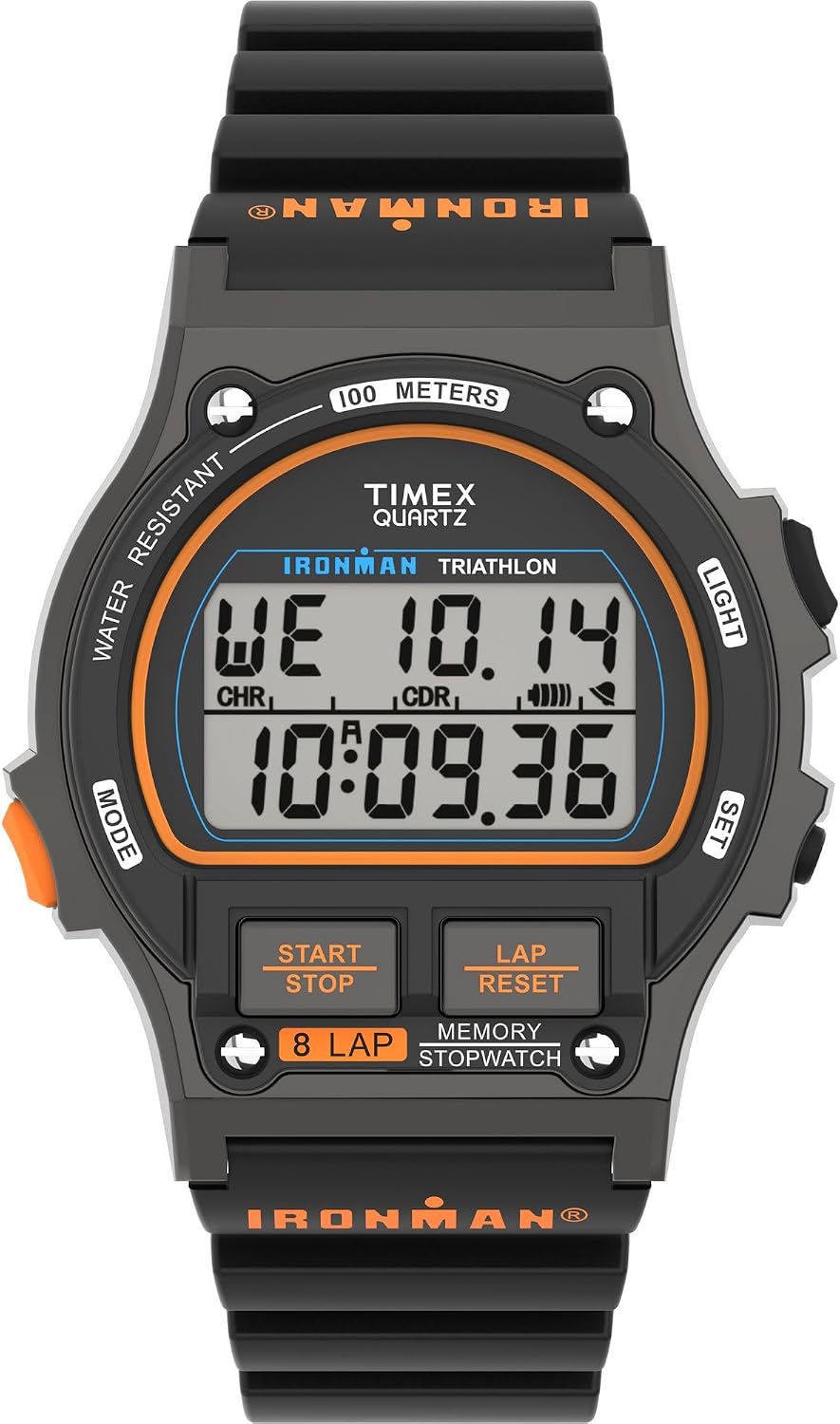
There are watches that live in safes and watches that live in the world. The Timex Ironman is the latter. Born in 1986 as the official watch of the Ironman Triathlon, it was never meant to be precious. It was meant to beep, time intervals, survive sweat, and tell you how many laps you had left. That brief made it one of the most important watches of the last forty years.
For young collectors raised on waitlists and secondary-market premiums, the Ironman is a useful corrective. It costs less than a dinner for two, it runs on a battery, and it has more cultural credibility than plenty of five-figure pieces. It is the watch you wear when you are actually doing something. And in a market obsessed with provenance, the Ironman has a provenance all its own: it was there for the first wave of wearable tech, the rise of triathlon, and the democratization of performance timing.
This review covers the Timex Ironman family, with a focus on the Classic 30, Essential 30, and Sleek 50. We will talk about what it is, how it wears, what it does, and why it still matters. We will not pretend it is a luxury object. That would miss the point.
Manufacture History: From Waterbury to the Ironman
Timex traces its roots to 1854 and the Waterbury Clock Company in Connecticut. For more than a century, the brand built its reputation on affordable, reliable timekeeping. It was the watch in the drugstore window, the pocket watch that went to war, the alarm clock on the nightstand. Timex did not chase haute horlogerie. It chased utility, and it got very good at it.
By the 1980s, digital watches had changed the game. Quartz modules made accurate timekeeping cheap. Athletes wanted more than time; they wanted splits, alarms, countdowns, and backlights. Timex answered with the Ironman in 1986. The line became the official watch of the Ironman Triathlon, and it quickly found a following among runners, swimmers, cyclists, and anyone who needed a watch that could take a beating. The Indiglo backlight, introduced in the early 1990s, made it even more useful in the dark.
The Ironman has gone through countless iterations since then. It has been full-size and mid-size, simple and feature-packed, resin-cased and stainless-steel-backed. It has been reissued in collaborations and seasonal colorways. Through it all, the formula has stayed the same: digital quartz, a lightweight case, a resin strap, and a feature set that covers the basics of training. That consistency is why it endures.
Movement: Digital Quartz, Zero Pretense
The Timex Ironman runs on a digital quartz module. There is no balance wheel, no mainspring, no rotor. It is battery-powered, and when the battery dies, you replace it. That is the whole service story. The module handles timekeeping, chronograph functions, alarms, timers, and the backlight. It is not decorated. It is not meant to be seen. It is meant to work.
This is a quartz watch, so it does not carry COSC certification. It does not need it. Quartz timekeeping is inherently accurate, and the Ironman will keep time to a level that is more than sufficient for daily wear. The chronograph is digital, so there are no pushers to engage a mechanical column wheel. You press a button, and the numbers change. That simplicity is the point.
From a collector's perspective, the movement is not the draw. The draw is the package: the module, the case, the strap, and the interface. The Ironman is a tool watch in the truest sense. It is designed to be used, not admired under a loupe.
Specs: What You Need to Know
The Ironman family is broad, so specs vary by reference. The case is typically resin with a stainless steel caseback. The crystal is mineral. The strap is resin, and the clasp is a pin buckle. There is no lume; the backlight does the job. Water resistance is model-dependent, so check the caseback if you plan to swim. Many Ironman models are built for pool and open-water use, but not every variant is the same.
What you will not find on the spec sheet is the thing that matters most: the Ironman is light. It does not weigh down your wrist. It does not catch on a sleeve. It does not make you think about it. That is a spec you cannot measure, but it is the one you feel every day.
On the Wrist: Light, Fast, Disappearing
The Ironman wears like a running shoe feels when it fits. The resin case and strap keep the weight down, and the digital module sits flat against the wrist. There is no crown digging into the back of your hand, no heavy bracelet to adjust, no precious metal to worry about. You put it on, you tighten the strap, and you forget about it until you need it.
The display is readable at a glance, and the backlight is bright enough for early-morning runs or dark hotel rooms. The buttons are easy to find by feel, which matters when you are moving. The strap is flexible and ventilated, and the pin buckle is simple and secure. On smaller wrists, some full-size models can feel broad, but the lack of weight keeps them from feeling cumbersome. Mid-size variants exist for a reason.
This is not a watch you wear to a black-tie dinner. It is a watch you wear to the gym, the track, the pool, the airport, and the grocery store. It is the watch you grab when you do not want to think about what watch to grab.
Accuracy: Quartz Truth
The Ironman is a quartz watch, so accuracy is not a concern in the way it is for mechanical watches. You will not need to reset it every few days. You will not notice it drifting. The digital display shows exactly what the module thinks the time is, and the module is good at its job. When the battery starts to fade, the display may dim or the functions may become erratic. Replace the battery, and you are back in business.
The chronograph is digital and easy to use. It is not a high-frequency mechanical movement, but it does not need to be. For interval training, lap timing, and everyday timing, it is more than accurate enough. The alarm and timer functions are similarly straightforward. This is a watch that tells you what you need to know without asking for attention.
Occasions: Where It Works
The Ironman is at its best in sport and daily wear. It is a natural companion for running, swimming, cycling, gym sessions, and outdoor chores. It is also a great travel watch: lightweight, durable, and easy to read in any light. It does not work for formal or dress occasions, and it does not pretend to. If you need a watch for a suit, look elsewhere. If you need a watch for life, this is it.
It also works as a palate cleanser. If you have been staring at dive watches and chronographs for too long, the Ironman resets your expectations. It reminds you that a watch can be useful without being expensive, and that utility has its own kind of cool.
Wrist Presence: 3/5
The Ironman has presence, but not in the way a gold dress watch does. It reads as purposeful. People who know watches will recognize it. People who do not know watches will recognize it too, because it has been on wrists for decades. It is not flashy, but it is iconic. That is a different kind of presence. I give it a 3 out of 5. It is not a statement piece, but it is a cultural artifact.
Reference Variants: Classic 30, Essential 30, Sleek 50
The Ironman family is deep, but three references cover a lot of ground. The Classic 30 is the archetype: a full-size resin-cased digital watch with a 30-lap memory, chronograph, alarm, timer, and backlight. It is the one most people picture when they hear Timex Ironman. The Essential 30 is a simplified version with the same core functionality and a slightly more streamlined feature set. The Sleek 50 takes the formula and adds a slimmer profile and a 50-lap memory. Each has its own charm, and each is affordable enough that you can own more than one without guilt.
There are many other variants, including the Transit, the Rugged 30, and various special editions. The differences are usually in the case shape, the strap, the feature set, and the colorway. The core experience remains the same.
Family and Siblings
Within the Ironman family, the Classic 30, Essential 30, Sleek 50, Transit, and Rugged 30 are the names you will see most often. The Classic 30 is the purist's choice. The Essential 30 is the value play. The Sleek 50 is for those who want a slightly more refined profile. The Transit and Rugged 30 lean into outdoor utility. If you are new to the line, start with the Classic 30 and go from there.
Other Timex Models to Know
Timex is not just the Ironman. The Marlin is the brand's mechanical heritage play, with a vintage-inspired dial and a hand-wound or automatic movement. The Q Timex is the retro digital-analog crossover that became a cult hit. The Expedition is the outdoor line, with compasses and chronographs. The Waterbury is the everyday classic. The Easy Reader is exactly what it sounds like. Together, they show a brand that can do affordable utility and affordable style without losing its identity.
Similar Watches
If you want the Ironman experience but something different, there are a few obvious ports of call. The Casio G-Shock DW-5600 is the other cult digital sports watch. It is tougher and blockier, and it has its own deep cultural footprint. The Garmin Instinct 2 is a modern GPS training tool that adds smart features and a more technical interface. The Suunto Core is an outdoor digital watch with altimeter and compass functions. Each offers something the Ironman does not, but none replaces it entirely.
Homages and Alternatives
The Ironman is already affordable, so homages are less common than they are for luxury watches. Still, there are budget digital sports watches that borrow the formula. The Skmei 1155 is one example: a resin-cased digital watch with chronograph, alarm, and backlight at a very low price. It is not a Timex, and it does not have the same history, but it gets the job done. For most buyers, the real alternative is another Timex Ironman.
Investment Value: Buy It for Life, Not for Resale
The Timex Ironman is not an investment. It does not appreciate. It does not have an auction market. It does not come with a waitlist. What it does have is utility, and that utility holds its value in a different way. You will get years of use out of it, and when it finally dies, you will probably buy another one. The pre-owned market is thin, and prices are low. That is fine. The Ironman was never meant to be a store of value. It was meant to be a tool.
If you want a watch that holds value, look elsewhere. If you want a watch that holds up, this is it. The Ironman is a reminder that not everything in horology has to be about money. Sometimes a watch is just a watch, and that is enough.
Service Interval: Battery, Not Overhaul
Service on an Ironman is battery replacement. There is no mechanical movement to overhaul, no gaskets to replace on a schedule, no timing to adjust. You can take it to a jeweler or send it to Timex. The cost is minimal. The interval depends on the battery and the model, but you will know when it needs a new one. That is the whole story. It is refreshingly simple.
Reference Number and Price Range
The reference number for the Classic 30 is T5K195. The Ironman family typically ranges from about $40 to $80, depending on the model and features. At that price, you are buying genuine utility, cultural credibility, and zero pretension. It is one of the best value propositions in watches. The price buys you a tool that will work every day, and it holds value in usefulness rather than resale.
Pros and Cons
Pros: unbeatable value, lightweight and comfortable, iconic digital design, reliable quartz timekeeping, genuinely useful features like alarms, timers, and backlight. Cons: not a luxury object, resin case and strap can feel disposable, battery replacement required, display can be hard to read in some light, no mechanical or haute horlogerie credibility. The pros far outweigh the cons for the right buyer.
Final Verdict
The Timex Ironman is not a watch you baby. It is a watch you live in. It has more cultural staying power than most luxury pieces, and at its price, it is the rare watch that asks nothing of you. For young collectors, it is a palate cleanser and a reminder that utility can be cool. It is not the watch you wear to impress someone. It is the watch you wear when you have better things to do. And that is exactly why it still wins.