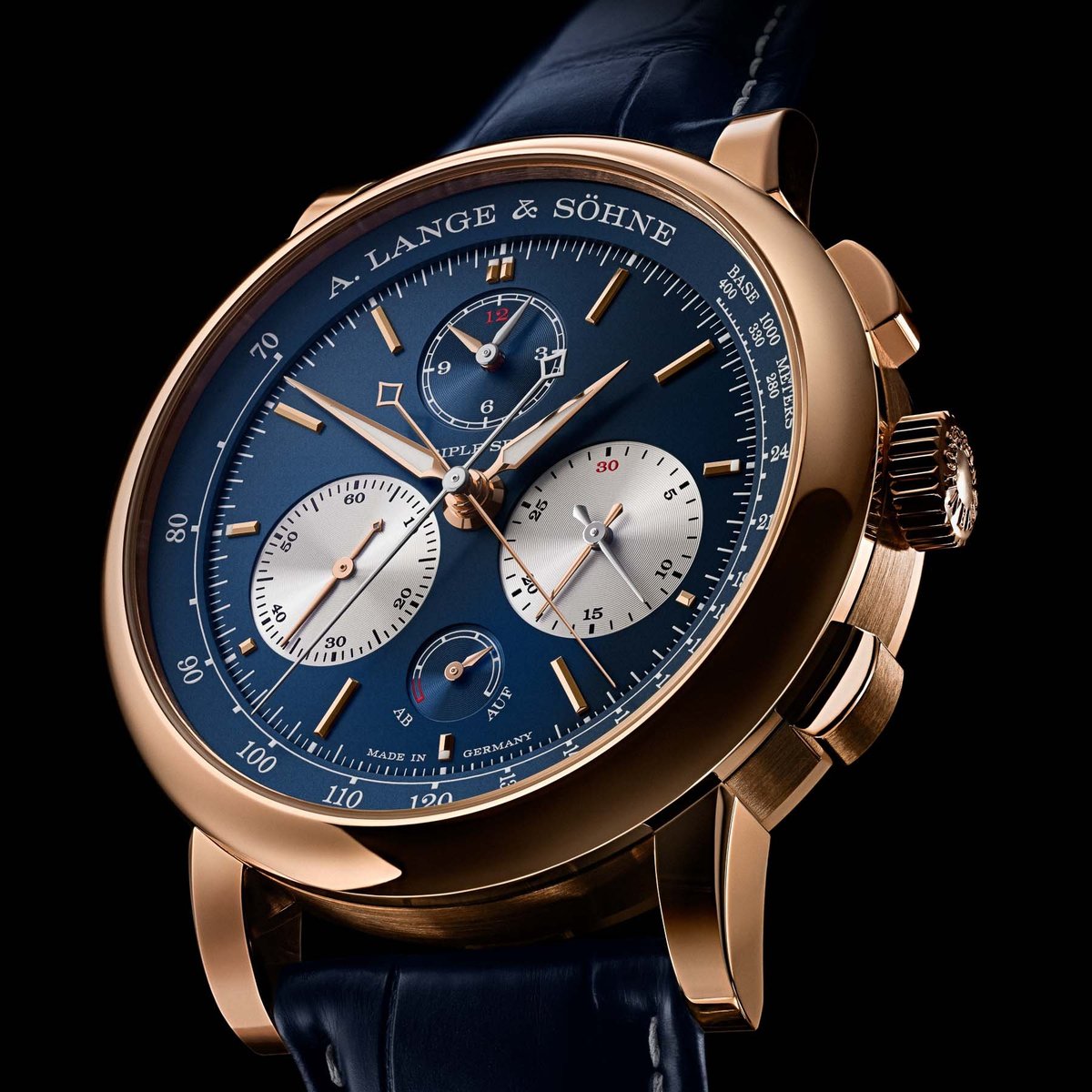
A. Lange & Söhne Triple Split Review: The Wearable Rattrapante King
Most split-seconds chronographs are collector objects first and wristwatches second. The A. Lange & Söhne Triple Split is different. It is still a serious high-horology piece, the kind of watch that invites close inspection with a loupe, but it is also a watch I would happily wear for a full week. The triple rattrapante function is not a party trick. It changes how you use a chronograph, and it makes the Triple Split one of the few mega-complications that actually earns wrist time.
Lange introduced the Triple Split in 2018 as an evolution of the Double Split. The Double Split could compare two events up to 30 minutes apart. The Triple Split adds a split hour counter, so it can compare two events up to 12 hours apart. That sounds like a small technical step. In practice, it is a major one. It turns the chronograph into a true long-duration comparison tool, and it gives the watch a reason to exist beyond rarity.
This review is written from the wrist, not from the display case. I care about how the case sits, how the chronograph pushers feel, how legible the dial is in real light, and whether the watch makes sense after a week of meetings, travel, and ordinary desk work. The Triple Split is expensive and rare, but it still has to function as a watch. On that count, it mostly succeeds.
Brand history and context
A. Lange & Söhne was founded in Glashütte in 1845. The modern chapter began after German reunification, when Walter Lange revived the brand in 1990. Since then, Lange has built a reputation for German silver movements, hand-engraved balance cocks, Glashütte ribbing, and a willingness to pursue complicated mechanics with a distinctly Saxon accent. The brand is not trying to be Swiss. It is trying to be Lange.
The Triple Split sits directly in that tradition. Lange has a long history with rattrapante chronographs, and the Double Split was already a landmark when it arrived in 2004. The Triple Split extends the idea by splitting the hour counter as well as the minutes and seconds. That makes it the first mechanical chronograph with a triple rattrapante, and it places the watch in a small group of modern complications that are genuinely novel rather than merely decorative.
The context matters for buyers. This is not a starter Lange. It is a statement piece from a brand that already has a deep bench of chronographs, including the Datograph and the 1815 Chronograph. The Triple Split is for the collector who has moved past the obvious choices and wants something that rewards technical curiosity. It is also for the wearer who wants a complication watch that does not feel fragile.
Movement: L132.1 and the triple rattrapante
The Triple Split is powered by the Lange calibre L132.1. It is a manual-winding movement with 567 parts, 52 jewels, a frequency of 21,600 vph, and a power reserve of 55 hours. Those numbers matter less than the architecture. This is a movement designed to be seen as well as used. The German silver plates, the Glashütte ribbing, the gold chatons, and the hand-engraved balance cock are all part of the experience. The chronograph mechanism is layered on top of a beautifully finished base, and the view through the sapphire caseback is one of the reasons to own the watch.
The headline is the triple rattrapante. A conventional rattrapante, or split-seconds chronograph, has two central seconds hands. You can stop one to record a lap or an event while the other continues running. The Double Split added a split minute counter. The Triple Split goes further by adding a split hour counter. That means you can compare two events that are hours apart, not just minutes apart. The maximum additive timing range is 12 hours.
Using it is intuitive once you understand the pushers. The chronograph starts and stops as usual. The rattrapante pusher at 10 o'clock stops the split hands without stopping the main chronograph. Press it again and the split hands catch up to the running hands. The pusher at 2 o'clock controls the chronograph. The pusher at 4 o'clock resets. The power reserve indicator on the dial is a useful reminder that this is a manually wound watch. With 55 hours of reserve, it is easy to live with, but it is not an automatic. You have to wind it.
The finishing is exactly what you expect from Lange. The movement is not just technically complex; it is visually rich. The balance cock is engraved by hand, the screws are blued, and the surfaces are finished to a standard that rewards a loupe. This is not a movement that feels industrial. It feels like a small mechanical landscape. That matters because the Triple Split is the kind of watch you take off just to look at the back.
Specs and daily-wear reality
The Triple Split reference 424.038 uses an 18k white gold case. The case diameter is 43.2 mm, and the thickness is 15.6 mm. Water resistance is 30 meters. The crystal is sapphire, the dial is grey, and the watch comes on a leather strap with a deployant clasp. There is no lume. That is not a surprise for a Lange complication, but it does shape how you wear it. This is not a watch for dark restaurants, night hikes, or swimming. It is a watch for daylight, desks, and well-lit rooms.
The 43.2 mm diameter is substantial but not outrageous. The 15.6 mm thickness is the more important number. This is a tall watch. It sits high on the wrist, and you will notice it under a tight shirt cuff. The case is not slab-sided, and the strap helps pull it down, but the Triple Split is not a slim dress watch. It is a complicated chronograph with a movement that needs space. If you are used to a Datograph, the height will feel familiar. If you are used to a time-only Lange, it will feel like a different category of watch.
The dial is classic Lange. The chronograph subdials are well placed, the power reserve indicator is useful, and the grey surface gives the white gold case a cool, technical look. Legibility is good in daylight. The hands are well shaped, and the contrast is strong enough for quick reading. At night, the lack of lume means you are relying on ambient light. That is acceptable for a watch like this, but it is worth knowing before you buy.
The strap and clasp are part of the daily-wear story. The leather strap is comfortable once broken in, and the deployant clasp makes it easy to take the watch on and off. The white gold case has a reassuring weight without feeling like a brick. The watch feels expensive in the hand, but it does not feel delicate. That is an important distinction. Some high-complication watches feel like they should be carried in a velvet pouch. The Triple Split feels like it can handle a normal week.
On the wrist: comfort, balance, and presence
On the wrist, the Triple Split is a presence watch. It does not disappear under a cuff, and it does not try to. The 43.2 mm case gives it a broad stance, and the white gold has a bright, cool shine that catches light. The thickness adds visual weight, but the case is balanced enough that it does not feel top-heavy. The strap follows the wrist well, and the deployant clasp keeps the watch secure. After a few days, the height becomes normal. After a week, you stop thinking about it.
Comfort is good for a watch of this size, but it is not a featherweight. The white gold case has real mass, and the movement adds density. If you wear your watches tight, the caseback can press into the wrist. If you wear them slightly loose, the watch sits better. The lugs are curved enough to keep the strap from flaring, and the deployant clasp is low-profile enough to avoid digging into the underside of the wrist. I would not call it a lounge-wear watch, but it is comfortable for a full day at a desk.
The balance is the surprising part. A 15.6 mm thick chronograph could feel clumsy. The Triple Split does not. The dial is large enough to carry the complications, and the case proportions keep the watch from looking like a hockey puck. It has wrist presence, but it is not absurd. It reads as a serious watch rather than a novelty. That is a fine line, and Lange gets it right.
Accuracy and chronograph performance
The Triple Split is not a COSC-certified watch, and Lange does not market it as a precision timekeeping instrument in the same way as a chronometer. That does not mean it is inaccurate. A well-regulated L132.1 should keep time within a few seconds per day in normal wear. The key is to keep it wound. With a manual movement and a 55-hour power reserve, you have a natural daily routine: wind it in the morning, and it will be stable. If you let it run down, you will need to reset it and re-establish the rate.
The chronograph is the real performance story. The pushers have a crisp, mechanical feel. The start and stop action is positive, and the rattrapante pusher has a satisfying snap. The split hands align cleanly when they catch up. The hour and minute counters add a layer of usefulness that most chronographs do not have. You can time a long event, compare two durations, and still have a running reference. That is rare. The chronograph is not just a decoration. It is a tool, even if the tool is expensive.
Real-world accuracy also depends on how you use the chronograph. Running the chronograph constantly will affect the power reserve, and the rattrapante mechanism adds friction. For daily wear, I would use the chronograph when needed and let it rest otherwise. The watch is happiest when it is wound regularly and worn consistently. That is true of most manual chronographs, but it is worth saying for a watch at this level.
Occasions and versatility
The Triple Split is not a one-watch collection, but it is more versatile than its price and complexity suggest. It works for formal occasions because the dial is balanced and the case is white gold. It works for dressy evenings because the finishing is beautiful and the watch has a quiet authority. It works for daily wear if you are careful with cuffs and avoid knocking it against door frames. It works for travel because the chronograph can time long journeys and the power reserve indicator helps you keep it wound.
It does not work for sport, swimming, or rough outdoor use. The 30-meter water resistance is enough for handwashing and rain, but not for swimming. The lack of lume makes it a poor choice for night activities. The leather strap is not meant for sweat. This is a watch for the city, the office, the dinner table, and the airport lounge. Within that world, it is highly capable.
If you want a single watch for everything, this is not it. If you want a high-complication watch that can handle a normal working week, it is. The Triple Split is dressy enough for a suit and technical enough to be interesting. That combination is harder to find than it should be.
Reference variants and family context
The reference 424.038 is the launch version of the Triple Split. It uses an 18k white gold case, a grey dial, and a leather strap. It is the purest expression of the model: no precious-metal flash, no unnecessary color, just the complication and the Lange finishing. The white gold case gives it a cool, modern look that works well with the grey dial.
The Triple Split belongs to Lange's split-seconds family alongside the Double Split. The Double Split is the predecessor and the more familiar watch. It offers a split-seconds and split-minutes function, but not the split hours. The Triple Split is the more complex sibling. If you are comparing the two, the question is whether you need the hour comparison. If you do not, the Double Split is still a remarkable watch. If you want the ultimate expression of the idea, the Triple Split is the one.
Lange's broader family includes the Datograph, the 1815 Chronograph, and the Zeitwerk. The Datograph is the more famous chronograph, and it has a flyback function. The 1815 Chronograph is the more classical option. The Triple Split is the technical flagship. It is not the watch for someone who wants the most recognizable Lange. It is the watch for someone who wants the most interesting one.
Similar watches and homages
If you are shopping in this stratosphere, the obvious alternative is the Patek Philippe 5370P split-seconds chronograph. It is a pure rattrapante with a platinum case and a beautiful movement. It is more classical and less technical than the Triple Split. The Vacheron Constantin Traditionnelle Split-Seconds Chronograph is another option. It has a more traditional dress-watch silhouette and a different kind of elegance. The Roger Dubuis Excalibur Split-Seconds Chronograph is a more extroverted choice, with a modern case and a bolder design.
There are no direct homages to the Triple Split. The triple rattrapante mechanism is too complex and too expensive to replicate at an accessible price. You will find split-seconds chronographs at lower price points, but they do not offer the same three-level comparison. That makes the Triple Split a genuinely unique proposition. If you want this specific function, there is no substitute.
Investment value and service
The Triple Split launched with a retail price around $147,000. Current retail has moved higher, and the watch is not easy to find at authorized dealers. The pre-owned market generally sits in the $135,000 to $175,000 range, depending on condition, completeness, and timing. The trend is stable rather than explosive. Lange complications are respected, but they are not as liquid as steel sports watches. This is not a watch for quick flipping. It is a watch for long-term ownership.
The investment case is supported by rarity and technical significance. The Triple Split is the first mechanical chronograph with a triple rattrapante, and it is a Lange. That gives it a place in collections. But the market for six-figure dress chronographs is narrow. If you need to sell quickly, you may have to accept a discount. If you can hold, the watch should retain value well. My recommendation is to buy it because you want to wear it. The investment should be a secondary benefit, not the reason.
Service is a serious consideration. The Triple Split is a complex manual chronograph, and it should be serviced by an authorized Lange workshop. The rattrapante mechanism requires specialist knowledge, and independent watchmakers may not have the parts or training. Lange recommends servicing every few years, but the exact interval depends on use. The cost will be significant. That is part of owning a high-complication watch. You should budget for it before you buy.
Pros and cons
- Pros: Unique triple rattrapante function that is genuinely useful.
- Pros: Excellent Lange finishing and movement architecture.
- Pros: Surprisingly wearable for a 43.2 mm complication watch.
- Pros: Strong presence and a dial that is legible in daylight.
- Cons: Very high price and limited liquidity.
- Cons: Thick case and no lume limit casual and evening use.
- Cons: Manual winding and complex service demand commitment.
- Cons: Leather strap and 30-meter water resistance are not sporty.
Final verdict
The A. Lange & Söhne Triple Split is one of the most impressive chronographs of the modern era. It takes the rattrapante concept and pushes it into a new dimension, then wraps it in a case that is actually wearable. It is not a subtle watch, and it is not a cheap one. But it is a watch that rewards the wearer every time the chronograph is used.
If you are looking for a safe, liquid, do-everything watch, this is not it. If you are looking for a high-horology chronograph that can survive a real week on the wrist, the Triple Split is hard to beat. It is a collector piece, but it is also a watch. That is the highest compliment I can give it.