Manufacture History
Founded in 1883 in Geneva, Alpina built its reputation on sports and aviation watches. The brand pioneered the concept of the 'sport watch' with the Alpiner line in the 1930s, and the Pilot collection continues this legacy. The Solarmetre is a contemporary interpretation of the pilot's watch, with a focus on practicality and reliability. Alpina's commitment to robust, functional timepieces is evident in every detail of this model.
Movement: Solar Quartz Precision
At the heart of the AL-140BW3S26 is the AL-140 solar quartz movement. Unlike traditional quartz movements that rely on disposable batteries, this caliber uses a solar cell beneath the dial to convert light into electrical energy. A full charge provides up to six months of power reserve, and the movement automatically stops when the reserve is low to protect the battery. This is a perfect solution for those who want the accuracy of quartz without the environmental impact of battery disposal.
The movement is not chronometer-certified, but quartz movements rarely are; however, its accuracy is exceptional, typically within ±15 seconds per month. The date complication is quickly set via the crown, and the quickset feature works smoothly. The finishing is utilitarian—no Geneva stripes or blued screws, but that's not the point here. This is a movement built for function, not for display, and it excels at that.
Case and Build Quality
The 42mm stainless steel case is brushed on the top and polished on the sides, giving it a subtle contrast. The bezel is fixed and features a simple, flat design that keeps the focus on the dial. The screw-down crown ensures water resistance up to 100 meters, making it suitable for swimming and snorkeling, though not for diving. The sapphire crystal is flat and treated with an anti-reflective coating, ensuring excellent legibility in bright conditions.
The solid caseback is engraved with the Alpina logo and basic information, adding a touch of classicism. The lugs are slightly curved, allowing the bracelet to integrate seamlessly. The bracelet itself is a three-link design with a folding clasp that offers three micro-adjustment holes. It's comfortable and secure, though the clasp could feel a bit sharp on the edges if you have sensitive skin. Overall, the build quality is solid for the price point, with no sharp edges or misalignments.
Dial and Legibility
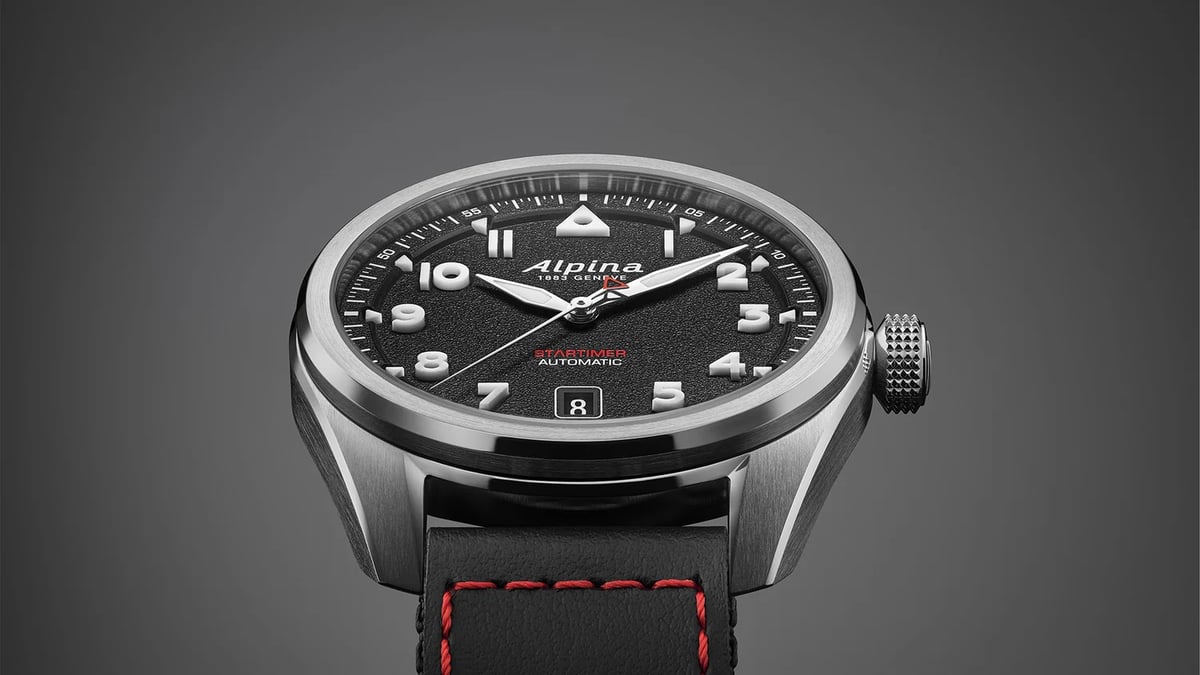
The black dial is the canvas for a classic pilot layout. Large white Arabic numerals at 12, 3, 6, and 9, with stick markers elsewhere, provide excellent contrast. The minute track is printed in white, and the hour and minute hands are broad and sword-shaped, filled with Super-LumiNova. The lume glows brightly after a full charge and lasts for several hours, making it easy to read in the dark. The date window at 3 o'clock is neatly integrated, with a white-on-black date disc that matches the dial.
The dial is protected by a flat sapphire crystal with an anti-reflective coating, which minimizes glare. The overall legibility is outstanding, even in low light. The seconds hand is slim and has a small counterweight, adding a touch of elegance. There's no unnecessary clutter—this is a tool watch that prioritizes function over decoration.
Wrist Feel and Comfort
On the wrist, the 42mm case wears comfortably for most wrists, thanks to a well-proportioned lug-to-lug of 48mm. The steel bracelet adds a reassuring weight, but the watch never feels top-heavy. The flat caseback sits flush against the skin, and the signed crown is easy to grip without digging into the hand. It's a solid, substantial presence that doesn't overstay its welcome.
The bracelet's links are slightly tapered, and the folding clasp offers three micro-adjustment holes for a precise fit. The watch's 11.5mm thickness is moderate, allowing it to slide under a shirt cuff with ease. Whether you're at a desk or on a weekend hike, the Solarmetre stays put and remains comfortable throughout the day. The weight distribution is balanced, and the bracelet doesn't pull or pinch.
Accuracy and Daily Use
As a quartz movement, the AL-140 is exceptionally accurate, typically within ±15 seconds per month. The solar charging ensures consistent voltage, so you won't experience the gradual drift often seen in battery-powered quartz watches as the cell depletes. In real-world use, you can set the watch and forget about it for weeks—it will only lose a few seconds, which is negligible for daily wear.
One of the main advantages of solar power is that you never need to worry about battery changes. As long as the watch gets some light exposure (even indoor lighting), it will keep charging. The power reserve indicator is not present, but the watch has a low-battery warning feature: the seconds hand jumps in two-second intervals when the charge is critically low. This is a thoughtful touch that alerts you to charge it before it stops.
Occasions and Versatility
The Pilot Solarmetre is a versatile piece that can easily transition from a casual weekend to a business casual office. Its sporty yet classic design means it doesn't look out of place with a suit, though it's not formal enough for black-tie events. It's an ideal travel companion, thanks to its 100m water resistance and robust build. The solar charging means you don't need to pack a watch winder or worry about power reserve on long trips.
For outdoor activities, the lume and legibility are superb, and the sapphire crystal protects against scratches. Whether you're hiking, sailing, or simply commuting, this watch is up to the task. It's not a dive watch, so don't take it beyond 100 meters, but it's more than sufficient for everyday adventures.
Wrist Presence
On the wrist, the Solarmetre commands a 4/5 presence. The black dial and bold white numerals give it a striking look, but it's not overly flashy. The brushed steel case and bracelet keep it understated, while the size (42mm) makes it noticeable without being overpowering. It's the kind of watch that draws a second glance from fellow enthusiasts but doesn't scream for attention.
Reference Variants
The AL-140BW3S26 is the black dial on steel bracelet version. Alpina also offers a blue dial variant (AL-140BN3S26) and a black dial with leather strap (AL-140BW3A26). Each variant shares the same solar movement and case dimensions, but the dial and strap options allow for personalization. The blue dial adds a pop of color, while the leather strap gives a more vintage feel.
Family and Other Models
The Solarmetre is part of Alpina's Pilot family, which includes automatic and chronograph versions. The Startimer Pilot Automatic is a mechanical alternative, offering a self-winding movement with a similar dial layout. The Pilot Chronograph adds a stopwatch function, but at a higher price. For those who prefer a rugged sports watch, the Alpiner Extreme and Seastrong Diver are excellent choices, though they are not solar-powered.
Comparisons and Alternatives
In the solar quartz category, the Citizen Promaster Eco-Drive is a strong competitor, offering similar functionality and durability at a comparable price. The Seiko Astron GPS Solar is a higher-end option with GPS time sync, but it costs significantly more. For a mechanical pilot watch, the Hamilton Khaki Aviation X-Wind is a worthy contender, though it requires winding and servicing.
If you're looking for a budget homage, the Invicta Pro Diver mimics the pilot style but lacks the solar technology and build quality. The Orient Pilot offers a mechanical movement at a lower price, but it doesn't have the convenience of solar charging.
Investment Value
The Alpina Pilot Solarmetre has a retail price of $795, but it can often be found for less on the secondary market. Pre-owned examples range from $400 to $600, making it a depreciating asset in the short term, but it holds its value reasonably well for a quartz watch. It's not a collector's piece that will appreciate, but it's a smart purchase for someone who wants a reliable daily wearer without breaking the bank. If you buy it pre-owned, you can enjoy it without worrying about significant value loss.
Service and Maintenance
Because it's a quartz watch, the Solarmetre requires minimal maintenance. The solar battery is designed to last many years, but eventually, it will need replacement—typically after 10-15 years. A replacement battery and seal check can be done by any competent watchmaker for around $100. Alpina recommends a service every 5 years, but for quartz, this is mostly a pressure test and inspection. Authorized service is not mandatory, as the movement is simple to work on.
Pros and Cons
Pros: Solar-powered, no battery changes; high accuracy; robust 100m water resistance; sapphire crystal; excellent lume; classic pilot design.
Cons: Not a mechanical movement; 42mm may be large for smaller wrists; limited brand prestige compared to luxury Swiss brands; bracelet clasp can be a bit sharp.
Final Verdict
The Alpina Pilot Solarmetre is a smart choice for those who want the look and feel of a pilot watch without the maintenance of an automatic. It's accurate, durable, and affordable, making it an ideal daily companion. While it won't turn heads in a collector's circle, it offers undeniable practicality and style for the modern young enthusiast. If you prioritize reliability and value, this watch is a winner.