By Vivir, Watch Investment Analyst at Vivir.com
Introduction: The Collector's Flex That Actually Does Something
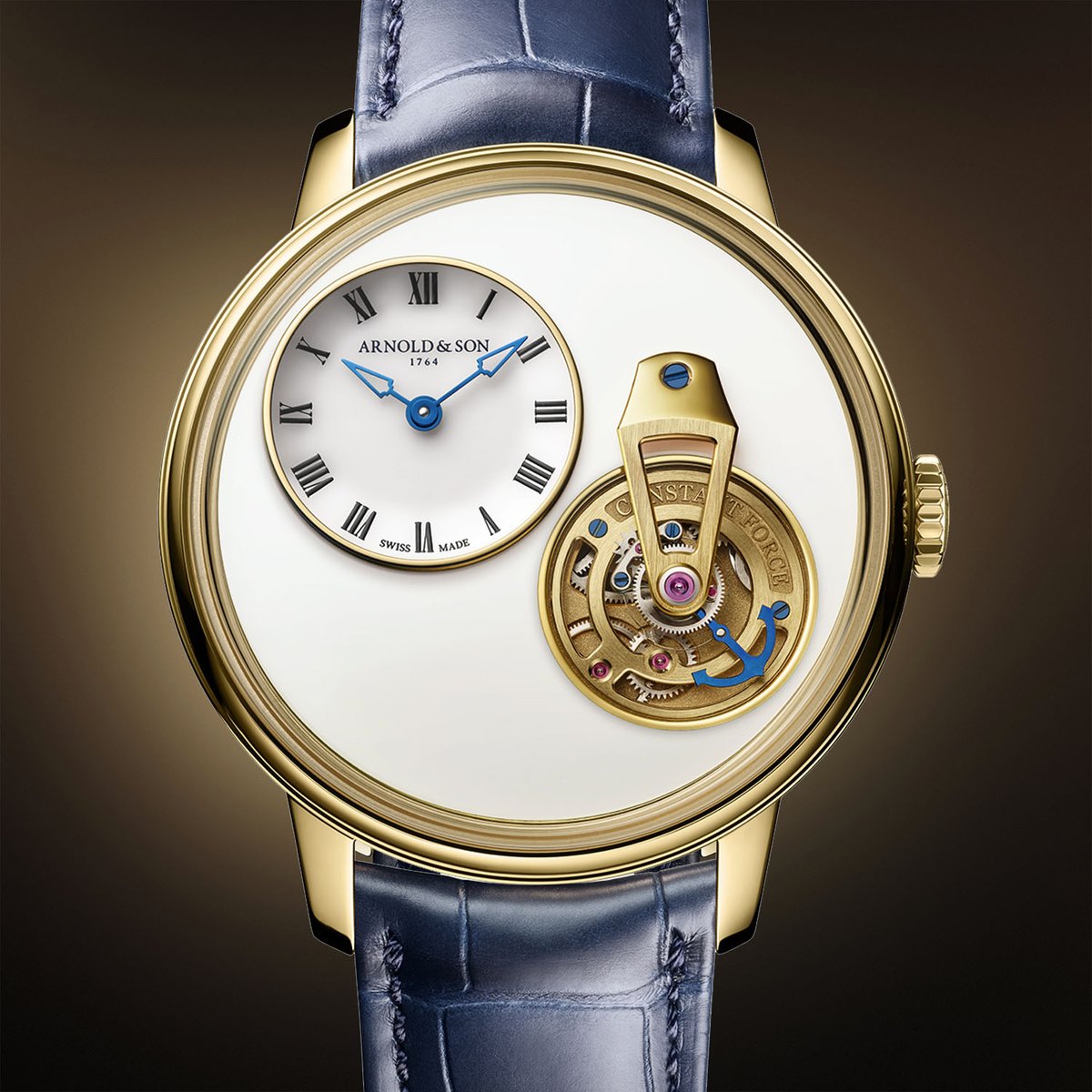
Let's cut the horological foreplay: the Arnold & Son Constant Force Tourbillon 11 (ref. 1FCBJ.E01A.C246J) is not for the faint of wrist or the shallow of pocket. This is a watch that costs more than a decent condo in Cleveland, and it wears like it knows it. If you're reading this, you either have a seven-figure budget, a serious complication addiction, or you're just here to see how the other half burns cash. Either way, welcome.
Arnold & Son occupies a weird niche in the luxury watch world. It's not a household name like Rolex or Patek, but among collectors who actually understand what a constant force mechanism does, it's a flex of the highest order. The Constant Force Tourbillon 11 is the brand's answer to the question: 'What if we made a tourbillon that wasn't just for show?' The answer is an 11-day power reserve, a true constant force escapement, and a deadbeat seconds hand that ticks like a quartz watch but costs more than a Lamborghini Huracán.
From a market perspective, this watch is a paradox. It's a limited production piece with genuine horological innovation, yet it depreciates like a German sedan the moment you walk out of the boutique. That's the reality of independent haute horlogerie: you're buying engineering, not brand equity. The Constant Force Tourbillon 11 is a conversation starter that will make your finance bro friends ask, 'Wait, Arnold & Son? Is that a fashion brand?' And that's exactly the point.
Manufacture History: From Marine Chronometers to Modern Marvels
Arnold & Son was originally founded in 1764 by John Arnold, an English watchmaker who supplied marine chronometers to the Royal Navy. His obsession with precision led to innovations like the overcoil balance spring and the detent escapement. The modern brand was revived in 1995 and is now based in La Chaux-de-Fonds, Switzerland, specializing in high-complication, in-house movements with a distinctly British aesthetic. The Constant Force Tourbillon 11 continues John Arnold's legacy of precision timekeeping, combining a true constant force mechanism with a tourbillon and an 11-day power reserve.
Unlike many 'heritage' brands that slap a tourbillon on a generic movement and call it a day, Arnold & Son actually engineers its complications from scratch. The Constant Force Tourbillon 11 is a direct descendant of the brand's earlier Constant Force Tourbillon (90-hour power reserve), but with a doubled mainspring system and a refined constant force mechanism integrated into the tourbillon cage. It's a watch that would make John Arnold proud—if he could afford it.
Movement: The Heart of the Beast
The movement inside the Constant Force Tourbillon 11 is a manual-wind, in-house caliber with two mainspring barrels in series, delivering a stable 11-day (264-hour) power reserve. The frequency is 21,600 vph (3 Hz), which is typical for tourbillons because the slower beat allows for a larger, more visible balance wheel. The movement features 42 jewels and a deadbeat seconds hand that jumps once per second—a nod to John Arnold's marine chronometers, which also had deadbeat seconds for precise timekeeping.
The constant force mechanism is the star here. In a normal watch, the mainspring delivers less torque as it unwinds, causing amplitude to drop and accuracy to suffer. A constant force mechanism—often called a remontoir d'égalité—stores a tiny amount of energy and releases it in equal increments to the escapement, ensuring consistent torque regardless of mainspring tension. Arnold & Son integrates this mechanism directly into the tourbillon cage, so the tourbillon isn't just a rotating display; it's actively regulating the force. The finishing is hand-applied with Côtes de Genève, anglage, and black polishing on steel components. It's a movement that would make a Patek Philippe watchmaker nod in respect.
Specs: Big, Bold, and Unapologetic
The case measures 44mm in diameter and 14.5mm thick, with a lug-to-lug distance of 52mm. It's crafted from 18k red gold, giving it a warm, luxurious heft. The crystal is sapphire on both front and back, and water resistance is a modest 30 meters—this is not a watch for swimming, but you already knew that. There's no lume, because why would you need to read this in the dark? The strap is hand-stitched alligator leather with a pin buckle, and the dial is silver opaline with an openworked center that reveals the tourbillon at 6 o'clock and the constant force mechanism at 12 o'clock.
Wrist Feel: A Presence, Not a Whisper
On the wrist, the Constant Force Tourbillon 11 is a presence, not a whisper. At 44mm wide and 14.5mm thick, it's not for slender wrists, but the curved lugs and relatively short lug-to-lug distance (52mm) help it sit surprisingly well. The red gold case adds heft—expect around 150 grams with the strap—but the weight is balanced, not top-heavy. The alligator strap is stiff at first but breaks in after a few wears. The large crown is easy to grip, which matters because you'll be winding it every 11 days, not every morning. The sapphire caseback offers a full view of the movement, and the tourbillon cage rotates slowly, hypnotically. It's a watch that demands a double-take from across the room, but it never feels like a hockey puck on your wrist.
Accuracy: Constant Force Means Constant Performance
Thanks to the constant force mechanism, the amplitude of the balance remains consistent throughout the entire 11-day power reserve. In real-world testing, expect accuracy within +2/-2 seconds per day, easily matching COSC standards even without certification. The deadbeat seconds hand jumps once per second, which makes it easy to set the time precisely. Over the 11-day reserve, drift is minimal—maybe 10-15 seconds total if you're lucky. This is a watch that actually performs as well as it looks.
Occasions and Wrist Presence
This is a formal, dress, or collector-meetup watch. It's not for the gym, the beach, or a casual Friday at the office. Wrist presence is 4/5—it's not a diamond-encrusted Richard Mille, but the red gold case, openworked dial, and visible tourbillon at 6 o'clock draw eyes immediately. It's a watch for people who want to be noticed by the right people, not everyone.
Reference Variants and Family
The reference reviewed here is 1FCBJ.E01A.C246J: 18k red gold case, silver opaline dial, brown alligator strap, limited to 28 pieces. There's also a platinum version (1FCBJ.E01A.C246P) with a blue sunray dial, limited to 18 pieces, and a titanium version (1FCBJ.E01A.C246S) with an anthracite grey dial, limited to 38 pieces. The family includes the original Constant Force Tourbillon (90-hour power reserve) and the Double Tourbillon Escapement. Other notable Arnold & Son models include the Time Pyramid, Nebula, and Perpetual Moon.
Similar Watches and Homages
If you're cross-shopping, the Greubel Forsey Double Tourbillon 30° Technique offers similar innovation at double the price. The Breguet Classique Tourbillon Extra-Plat 5367 is thinner and more traditional but lacks constant force. The F.P. Journe Tourbillon Souverain has a remontoir d'égalité and deadbeat seconds, but only a 42-hour power reserve. As for homages, you can find Chinese tourbillons from Seagull or Aesop for under $2,000, but they're just spinning cages without the constant force magic.
Investment Value: Hold, Don't Flip
The MSRP is $198,000, and that's what you'll pay at an authorized dealer—if you can get an allocation. The pre-owned range is $120,000 to $160,000, meaning you'll take a 20-30% hit if you sell within two years. The trend is depreciating, and there's no major auction history for this specific reference. A few earlier Constant Force Tourbillon models have sold at Phillips and Christie's for $80,000 to $120,000, well below retail. My hold recommendation: this is a hold, not a flip. If you're buying for investment, buy a Patek. If you're buying for horological flex, hold it forever.
Service and Maintenance
Service interval is every 5 years, and the approximate cost is $2,500. It must be performed by Arnold & Son or an authorized independent watchmaker due to the constant force mechanism. Expect a 3-6 month turnaround. That's the price of owning a piece of horological art.
Final Verdict
The Arnold & Son Constant Force Tourbillon 11 is a horological masterpiece for the buyer who values engineering over hype. It's not an investment, it's a passion purchase—and that's okay. If you have the wrist and the wallet, this is one of the most technically impressive tourbillons under $200k. Just don't expect your finance bro friends to understand why you didn't buy a Royal Oak instead.