Swiss automatic, gas-tube lume, and railroad DNA in a steel daily.
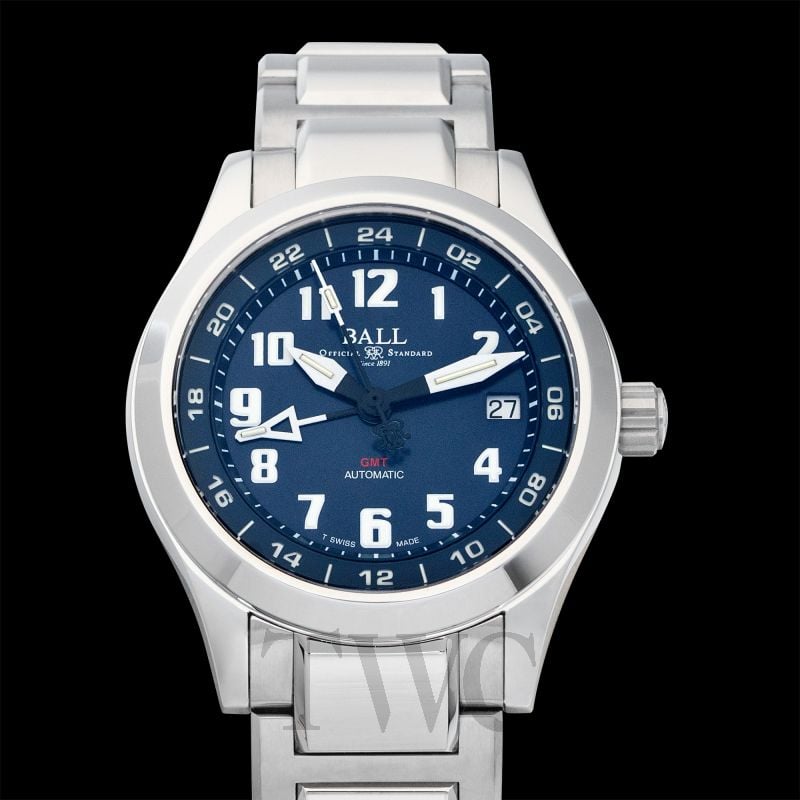
The Ball Engineer III Army is the watch you buy when you want a field watch that does not cosplay as one. It has a clean, legible dial, a steel case, and a bracelet that feels built for actual use rather than a boutique display. More importantly, it carries Ball's signature tritium gas tubes, which glow without sunlight or a phone flashlight. That single detail changes the ownership experience: this is a watch that works at night, not just a watch that looks good in a case.
Ball is not a hype brand, and the Engineer III Army is not a hype watch. That is the point. It sits in the space between entry-level Swiss automatics and serious tool watches, with railroad heritage that is more than marketing copy. For young collectors who have already cycled through the usual suspects, the Army offers a different kind of satisfaction: a watch that is quietly capable, easy to wear, and genuinely useful after dark.
Brand History: Railroad Precision, Swiss Execution
Ball Watch Company was founded in 1891 by Webb C. Ball, the man who became American railroading's timekeeping enforcer after the Kipton disaster. Ball's standards for accuracy and legibility helped turn the pocket watch into a safety instrument, and the company's name became synonymous with reliable timekeeping on the rails. Today Ball is Swiss-based and Swiss-made, but the Engineer III Army still trades on that accuracy-first, legibility-obsessed DNA. It is a modern watch with a nineteenth-century mandate: tell the time clearly, and do it without drama.
Movement: The Swiss Workhorse Inside
The Engineer III Army runs on Ball's RR1103 automatic, which is Ball's designation for a proven ETA 2824-2-family movement. That means a familiar architecture: automatic winding, a date complication, a frequency of 28,800 vph, 25 jewels, and roughly 38 hours of power reserve. It is not an in-house caliber, and it is not presented as haute horlogerie. It is a workhorse, which is exactly what a tool watch needs. Service is straightforward for any competent watchmaker, parts are widely understood, and the movement has decades of real-world validation behind it.
The RR1103 is not COSC-certified in the Army configuration, so do not expect chronometer paperwork. Expect instead the normal behavior of a well-made Swiss automatic: decent rate, easy regulation, and a date change that does what it says. Ball's finishing on this movement is industrial rather than decorative, which suits the watch's brief. You are paying for robustness and legibility, not for anglage and Geneva stripes.
Case, Dial, and Lume
The case is stainless steel, paired with a sapphire crystal and a stainless steel bracelet. Ball keeps the design clean: a restrained dial, applied markers, a date window, and the brand's railroad-inspired details. The tritium gas tubes are the headline. Unlike Super-LumiNova, tritium tubes do not need to be charged by light. They emit a constant, low-level glow for years, which makes the Engineer III Army unusually practical for night shifts, travel, camping, or anyone who wakes up in a dark room and wants to know the time without reaching for a phone.
The trade-off is that tritium tubes are not a lume bomb. They read as crisp, individual glowing markers rather than a broad painted surface. Collectors who love instrumentation will appreciate the precision. Anyone expecting a Seiko-style torch will need to adjust expectations. The tubes also have a finite life; they dim over years and cannot be recharged. Ball can replace them, but that is part of the ownership math. For many buyers, the decade-plus of constant glow is worth it.
Design and Build: A Tool Watch With Manners
Ball's design language here is more restrained than many of its tritium-heavy siblings. The dial avoids oversized numerals and unnecessary text, which keeps the watch readable at a glance. The markers are applied and framed, the hands are straightforward, and the date window is placed where it does not disrupt the symmetry too much. It is not a sterile design, but it is disciplined. The case finishing mixes brushed and polished surfaces just enough to keep the watch from looking like a slab of metal, while the sapphire crystal adds a clean, modern reflectivity that suits the tool-watch brief.
The build quality is what you expect at this price: solid, not precious. The bracelet feels secure, the clasp does its job, and the case has enough heft to inspire confidence without becoming a liability on the wrist. Ball's tritium tubes are the defining detail, but the rest of the watch is designed to support them rather than compete. That restraint is a strength. It means the Engineer III Army can pass as a normal steel daily watch in daylight and then reveal its party trick at night.
On the Wrist
On the wrist, the Engineer III Army reads as a compact steel tool watch rather than a chunky diver. The case has enough presence to feel substantial, but the bracelet articulates well and settles close to the wrist. The crown is easy to grip without digging into the back of the hand, and the sapphire crystal keeps glare down in daylight. It is the kind of watch that disappears under a cuff and then reminds you why it exists when the lights go out.
The bracelet is a major part of the experience. It is not a jewelry-grade bracelet, but it is robust, comfortable, and appropriate for the price. The folding clasp feels secure, and the watch balances well on the wrist. If you prefer a strap, the Army is equally at home on leather or a NATO-style nylon, which broadens its casual appeal. It is not a formal watch, and it does not pretend to be. It is a daily wearer with a military-adjacent attitude and a Swiss heart.
Accuracy and Daily Use
Because the Engineer III Army is not sold as a chronometer in every configuration, expect normal Swiss workhorse behavior. Many examples run within roughly -10 to +15 seconds per day, and some do better. The movement is regulatable, and a competent watchmaker can tighten the rate during service. If you need paper COSC accuracy, look at Ball's chronometer-badged siblings instead. If you want a robust daily that keeps close enough time for real life, the Army is fine.
Daily use is where the watch makes sense. The dial is legible, the date is useful, and the tritium glow is a genuine convenience rather than a gimmick. It is not a dive watch, so do not treat it like one, but it is more than capable of handling office life, travel, weekends, and the occasional hike. The steel case and sapphire crystal mean you do not have to baby it. This is a watch that wants to be worn.
Occasions and Wrist Presence
The Engineer III Army is a daily watch first, a sport watch second, and a travel companion third. It works with jeans, a T-shirt, a field jacket, or a casual button-down. It is not a dress watch, and it will not replace a slim formal piece. But for the kind of collector who wants one watch to do most things, it covers a lot of ground. Its wrist presence is moderate: more than a minimalist dress watch, less than a chunky diver. The tritium glow and railroad-derived dial give it an unmistakable identity after dark.
Who Should Buy It
This watch is for the collector who values function over flex. If you work odd hours, travel frequently, or simply like the idea of a watch that glows without being charged, the Engineer III Army makes a strong case. It is also a good choice for someone who wants a Swiss automatic but is bored by the usual dive-watch and dress-watch formulas. It is less compelling for buyers who need a formal watch, a status symbol, or an investment-grade piece. The Army is a specialist, and it is best enjoyed as one.
Reference Variants and Family
The core reference in this review is NM2188C-S-BK, a black-dial Engineer III Army on a stainless steel bracelet. Ball has offered the Engineer III family in several flavors, including the Marvelight, Pioneer, and Legend, each with its own dial and case details. The Army sits as the more utilitarian option: less polished, less precious, and more focused on legibility and night visibility. If you are shopping the family, compare the Army against the Marvelight for a dressier look and the Pioneer for a more adventure-ready stance.
Similar Watches to Consider
If you like the Engineer III Army but want to compare, start with the Tudor Black Bay 36. It is a compact steel everyday watch with stronger brand cachet and a more refined bracelet, but it lacks tritium tubes. The Sinn 556 I is a German tool-watch alternative with a clean dial and excellent legibility; it feels more austere and less glow-focused. The Hamilton Khaki Field Automatic is the affordable field-watch entry point, with military DNA but ordinary painted lume. The Longines Conquest is a dressier steel sports option with a broad service network and a more conventional luxury feel.
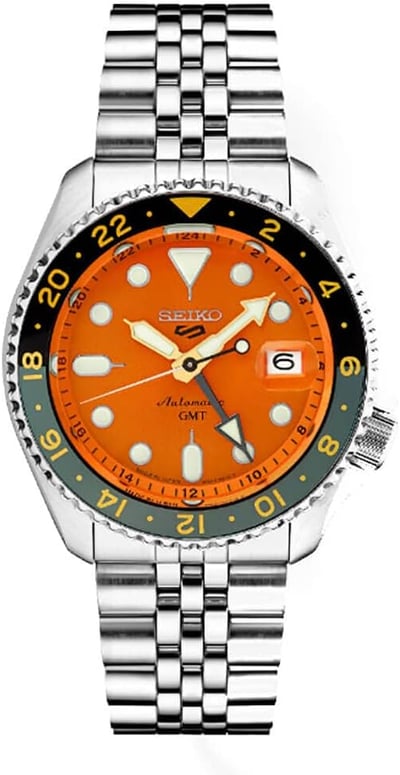
For buyers who want the Ball look at a lower price, homages exist. The Seiko 5 Sports SRPE55 is a budget steel daily with field-watch proportions and a huge modding community. The Pagani Design PD-1690 is an entry-level military-style automatic that borrows the look without the tritium tubes. Neither replaces the Ball's gas-tube glow, but they are useful reference points for the style.
Investment Value and Ownership
The Engineer III Army is not an investment watch. Ball has a dedicated following, but the secondary market is softer than mainstream Swiss brands. Expect pre-owned examples to trade at a meaningful discount to retail, which makes the used market the smart entry point. The watch holds value better than fashion watches, but it will not appreciate like a steel sports Rolex. Buy it because you want a tritium tool watch with railroad heritage, not because you want to flip it.
MSRP for the Engineer III Army has sat around the $1,199 mark, with current retail often a little higher. Pre-owned examples typically trade in the $650 to $900 range depending on condition and completeness. Auction history is not a factor here; there is no meaningful collectible market for this reference. The hold recommendation is simple: buy pre-owned, wear it, and keep the box and papers if you want the best resale outcome.
Service and Long-Term Care
The RR1103 is a serviceable ETA-based movement, so routine maintenance is not a boutique-only headache. Ball authorized service centers can handle it, and independent watchmakers familiar with ETA movements can work on the caliber. The tritium tubes are the special case: replacement should go through Ball rather than a local watchmaker. If you plan to keep the watch for a decade or more, factor in the eventual cost of tube replacement or accept that the glow will fade. The watch itself is robust, and the sapphire crystal and steel case are easy to live with.
Pros and Cons
The pros are clear: constant tritium glow without charging, a proven Swiss automatic movement, a balanced steel case and bracelet for daily wear, and genuine Ball railroad heritage with strong legibility. The cons are equally clear: resale is softer than mainstream Swiss brands, the tritium tubes dim over time and cannot be recharged, the Army is not a paper chronometer in most configurations, and the finishing is robust rather than luxurious. None of these are dealbreakers if you understand what you are buying.
Final Verdict
The Ball Engineer III Army is a niche daily with a clear point of view: legibility first, glow always, and a Swiss workhorse inside. It is not the watch to buy if you want maximum resale or a status flex, but it is deeply satisfying for collectors who like tool watches with a story. Buy it pre-owned, wear it hard, and let the tubes do the talking after dark.