Brand context: Bovet 1822
Bovet was founded in 1822 by Edouard Bovet in Fleurier, Switzerland. The maison built its early reputation on highly decorated pocket watches made for the Chinese market, and in the modern era it has returned to high horology with a distinctive case architecture, including the bow at 12 o'clock and a taste for convertible cases and elaborate dials. The Sportster line is Bovet's sportier, more contemporary offer, and the Pininfarina collaboration is its most direct link to the automotive world.
That context matters because Bovet is not a volume brand. It does not have the resale depth of Rolex, Patek Philippe, or Audemars Piguet, and its service network is narrower. What it does have is a strong design identity and a genuine in-house movement story. The Sportster Pininfarina sits at the intersection of those strengths: it is more wearable than Bovet's dressier pieces, but it still carries the maison's signature details.
Design and Pininfarina provenance
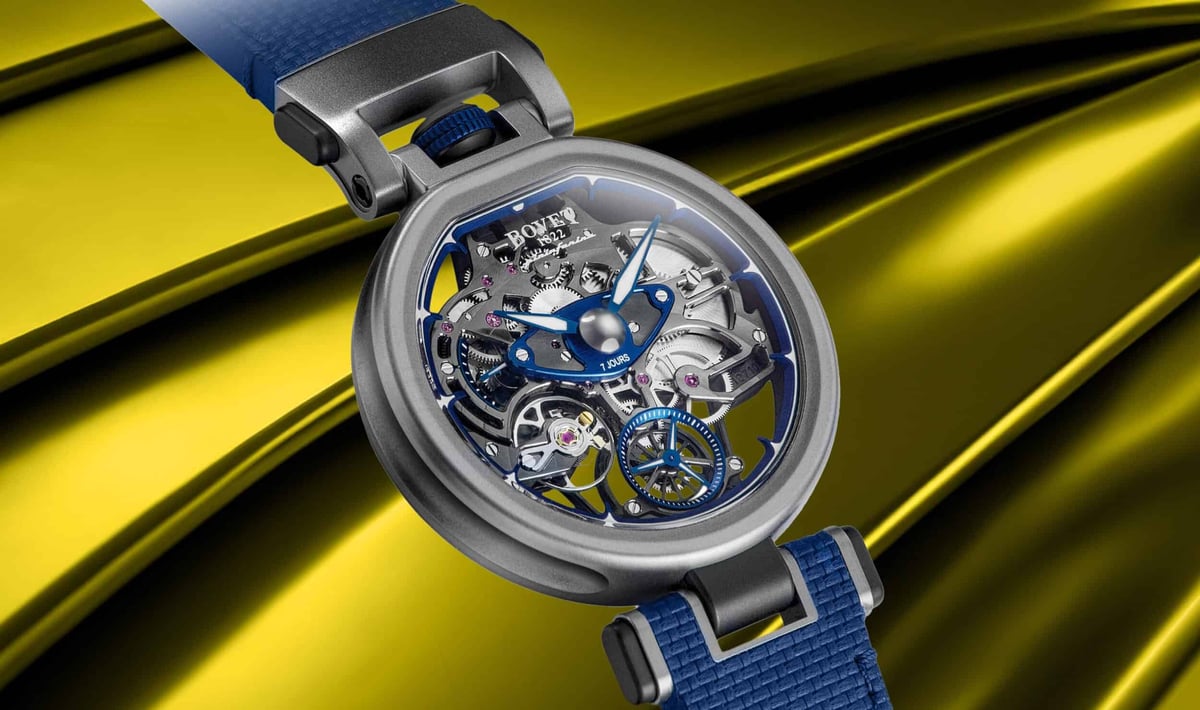
The TPIN001-18 is a chronograph with clear automotive cues. The dial is arranged for legibility rather than jewellery, with the Pininfarina co-branding acting as the visual anchor. The case is stainless steel, the crystal is sapphire, and the watch is delivered on a rubber strap that suits the sporty brief. Lume is Super-LumiNova, which is appropriate for a watch that wants to be worn rather than stored.
The Pininfarina connection is not just a logo on the dial. It gives the watch a reason to exist in a crowded luxury chronograph market. Bovet's case shapes are already sculptural, and the Pininfarina edition leans into that with a more purposeful, modern feel. It is not a subtle watch. It has wrist presence, and it is best suited to a collector who enjoys that. If you want a discreet chronograph that disappears under a cuff, this is not the one.
Movement and mechanics
The Sportster Pininfarina TPIN001-18 is powered by Bovet's in-house automatic chronograph caliber, understood to be the Cal. 13BA15. It runs at 28,800 vph and offers a 72-hour power reserve, which is generous for an automatic chronograph and useful for a watch that may sit in a rotation. The movement is in-house, not COSC-certified, and it includes chronograph and date functions. Bovet does not publish a jewel count for every Pininfarina variant, so we leave that figure blank rather than guess.
In hand, the movement architecture is consistent with Bovet's positioning: it is a proper haute-horlogerie engine rather than a bought-in workhorse, and the finishing is a step above what you find in mass-produced sports chronographs. The chronograph pushers should feel positive, and the reset should snap cleanly to zero. As with any chronograph, avoid running the chronograph continuously if you want to minimise wear, and have the movement checked by a qualified watchmaker before relying on it as a daily timekeeper.
Specs and reference notes
The TPIN001-18 is a stainless steel chronograph with a sapphire crystal, Super-LumiNova, a rubber strap, and a pin buckle. Bovet does not publish every dimension for this exact reference, so we have left those figures out rather than guess. That is the right approach for a collector: an unknown case measurement is better treated as unknown than replaced with a typical number from another Sportster.
The reference is best understood as the Pininfarina chronograph within the Sportster family. Siblings include the standard Sportster Chronograph, the Sportster Saguaro, and the Sportster Tourbillon. Each has a different personality, but the Pininfarina is the one with the clearest automotive design brief. If you are comparing them, focus on condition, paperwork, and strap completeness rather than assuming every Sportster wears the same.
On-wrist feel
The Sportster Pininfarina is not a shrinking-violet watch. Its case is broad and sculpted, and the rubber strap visually integrates with the lugs to keep the package cohesive. On the wrist, the weight is noticeable but not unbalanced. The rubber keeps the watch from sliding around, and the strap tail tucks neatly. It wears best on medium-to-large wrists; smaller wrists should try before buying, because the case presence is part of the design rather than an accident.
The chronograph pushers are easy to reach, and the crown is protected enough for daily use. This is a sports watch first and a dress watch second. It works with a polo shirt, a casual jacket, or travel wear, but it is not the watch you choose for a black-tie evening. The Pininfarina design gives it a more contemporary feel than Bovet's classic pieces, and that is exactly the point.
Accuracy and daily use
The TPIN001-18 is not COSC-certified, so do not expect chronometer paperwork. Real-world examples should run within a few seconds per day after regulation, but the honest expectation for a pre-owned Bovet chronograph is a range of roughly -5 to +10 seconds per day, depending on condition and service history. If you are buying pre-owned, ask for a timegrapher reading and a service invoice. A watch that has been sitting unused may need a service before it settles into daily accuracy.
Daily use is straightforward. The automatic movement and 72-hour reserve mean you can rotate the watch without constantly resetting it. The rubber strap is comfortable in warm weather, and the sapphire crystal is practical. The main caveat is service: Bovet is not a brand you can drop off at every corner watchmaker. Authorized service is the safer route, especially for parts and chronograph adjustment.
Market and investment case
The investment case for the Bovet Sportster Pininfarina is mixed. On the positive side, it is a niche collaboration with a real design story, an in-house movement, and a distinctive look that stands apart from the usual steel chronograph crowd. On the negative side, Bovet resale is soft compared with mainstream luxury sports watches. Pre-owned examples typically trade well below original retail, and the market for Pininfarina-branded Bovets is narrow. That means liquidity is limited: you can buy well, but you may need patience when selling.
Current pre-owned pricing for the TPIN001-18 sits in the roughly $5,000 to $9,000 range, depending on condition, box and papers, and strap options. The trend is depreciating rather than appreciating. There is no major auction history to point to, and this is not a watch that collectors treat as a blue-chip asset. The hold recommendation is simple: buy pre-owned if you love the design, and do not stretch for a new or near-retail example unless the provenance and paperwork are exceptional. This is a watch to enjoy, not a watch to underwrite a portfolio.
Service and ownership
Bovet service is best handled through authorized channels. The brand's network is not as dense as the big groups, and independent watchmakers may struggle with parts for the in-house chronograph. Service intervals are not published as a single universal figure for this reference, so we leave the interval and cost blank rather than invent numbers. Budget for a proper service at some point in ownership, and factor that into the purchase price. A well-documented service history is worth more than a polished case on a watch like this.
Alternatives and homages
If you like the automotive chronograph brief but want stronger resale, the Chopard Mille Miglia Chronograph is the obvious comparison. It has a long motorsport heritage, a comfortable rubber strap, and a more liquid market. The Omega Speedmaster Racing is another alternative: it is a motorsport-themed chronograph with a broader collector base and easier service. The Porsche Design Chronotimer is the closest in spirit to the Pininfarina idea, because it comes from a car-design house and carries that same industrial-luxury feel.
True homages to the Bovet Sportster Pininfarina are rare. The design is too specific and too niche for the homage machine to copy directly. At the entry level, a Pagani Design PD-1662 offers a racing-chronograph look for around $250, but it is not a substitute for the Bovet's movement, finishing, or provenance. Treat it as a style alternative, not an investment.
Pros and cons
The pros are clear: Pininfarina design provenance, an in-house automatic chronograph with a 72-hour power reserve, a distinctive Bovet case architecture, and a comfortable rubber strap. The cons are equally clear: soft resale versus mainstream luxury chronographs, a limited service network, a large wrist presence that will not suit everyone, and no COSC certification. The watch is a character piece, and character always comes with trade-offs.
Who should buy it
This watch is for the collector who already has a safe core and wants something with a story. It suits someone who appreciates Italian car design, Bovet's unusual case language, and the idea of a chronograph that is not another Speedmaster or Daytona. It does not suit the first-time luxury buyer looking for maximum liquidity, nor the collector who needs a slim watch that slips under a shirt cuff.
If you are buying, prioritise examples with box, papers, and a clear service history. Check the chronograph functions, the crown action, and the strap condition. The rubber strap is part of the design, so a missing original strap is a negotiating point. As with any niche watch, buy the best example you can find rather than the cheapest one on the market.
Final verdict
The Bovet Sportster Pininfarina TPIN001-18 is a compelling niche chronograph for the collector who values design provenance over resale safety. It is not a blue-chip investment, and it should not be bought as one. But at pre-owned money, it offers a genuine in-house movement, a Pininfarina connection, and a look that you will not see on every wrist. Buy it because you love it, service it properly, and enjoy the fact that it is not the obvious choice.