The Resurrection of the Jet Star: A Technical Prelude
In the pantheon of 20th-century horology, Bulova occupies a space of restless innovation. While the Swiss industry was perfecting the lever escapement, Bulova was experimenting with tuning forks and high-frequency oscillators. The 96A337 Jet Star is the modern culmination of this spirit. It is a reissue of the 1973 Jet Star, a watch that emerged during the twilight of the mechanical era and the dawn of the quartz revolution. To understand the 96A337, one must first appreciate the geometry of the early 1970s. This was an era of 'turtle' cases and tonneau shapes, where the lugs were integrated into the mass of the case, creating a seamless, architectural look on the wrist.
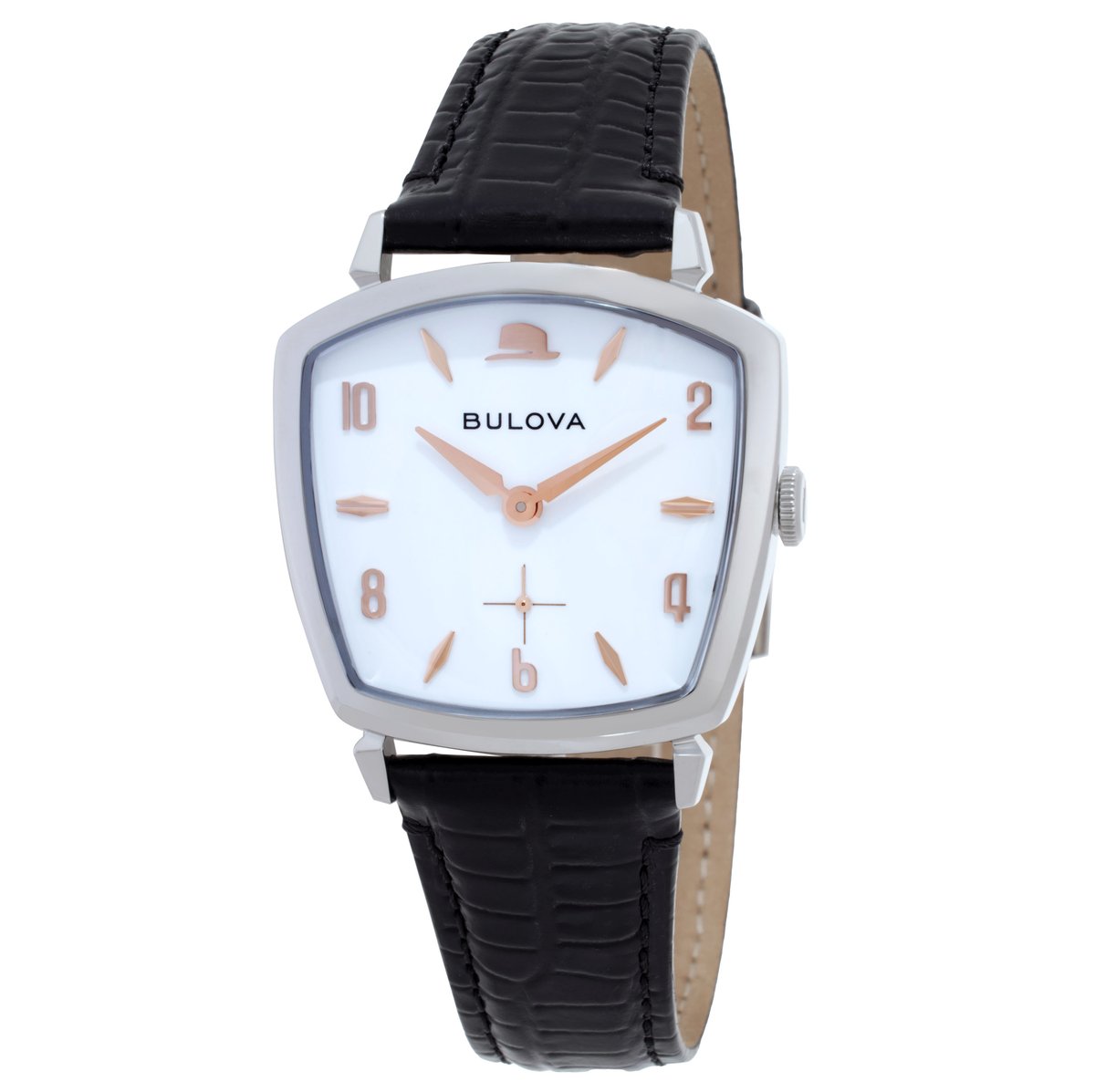
The 96A337 meticulously recreates this silhouette. The stainless steel case is a masterclass in faceted finishing. The top surfaces feature a radial brushing that draws the eye toward the dial, while the beveled edges are mirror-polished, providing a sharp contrast that defines the watch's profile. This level of case complexity is rarely seen at this price point, where simple slab-sided cases are the norm. The use of a boxed sapphire crystal is another nod to the 1970s, mimicking the look of acrylic crystals of the era while providing the scratch resistance required by the modern collector.
The 262kHz Torsional Resonator: Beyond Standard Quartz
The heart of the 96A337 is the Bulova High Precision Quartz (HPQ) movement. To the uninitiated, quartz is often dismissed as a monolith of inexpensive, low-maintenance timekeeping. However, Bulova's 262kHz technology is a significant departure from the standard 32,768 Hz quartz oscillator found in the vast majority of watches. Standard quartz oscillators use a two-pronged crystal; Bulova utilizes a three-pronged torsional resonator. This third prong allows the crystal to vibrate at 262,144 Hz, which is eight times faster than standard quartz.
The technical benefits are two-fold. First, the higher frequency allows for a higher degree of accuracy. The movement is less susceptible to frequency shifts caused by temperature fluctuations or gravitational changes. Second, and most visible to the wearer, is the sweeping seconds hand. While a standard quartz watch ticks once per second, the Jet Star’s seconds hand moves at 16 beats per second. This creates a fluid motion that is smoother than most mechanical watches, including those beating at 28,800 vph (which move at 8 beats per second). For the collector who appreciates mechanical aesthetics but demands quartz precision, this movement is the ultimate compromise.
Dial Architecture and Chromatic Harmony
The dial of the 96A337 is a study in 1970s color theory. The base is a sunray silver that catches the light in a radial pattern, providing a neutral backdrop for the vibrant accents. The chapter ring is rendered in a deep navy blue, punctuated by a bold red scale. This 'Pepsi' color palette is iconic in horology, but here it is applied with a level of restraint that feels sophisticated rather than derivative. The applied indices are multifaceted and polished, featuring a small strip of Super-LumiNova for low-light legibility.
One of the most impressive details is the date window at 3 o'clock. Rather than a simple cutout, it features a polished frame that matches the indices, showing a level of attention to detail that is often overlooked. The hands are baton-style, with a red seconds hand that provides a constant pop of color as it sweeps across the silver dial. The legibility is excellent, aided by the anti-reflective coating on the sapphire crystal, which minimizes glare even under direct sunlight.
Case Construction and Ergonomics
The 40mm case diameter is the 'sweet spot' for modern enthusiasts, but the tonneau shape makes it wear slightly differently than a round 40mm watch. Because there are no traditional lugs extending from the case, the 45mm lug-to-lug distance is essentially the total length of the watch. This makes the 96A337 exceptionally wearable for those with smaller wrists who might otherwise struggle with a 40mm sports watch. The case thickness of 11.5mm is remarkably slim given the complexity of the movement and the boxed crystal, allowing it to slide easily under a shirt cuff.
The finishing of the case deserves special mention. The transition between the brushed top surfaces and the polished chamfers is crisp and well-defined. This is a hallmark of high-quality machining. In the 1970s, these cases were often mass-produced with soft edges; Bulova has improved upon the original by utilizing modern CNC tolerances to ensure the geometry is as sharp as possible. The screw-down caseback ensures a water resistance of 50 meters, which, while not suitable for diving, is more than adequate for daily wear and the occasional exposure to the elements.
The Bracelet: Suppleness and Style
Bulova has equipped the 96A337 with a five-link stainless steel bracelet that mirrors the aesthetic of the 1973 original. The links are small and numerous, which allows the bracelet to drape comfortably over the wrist. The finishing on the bracelet matches the case, with brushed outer links and polished center accents. The use of a hidden butterfly clasp provides a seamless look when the bracelet is closed, emphasizing the 'integrated' feel of the watch.
However, the butterfly clasp does present a minor trade-off: the lack of a micro-adjustment mechanism. To compensate for this, Bulova includes two half-links in the packaging. While this requires a bit more effort during the initial sizing process, it allows most wearers to achieve a comfortable fit. The bracelet is secured to the case with standard spring bars, meaning the 96A337 is not a true integrated-bracelet watch. This is a significant advantage for collectors who enjoy strap-swapping; a leather rally strap or a navy blue NATO would completely transform the character of the piece.
Investment and Market Position
In a market saturated with 'luxury' steel sports watches, the Bulova Jet Star 96A337 stands out as a high-value proposition. It does not attempt to compete with the high-jewelry finishing of a Patek Philippe Nautilus or the brand prestige of a Rolex, but it offers something those watches cannot: a proprietary, high-frequency movement with a genuine historical pedigree. At a retail price often found under $500, it competes directly with the Tissot PRX and various Seiko 5 models.
From an investment standpoint, the 96A337 is a 'stable' asset. It is unlikely to see the meteoric price increases associated with limited-run mechanical pieces, but its technical uniqueness ensures it will always have a following among horological purists. It is a watch bought for the pleasure of ownership and the appreciation of engineering rather than speculative gain. For the young collector, it represents a discerning choice—a watch that signals an understanding of movement technology and design history.
Final Thoughts: The Discerning Choice
The Bulova Jet Star 96A337 is a reminder that quartz technology, when executed with precision and reverence, can be just as soul-stirring as a mechanical movement. The sweep of the seconds hand is a hypnotic testament to the 262kHz oscillator within, and the faceted tonneau case is a beautiful tribute to one of the most creative eras in watch design. It is a precise, technical, and ultimately rewarding timepiece that deserves a place in any sophisticated collection. Whether you are drawn to its 1970s soul or its high-frequency heart, the Jet Star is a masterclass in what modern Bulova can achieve when they look back at their archives with an eye toward the future.