First impression: a diver with a point of view
The Bulova Sea Hunter 43B179 is not the watch I would hand to someone who wants a quiet first luxury piece. It is a blue-dial automatic diver with a broad bezel, a purposeful case, and enough visual texture to keep the wrist interested after the honeymoon week. That is a compliment. Plenty of affordable divers look correct in a product photo and then turn into grey mush under office lighting. The Sea Hunter has a little more theatre: the dial shifts from deep navy to a brighter blue depending on the light, the applied markers sit proud enough to catch a sleeve, and the date at three is useful without becoming the loudest thing on the dial.
I wore it the way most young collectors actually wear a dive watch: with an oxford shirt for two days, with a T-shirt and jeans for the rest, and through a weekend that involved salt water, a sink full of dishes, and a train journey. What survived was a watch that feels like a tool first and a fashion object second. That is the right order for a Sea Hunter. It is also the reason it earns wrist time rather than simply collecting compliments.
Brand context: American name, global ownership
Bulova was founded in 1875 in New York and built its reputation on American watchmaking ambition, from early pocket watches to military contracts and, later, Accutron tuning-fork technology. The brand is now owned by Citizen, which gives it access to reliable Japanese movement production and a global service network. That history matters here because the Sea Hunter is not a precious-object diver. It is a modern Bulova: accessible, robust, and just distinctive enough to avoid feeling like catalogue filler.
The Sea Hunter name suggests expedition and saltwater, and the 43B179 leans into that brief with a rotating dive bezel, a screw-down crown, and a blue dial that reads clearly in daylight. Bulova does not publish a deep lineage for this exact reference, so I would treat it as a standalone modern diver rather than a numbered reissue. That is fine. Not every watch needs a family tree; some just need to be good at being worn.
Case, strap, and the first week on the wrist
The first thing I check on any dive watch is not the diameter on the spec sheet. It is the lug-to-lug span and how the strap meets the case. A watch can be nominally large and still sit beautifully if the lugs curve, the caseback is shaped, and the strap follows the wrist. The Sea Hunter passes that test better than its tool-watch brief suggests. The case has a full-size presence, but the rubber strap is soft enough to bend around the wrist immediately and the pin buckle is easy to adjust through the day. There is no break-in period that makes you question the purchase.
That said, this is not a slim watch. It has the tall, protective profile of a real diver, and the bezel gives it a broad visual footprint. On my wrist it felt balanced rather than top-heavy, but I would not call it discreet. The rubber strap helps because it keeps the case close to the skin and prevents the watch from sliding around during a long walk. If you prefer a bracelet, you will want to check how the spring bars and end links line up; the rubber strap is clearly part of the comfortable, everyday character of this reference.
The sapphire crystal is a sensible choice at this price. It shrugs off the kind of desk-knock that would leave a mineral crystal looking tired after a month. The screw-down crown is easy to grip and does not dig into the back of the hand. The bezel turns with a firm, practical click rather than a luxury silky glide. That is not a criticism. A dive bezel should feel like a tool, and this one does.
Dial and legibility: the blue is the point
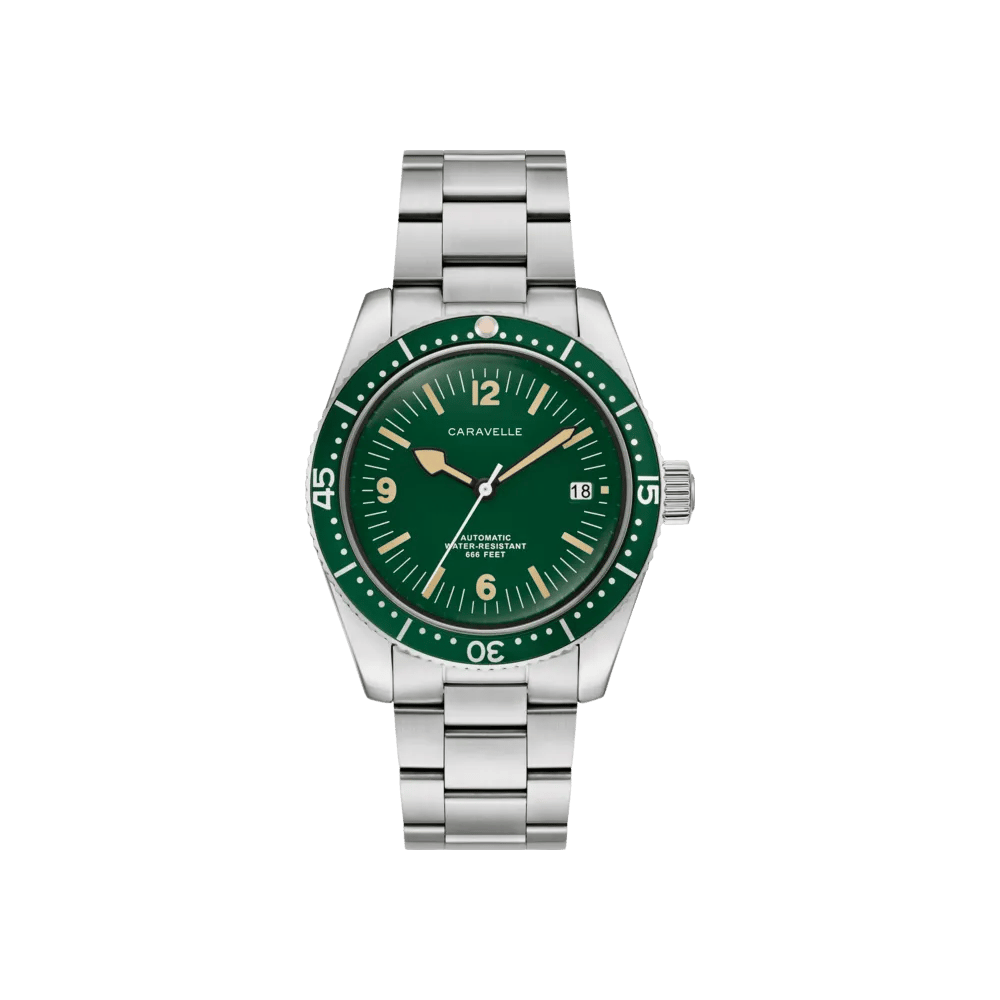
The 43B179 lives or dies on its dial, and fortunately it lives. The blue is deep enough to look serious with a jacket but bright enough to avoid the black-dial default. Applied hour markers give it depth, and the hands are broad enough to read at a glance. Legibility is excellent in daylight. Indoors, the contrast between the blue dial and the white luminous material is still clear, and the date window is placed where you expect it without interrupting the marker layout.
Lume is the usual weak point on affordable divers, but the Sea Hunter performs respectably. The Super-LumiNova charges quickly under a lamp and remains readable through the early part of the night. It will not rival a professional dive watch with a fully luminous dial, but for a daily wearer it is more than adequate. The bezel markings are also easy to track, which matters if you actually use the timing function rather than just admiring the click.
Movement and accuracy: honest automatic, not a showpiece
Bulova does not publish full movement details for this reference, so I will not invent a caliber number. What I can say is that the Sea Hunter 43B179 is an automatic three-hand-plus-date watch, and it behaves like a good workhorse automatic. There is no exhibition caseback theatre here, no decorated rotor to show off, and no COSC certification. That is consistent with the price and the brief. You wind it, set it, wear it, and it keeps running as long as you keep moving.
Real-world accuracy will vary by example and by how you wear it. Expect something in the region of minus twenty to plus forty seconds per day, with positional variation when you take it off at night. That is normal for a non-COSC automatic at this level. If you are the kind of collector who checks a timegrapher every week, have it regulated by a watchmaker. If you are the kind of collector who wants a reliable daily diver, you will not lose sleep over it.
The movement is not in-house, and Bulova does not pretend otherwise. That is not a problem. Citizen-owned Bulova has access to proven automatic movements, and the service path is straightforward. The Sea Hunter is a watch to wear, not a movement to lecture about.
A week in the life: what actually mattered
Over seven days I paid attention to the small things. The strap never got sweaty enough to be annoying, even on a warm afternoon. The buckle did not scratch a desk. The crystal stayed clear after being brushed against a coat sleeve and a door frame. The crown stayed screwed down without me thinking about it. The date was easy to read when I needed it and easy to ignore when I did not. Those are not glamorous observations, but they are the ones that decide whether a watch stays in the rotation after the review week ends.
The one moment the Sea Hunter felt less than ideal was under a tight shirt cuff. The case is tall enough that it caught the fabric, and I found myself pushing the sleeve back rather than letting the watch slide under it. That is the trade-off of a proper dive watch. If you want a watch that disappears under tailoring, look at a slim dress watch. If you want a watch that feels capable on a hike, in the water, and on a train, the Sea Hunter makes more sense.
Living with it: occasions and compromises
The Sea Hunter is at its best as a sport and daily watch. It looks right with a T-shirt, a field jacket, or a casual shirt. It is not a formal watch, and I would not pretend otherwise. The tall case and rubber strap make it feel out of place under a tight cuff, and the blue dial is too energetic for black-tie. But for travel it is a sensible companion: easy to read, robust, and not so expensive that you spend the trip worrying about it.
Water resistance is rated by the manufacturer, and I treated the watch accordingly: rinse after salt water, check the crown is screwed down, and do not take it saturation diving. The rubber strap dries quickly, which is one of the quiet pleasures of a diver on rubber. After a week, the watch had picked up no visible marks that a quick wipe could not handle. That is what I want from a daily tool.
Wrist presence: 4/5
This is a watch you notice on your own wrist, and other people notice it too. The blue dial and broad bezel give it more presence than a plain black diver, but it does not shout. I would rate it four out of five: confident, sporty, and just distinctive enough. It is not a subtle dress watch, and it is not trying to be.
Variants and family context
At the time of writing, the 43B179 is the reference I can document confidently in this blue-dial, rubber-strap configuration. Bulova has not published a broad set of dial and strap variants for this exact reference, so I would not chase a phantom catalogue. If you see a different dial colour or bracelet listed under the same number, check the dealer's photos and paperwork carefully. The Sea Hunter family itself is not as deeply catalogued as, say, the Marine Star line, so treat this as a standalone modern diver rather than a collect-them-all family.
Within Bulova's wider catalogue, the Lunar Pilot, Marine Star, Precisionist, Curv, and Surveyor are the names most collectors will cross-shop. The Marine Star is the closest sibling in spirit, but the Sea Hunter has a more focused dive-watch identity. The Lunar Pilot is the history play, the Precisionist is the technology play, and the Sea Hunter is the saltwater daily.
Alternatives and homages
If you want the same brief with more brand cachet, the Seiko Prospex SPB143 is the obvious step up: vintage-inspired, beautifully dialled, and backed by Seiko's dive-watch heritage. The Oris Aquis Date is a bigger jump in finishing and bracelet quality, with a more modern silhouette. The Tissot Seastar 1000 and Longines HydroConquest are the Swiss alternatives that most buyers will weigh, and the Orient Kamasu remains the budget automatic diver that makes life difficult for everyone.
As homages, the Orient Kamasu offers sapphire and reliable automatic timekeeping for around two hundred and fifty dollars. The Seiko 5 Sports SRPD55 is the versatile beater with a similar dive-watch silhouette. The Casio MDV106 Duro is the budget king: it does the essentials for less than the cost of a good strap. None of them has the Sea Hunter's specific blue-dial character, but they are honest alternatives for a first diver.
Value, investment, and service
This is not an investment watch. Bulova automatics tend to depreciate from retail, and the Sea Hunter is no exception. The smart money buys pre-owned or waits for a dealer discount. At street price, you are paying for a distinctive automatic diver with a comfortable rubber strap, sapphire crystal, and enough Bulova history to make it interesting. You are not paying for scarcity. If you want a watch that holds value, look elsewhere. If you want a watch that earns its keep on the wrist, the maths is more favourable.
Service is straightforward. Bulova service centres can handle routine maintenance, and an independent watchmaker familiar with common automatic movements can also service the watch. I would not send it to a boutique that treats it like a fragile heirloom. It is a tool watch, and it should be serviced like one. There is no published service interval for this exact reference, so follow the manufacturer's guidance and your watchmaker's advice.
Pros and cons
Pros: the blue dial has real character; the rubber strap is comfortable from day one; legibility is strong; the sapphire crystal is a welcome durability point; and the automatic movement is a sensible workhorse. It also feels like a proper dive watch rather than a desk diver with dive styling.
Cons: it is not a slim watch, so it will not slip under a tight cuff; the movement is not COSC-certified and accuracy will vary; the bezel action is practical rather than luxurious; and the investment case is weak. If you want a dressy all-rounder, this is not it.
Final verdict
The Bulova Sea Hunter 43B179 is a convincing daily diver for the collector who wants character without paying luxury prices. It wears comfortably on its rubber strap, reads clearly, and has enough blue-dial personality to justify a second look. It is not an investment and it is not subtle, but it is honest, robust, and easy to live with. If you want a watch that survives a real week on the wrist and still makes you smile on Friday, it deserves a place on the shortlist.