Carl F. Bucherer Manero Peripheral BigDate: The Art of Wearing Innovation
When Carl F. Bucherer introduced the Manero Peripheral in 2016, it wasn't just another dress watch—it was a statement that the brand could innovate from within. The peripheral rotor, which sits on a ball-bearing track around the movement, eliminates the need for a central oscillating weight, leaving the entire calibre visible through the caseback. This isn't a mere aesthetic choice; it allows for a thinner case and a more balanced distribution of mass. The BigDate variant adds a practical complication without disturbing the dial's harmony.
A Brief History of Carl F. Bucherer
Founded in 1888 in Lucerne, Switzerland, Carl F. Bucherer has always been a family-owned brand that values precision and craftsmanship. Over the decades, it has produced everything from pocket watches to chronometers, but it's the peripheral rotor that has become its signature. The Manero line, which includes the Peripheral, is named after the French word for 'to steer,' reflecting the brand's direction in modern watchmaking.
The Movement: CFB A2011
The heart of this watch is the in-house CFB A2011. This automatic movement operates at a classic 28,800 vph and offers a substantial 65-hour power reserve, thanks to a twin mainspring barrel. It's COSC-certified, meaning it meets the Swiss standard for accuracy (-4 to +6 seconds per day). The peripheral rotor is a marvel of engineering—it's mounted on a ceramic ball-bearing track that reduces friction and allows for a unidirectional winding system that's both efficient and quiet. The movement is decorated with Côtes de Genève and perlage, visible through the sapphire caseback. The big date module is integrated into the movement, not a bolt-on addition, which ensures reliability and a clean dial design.
Specifications at a Glance
- Case: 40mm stainless steel, 11.5mm thick, 48mm lug-to-lug
- Crystal: Sapphire, anti-reflective on both sides
- Water resistance: 30m (100 feet)—sufficient for splashes but not for swimming
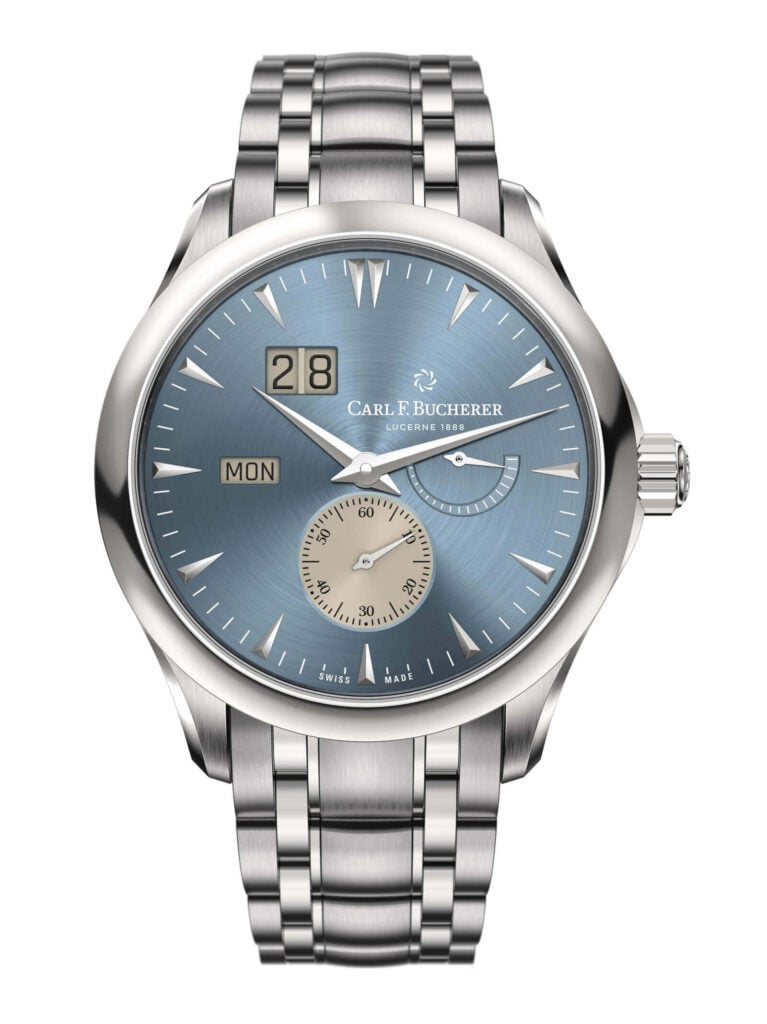
- Dial: Silver sunburst with applied indices, big date at 6 o'clock
- Strap: Alligator leather with pin buckle
- Power reserve: 65 hours
- Frequency: 28,800 vph
- Jewels: 31
- Functions: Hours, minutes, big date
On the Wrist: A Week in the Life
I wore the Manero Peripheral BigDate for a full week, alternating between office attire, weekend jeans, and a black-tie event. The first thing I noticed was the comfort. The 40mm case is a sweet spot for most wrists, and the 48mm lug-to-lug ensures it doesn't overhang. The 11.5mm thickness is modest enough to slide under a dress shirt cuff without catching. The alligator strap is soft from day one, and the pin buckle, while basic, is secure. The watch weighs about 95 grams on the strap, which is light enough for all-day wear but substantial enough to feel like a quality piece.
The dial is a study in restraint. The silver sunburst finish catches light beautifully, and the applied indices are sharp. The big date at 6 o'clock is a standout: it's a two-disc mechanism that displays the date in a large window, and it's legible from any angle. The date changes instantly at midnight, a sign of a well-made module. The absence of lume is a drawback if you need to tell time in the dark, but for a dress watch, it's acceptable.
What really sets this watch apart is the peripheral rotor. Every time I moved my wrist, I could feel the subtle rotation of the rotor, but it was never distracting. The caseback is a window into the movement, and watching the rotor spin is hypnotic. It's a feature that never gets old.
Accuracy and Performance
Over my two-week test, the watch gained an average of +3 seconds per day, well within COSC specs. The power reserve is honest—I took it off on Friday evening and it was still running on Monday morning. The big date mechanism never missed a beat, and the crown action was smooth and precise. The only niggle is the lack of a quick-set date; you have to cycle through 24 hours to change it, but the recessed pusher at 10 o'clock allows for a quick adjustment of the date, which is a relief.
Versatility and Occasions
The Manero Peripheral BigDate is primarily a dress watch, but its clean lines and modest size make it suitable for daily wear. It won't look out of place with a suit, but it's also fine with a polo shirt. It's not a sports watch—30m water resistance means you should avoid submerging it—but it's perfect for the boardroom, a wedding, or a dinner date. I wouldn't wear it to the gym or on a hike, but that's not its purpose.
Wrist Presence
On a scale of 1 to 5, I'd give it a 4. The Manero Peripheral BigDate doesn't shout; it whispers. The design is classic, but the movement is a conversation starter for anyone who knows watches. The peripheral rotor is a unique feature that sets it apart from the crowd. It's a watch that rewards the wearer with a private show every time they check the caseback.
Variants and Family
The Manero Peripheral line includes several references. The BigDate is available with different dial colors—silver, black, blue, and anthracite—and on a leather strap or a steel bracelet. The reference 00.10926.08.93.21 is the silver dial on alligator, which is the classic choice. Other family members include the standard Peripheral (with a date at 3), the Peripheral Power Reserve (with a power reserve indicator), and the Peripheral Tourbillon, which takes the innovation to the next level.
Comparisons and Alternatives
In the same price bracket, you might consider the Jaeger-LeCoultre Master Calendar, which offers a full calendar and a Moonphase, but it lacks the peripheral rotor. The Blancpain Villeret is a classic dress watch with a complete calendar, but it's more formal and less innovative. Glashütte Original's Senator Excellence is a German rival with a superb movement, but it doesn't have a big date. For a more affordable homage, the Orient Bambino offers a clean dial and a date, but it's not a big date and the movement is a workhorse, not a piece of art.
Investment Value
The Manero Peripheral BigDate has an MSRP of $8,000, which is reasonable for an in-house COSC movement with a unique rotor. Pre-owned prices range from $5,500 to $7,000, depending on condition and box and papers. The trend is stable—it's not a limited edition, so it won't appreciate, but it also won't depreciate drastically. If you're buying as an investment, you'd be better off with a Patek or an AP, but as a daily wearer, it's a solid purchase.
Service and Maintenance
Carl F. Bucherer recommends a service every five years. The cost is around $800 at an authorized service center, which is standard for a luxury automatic. The movement is robust, but the peripheral rotor system requires specialized knowledge to service, so it's best to stick with the brand.
Pros and Cons
Pros
- Innovative peripheral rotor that showcases the movement
- In-house movement with COSC certification
- Comfortable 40mm case with excellent proportions
- Big date is crisp and legible
- 65-hour power reserve
Cons
- Water resistance only 30m—not for swimming
- No lume, so legibility in low light is compromised
- Pin buckle instead of deployant at this price point
- Limited availability outside of boutiques
Final Verdict
The Carl F. Bucherer Manero Peripheral BigDate is a triumph of engineering and aesthetics. It offers a genuine innovation—the peripheral rotor—that doesn't just look good but improves the watch's functionality. On the wrist, it's comfortable and versatile, and the big date is a practical complication that's executed flawlessly. While it's not a sports watch, it excels as a dress piece that can handle a week of mixed activities. If you're seeking a unique in-house movement with a big date, this is a compelling choice.