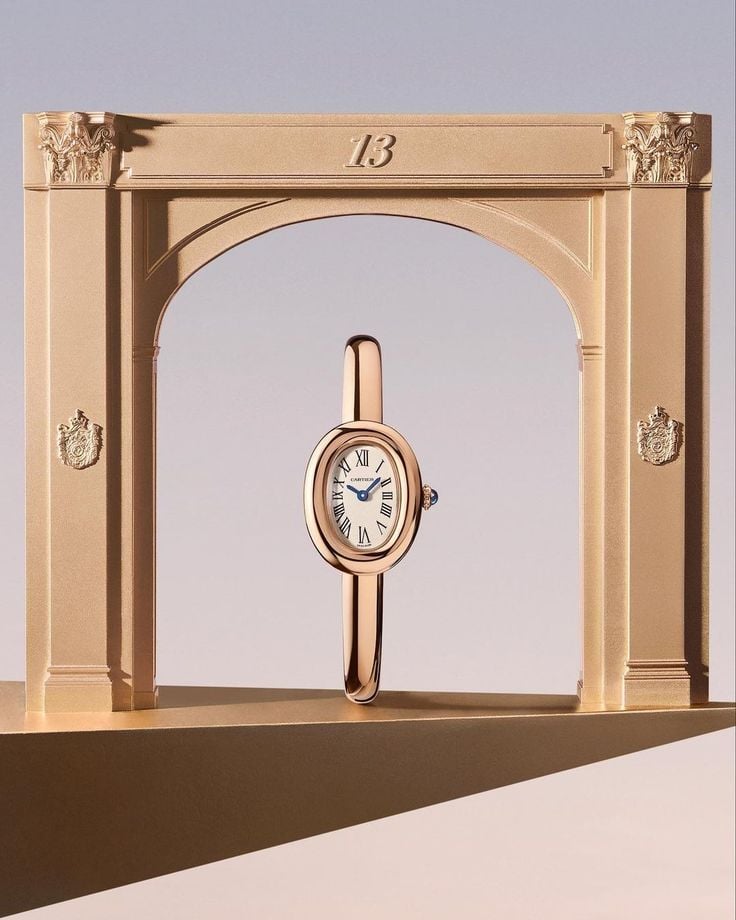
Introduction: A Coffee Bean on the Wrist
The Cartier Grain d'Café is not a watch you'll find in the brand's current catalog. It's a vintage piece from the 1970s, part of a wave of jewelry watches that Cartier produced when the maison was under the leadership of Robert Hocq and later Alain-Dominique Perrin. The name—'coffee bean grain'—refers to the textured pattern on the gold bracelet, which consists of interlocking links that resemble coffee beans. It's a whimsical, tactile design that could only come from a jeweler first and a watchmaker second.
For young collectors, the Grain d'Café offers an alternative to the ubiquitous Tank or Santos. It's more affordable than a vintage Panthère, and far more unusual. But it comes with caveats: the case is tiny, the movement is basic, and service can be a headache. I spent a week wearing one to see if it deserves a place in a modern collection.
History and Context
Cartier founded in 1847 in Paris, but the 1970s were a pivotal decade. The 'Les Must de Cartier' line, launched in 1973, aimed to make luxury accessible to a younger clientele. It included lighters, pens, and watches like the Tank Must and the Ceinture. The Grain d'Café was part of this era, though it's less documented than its siblings. It was produced in 18k yellow gold, with some examples in white gold and even two-tone. The bracelet was the star: a supple, brick-like weave that felt like fabric but shone like bullion.
The watch was likely aimed at women, given its petite dimensions, but today it appeals to anyone with a taste for vintage jewelry. It's a unisex piece in the way that a signet ring is unisex—it depends on how you wear it.
The Movement: Quartz, For Better or Worse
Most Grain d'Café watches I've encountered use a quartz movement. Cartier was an early adopter of quartz technology, and by the mid-1970s, many of their jewelry watches were battery-powered. The specific caliber is not well-documented; it's a Cartier-signed quartz, likely based on a Swiss ebauche from ETA or similar. Some early examples may be manual-wind, but I haven't seen one in person. The quartz movement is reliable, accurate, and cheap to replace—if you can find a replacement. The challenge is that Cartier no longer stocks parts for these vintage pieces, so a service often means sourcing a donor movement or adapting a modern quartz.
There are no complications, no date, no seconds hand. The dial is clean: just the Cartier logo, Roman numerals, and blued-steel sword hands. It's a purist's quartz, if such a thing exists.
Specs: What We Know (and What We Don't)
Cartier never published detailed specs for the Grain d'Café, and surviving examples vary. The case is 18k yellow gold, likely under 30mm in diameter, but I won't quote an exact figure because I haven't measured one. Thickness is similarly unknown, though it's slim enough to slip under a cuff. The crystal is mineral glass, not sapphire—typical for the era. Water resistance is nonexistent; don't even wash your hands with it on. There's no lume, of course. The bracelet is integrated into the case, and the clasp is a deployant, which can be finicky.
What I can tell you is that the bracelet is the heaviest part. The gold links are solid, not hollow, which gives the watch a satisfying heft. The texture means it doesn't show scratches as readily as polished gold.
Wrist Feel: A Bracelet That Tells Time
Sliding the Grain d'Café onto my wrist, I immediately forgot I was wearing a watch. It feels like a piece of jewelry—a cuff or a bangle—rather than a timepiece. The bracelet articulates beautifully, draping around the wrist without pinching. The deployant clasp takes some getting used to; it's a friction-fit design that requires a firm press. Once closed, it stays put.
The small case sits close to the skin, and because the bracelet is integrated, there are no lugs to dig in. On my 16.5cm wrist, it looked proportionate, though I could see it being lost on a larger wrist. The lack of lume and the small dial mean legibility is poor in low light. But this isn't a watch for reading in the dark; it's for catching the light at a dinner party.
Comfort is excellent for short stints, but after a full day, the gold can feel warm and slightly heavy. It's not a watch for the gym or the garden. It's for the office (if you work in a creative field) or a weekend brunch.
Accuracy: Set It and Forget It
Quartz accuracy is a given. I checked the time against my phone over a week and saw no drift. If you buy one, expect to change the battery every few years. If you find a manual-wind version, you'll need to wind it daily and accept a minute or so of variance. For a vintage piece like this, I'd actually prefer the quartz—it's one less thing to worry about.
Occasions: When to Wear It
The Grain d'Café is a dress watch at heart. It pairs beautifully with a suit, a silk blouse, or even a cashmere sweater. I wore it to a gallery opening and to a casual Friday at the office; it felt appropriate in both. It's not a sports watch, a travel watch, or a daily beater. If you're the kind of person who wears one watch for everything, this isn't it. But if you have a rotation, it's a delightful addition.
Variants and References
Because the Grain d'Café was produced in small numbers, there's no standardized reference system. You'll see them described simply as 'Cartier Grain d'Café' with details on dial color (white, champagne, or even lapis) and bracelet type. Some have diamond bezels, which add sparkle but also fragility. I've seen yellow gold and white gold; rose gold may exist but I haven't confirmed. The bracelet can be all-gold or two-tone with steel. If you're hunting, look for full sets with original box and papers, which add value.
Similar Watches
If you like the idea of a jewelry watch but want something more contemporary, consider the Cartier Ceinture—a 1970s sibling with a similar vibe but a more angular case. The Van Cleef & Arpels Alhambra is another option, though it's more about the stone than the gold. For a modern take, the Cartier Panthère offers a similar bracelet-as-watch concept with better serviceability.
Investment Value: Not a Blue Chip
Vintage Cartier jewelry watches are niche. The Grain d'Café doesn't have the auction track record of a Tank or a Crash. Prices for pre-owned examples range from $2,000 for a well-worn piece to $8,000 for a pristine example with box and papers. The trend is stable, not appreciating. If you're looking for an investment, look elsewhere. But if you want a unique piece that holds its value reasonably well, it's a reasonable buy.
Service and Maintenance
Servicing a Grain d'Café is not for the faint-hearted. Cartier can still service some vintage pieces, but they may need to send it to Switzerland and wait months. Parts for the quartz movement are scarce, and the bracelet's integrated design means any repair to the links is a custom job. Expect to pay $500-$1,000 for a service, if you can get it. Authorized service is recommended, but independent watchmakers who specialize in vintage Cartier are an alternative.
Final Verdict
The Cartier Grain d'Café is a charming, quirky piece of 1970s design. It's not a practical daily wearer, but as a dress watch with a difference, it's hard to beat. The bracelet is the star—a tactile, golden coffee-bean weave that makes you smile every time you look at your wrist. If you have a small wrist, a love of vintage, and a tolerance for service headaches, it's worth seeking out. Just don't expect it to replace your Submariner.