Casio GWF-D1000BC Review: The Frogman That Earns Its Keep
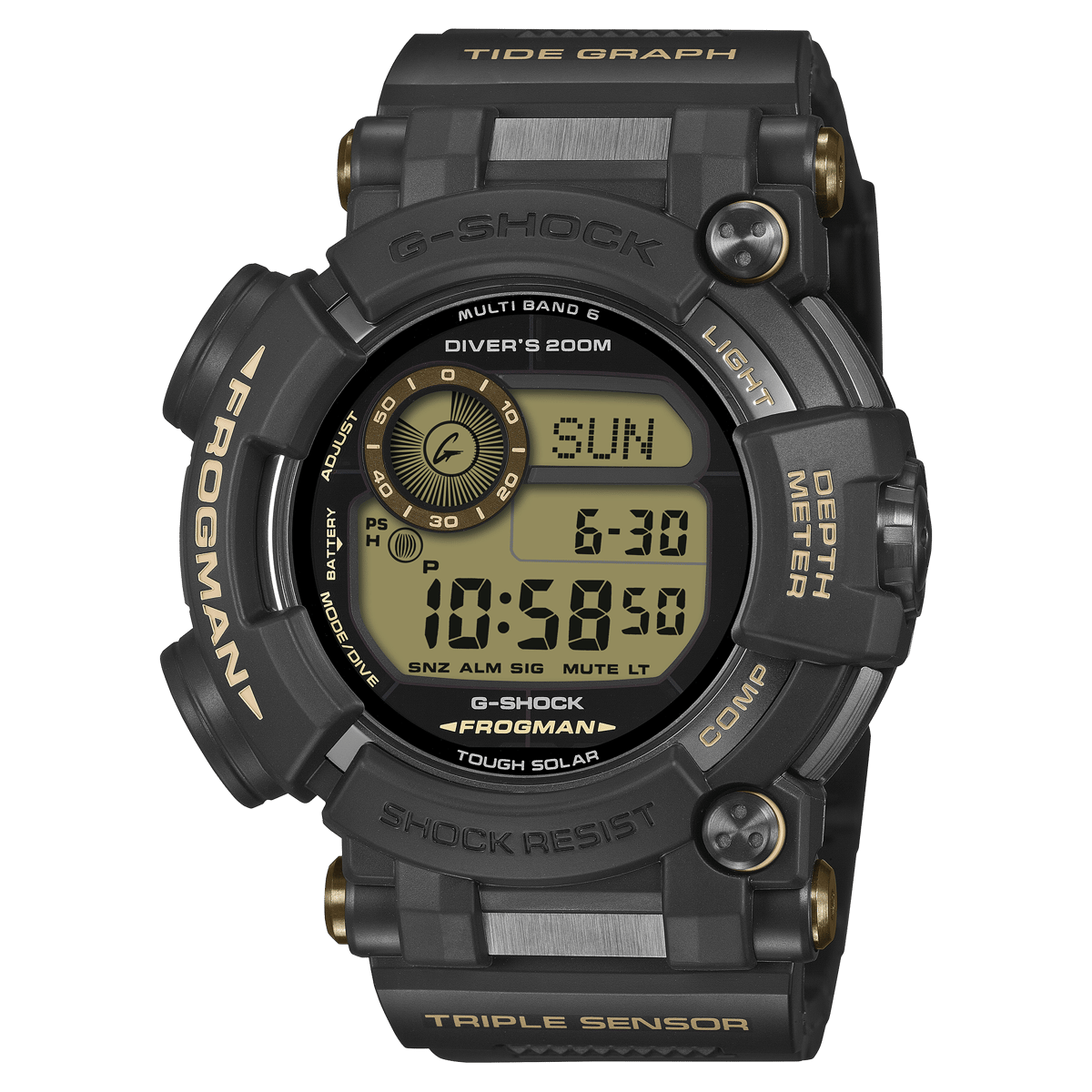
The Casio GWF-D1000BC is not a watch that asks for permission. It is a Master of G Frogman, a dive-specific tool with triple sensors, Tough Solar power, and a design language that puts function ahead of elegance. For collectors who spend most of their time in steel sports watches, the GWF-D1000BC can feel like a different species: larger, more technical, and unapologetically utilitarian. That is precisely the point.
In the current market, the GWF-D1000BC occupies an interesting niche. It is expensive enough to be a considered purchase, yet not so precious that owners treat it as a safe queen. Secondary prices have settled into a stable band, and the Frogman name still carries weight among G-Shock collectors. This review looks at the watch as a tool, a daily companion, and a hold-or-sell proposition.
Brand context: Casio and the Frogman line
Casio was founded in 1946 in Japan and introduced the G-Shock in 1983. The Frogman arrived in 1993 as a dive-focused Master of G, and it quickly became one of the most recognizable tool-watch families in the G-Shock catalog. The GWF-D1000BC continues that lineage with a triple-sensor module, solar charging, and a case built around underwater use rather than desk diving.
The Frogman has always been a niche within a niche. It is not the everyman G-Shock square, and it is not a fashion-forward limited edition. It is a purpose-built dive watch that happens to have a cult following. That combination gives the GWF-D1000BC a certain credibility among collectors who want a watch with a real reason to exist.
Design and case construction
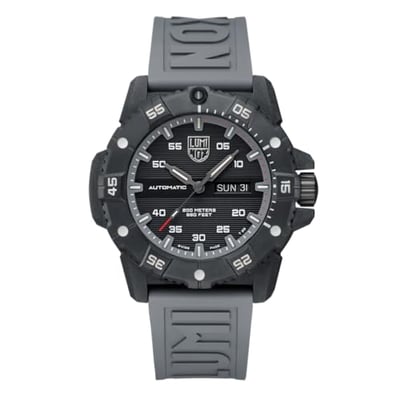
The watch uses a stainless steel case with a carbon bezel, a mineral crystal, and a rubber strap with a pin buckle. Water resistance is rated to 200 meters, which is appropriate for a dive-oriented Frogman. The case is large and tall in person, and the bezel gives it a chunky, armored look. This is not a watch that slips under a cuff; it is a watch that announces itself.
The mineral crystal is a practical choice for a tool watch, though it will not have the scratch resistance of sapphire. The rubber strap is comfortable and secure, and the pin buckle keeps the package simple. There is no traditional lume in the luxury sense; the watch relies on LED illumination and a highly legible display. That is consistent with the G-Shock design philosophy. The caseback and bezel are shaped to protect the module and keep the watch stable during activity.
From a pure design standpoint, the GWF-D1000BC is a function-first object. The dial is busy because it has to display multiple sensor readings, time, and dive data. The bezel is chunky because it protects the crystal and the module. The strap is resin because it needs to survive water, sweat, and abuse. None of these choices are accidental, and collectors who appreciate industrial design will find a lot to like.
Movement and functions
The GWF-D1000BC runs on Casio's Module 3510, a solar-powered quartz movement. It is not a mechanical watch, and it does not pretend to be. The module delivers depth measurement, a compass, a thermometer, a dive log, chronograph functions, alarms, and a perpetual calendar. Timekeeping is quartz-accurate, and with radio or Bluetooth correction the watch can be effectively set-and-forget. The power system is Tough Solar, so routine light exposure keeps it running without regular battery changes.
From a collector's standpoint, the movement is less about finishing and more about capability. There is no hand decoration to admire, no exhibition caseback, and no mechanical drama. The value is in the sensor suite and the reliability of the digital/analog display. That is the correct trade-off for a Frogman. The module is in-house Casio technology, and it is built for durability rather than servicing romance.
The dive log is one of the more interesting functions. It allows the owner to record depth and time data, and in Bluetooth-equipped variants that data can be reviewed through the companion app. For actual divers, this is a useful feature. For collectors, it is part of the watch's identity. The triple sensor also includes a compass and thermometer, which make the watch useful for hiking, travel, and outdoor work.
Wrist feel and presence
On the wrist, the GWF-D1000BC feels like a proper Master of G. It is large, tall, and visually dense, with a case that sits high and a strap that wraps securely. The carbon bezel and resin strap help manage the weight, but they do not make the watch small. Owners with smaller wrists should try before buying; this is a watch that can overwhelm a shirt cuff and dominate a casual outfit.
For sport, travel, and outdoor use, the size makes sense. The watch feels stable during activity, and the display is easy to read at a glance. The trade-off is versatility. It is not a formal watch, and it is not a subtle daily wearer for every occasion. It is at its best when the owner wants a tool-watch presence and does not need to pretend otherwise.
Wrist presence is a five out of five. This is not a watch that disappears on the arm. It is a statement piece in the tool-watch sense, and it signals that the owner values capability over convention. That will either be the reason to buy it or the reason to pass.
Accuracy and daily use
Quartz accuracy is one of the GWF-D1000BC's strongest practical arguments. In free-running mode, expect accuracy within about ±15 seconds per month. With radio sync or Bluetooth time correction, the watch can be effectively exact. Solar charging means the owner does not need to worry about battery changes under normal use, though the rechargeable cell will eventually require service.
Daily use is straightforward: the functions are deep but the core timekeeping is reliable. The dive log and sensors are there for owners who will actually use them; for others, they are part of the watch's character. The main daily compromise is size, not function.
In practice, the GWF-D1000BC is a watch you can grab and go. It does not need winding, it does not need a winder, and it does not need to be babied. That makes it an excellent travel companion, especially for trips that involve water, hiking, or outdoor activity. The only real question is whether the owner can live with the bulk on a daily basis.
Variants and family references
The GWF-D1000 family includes several Frogman variants. The GWF-D1000-1 is the standard triple-sensor model. The GWF-D1000B-1 adds Bluetooth and blue accents. The GWF-D1000BC-1, closest to the reference reviewed here, combines a carbon bezel with Bluetooth-linked dive-log functionality. Earlier Frogman references such as the GWF-1000 and GW-200 remain important in the collector conversation, while the newer GWF-A1000 shows how the line has evolved toward analog-digital design.
Within the Frogman family, the GWF-D1000BC sits in a sweet spot for collectors who want modern functionality without going all the way to the newest analog-digital models. It retains the classic Frogman silhouette while adding the triple sensor and solar power that make it genuinely useful. That combination is likely to keep demand steady among G-Shock enthusiasts.
Similar watches and alternatives
Buyers considering the GWF-D1000BC often cross-shop dedicated dive computers and other tool watches. The Seiko Prospex Marinemaster offers a mechanical alternative with serious dive credibility and a strong collector following. The Garmin Descent Mk2 and Suunto D5 are modern dive computers with depth logging and multisport features. None of them match the Frogman's specific mix of G-Shock toughness, solar power, and collector nostalgia.
If you want a mechanical dive watch with luxury finishing, the GWF-D1000BC is not the answer. If you want a rugged dive tool that can also serve as a daily beater and has a real collector base, it is a compelling option. The closest alternative within Casio's own lineup is probably the GWF-A1000, which offers a more analog-digital design but less of the classic Frogman feel.
Market context and collectibility
The GWF-D1000BC is not an investment-grade watch in the way a steel Patek or a vintage Rolex is. It is a collectible G-Shock, and that means value is driven by condition, completeness, and demand for the specific variant. Secondary prices have been stable rather than explosive. A complete set with good condition can command a premium, but there is no major auction history to suggest blue-chip appreciation. The original MSRP was around $1,100, and pre-owned examples generally trade in the $700-$1,200 range depending on condition and accessories.
Demand cycles for G-Shock Frogman models tend to follow the collector community rather than the broader luxury market. When a new Frogman generation is released, interest in older references often picks up. When the market is focused on steel sports watches, tool watches like the GWF-D1000BC can cool off. That is why this is a hold-for-use purchase rather than a speculative trade.
For collectors, the hold-versus-sell decision is straightforward. If you value the triple-sensor Frogman format and wear the watch, holding makes sense. If the size keeps it in the drawer, selling into the stable demand for Frogman variants is reasonable. The watch will not fund a retirement, but it will not collapse like a fashion watch either.
Service and ownership
Casio service centers handle repairs and rechargeable-cell replacement. There is no routine mechanical service schedule, which keeps ownership simple. The watch is robust, but the sensors and module are specialized, so authorized service is the safer route if something fails. For most owners, the GWF-D1000BC will run for years with minimal attention.
Ownership is further simplified by the solar power system. There is no annual battery change to budget for, and the watch can sit in a drawer for long periods as long as it gets some light. That makes it a low-maintenance addition to a collection, even if it is not the watch you wear every day.
Final verdict
The Casio GWF-D1000BC is a specialized tool watch with a clear purpose. It is not luxurious, subtle, or mechanically romantic. It is a Frogman: tough, solar-powered, sensor-equipped, and built for underwater use. For collectors who want a capable dive tool with real G-Shock character, it earns its place. For buyers looking for a safe investment or a dress watch, it is the wrong answer.
Buy it for capability, wear it for adventure, and hold it only if the Frogman formula still excites you. That is the honest market take.