In this review# Chronoswiss Regulator Classic Review
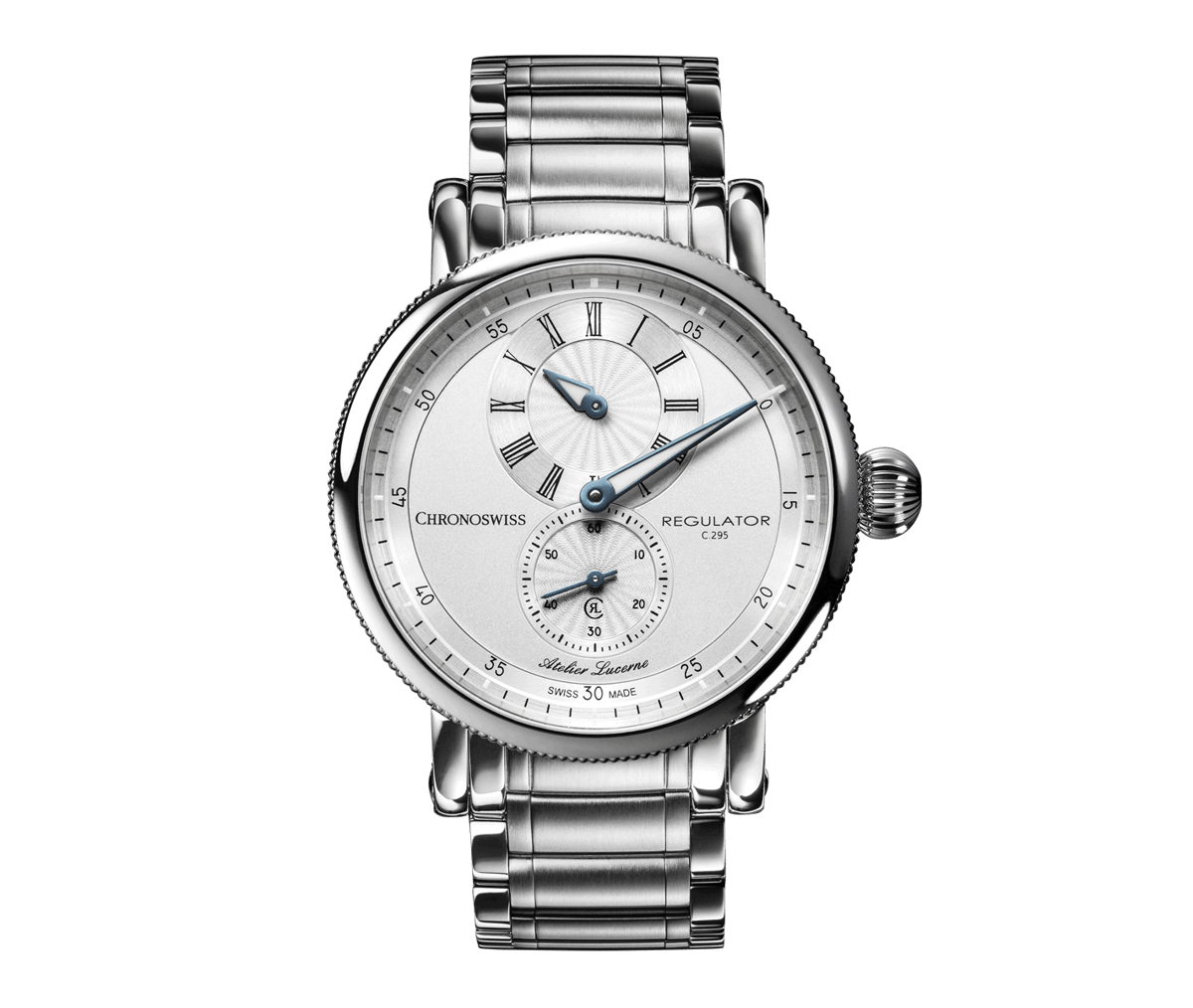
When Chronoswiss unveiled the Regulator Classic in 2019, it did so with a clear intention: to reaffirm its reputation as the premier interpreter of the regulator‑style watch. The model arrives in two case diameters—37 mm for those who favour a more restrained wrist presence and 41 mm for a contemporary, slightly bolder silhouette—both executed in polished stainless steel. Its most distinguishing feature is the regulator layout, where the hour track sits off‑centre, the minutes remain central, and a discreet small‑seconds sub‑dial sits at the 6 o’clock position. The watch is offered with three dial colour schemes—galvanic silver, deep blue, and a muted grey/black—each finished with a sun‑burst texture that enhances legibility. Powered by Chronoswiss’s in‑house Calibre C.295 automatic movement, the Regulator Classic promises a 42‑hour power reserve and 100 m water resistance, all for a retail price of roughly $6,000 (CHF 4,750 / EUR 4,650). Below we break down how the watch performs in the key areas that matter to collectors and everyday wearers alike.
## Heritage — the model's place in the brand's line and its launch context
Chronoswiss has long been associated with the regulator aesthetic, a design language that dates back to the brand’s early experiments in the 1970s and has since become a signature element of its catalog. The Regulator Classic sits squarely within this lineage, representing the brand’s “entry‑level” offering in a portfolio that also includes more complex, higher‑priced regulator models. Launched in 2019, it arrived alongside a refreshed visual language that the brand describes as “sportier” and “more youthful,” signaling an attempt to appeal to a broader audience while preserving the classic regulator architecture that enthusiasts have come to expect.
The model is positioned as a Tier 2 dress‑watch in Chronoswiss’s internal hierarchy, indicating a balance between mechanical sophistication and price accessibility. Its launch coincided with a broader expansion of the regulator range, which now includes both the 37 mm and 41 mm case sizes. This dual‑size strategy acknowledges the growing demand for both traditional and contemporary wrist dimensions without compromising the core design principles that define the regulator format.
## Design & Case — case dimensions, materials, dial
### Case
The Regulator Classic is built around a stainless‑steel case that measures 41 mm in diameter for the larger version, with a slimmer 37 mm alternative. Both sizes retain the same proportionate geometry, ensuring that the regulator layout remains visually balanced regardless of the case size chosen. The case thickness is not disclosed in the source material, but the overall silhouette is clean, with smooth, rounded edges that complement the watch’s dress‑watch intent.
Chronoswiss equips the watch with a screw‑down crown and a case back that is described in the official factsheet as a “solid” component, though the source does not elaborate on whether it is transparent or opaque. The watch offers a water resistance rating of 100 m (10 atm), making it suitable for everyday wear and occasional swimming, though it is not intended for serious diving.
### Dial
Three dial finishes are available:
* **Galvanic Silver** – a bright, reflective surface that accentuates the regulator’s off‑centre hour track.
* **Blue** – a deep, saturated hue that adds a contemporary twist while preserving legibility.
* **Grey/Black** – a more understated tone that leans toward classic dress‑watch aesthetics.
All dials feature a sun‑burst texture that catches light and aids readability. The hour track is positioned at the 3 o’clock position, a hallmark of regulator watches, while the central minute hand sweeps the traditional centre. A small‑seconds sub‑dial sits at 6 o’clock, keeping the overall layout uncluttered. Reviewers consistently note the dial’s “very legible” nature, describing the time‑telling experience as “incredibly user‑friendly.”
The hour markers are applied, with a minimalist baton style that aligns with the watch’s clean aesthetic. The hands are coated in a luminescent material, ensuring visibility in low‑light conditions, though the exact luminescence specification is not provided.
### Bracelet
Chronoswiss pairs the Regulator Classic with a stainless‑steel bracelet that mirrors the case’s finish. Positive commentary from owners highlights that the “case and bracelet brim with quality,” suggesting a high level of finishing, solid link construction, and a comfortable fit. The bracelet’s design is straightforward, avoiding excessive decoration, which reinforces the watch’s dress‑watch positioning. No specific details about micro‑adjustment mechanisms or clasp type are supplied in the source data.
## Movement & Performance — caliber, power reserve, accuracy
At the heart of the Regulator Classic lies the Chronoswiss Calibre C.295, an in‑house automatic movement. This calibre is a development of the brand’s earlier Calibre C.291, but the source does not detail the technical differences beyond the designation change. The C.295 delivers a power reserve of 42 hours, which is sufficient for daily wear and typical overnight storage.
The movement operates at a standard frequency for modern automatic watches; however, the source does not specify the beats‑per‑hour (vph) rate, so we refrain from stating any figure. Chronoswiss’s reputation for meticulous finishing is evident in the movement’s visible components, though the watch is presented with a solid case back, limiting direct visual access to the movement for the wearer.
In terms of accuracy, the source material does not provide certified chronometer data or average daily deviation figures. Nonetheless, Chronoswiss’s historical emphasis on precision engineering suggests that the C.295 meets the brand’s internal standards for reliability. One negative review references an “ETA 2895‑2 modificado” movement, implying that some owners compare the Regulator Classic unfavourably to earlier regulator models that employed re‑finished Enicar movements. This criticism points to a perception that the current in‑house movement lacks the heritage appeal of its predecessor, though it does not directly comment on performance metrics.
## On the Wrist — wearability, lug‑to‑lug, comfort notes
The Regulator Classic’s 41 mm case places it on the larger side of contemporary dress watches, while the 37 mm version offers a more traditional fit. The source does not disclose the exact lug‑to‑lug measurement, so we cannot comment on the watch’s wrist coverage in precise terms. However, the combination of a polished stainless‑steel case and a matching bracelet results in a balanced weight distribution that most wearers find comfortable for extended periods.
The bracelet’s solid construction, praised for its quality, contributes to a secure yet flexible fit. The absence of a disclosed micro‑adjustment system means that fine‑tuning the bracelet length must be performed by a professional or through standard link removal. The watch’s 100 m water resistance adds a practical benefit, allowing the wearer to expose the piece to rain, hand washing, or brief swimming without concern.
Overall, the regulator layout does not impede comfort; the off‑centre hour track is positioned away from the wrist’s natural curve, and the central minute hand remains unobstructed. The small‑seconds sub‑dial at 6 o’clock is low‑profile, ensuring that the watch sits flat against the skin without catching on clothing.
## When to Wear — occasion, setting and dress‑code fit
Chronoswiss markets the Regulator Classic as a dress watch, and its aesthetic validates that claim. The clean lines, polished steel case, and understated dial colours make it suitable for formal environments such as business meetings, galas, or black‑tie events. One reviewer explicitly notes that the watch “will complement casual attire or a black‑tie ensemble,” indicating a versatility that bridges both relaxed and formal dress codes.
The regulator layout, while distinctive, does not appear overly sporty or casual, allowing the piece to transition seamlessly from a boardroom setting to an evening dinner. The 100 m water resistance, while not a primary selling point for dress watches, adds a layer of practicality for everyday life, making the Regulator Classic an unobtrusive companion for travel or weekend outings.
Because the watch is offered in three dial colours, owners can select a version that aligns with their personal wardrobe palette—silver for classic formal wear, blue for a subtle pop of colour, or grey/black for a more understated look. The stainless‑steel bracelet further reinforces its suitability for a wide range of occasions, eliminating the need for a separate strap swap.
## Value & Verdict — price‑positioning + final take
At a retail price of approximately $6,000 (CHF 4,750 / EUR 4,650), the Chronoswiss Regulator Classic occupies a mid‑tier position within the luxury watch market. It is more affordable than high‑end chronometer‑certified Swiss watches, yet it remains above entry‑level quartz or mass‑produced automatic pieces. The price reflects several factors:
* **In‑house movement** – the Calibre C.295 provides a proprietary alternative to widely used ETA or Sellita calibres, adding brand exclusivity.
* **Regulator heritage** – Chronoswiss’s long‑standing association with the regulator layout justifies a premium for the design’s execution.
* **Material quality** – the polished stainless‑steel case and bracelet, combined with a solid case back, convey a high level of finishing.
* **Versatility** – the watch’s ability to pair with both casual and formal attire expands its utility beyond a single niche.
Critiques centre on two main points. First, some enthusiasts compare the Regulator Classic unfavourably to earlier Chronoswiss regulator models from the 1990s that utilised re‑finished Enicar movements, arguing that the modern version feels “a far cry” from its predecessors in terms of pricing and perceived authenticity. Second, a reviewer mentions that the movement is a “modified ETA 2895‑2,” suggesting that the in‑house calibre may be based on an older platform rather than a wholly original architecture. While these observations do not diminish the watch’s functional performance, they highlight a tension between heritage expectations and contemporary brand strategy.
**Verdict:** The Chronoswiss Regulator Classic delivers a compelling blend of classic regulator design, solid build quality, and an in‑house automatic movement at a price that is competitive within its niche. Its legible dial, polished aesthetics, and 100 m water resistance make it a practical choice for both formal and everyday wear. For collectors who value Chronoswiss’s regulator lineage and appreciate a watch that bridges tradition with a modestly modern aesthetic, the Regulator Classic stands out as a worthy addition. Those seeking a pure historical replica of the brand’s 1990s regulator models may find the price‑to‑heritage ratio less convincing, but for most buyers the watch offers a balanced proposition of design, performance, and versatility.