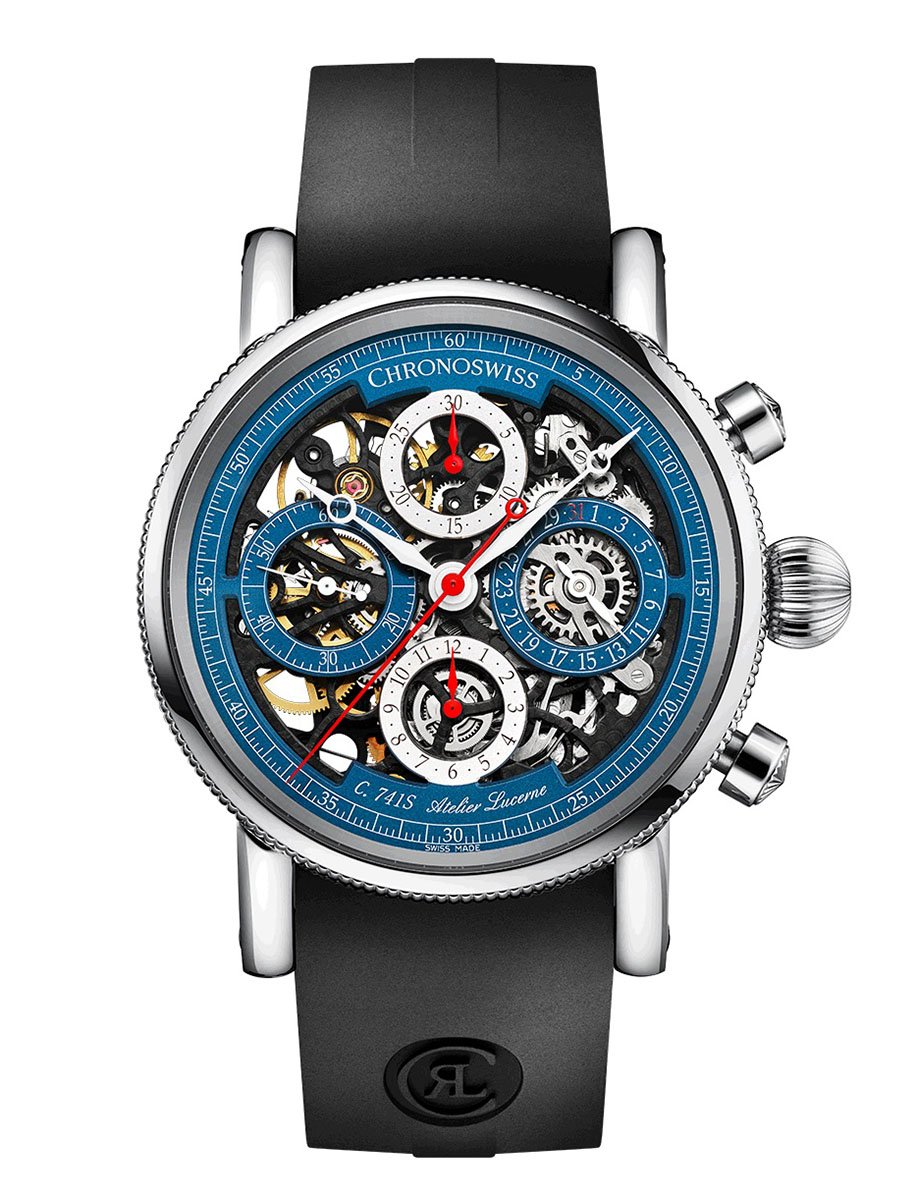
Chronoswiss Sirius Opus Chronograph Review
The Chronoswiss Sirius Opus Chronograph is a watch that rewards the informed collector. It is not a hype piece, nor does it try to be. Instead, it offers a blend of traditional German design, Swiss mechanical reliability, and a distinctive aesthetic that sets it apart from the mainstream. Reference CH-7543.1S-BLSI/71-2 is a stainless steel chronograph with a blue and silver dial, a leather strap, and the brand's signature coin-edge bezel. In a market dominated by in-house movements and limited editions, the Sirius Opus Chronograph remains a charming alternative for those who value character over speculation.
This review examines the watch in detail, from its movement architecture to its wrist presence, and offers guidance on whether it deserves a place in your collection. We will look at the Cal. 741 movement, the finishing, the wearing experience, and the value proposition. Whether you are a seasoned collector or a newcomer to independent horology, the Sirius Opus Chronograph is worth understanding.
Manufacture History
Chronoswiss was founded in Munich in 1983 by Gerd-Rüdiger Lang. Lang was a former employee of Heuer and a passionate advocate for mechanical watchmaking during the quartz crisis. He began by producing regulator clocks and then moved into wristwatches. Chronoswiss is widely credited with reviving the regulator wristwatch in the 1980s, a design where the hour, minute, and seconds hands are separated on the dial.
The brand is known for its classical German design language: coin-edge cases, oversized onion crowns, sapphire crystals, and a love of exposed mechanics. The Opus Chronograph, introduced in the 1990s, became a signature model with its skeletonized dial and visible movement. The Sirius line later offered a more traditional take on the brand's chronograph expertise, with solid dials and classic proportions. The Sirius Opus Chronograph, as reviewed here, bridges these two worlds. It uses the proven Opus chronograph movement but presents it in a more restrained, wearable package.
Chronoswiss has changed hands over the years, but its commitment to traditional watchmaking has remained. The brand is not as well-known as some of its Swiss counterparts, which makes it an insider's choice. For collectors who appreciate independent spirit and technical substance, Chronoswiss offers a compelling alternative.
Movement and Architecture
At the heart of the Sirius Opus Chronograph is the Chronoswiss Cal. 741, an automatic chronograph movement. It is based on the ETA 2892-A2, a thin and robust automatic base, paired with a Dubois Dépraz chronograph module. This modular architecture is common in the industry and has proven itself over decades. The movement beats at 28,800 vibrations per hour (4 Hz) and offers a power reserve of 42 hours.
The Cal. 741 is not an in-house movement, and it is not COSC-certified. However, Chronoswiss regulates each movement in-house and applies its own finishing. The finishing includes blued screws, Geneva stripes on the bridges, and perlage on the base plate. These details are visible through the sapphire caseback, which is a nice touch for collectors who enjoy watching the mechanics at work. The chronograph function is controlled by two pushers, with a central chronograph seconds hand and a 30-minute counter. A date window is also present, adding daily practicality.
What does this mean for the wearer? It means reliability, ease of service, and a level of finishing that exceeds the movement's humble origins. The ETA 2892 is known for its thin profile and smooth winding, and the Dubois Dépraz module is a proven design. While some collectors may turn their noses up at a non-in-house caliber, the reality is that this movement is more robust and easier to maintain than many exotic alternatives. For a watch at this price point, it is a sensible choice.
Case, Dial, and Finishing
The Sirius Opus Chronograph features a stainless steel case with Chronoswiss's signature coin-edge bezel. The bezel is not just decorative; it provides a tactile grip and adds a distinctive character. The case is round with curved lugs that flow into the leather strap. The crown is oversized and easy to manipulate, a hallmark of Chronoswiss design. The pushers are polished and have a satisfying action.
The dial is where this reference stands out. The BLSI code indicates a blue and silver dial. The main dial is a deep blue with a sunburst or guilloché finish, depending on the light. The two chronograph subdials are silver, providing excellent contrast and legibility. Applied indices and polished hands add a touch of elegance. The date window is discreetly placed, and the overall layout is balanced. There is no lume, which is typical for a dress chronograph, but it means the watch is not suited for low-light legibility.
The sapphire crystal is slightly domed, adding a vintage feel. The caseback is also sapphire, allowing a view of the decorated movement. The finishing on the case is a mix of polished and brushed surfaces, with the bezel and lugs receiving a high polish. The leather strap is well-made and complements the watch's formal character. The pin buckle is simple and functional, though some might prefer a deployant clasp for added convenience.
On the Wrist
The Sirius Opus Chronograph wears like a proper dress chronograph. The case is substantial enough to feel present, yet it sits flat on the wrist and does not overwhelm. The curved lugs and soft leather strap help it hug the wrist comfortably, and the watch is well balanced. The coin-edge bezel provides a tactile grip, and the oversized crown is easy to operate. The chronograph pushers have a crisp, mechanical action that is satisfying to use.
The blue dial with silver subdials is legible and elegant, with applied indices and polished hands that catch the light. The date window is discreet and does not disrupt the symmetry. Overall, it is a watch that feels special without being flashy, suitable for daily wear and special occasions alike. The watch is not a lightweight, but it is not overly heavy either. It has a solid, quality feel that inspires confidence.
Accuracy and Daily Use
The Cal. 741 is a robust and reliable movement. In real-world use, a well-regulated example should keep time within -5 to +10 seconds per day, though this can vary depending on wear patterns and chronograph use. It is not COSC-certified, but Chronoswiss regulates the movement in-house. The power reserve of 42 hours is adequate for a weekend, but if you let it sit for more than two days, you will need to reset the time and date. The chronograph function is smooth, and the date changes reliably.
For a mechanical chronograph, this level of accuracy is perfectly acceptable and in line with other ETA-based luxury watches. The watch is easy to live with. The date is quick-set, and the chronograph is simple to operate. The only caveat is that the watch is not water-resistant to any significant degree, so you should avoid swimming or showering with it. It is a dress watch, after all, and should be treated as such.
Occasions
The Sirius Opus Chronograph is a versatile watch. It can be worn with a suit for formal occasions, with jeans for a sporty look, as a daily wearer, as a dress watch, and even while traveling. Its classic design means it fits in almost anywhere, except perhaps the most extreme outdoor activities. It is not a dive watch, so keep it away from water. But for the office, dinner, or a weekend getaway, it is an excellent companion.
Wrist Presence
On a scale of 1 to 5, the Sirius Opus Chronograph earns a 4 for wrist presence. It has a confident presence thanks to its detailed dial, polished case, and distinctive coin-edge bezel. It is not ostentatious, but it is far from invisible. It draws the eye of those who know watches, while remaining understated enough for conservative environments. The blue dial is particularly striking in person, and the silver subdials add a layer of sophistication.
Reference Variants and Family
Chronoswiss uses a complex reference system. The BLSI code indicates a blue and silver dial, and the /71-2 suffix indicates the strap configuration. Other variants may exist with different dial colors and strap options, but this review focuses on the CH-7543.1S-BLSI/71-2. The Sirius family includes the Sirius Chronograph and Sirius Regulator, while the Opus family includes the original Opus Chronograph with its skeletonized dial. The Sirius Opus Chronograph is a bridge between these two lines, offering the Opus movement in a more traditional Sirius case.
Similar Watches and Homages
If you are considering the Sirius Opus Chronograph, you might also look at the Omega Speedmaster Professional, a manual-wind chronograph with a similar classic heritage. The IWC Portugieser Chronograph is another dressy automatic chronograph with a clean dial and comparable positioning. For those who want an in-house movement, the Jaeger-LeCoultre Master Control Chronograph is a step up in finishing and exclusivity. The Zenith El Primero offers a high-frequency automatic chronograph with a storied movement.
For budget-conscious collectors, there are homages that capture a similar vintage chronograph vibe. The Seagull 1963 Chronograph is a mechanical chronograph with military charm, priced around $250. The Dan Henry 1964 Chronograph is another affordable option that pays tribute to mid-century designs. These are not direct copies of the Chronoswiss, but they offer a similar aesthetic at a fraction of the cost.
Investment Value and Service
The Chronoswiss Sirius Opus Chronograph is not a highly sought-after investment piece. MSRP is not widely available, and pre-owned prices are generally in the low four figures. The watch depreciates from retail, like most watches from independent brands. However, this means that buying pre-owned can be a great value. You get a well-made Swiss chronograph with unique design for a fraction of the original price. There is no major auction history for this reference, and it is unlikely to become a collector's item in the near future.
Service is straightforward. The ETA-based movement can be serviced by Chronoswiss or a qualified independent watchmaker. Parts are generally available, and the movement is well understood. Chronoswiss recommends periodic servicing, but the exact interval and cost depend on usage and the service provider. It is always best to consult the manufacturer or a trusted watchmaker for advice.
Pros and Cons
Pros:
- Distinctive Chronoswiss design with coin-edge bezel and blue dial
- Reliable modified ETA chronograph movement
- Sapphire crystal and exhibition caseback
- Comfortable leather strap and solid build quality
Cons:
- Limited brand recognition compared to mainstream luxury names
- Not an in-house movement
- Depreciates on the secondary market
- No lume or significant water resistance for sport use
Final Verdict
The Chronoswiss Sirius Opus Chronograph is a charming, well-executed dress chronograph that blends German design with Swiss reliability. It is not an investment piece, but for a collector who values character over hype, it is a compelling pre-owned buy. Its unique aesthetics and robust movement make it a worthy addition to any collection of independent horology. If you appreciate watches that fly under the radar, this Chronoswiss deserves a closer look.