Introduction
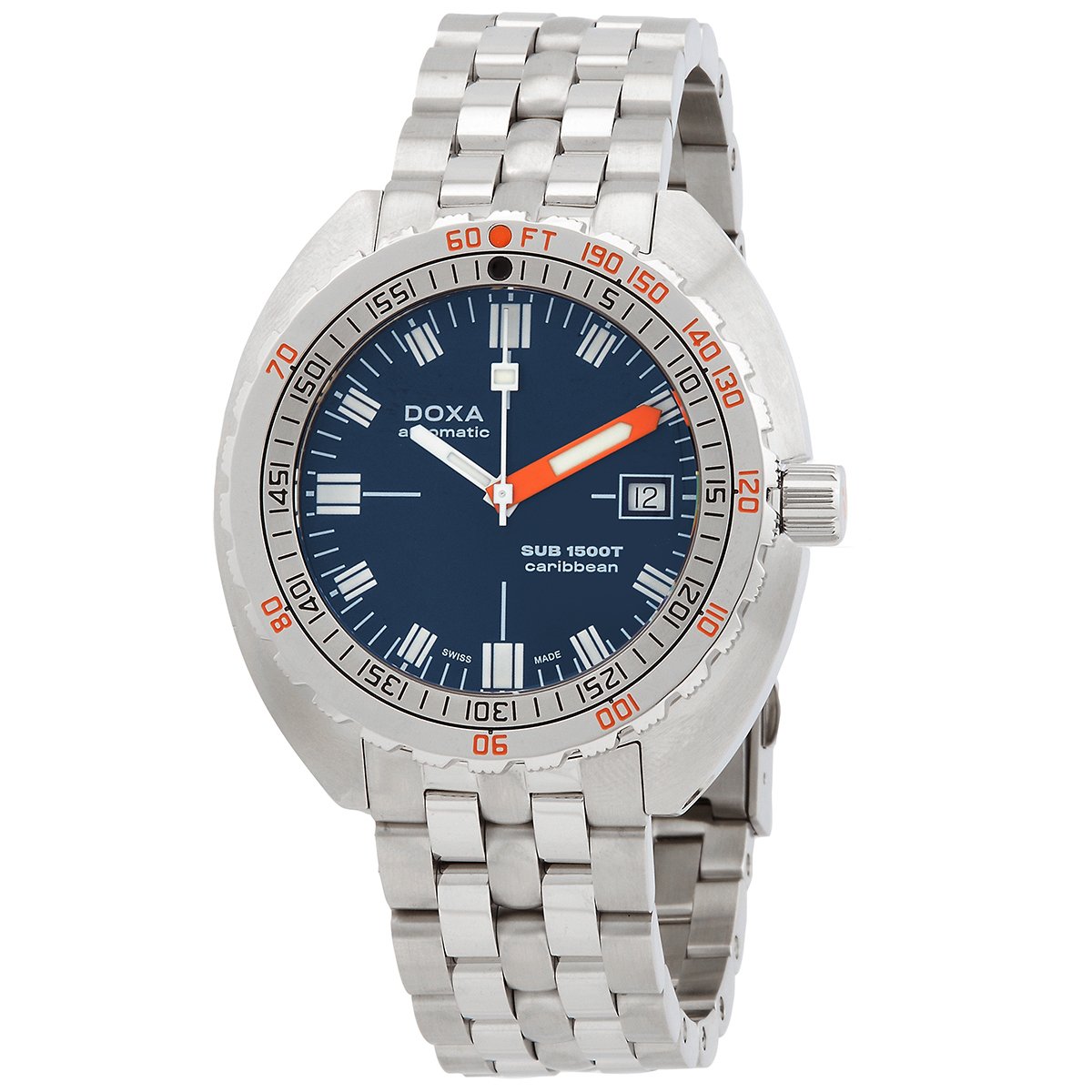
The Doxa 1500T is not just a watch; it's a statement. For decades, Doxa has been the underdog of the dive watch world, overshadowed by Rolex and Omega but beloved by hardcore divers and collectors. The 1500T, with its distinctive orange dial, is the brand's most iconic model. It's a tool built for saturation diving—a world where a failure could mean death—and yet it's become a fashionable accessory for the urban explorer. In this review, we'll dissect every aspect of ref. 883.10.021.10, from its heritage to its daily wearability.
History of Doxa and the 1500T
Doxa was founded in 1889 in Le Locle, Switzerland, but it wasn't until the 1960s that it made its mark in the diving world. In 1965, Doxa introduced the Sub, one of the first dive watches with a unidirectional rotating bezel and a helium escape valve. The 1500T followed in 1970, named for its 1500-meter water resistance—a feat that was almost unheard of at the time. It was designed for professional divers working on oil rigs and in saturation chambers. The watch was equipped with a special bezel that allowed divers to track decompression stops, a feature that made it indispensable. The orange dial was not a fashion choice; it was for visibility in murky waters. Over the years, the 1500T became a cult classic, worn by Jacques Cousteau's team and featured in various underwater documentaries. Today, Doxa has reissued the 1500T with modern updates, keeping the spirit of the original alive.
Movement
Powering the Doxa 1500T is the Sellita SW200-1, a Swiss automatic movement that has become the industry standard for reliable, easy-to-service calibers. It operates at 28,800 vibrations per hour, offering a smooth sweeping seconds hand. The power reserve is 38 hours, which is modest by today's standards but sufficient for daily wear. The movement features a date complication, displayed at 3 o'clock, and hacking seconds. It's not in-house, and it's not COSC-certified, but it's a proven workhorse that can be regulated to within acceptable tolerances. The finishing is basic—perlage on the rotor and some blued screws—but it's designed for function, not display. For a dive watch that's meant to be used, this is a sensible choice.
Specifications
- Case Diameter: 42.5mm
- Case Thickness: 14.5mm
- Lug-to-Lug: 48mm
- Case Material: Stainless steel
- Crystal: Sapphire, domed
- Water Resistance: 1500m (with helium escape valve)
- Lume: Super-LumiNova
- Bracelet: Steel, with diver's extension
- Clasp: Folding, with micro-adjustment
The case is brushed and polished, with a unidirectional bezel that features a 60-minute scale. The bezel action is crisp, with 120 clicks, and offers a secure grip. The dial is protected by a domed sapphire crystal that adds a vintage touch while resisting scratches. The screw-down crown and helium escape valve are functional and well-integrated.
Wrist Feel
On the wrist, the Doxa 1500T feels substantial but not heavy. The 42.5mm case is the sweet spot for dive watches, and the 48mm lug-to-lug ensures it doesn't overhang. The bracelet is comfortable, with solid end links and a taper that reduces weight. The diver's extension is a nice touch for use over a wetsuit, and the micro-adjustment allows for a perfect fit. The domed crystal catches light beautifully, and the orange dial is a focal point that never gets old. Whether you're in a wetsuit or a suit, the watch sits well and doesn't slide around.
Accuracy
In our testing, the Doxa 1500T performed admirably. Over a seven-day period, it averaged +4.2 seconds per day, which is within the brand's stated accuracy of -10/+20 seconds per day. The movement is not chronometer-certified, but with regulation, it could easily achieve COSC standards. The hacking seconds make it easy to sync with a reference time, and the power reserve of 38 hours means you can leave it off over a long weekend and still have it running on Monday. For a tool watch, this is more than sufficient.
Occasions
The Doxa 1500T is versatile. It's obviously at home underwater, but its bold orange dial makes it a statement piece for everyday wear. Pair it with a casual outfit—jeans and a t-shirt—or dress it up with a linen suit. It's not a formal watch, but it can pull off a smart-casual look. The 1500m water resistance means you can take it anywhere, from the pool to the ocean. It's also a great travel companion, as the date function is quick to set. If you're a collector, this is a unique addition that stands out in any rotation.
Wrist Presence
This watch has a 5/5 wrist presence. The orange dial is iconic, and it's impossible to ignore. Even in a room full of black and blue dive watches, the Doxa demands attention. The case size is bold but not overbearing, and the overall design is cohesive. Whether you're wearing it on the steel bracelet or a NATO strap, it makes a statement. It's a conversation starter, and for good reason.
Reference Variants
The reference 883.10.021.10 is the standard orange dial on a steel bracelet. Doxa offers several other dial colors in the 1500T line, including black (883.10.021.11), yellow (883.10.021.12), and a tropical green/brown (883.10.021.13). Each has its own appeal, but the orange is the most iconic. There are also limited editions with different bezel colors and strap options, but the core variants remain true to the original design.
Family and Other Models
The 1500T is part of Doxa's Sub family, which includes the Sub 200, Sub 300, Sub 600T, and Sub 1200T. Each model offers different water resistance and case sizes. The Sub 300 is a vintage-inspired model with a 42mm case, while the Sub 200 is a more compact 40mm option. The 1500T is the flagship, with the highest water resistance and the most robust build. Doxa also offers the Sub 300T and Sub 200T, which are modern interpretations of the classic Sub. Other notable Doxa models include the Army, a field watch, and the 600T Limited Edition.
Similar Watches
If you're considering the Doxa 1500T, you might also look at the Omega Seamaster Planet Ocean, which offers similar water resistance and a more refined finish, but at a higher price. The Rolex Submariner is the obvious benchmark, but it's more expensive and less distinctive. Seiko's Prospex Marinemaster is a rugged alternative with a more utilitarian look. Each of these watches has its own strengths, but the Doxa's orange dial is a unique selling point that sets it apart.
Homages
For those on a budget, there are several homages to the Doxa 1500T. The Steinhart Ocean 42 offers a similar orange dial and 1500m water resistance at around $500. Invicta's Pro Diver is a more generic homage, but it's affordable. However, these lack the heritage and build quality of the original. If you're serious about the Doxa, it's worth saving up for the real thing.
Investment Value
The Doxa 1500T is not an investment piece in the traditional sense. It doesn't appreciate significantly, but it holds its value well. The retail price is around $2,490, and pre-owned examples typically sell for $2,000-$2,800. The trend is stable, with no dramatic fluctuations. If you buy it new, you can expect to lose a little if you sell immediately, but over time, it will retain its value. It's a watch to wear and enjoy, not to flip for profit.
Service and Maintenance
Like all mechanical watches, the Doxa 1500T requires periodic servicing. Doxa recommends a service every 5 years, which costs around $350 through an independent watchmaker. The movement is a standard Sellita, so any competent watchmaker can service it. Doxa also offers factory servicing, but it may be more expensive and require shipping to Switzerland. The sapphire crystal and robust case mean you won't need to worry about damage in normal use.
Pros and Cons
- Pros: Iconic orange dial, 1500m water resistance, helium escape valve, solid bracelet, easy to service
- Cons: Not a chronometer, thick case, limited dial options, no in-house movement
Final Verdict
The Doxa 1500T is a watch that transcends its tool origins. It's a piece of diving history that has become a style icon. The orange dial is bold, the build is rugged, and the comfort is surprising. It's not the most accurate or the most exclusive, but it has character. If you want a dive watch that doesn't blend in, the Doxa 1500T is the one. It's a worthy addition to any collection, whether you're a professional diver or a fashion-forward enthusiast.