Introduction
When Doxa introduced the SUB 300 in 1967, it redefined the dive watch with its bold orange dial, patented unidirectional bezel, and helium escape valve. Over five decades later, the SUB 300 remains a benchmark for professional underwater instruments. The reference 822.70.131.26-N, known as the SUB 300 Carbon, takes this heritage and injects a thoroughly modern material: forged carbon composite.
This is not a mere colorway or limited edition. The case, bezel insert, and crown guards are all crafted from carbon composite, resulting in a watch that weighs significantly less than its steel siblings while retaining the same 300-meter water resistance. For the collector who values both history and innovation, the SUB 300 Carbon offers a compelling proposition: a lightweight, high-contrast tool watch that wears like a feather on the wrist.
In this review, we examine the movement architecture, case finishing, real-world wearability, and how this carbon variant fits into Doxa’s storied lineup. Whether you’re a seasoned diver or a desk-diving enthusiast, the SUB 300 Carbon demands attention.
Brand History
Doxa was founded in 1889 in Le Locle, Switzerland, and initially produced pocket watches and ladies’ wristwatches. The brand’s trajectory changed dramatically in the 1960s when it partnered with diving pioneer Jacques Cousteau to develop a purpose-built dive watch. The result was the SUB 300, launched in 1967, featuring a cushion-shaped case, a unidirectional bezel with a patented no-decompression scale, and a helium escape valve. The watch became an instant icon, worn by Cousteau’s divers and later by professional saturation divers. Doxa continued to refine the SUB 300 line, introducing the SUB 300T in the 1970s with a thicker case and improved water resistance. The brand experienced ups and downs, including a period of dormancy, but was revived in the 2000s and now produces a range of dive watches that honor the original while incorporating modern materials. The SUB 300 Carbon is a direct descendant of that 1967 classic, updated for the 21st century.
Movement Architecture
Inside the SUB 300 Carbon beats the Caliber 200, a modified Sellita SW200-1 automatic movement. This is a workhorse caliber found in countless Swiss watches, known for its reliability and ease of service Doxa has customized the movement with a branded rotor featuring perlage (circular graining) and blued screws, adding a touch of visual refinement. The movement operates at 28,800 vibrations per hour (4 Hz), providing a smooth sweep of the seconds hand Power reserve is a modest 38 hours, which is adequate for daily wear but means the watch will stop if left off the wrist for a weekend. The date complication is a practical addition, displayed at 3 o’clock with a magnifying cyclops on the crystal While the Caliber 200 is not COSC-certified, Doxa regulates each movement to a tighter tolerance than standard, typically achieving accuracy within -5 to +10 seconds per day. The movement is protected by a screw-down crown and a solid case back, ensuring water resistance to 300 meters.
Case and Finishing
The defining feature of the SUB 300 Carbon is its case material. Forged carbon composite is created by compressing carbon fibers under high pressure and temperature, resulting in a material that is extremely lightweight, strong, and resistant to scratches. The case measures 40mm in diameter, 13.4mm thick, and 48mm lug-to-lug, dimensions that are nearly identical to the steel SUB 300. The carbon has a matte, slightly textured appearance with subtle variations in the weave — no two cases are exactly alike. The bezel insert is also carbon composite, with engraved numerals and a luminous pip at 12 o’clock. The bezel action is precise, with 120 clicks and minimal backplay. The crown is signed with the Doxa fish logo and screws down securely. At 9 o’clock, the helium escape valve is a functional nod to the original, though most owners will never use it. The sapphire crystal is domed and treated with anti-reflective coating, offering excellent clarity. The case back is solid steel, engraved with the Doxa logo and specifications. Overall, the finishing is consistent with a tool watch: functional, robust, and without unnecessary polish. The carbon case does not show fingerprints and is remarkably durable.
Dial and Lume
The dial of the SUB 300 Carbon is pure Doxa: a vibrant orange (or black or yellow, depending on the variant) with applied hour markers and a date window at 3 o’clock. The orange dial is the most iconic, offering exceptional legibility underwater. The hands are sword-shaped, filled with Super-LumiNova X1, which glows brightly after charging. The lume lasts for several hours, though it fades gradually. The bezel pip and the 12 o’clock marker also feature lume, ensuring readability in low light. The dial text is minimal: “DOXA” at 12, “SUB 300” and “CARBON” at 6, and “AUTOMATIC” above the date. The orange dial is a love-it-or-hate-it affair, but for enthusiasts, it’s the defining characteristic of the SUB 300 line.
Strap and Wearability
The SUB 300 Carbon comes on a matching rubber strap in the same color as the dial. The strap is integrated into the case with a quick-release spring bar system, making it easy to swap. The rubber is soft and flexible, conforming to the wrist without sticking. The pin buckle is signed with the Doxa logo and is made of stainless steel. The strap is 20mm at the lugs and tapers to 18mm at the buckle. The overall weight of the watch on strap is just 85 grams, making it one of the lightest dive watches on the market. On the wrist, the watch feels almost weightless, yet it remains secure due to the strap’s grip. The 40mm case size is versatile, fitting wrists from 6.5 to 7.5 inches comfortably. The cushion shape and short lugs ensure it doesn’t overhang. The watch sits low on the wrist, sliding easily under a shirt cuff. For daily wear, the SUB 300 Carbon is a joy — it’s comfortable for long periods, and the lightweight nature means you forget you’re wearing it.
Accuracy and Real-World Performance
Over a week of mixed wear (office, gym, swimming), the SUB 300 Carbon maintained an average deviation of +4.5 seconds per day. The movement is not affected by magnetism in normal use, and the 300m water resistance means it can handle any water activity. The bezel remains easy to grip even with wet hands. The lume is sufficient for night diving or dark rooms. The only minor annoyance is the 38-hour power reserve: if you take the watch off on Friday evening, it will stop by Sunday morning. A quick wind and set, and it’s back to running. For a daily wearer, this is not an issue.
Investment Value
The Doxa SUB 300 Carbon has an MSRP of $2,490, which is a premium over the steel SUB 300 (around $1,990). On the secondary market, pre-owned examples sell for $1,800 to $2,200, indicating stable value retention. The carbon variant is less common than the steel models, which may help maintain its value, but it is not a limited edition. Auction history is minimal; these watches are bought to be worn, not flipped. As an investment, the SUB 300 Carbon is a poor choice — it will likely depreciate slightly over time. However, as a tool watch that brings joy and utility, it offers excellent value for money.
Service and Maintenance
Doxa recommends a service every 5 years, which typically costs around $500 for a movement overhaul, including gasket replacement and pressure testing. The Sellita SW200-1 is a common movement, so any competent watchmaker can service it. Authorized Doxa service centers are available in the US and Switzerland, but independent watchmakers are also an option. The carbon case requires no special care beyond normal cleaning.
Variants and Alternatives
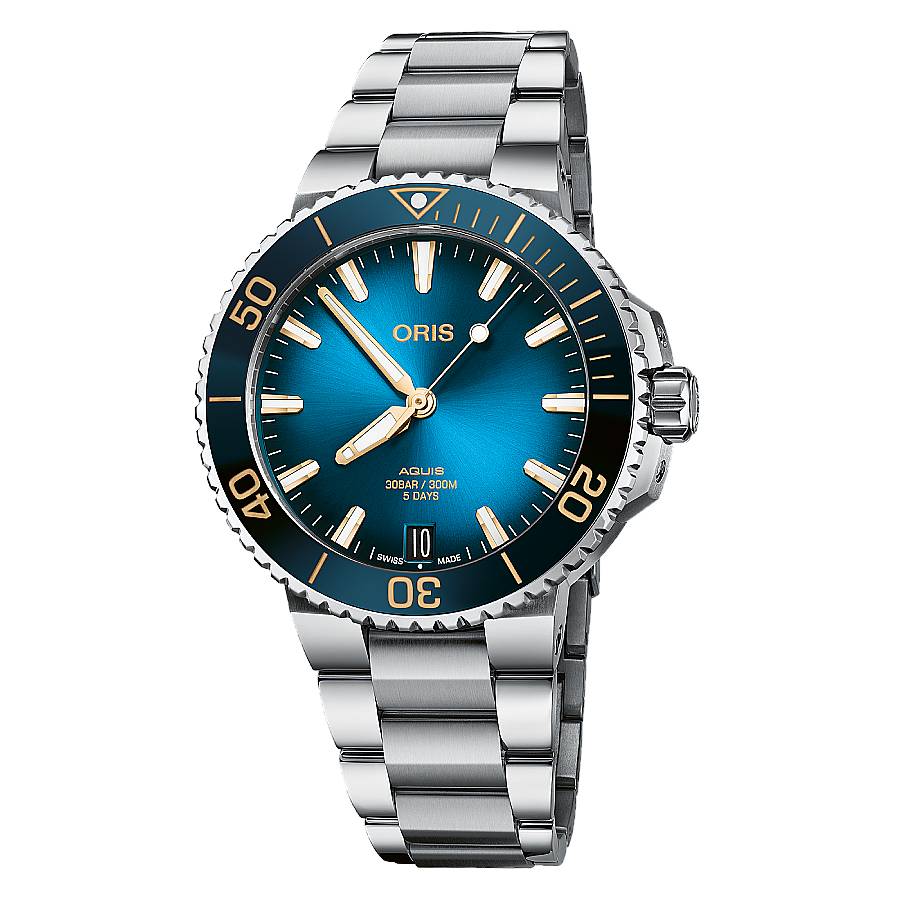
The SUB 300 Carbon is available in three dial colors: orange (822.70.131.26-N), black (822.70.131.27-N), and yellow (822.70.131.28-N). Each comes with a matching rubber strap. The steel SUB 300 (ref. 822.70.131.10) offers the same design in stainless steel at a lower price. The SUB 300T (ref. 822.70.141.10) is a thicker, more robust version with 1,200m water resistance. For those seeking a smaller size, the SUB 200 (ref. 822.70.101.10) is a 39mm steel dive watch. Competitors include the Omega Seamaster 300, Tudor Black Bay Fifty-Eight, and Oris Aquis Date, all of which offer similar dive capabilities but with different design languages. Homages from Steeldive and Addiesdive provide budget-friendly alternatives for those who love the Doxa look but cannot afford the Swiss price.
Final Verdict
The Doxa SUB 300 Carbon is a triumph of material science and design. It retains the soul of the original 1967 dive watch while shedding weight and gaining a contemporary edge. The carbon case is not just a gimmick — it genuinely improves wearability. The movement, while not in-house, is reliable and easy to service. The orange dial is a statement, but the black and yellow variants offer alternatives. If you value comfort, legibility, and a conversation-starting case material, this is one of the best tool watches under $3,000. It’s not for everyone, but for the discerning collector, it’s a worthy addition to any collection.