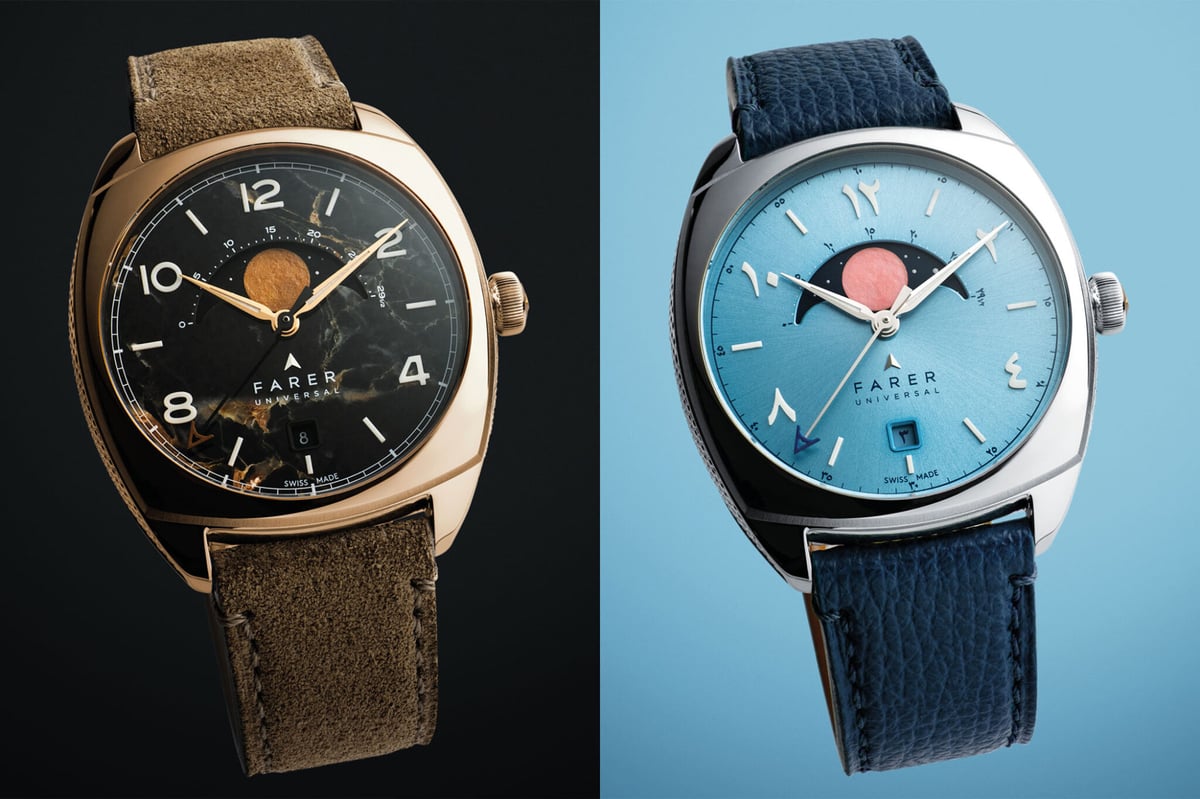
Farer Stratton II Review: A Microbrand GMT With Real Character
The Farer Stratton II is not the watch you buy to impress an auction room. It is the watch you buy because you want a GMT with a point of view—compact, colorful, and Swiss-powered without the legacy-brand markup. Farer has spent the last decade building a cult following among collectors who care more about design than crests, and the Stratton II is one of the clearest expressions of that brief.
As a second-generation Stratton, it refines the formula rather than reinventing it. You get a stainless-steel case, a 24-hour GMT complication, and a dial that feels unmistakably Farer. The question is whether it makes sense for a sophisticated young collector in a market crowded with GMTs from Tudor, Longines, Grand Seiko, and Christopher Ward.
Short answer: yes, if you value character and wearability over resale theater. The Stratton II is a travel watch with a designer’s eye and a movement you can actually service. It is not an asset. It is a companion.
Brand History: Farer’s British-Swiss Formula
Farer was founded in London in 2015 and has built its reputation on a simple idea: British design, Swiss manufacturing, and dials that do not look like everyone else’s. The brand is not trying to be a heritage house. It is trying to be the watch you reach for when you want something with personality but still want proper watchmaking underneath.
The Stratton II sits in Farer’s GMT line, a natural home for a brand that leans into travel and exploration imagery. The original Stratton established the template; the second generation tightens the design and keeps the focus on everyday usability. It is not a limited-edition hype drop, and it is not an auction darling. That is precisely the point.
Farer’s approach is closer to a design studio than a legacy manufacture. The brand works with Swiss partners, keeps production runs relatively small, and releases watches in distinct colorways. That model gives the Stratton II a sense of occasion without the artificial scarcity that defines so many modern drops.
Movement: Sellita SW330-2
The Stratton II runs on the Sellita SW330-2, a Swiss automatic GMT movement with a 24-hour hand and a date complication. It is not an in-house caliber, and it is not COSC-certified. What it is: proven, serviceable, and widely supported. The SW330-2 has a 56-hour power reserve, beats at 28,800 vph, and uses 25 jewels.
In a watch at this price, that is the right trade-off. You are not paying for hand-finished bridges or a micro-rotor. You are paying for a movement that can be maintained by Farer or a competent independent watchmaker, with parts that are not a treasure hunt. The movement architecture is modular, with the GMT function built on a familiar base. It is industrial rather than decorative, but it is honest.
The 56-hour power reserve is a practical detail for a travel watch. You can take it off for a weekend and pick it up again without resetting it. The date and GMT functions are useful without turning the dial into a cockpit. If you want a movement with more romance, you will pay for it elsewhere; if you want a movement that works, this is it.
Specs and Case
The Stratton II uses a 39.5mm stainless-steel case, 12.5mm thick, with a 45mm lug-to-lug measurement. That is a compact package for a GMT, and it is one of the watch’s strongest arguments. It wears like a daily watch, not like a piece of gear you have to plan around.
| Case | Stainless steel, 39.5mm |
|---|---|
| Thickness | 12.5mm |
| Lug-to-lug | 45mm |
| Crystal | Sapphire |
| Water resistance | 100m |
| Lume | Super-LumiNova X1 |
| Strap | Leather |
| Clasp | Pin buckle |
The sapphire crystal is the right choice for a watch that will see travel, and the 100m water resistance is enough for daily life, swimming, and unexpected weather. The Super-LumiNova X1 lume is a practical touch; it is not a dive-watch torch, but it does the job when the lights go down.
The leather strap suits the watch’s design-first brief, though it is not the most travel-proof option. If you plan to wear the Stratton II in hot climates or around water, a second strap is a sensible upgrade. The pin buckle is simple, comfortable, and easy to replace.
Design and Dial
The dial is where Farer does its best work. The Stratton II uses a layered, legible layout with a 24-hour track, applied markers, and a GMT hand that is easy to spot without dominating the dial. Farer’s color sense is the differentiator: it is playful without being childish, and it gives the watch a personality that most sub-$2,000 GMTs lack.
The case finishing is mixed, with brushed surfaces and polished accents that catch light without turning the watch into a mirror. The bezel is clean and purposeful. The overall effect is of a watch that was designed, not assembled from a catalog. That matters in a market where so many affordable GMTs are content to look like scaled-down versions of something else.
Legibility is strong for a watch with this much color. The hands are distinct, the markers are applied, and the GMT hand reads clearly against the dial. It is not a sterile instrument, but it is not a novelty either. Farer has found a balance between fun and function.
Wrist Feel and Comfort
The Stratton II wears smaller than its 39.5mm diameter might suggest, in the best way. The case is compact, the lug-to-lug is manageable at 45mm, and the 12.5mm thickness keeps it from feeling top-heavy. On a 6.75-inch wrist it sits neatly within the wrist bone, with enough case presence to read as a proper watch without sliding into dress-watch territory.
The leather strap is supple from the start, and the pin buckle is simple and comfortable. If you travel with it, you may want a second strap for hot days or water exposure, but the stock leather is right for the watch’s design-first brief. Balance is the key: the domed sapphire adds a little height, but the case remains stable on the wrist.
Comfort is a major part of the Stratton II’s appeal. It is the kind of watch you forget you are wearing, which is exactly what you want from a daily GMT. It does not snag on sleeves, and it does not feel fragile.
Accuracy and Daily Performance
Farer does not certify the Stratton II as a COSC chronometer, so expect real-world automatic performance rather than lab-grade precision. A healthy Sellita SW330-2 will typically run within about -10/+15 seconds per day, and many examples will do better. Positional variation, temperature, and daily wear will matter more than the spec sheet. If you need quartz-level accuracy, this is not that watch; if you accept mechanical reality, it is perfectly acceptable.
The GMT function is easy to set and useful for tracking a second time zone. For a traveler, that is the whole point. The date is a practical addition, though purists may prefer a no-date dial. Farer has made a sensible choice for the target buyer.
Occasions and Wrist Presence
The Stratton II is a versatile watch. It works with a T-shirt and jeans, it works with a blazer, and it works on a long-haul flight. It is not a formal dress watch, and it is not a hardcore dive watch, but it covers daily wear, travel, sport, and most smart-casual situations with ease.
Wrist presence: 3.5/5. The Stratton II does not shout across a room, but the dial’s color and the case’s mixed finishes give it enough presence for a microbrand GMT. It reads as a thoughtful design piece, not a status symbol.
Variants and Family References
The Stratton II is the core second-generation model in Farer’s Stratton line. Its closest family references are the original Stratton, the Lander GMT, and the Barnato GMT. Each takes Farer’s travel-watch language in a slightly different direction, but the Stratton II is the most everyday-focused of the bunch.
Other notable Farer models worth knowing include the Lander GMT, the Cobb Monopusher Chronograph, the Bernina Chronograph, and the Aqua Compressor line. If you like the Stratton II’s design language but want a different complication, Farer has options.
Similar Watches to Consider
If you are shopping the Stratton II, you are probably also looking at the Tudor Black Bay Pro, the Grand Seiko SBGM221, the Longines Spirit Zulu Time 39, and the Christopher Ward C63 Sealander GMT. Each offers a different take on the everyday GMT.
- The Tudor Black Bay Pro is more rugged and more expensive, with a stronger tool-watch flavor.
- The Grand Seiko SBGM221 is dressier and more finely finished, with an in-house movement and a much higher price.
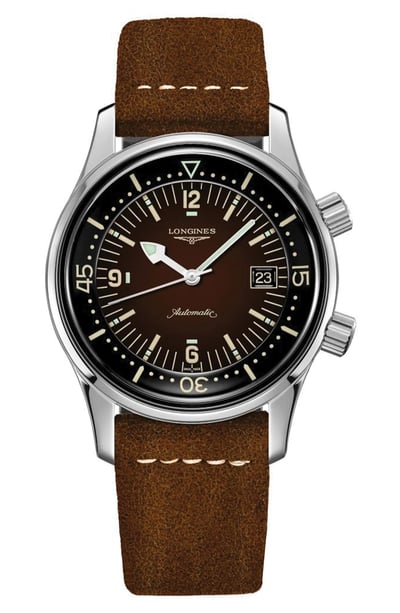
- The Longines Spirit Zulu Time 39 is a mainstream Swiss GMT with vintage cues and strong value.
- The Christopher Ward C63 Sealander GMT is the closest direct rival, with comparable specs and a similar microbrand-to-independent appeal.
The Stratton II’s advantage is design. It does not have the brand history of Tudor or Grand Seiko, and it does not have the mainstream recognition of Longines. What it has is a look that feels specific to Farer, and a size that works for a wide range of wrists.
Homages and Affordable Alternatives
If you want the GMT look for less, there are options. The Seiko 5 Sports SSK003 is an affordable automatic GMT with a similar everyday-travel brief. The Timex Waterbury GMT is a budget dual-time option with vintage flavor. The Pagani Design PD-1662 GMT is a homage-style watch that mimics the look at a fraction of the cost. None of these match the Stratton II’s design cohesion, but they scratch the itch.
Investment Value
The Stratton II has an MSRP of around $1,350 and a current retail price in the same neighborhood. Pre-owned examples typically trade between $850 and $1,100, which tells you the honest story: this is a depreciating asset. Farer is a microbrand, and microbrands rarely hold value like legacy luxury watches. There is no major auction history to speak of.
Hold recommendation: buy it to wear and travel with; do not expect it to appreciate. Farer’s limited runs can hold better, but the standard Stratton II is a consumer purchase, not an asset. If you love the design, the depreciation is the cost of admission.
Service and Ownership
Farer coordinates service through authorized partners, and the Sellita base means independent watchmakers can handle routine maintenance. Service intervals vary with use, and Farer does not publish a single fixed interval for every owner. The practical advice is the same as with any mechanical watch: service it when it stops keeping time or when the crown action feels rough, not on a rigid calendar.
Who Should Buy It
Buy the Stratton II if you want a compact GMT with real design character, a proven movement, and a price that does not require a home equity line. It is for the collector who reads about drops, follows auctions, and still wants a watch that feels like theirs. Skip it if you need brand recognition on the wrist, if you demand COSC accuracy, or if you are shopping for an investment.
Final Verdict
The Farer Stratton II is a sharp, wearable GMT for collectors who want character without the legacy-brand tax. It is not an investment, but it is a genuinely good travel watch with a movement you can trust. Buy it to wear, not to flip.
For the sophisticated young collector, the Stratton II makes the most sense as a second or third watch—the one you take on trips, wear on weekends, and enjoy for its design rather than its resale chart. It is a microbrand GMT with a real point of view, and that is worth something.