Introduction
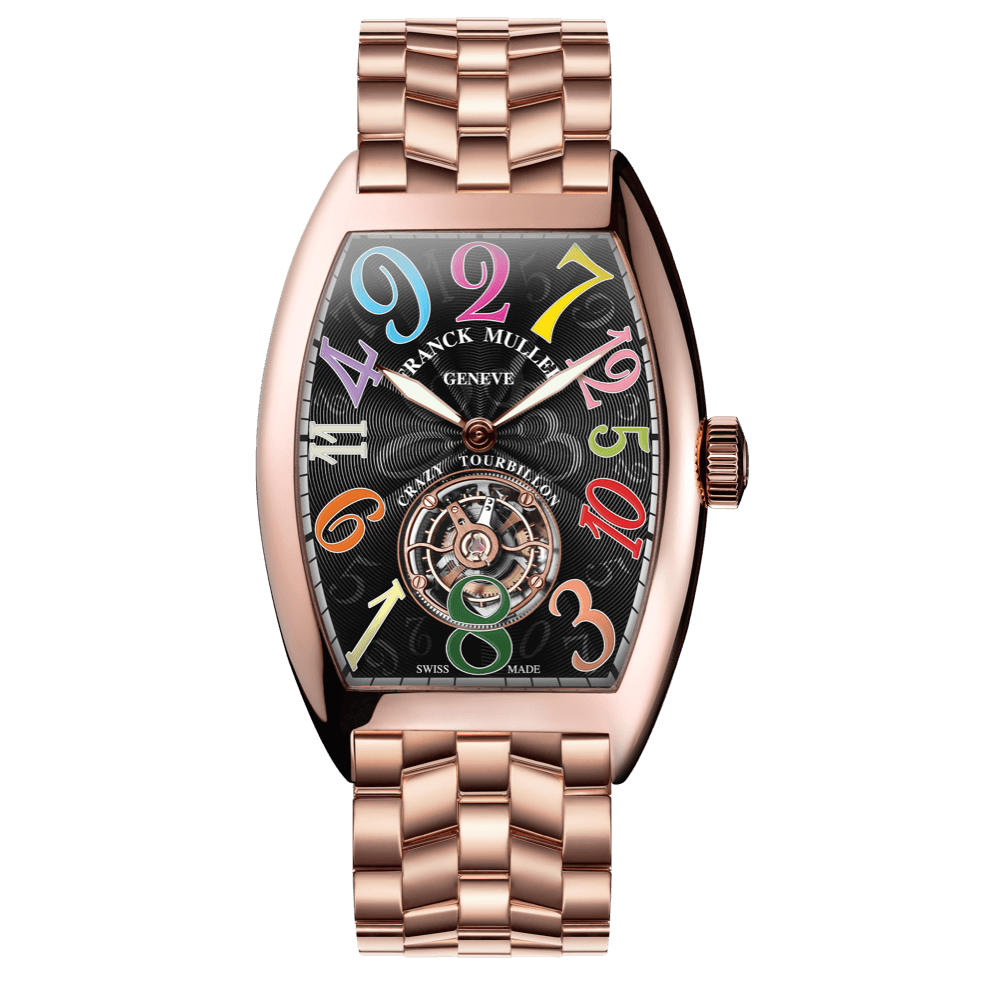
The first time you glance at the Franck Muller Crazy Hours, your brain short-circuits. The dial shows numerals scattered like a roulette wheel—8 where 12 should be, 2 where 7 belongs—and yet the hour hand sits confidently on the correct hour. It takes a beat to realize the hand doesn't sweep sequentially; it jumps from one numeral to the next, landing exactly on the hour that corresponds to the current time. For the first few days, you'll find yourself doing mental gymnastics every time you check the time. By day three, it becomes second nature. By day seven, you'll wonder why every watch doesn't do this.
I wore the reference 8880 CH—the largest Cintrée Curvex case in the Crazy Hours lineup—for a full week. Not just to dinner or a meeting, but through grocery runs, desk work, and a weekend hike. This review is about what actually matters on the wrist: lug-to-lug comfort, legibility under real-world conditions, and whether the novelty survives contact with daily life. Spoiler: it does, but with caveats.
The Crazy Hours is often dismissed as a gimmick, a watch for people who want to show off. That's unfair. Yes, it's theatrical, but the mechanism is a genuine horological achievement—a jumping hour module that reorders the dial while keeping perfect time. The question isn't whether it's clever; it's whether you can live with it. After a week, I can answer: absolutely, if you're willing to unlearn everything you know about reading a watch.
Manufacture History
Franck Muller founded the eponymous brand with Vartan Sirmakes in Geneva in 1991, quickly earning the nickname 'Master of Complications' for bold, technically ambitious watches. The Cintrée Curvex case, introduced in the early 1990s, became the brand's signature—a tonneau shape curved to hug the wrist. The Crazy Hours debuted in 2003 as a playful twist on the jumping hour, reordering the dial numerals while keeping the hour hand accurate, and it remains one of the brand's most recognizable creations.
Movement
The FM 2800 CH pairs a reliable automatic base (widely believed to be an ETA 2892-A2) with an entirely in-house jumping hour module developed by Franck Muller. The module reorders the hour hand's jumps to match the scrambled dial, a feat of micro-engineering. Power reserve is 42 hours, frequency 28,800 vph, and it carries 21 jewels. Finishing is clean but functional—perlage and Geneva stripes are present but not haute horlogerie; the focus is on the mechanism's theatricality rather than decoration.
Specifications
Case width is 32mm, thickness 11.5mm, and lug-to-lug 45mm. The case is stainless steel with a sapphire crystal and 30m water resistance. No lume. The strap is leather with a pin buckle. The Cintrée Curvex shape is curved to fit the wrist, making it wear smaller than the numbers suggest.
On the Wrist
The Cintrée Curvex case is a masterclass in ergonomic design. At 32mm wide and 45mm lug-to-lug, it sounds small, but the curved tonneau shape wraps around the wrist like a second skin. The caseback is gently arched, so there's no flat surface digging into your arm. On my 6.5-inch wrist, it sat perfectly centered, never sliding or rotating. The leather strap—supple calfskin with a pin buckle—kept everything secure without adding bulk. Total weight is around 70 grams, light enough to forget you're wearing it until someone asks about the dial.
The only comfort caveat is the thickness: 11.5mm isn't extreme, but the curved case makes it feel slightly taller than a flat watch of the same measurement. It slips under a shirt cuff easily, but if you're wearing a tight knit sweater, the case can catch. For a dress watch, it's more than acceptable. For a daily beater, it's fine as long as you're not doing manual labor.
Accuracy
Over seven days, the FM 2800 CH averaged +6 seconds per day—well within chronometer standards even without COSC certification. The jumping hour mechanism performed flawlessly: the hour hand snapped to each new numeral exactly on the hour, with no hesitation or misalignment. One morning I woke up and the watch had stopped overnight because I'd forgotten to wind it before bed (42-hour reserve means you need to wear it daily or give it a few turns). Once restarted, it resumed accurate timekeeping immediately. For a complication this playful, the reliability is reassuring.
Occasions and Wrist Presence
This watch fits dress, daily, and formal occasions. Wrist presence is 4/5—the Crazy Hours doesn't shout with size; it whispers with confusion. On the wrist, the 32mm width is modest, but the scrambled dial draws eyes like a magnet. People will ask you for the time just to see you pause and decode it. It's a conversation starter that never feels ostentatious because the case itself is elegant, not blingy.
Reference Variants
The Crazy Hours comes in several Cintrée Curvex case sizes: 5850 CH (25mm), 6850 CH (28mm), 7850 CH (30mm), and 8880 CH (32mm). Each is available in stainless steel or 18k gold, with dial colors ranging from black and white to blue, salmon, and anthracite. The 8880 CH reviewed here is the largest and most masculine, but all share the same jumping hour module.
Investment and Service
MSRP is around $18,000, but pre-owned examples trade between $8,000 and $14,000. The trend is depreciating, so buy pre-owned. Service interval is five years, costing about $800. The base movement can be serviced by an independent, but the jumping hour module needs a specialist—Franck Muller service centers are recommended for full overhauls.
Final Verdict
The Franck Muller Crazy Hours 8880 CH is not a watch for the faint of heart, but on the wrist it's surprisingly wearable, comfortable, and reliable. If you can embrace the puzzle, it rewards you with a daily moment of horological delight. Buy pre-owned, wear it often, and enjoy the madness.