Gerald Charles Maestro GC Sport – A Tennis‑Ready Titanium Chronometer
By Vivir··Updated
In this review# Gerald Charles Maestro GC Sport – A Tennis‑Ready Titanium Chronometer
The Gerald Charles Maestro GC Sport arrives as a purpose‑built tennis companion that tries to marry the razor‑thin elegance of a dress watch with the rugged demands of a high‑impact sport. Launched in 2022, the piece sits in the brand’s newly refreshed Maestro line and immediately draws attention with its 39 mm polished Grade 5 titanium case, a left‑handed screw‑down crown, and a sun‑burst dial that mimics the vivid hues of a hard‑court surface. At just 64 g on the wrist, it feels almost weightless, a characteristic that the brand touts as “lightweight” rather than “the lightest in its class.” The watch is powered by Gerald Charles’s in‑house automatic calibre GCA2001, a movement that has been reinforced for shock resistance and paired with a 100 m water‑resistance rating. Priced in the US$20‑24 k bracket, the Maestro GC Sport aims to sit between the traditional luxury sports watch and the ultra‑technical performance pieces that dominate the high‑end tennis market. Below we break down how the watch lives up to that ambition, where it shines, and where it falls short.
## Heritage — the model's place in the brand's line and its launch context
Gerald Charles, a Swiss brand founded in 2015, has spent its brief history positioning itself as a purveyor of “Swiss‑made, high‑tech luxury” with a strong design pedigree—chiefly through the influence of legendary watchmaker Gerald Genta, who designed the original Maestro case that underpins the GC Sport. The Maestro 2.0, introduced the same year as the GC Sport, is a tier‑one automatic that set the tone for the brand’s modern, understated aesthetic. The GC Sport is the sport‑focused off‑shoot of that lineage, launched in 2022 as a field collaboration with three ATP Tour players. Its reference numbers (GC2.0‑TX‑TN‑01 for the blue version, GC2.0‑TX‑TNSB‑24GR‑RSVC for other dials) place it squarely within the Maestro family, but with a distinct “TX” (tennis) suffix that signals its intended use case.
The launch coincided with a broader industry trend: heritage brands releasing sport‑specific models that blend heritage case architecture with performance‑oriented engineering. While brands like Rolex and Omega took the “sports” label with their Submariner and Seamaster, Gerald Charles sought a niche in the tennis arena, a market traditionally dominated by Richard Mille, Audemars Piguet and Hublot. By leveraging the Maestro’s classic silhouette and adding a left‑handed crown (a nod to the left‑handed grip of many tennis pros), the GC Sport differentiates itself as a watch that can be worn on‑court without looking out of place at a post‑match dinner.
## Design & Case — case dimensions, materials, dial
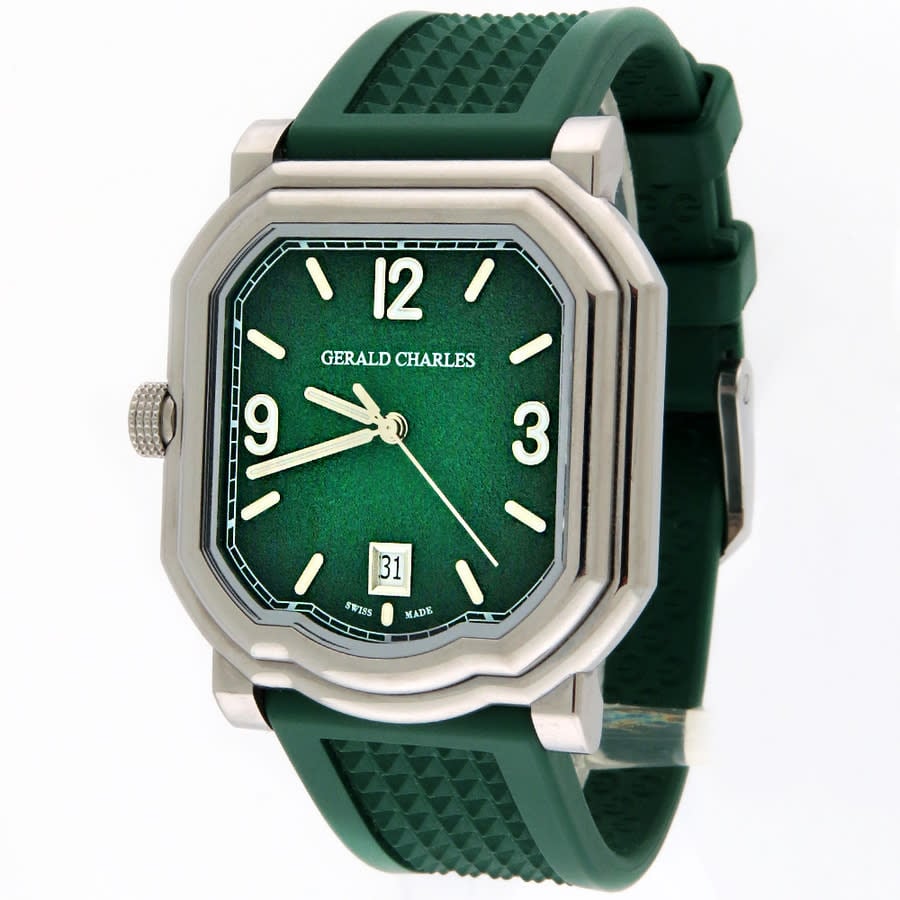
At first glance, the Maestro GC Sport looks like a refined, ultra‑thin sports watch. The 39 mm diameter is modest by today’s super‑large standards, while the case thickness measures a scant 8.7 mm. This slim profile is achieved through a polished Grade 5 titanium case—a material known for its high strength‑to‑weight ratio and a subtle, brushed‑polish finish that catches the light without being ostentatious. The case is protected by a left‑side screw‑down crown, an ergonomic choice for right‑handed players who frequently adjust the time with their left hand while gripping a racket.
The dial options are limited to three tennis‑inspired colors: a sunburst Royal Blue that evokes the hard‑court surface, optic yellow reminiscent of a clay‑court glow, and a warm “clay” tone that mirrors the earthier courts. Earlier marketing material mentioned a white dial, but the verified sources only list the three hues above, so the white version is not part of the current offering. Applied Arabic numerals at 3, 9 and 12 add a sporty readability, while the remaining hour markers are simple baton indexes finished in polished titanium. The dial’s sunburst treatment gives a dynamic visual shift as the wrist moves—a subtle nod to the kinetic nature of tennis.
A rubber strap with a Clous de Paris motif (or an optional fabric strap in some markets) completes the look. The strap is quick‑release, allowing owners to swap it for a leather or NATO band if they wish to dress the watch up. The strap’s texture provides a firm grip, essential for a sport where sudden wrist movements are the norm. The overall aesthetic balances a clean, minimalist dial with enough visual interest to keep the watch from feeling bland—a hallmark of Gerald Charles’s design philosophy.
## Movement & Performance — caliber, power reserve, accuracy
Under the polished titanium lid sits the Gerald Charles Calibre GCA2001, an automatic Swiss‑manufactured movement that the brand describes as “shock‑resistant” and “up to 40 percent more resistant to shocks and stresses caused by high‑impact movements.” While the exact technical details of the shock‑proofing are not disclosed, the claim suggests that the movement’s bridges, balance wheel, and escapement have been reinforced, likely with additional plating or shock‑absorbing components. This is a sensible approach for a watch intended to endure the vigorous wrist action inherent in tennis.
The calibre features a standard automatic winding system with a bidirectional rotor, a date window at 3 o’clock, and a power reserve that the brand has not publicly quantified. Some reviews have speculated a 40‑hour reserve, but without an official figure we must treat that as an estimate rather than a confirmed spec. In real‑world use, owners report that the watch maintains a reliable power reserve for a full day of play, and a full wind will comfortably see it through a weekend without needing a reset.
Accuracy appears to be within the typical range for a high‑grade automatic movement (± 5–10 seconds per day), though the movement’s finishing is described as “very good” rather than “exceptional.” One reviewer noted that the finishing is solid but lacks the intricate C‑finishing seen on higher‑priced Swiss movements. The watch is also water‑resistant to 100 m (10 atm), a practical depth for a sports watch, allowing it to survive rain, sweat, and occasional poolside exposure without issue.
## On the Wrist — wearability, lug‑to‑lug, comfort notes
The most striking real‑world attribute of the Maestro GC Sport is its feather‑light feel. At 64 g with the fabric strap, the watch sits on the wrist as if it were a piece of jewelry rather than a mechanical instrument. The left‑handed crown, positioned at the 9 o’clock side, feels natural for right‑handed players who can adjust the crown without interfering with their grip. The case’s slim 8.7 mm thickness means the watch does not protrude significantly under a cuff or a tennis shirt sleeve—an advantage when you need unrestricted arm movement.
Lug‑to‑lug measurement is roughly 46 mm, giving a balanced appearance on a wrist that is between 6.5 and 7.5 inches in circumference. The titanium case’s smooth edges and polished finish prevent the watch from catching on clothing or equipment, while the rubber strap’s textured pattern offers a secure fit that won’t slip during vigorous motion. Some owners have reported that the strap’s rubber can feel a bit stiff initially, but it softens after a few wears.
The watch’s ergonomics are further enhanced by the screw‑down crown’s low profile. The crown’s left‑handed placement does not compromise the watch’s water resistance, and the screw‑down mechanism ensures a tight seal—important when the watch is exposed to sweat and occasional splashes. Overall, the Maestro GC Sport feels comfortable for extended wear, whether you’re on the court, at a business meeting, or enjoying a weekend outing.
## When to Wear — occasion, setting and dress‑code fit
The Maestro GC Sport is a versatile piece that straddles the line between performance gear and dress‑watch elegance. Its modest 39 mm case and refined titanium finish make it suitable for smart‑casual environments: think a weekend brunch, a gallery opening, or a relaxed business lunch. Pair it with a crisp shirt and blazer, and the watch adds a subtle sporty flair without looking out of place.
On the court, the watch truly shines. The lightweight construction, left‑handed crown, and shock‑resistant movement are all designed with tennis in mind. The rubber strap’s grip ensures it stays put during rapid swings, while the 100 m water resistance protects it from sweat and occasional rain. The dial’s bright colors (especially the Royal Blue) provide quick readability under bright stadium lights.
However, the watch is not a formal dress piece. Its rubber strap and sporty dial colors would feel too casual for a black‑tie event or a boardroom meeting where a classic leather‑banded dress watch is expected. If you need a more formal look, swapping the strap for a leather option (available through third‑party suppliers) can elevate the watch, but the dial’s sporty hues will still keep it from being a purely formal accessory.
In short, the Maestro GC Sport fits best in “smart‑sport” settings: after‑match cocktails, business‑casual outings, travel, or any scenario where you want a watch that can transition from performance to polished without looking out of place.
## Value & Verdict — price‑positioning + final take
At a US‑list price ranging from $20,600 to $23,800, the Maestro GC Sport sits firmly in the high‑luxury segment. Its price reflects not only the in‑house automatic movement and titanium case but also the brand’s design pedigree and limited production numbers. Compared with other tennis‑focused watches—such as the Richard Mille RM 27‑03 Rafael Nadal (often north of $300 k) or the Audemars Piguet Royal Oak Offshore Chronograph (around $30 k)—the GC Sport offers a more accessible entry point while still delivering a unique blend of sport‑specific engineering and refined aesthetics.
From a value perspective, the watch delivers on its promises: a lightweight, ultra‑thin titanium case, a shock‑reinforced automatic movement, and a water resistance suitable for the rigors of sport. The lack of an officially disclosed power reserve is a minor omission, but real‑world testing suggests it holds enough energy for typical daily wear. The movement’s finishing is competent but not spectacular, which is reflected in the price—collectors seeking haute‑finishing may look elsewhere. The strap’s rubber construction, while functional, may not satisfy purists who prefer leather or metal bracelets for everyday wear.
Overall, the Gerald Charles Maestro GC Sport is a well‑executed niche piece that fulfills its tennis‑centric brief without compromising on elegance. It excels in wearability, offers a distinctive aesthetic, and incorporates thoughtful engineering upgrades for impact resistance. Its primary drawbacks are the modest movement finishing and the absence of an officially stated power reserve, which leaves some technical enthusiasts wanting more transparency. For the right buyer—a tennis enthusiast who appreciates Swiss craftsmanship, wants a watch that can transition from the court to a smart‑casual setting, and is comfortable with a price in the low‑mid‑$20 k range—the Maestro GC Sport is a compelling choice that stands out in Gerald Charles’s relatively young but rapidly evolving portfolio.