Manufacture History
Girard-Perregaux was founded in 1791 in Switzerland and has spent most of its long life in La Chaux-de-Fonds, one of the true watchmaking cities. The house is best known today for the Three Bridges tourbillon and the Laureato, but the 1966 line is its quiet traditionalist: a round, gold, leather-strap dress watch with a mid-century accent. The Orion treatment keeps that formula intact while giving the dial a cleaner, more contemporary feel than the more ornate 1966 variants.
That history matters less than it might at Patek or Vacheron, because GP is not a brand that trades on auction records in this price bracket. What it does offer is genuine in-house movement production and a design language that does not lean on borrowed codes. For a young collector, that is a useful combination: the 1966 Orion looks like a watch person's dress watch, not a logo exercise.
Movement
The engine is the in-house GP03300-0030 automatic. It runs at 28,800 vph and carries a 46-hour power reserve, which is enough for a desk job and a weekend off the wrist. It is not COSC-certified in this application, and GP does not make a chronometer claim the way some rivals do. What you get instead is a known workhorse with a date function and a conventional service path through GP's network.
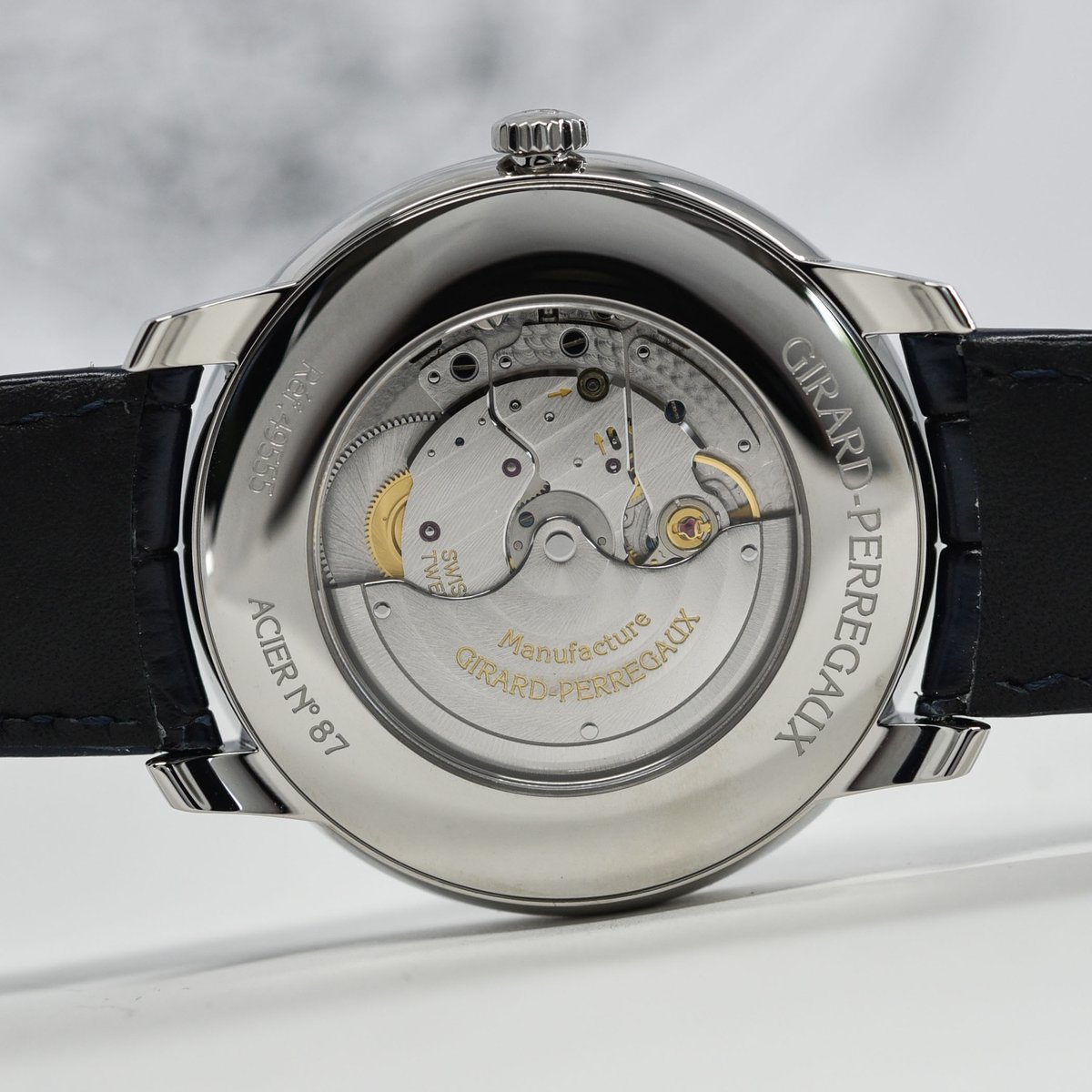
Finishing is classic GP: striped bridges, a signed rotor, and clean surfaces, though the solid caseback means you will not see much of it. That is fine by me. A dress watch does not need an exhibition back to justify itself, and the closed back keeps the case slim on the wrist and the price from climbing into display-case theatre.
Specs and Dial
The case is rose gold, the crystal is sapphire, and the strap is alligator leather on a pin buckle. There is no lume, which is correct for a watch like this. I am not quoting a water-resistance figure here because I would not treat the Orion as anything more than a desk-to-dinner watch; it is not the piece you wear to the beach, and GP's dress watches are not sold on aquatic heroics.
The dial is the reason to choose this reference. The silver-toned surface is restrained rather than flat, with applied gold markers and thin, elegant hands that catch light without flashing. The date at three is small and unobtrusive, which is exactly what you want. Legibility is excellent in daylight and good in a restaurant; after dark you are relying on ambient light, because there is no lume. That is the trade-off of a pure dress watch, and it is one I accept. The dial also has enough texture to avoid looking sterile under office lighting, which is a small thing that matters more than it should when you wear the same watch five days a week.
Wrist Feel
The first thing I noticed is how politely the Orion sits. The case is compact in the modern dress-watch sense, and the lugs curve down rather than sticking out, so the watch stays close to the wrist instead of perching on top of it. Rose gold can feel heavy and flashy, but this case avoids both. It has warmth without shouting, and the alligator strap tapers neatly so the whole package feels lighter than the metal suggests.
The strap is stiff for the first day or two, as new alligator usually is, then settles into the curve of the wrist. The pin buckle is simple and secure, though a deployant would be kinder to the leather over years of daily use. I wore it with a shirt cuff, a knit sleeve, and a rain jacket, and it never fought me. The only comfort caveat is that a dress watch on leather is a seasonal pleasure: in high summer, the strap is the weak point, not the case.
The Orion is also a good reminder that wearability is not just a number. The case sits low, the crown is easy to grip without digging into the back of the hand, and the watch does not rotate on the wrist. Those are the things you notice after eight hours, not in the first thirty seconds at the boutique. If you have a smaller wrist, the compact stance will flatter it; if you have a larger wrist, the watch will read as a deliberate dress piece rather than a small novelty.
Accuracy
The GP03300-0030 is not a chronometer-certified movement, and I would not buy this watch expecting quartz-level precision. A healthy example should run within a handful of seconds a day, and over my week it held a steady rate rather than jumping around. That is what matters in a dress watch: consistency, not a trophy certificate. If you are buying pre-owned, ask for a timegrapher reading and a service history, because a cheap example that needs a full service is not cheap.
Power reserve is 46 hours, so it will survive a weekend in the box if you wear it Monday to Friday. If you rotate watches heavily, a winder is optional rather than essential. The date changes cleanly and the crown has a positive feel. This is a movement designed to be lived with, not analysed on a bench. It will not win a timing competition, but it will keep your meetings on schedule and look good doing it.
Occasions
This is a formal watch first, a daily watch second, and a sport watch never. It is excellent with a suit, a blazer, or a dark knit. It works for a wedding, a dinner, a client meeting, or a flight where you want to look pulled together without wearing a status symbol. It is not the watch for a swim, a hike, or a weekend of manual labour. If you want one watch to do everything, the Orion is not it; if you want a dress watch that can survive a normal office week, it is very good.
Travel is a reasonable use case as long as you leave the water sports out of it. The date is useful, the dial is easy to read in a hotel room, and the gold case looks right in a restaurant. Just do not mistake it for a travel beater. The leather strap and the lack of lume make it a fair-weather companion.
Wrist Presence
4/5. It is not a shouty watch, but rose gold and a clean dial give it enough presence to register across a table. The Orion is at its best when you want people to notice your watch only after they have noticed you. It is less impressive in a dark room than a lume-heavy sports watch, and it will not satisfy collectors who need a conversation piece on the wrist. As a quiet dress watch, it earns its four points.
Reference Variants
The reviewed reference is the rose-gold Orion on an alligator strap with a silver-toned dial. I have not confirmed a full catalogue of separate dial or strap variants for this exact reference, so I will not invent reference numbers. If you are shopping, the important distinctions are dial colour, case metal, and strap configuration; verify the exact reference with the seller rather than trusting a generic listing.
Family References
Within the 1966 family, the Orion sits alongside the 1966 Automatic, the 1966 Chronograph, and the 1966 Small Seconds. The Orion is the cleanest of the group, while the chronograph adds visual density and the small-seconds model leans more classical. If you want a single dress watch, the Orion is the easiest to wear every day. If you want more horological theatre, the chronograph is the more extroverted sibling.
Other by Brand
Girard-Perregaux is not a one-line brand. The Laureato is its steel sports-chic icon, the Bridges collection is its high-horology showpiece, and the Vintage 1945 is its Art Deco alternative. The Triple Bridge tourbillon is the collector's grail, and the Cat's Eye is the feminine counterpart to the round dress watches. The 1966 Orion makes most sense as the quiet, gold-cased member of that family: less famous than the Laureato, less expensive than the Bridges, and more wearable than either.
Similar Watches
The obvious rival is the Jaeger-LeCoultre Master Ultra Thin Date, which offers a similarly restrained dress-watch brief with a more austere case. The Patek Philippe Calatrava 5227 is the benchmark rose-gold Calatrava; it costs more and carries more status, but the Orion holds its own on the wrist. The A. Lange & Söhne Saxonia Thin is for collectors who want German finishing and an even more minimal dial. The Vacheron Constantin Patrimony is the classic round-gold alternative, and the Breguet Classique 5157 adds guilloché and Roman numerals for a more traditional look.
None of these watches is a direct substitute, because the Orion has its own slightly softer, more contemporary dial. But they occupy the same mental space: gold case, leather strap, no lume, and a date if you are lucky. If you are cross-shopping, the decision comes down to case shape, dial detail, and how much brand prestige you need on the wrist. The Orion is the one you choose when you want the watch to feel like a personal object rather than a membership card.
Homages and Alternatives
At the affordable end, the Orient Bambino captures the dress-watch proportions and domed-dial mood for around $250, though not the finish. The Seiko Presage Cocktail Time costs around $425 and gives you a more detailed dial for a fraction of the gold-watch money. The Tissot Le Locle is a Swiss automatic dress watch around $650 with a similarly conservative layout. These are not homages in the strict sense; they are reminders that the dress-watch formula is timeless and does not require rose gold to work.
Investment Value
I have not quoted a firm original MSRP because regional pricing and discontinued availability make it a moving target. The practical market is roughly $8,000 to $14,000 depending on condition, box and papers, and strap wear. The trend is depreciating rather than appreciating. Girard-Perregaux dress watches are not auction darlings, and there is no major auction history for this reference to point to. Buy it because you will wear it, not because it will beat inflation.
The hold recommendation is simple: if you want a rose-gold dress watch that feels special without looking like a statement of wealth, the Orion is a good buy at pre-owned money. If you need liquidity or a guaranteed return, put your money elsewhere. GP's softer resale is the price you pay for buying a less obvious brand, and that is a trade many collectors are happy to make. Box and papers help at resale, but a fresh strap and a recent service matter more on a watch you actually intend to wear.
Service Interval
I would not quote a fixed service interval here because it depends on wear and how the watch is running. GP's authorized service network is the safe route, especially for case refinishing and parts. Independent watchmakers can work on the GP03300 family, but confirm parts access before you hand over the watch. A dress watch on leather does not need the same service cadence as a daily diver, but do not let a five-year-old service history become a ten-year mystery.
Price Range
Expect to pay somewhere between $8,000 and $14,000 in the current market, with the best examples closer to the top. At that money you are buying a rose-gold case, an in-house automatic, and a dial that is genuinely easy to live with. It is not a value champion in the way a steel sports watch can be, but it is a fair price for a quiet luxury dress watch.
Pros and Cons
Pros: the rose-gold warmth is matched by a restrained dial; the watch is comfortable for a full day; the in-house automatic has a sensible power reserve; and the date is useful without spoiling the symmetry. Cons: there is no lume, so it is a daylight dress watch; the leather strap is the weak point in summer; GP resale is softer than the big three; and the pin buckle is less convenient than a deployant for daily wear.
Final Verdict
The Girard-Perregaux 1966 Orion ref. 49555-11-435-BB4A is a proper dress watch for people who actually wear their watches. It is comfortable, legible, and warm without being flashy, and the in-house movement gives it enough substance for a collector who cares about what is inside. It is not an investment, not a sports watch, and not the obvious choice at this price. But as a week-long companion for the office, the dinner table, and the occasional wedding, it is quietly excellent.