The Deep Diver Is the Girard-Perregaux You Forgot to Want
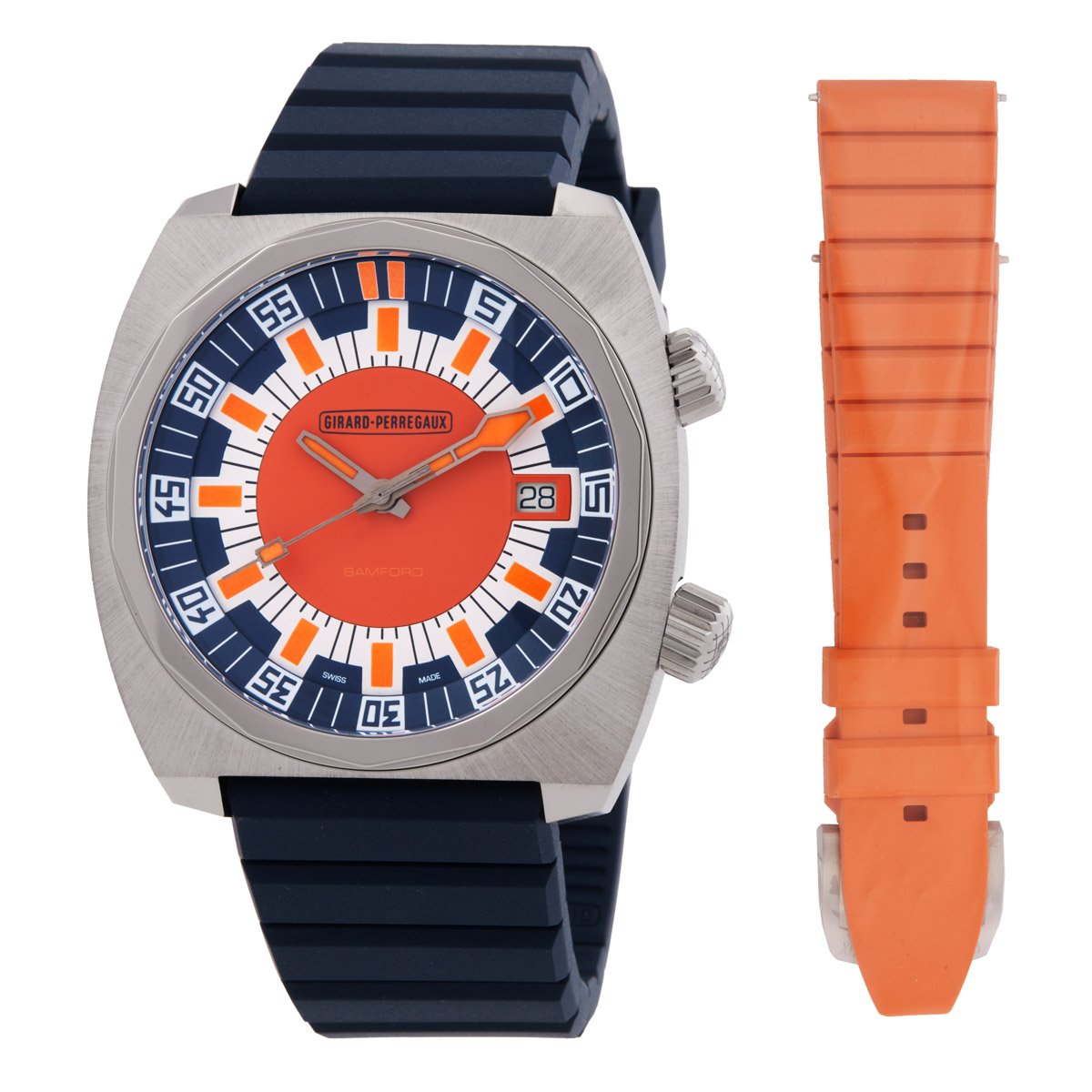
Girard-Perregaux is not the first name that comes up when young collectors talk about dive watches. That is the point. The Laureato gets the Instagram posts, the Bridges gets the auction headlines, and the Vintage 1945 gets the design nerds. The Deep Diver gets the people who actually dig. It is a late-1960s and 1970s tool watch from a maison with serious in-house movement credentials, and it has the kind of cushion-case silhouette that looks wrong on a spec sheet and right on a wrist.
The Deep Diver arrived when dive watches were still tools, not accessories. GP was an engineering-led house, and the Deep Diver was its answer to the professional diver boom. Today, vintage examples sit in a sweet spot: less obvious than a Submariner, less expensive than a Fifty Fathoms, and more interesting than another generic steel sports watch. That is a dangerous combination for anyone who claims to be done buying watches.
This is not a review of a mall-watch reissue with a press release and a waitlist. It is a collector's review. We will cover the history, the movement reality, the wrist feel, what to verify, and where the value sits. If you want a vintage dive watch that says something without shouting, the Deep Diver is worth your attention. If you want a watch you can take diving tomorrow without a service file, keep scrolling.
Why the Deep Diver Matters Now
Vintage dive watches have become a language. The Submariner is currency. The Seamaster 300 is the entry ticket. The Fifty Fathoms is the heritage play. The Deep Diver is the insider's line. It is not the watch you buy to impress a table at dinner. It is the watch you buy because you know what it is, and you like that most other people do not.
That is also why it matters in the current market. The obvious watches have become financial instruments. The Deep Diver is still a watch. It has patina, service history, bracelet stretch, and all the messy reality of a vintage object. You have to do homework. You have to ask questions. You have to be patient. That is not a bug. It is the entire point.
Manufacture History: GP Before the Hype
Girard-Perregaux was founded in 1791 in Switzerland, which makes it one of the oldest continuous names in Swiss watchmaking. That history is not just a plaque in the lobby. GP has a real movement tradition, including high-frequency work and in-house automatic calibers. The Deep Diver came from that engineering culture, not from a licensing deal.
By the late 1960s, the dive-watch category was heating up. Rolex had the Submariner, Omega had the Seamaster 300, Blancpain had the Fifty Fathoms, and every serious Swiss house wanted a piece of the professional diving market. GP's entry was the Deep Diver: a cushion-case diver with a rotating bezel, a date, and an automatic movement. It was not a fashion watch. It was a tool for people who needed to know how long they had been under water.
The reference most collectors cite is 9105, though vintage GP production is not a clean spreadsheet. Examples vary in dial, bezel, crown, bracelet, and movement. That is the first rule of Deep Diver collecting: buy the individual watch, not the model name. The second rule is the same as every vintage purchase: originality is everything.
Movement: In-House, Vintage, and Not a Spec-Sheet Flex
The Deep Diver is automatic, as a dive watch should be. Girard-Perregaux used its own automatic movements in this era, and that is a large part of the appeal. You are not buying a generic Swiss diver with GP's name on the dial. You are buying a watch from a house that made its own movements and knew how to finish them.
Here is the honest part: the exact caliber depends on the reference and production batch. Vintage GP is not like modern Rolex, where a reference number tells you almost everything. If a seller claims a specific caliber, ask for service records and photos of the movement. Do not buy a story. Buy a watch with a movement that a qualified watchmaker has inspected.
The movement architecture is period-correct: automatic winding, a date complication, and the kind of finishing you expect from a serious Swiss house of the era. It is not a modern chronometer with silicon parts and a five-year warranty. It is mechanical watchmaking from the 1960s and 1970s, which means it needs care, parts, and a watchmaker who knows what they are doing.
Specs: What We Can Say Without Making Things Up
The Deep Diver is a stainless steel dive watch with an acrylic crystal, a rotating bezel, and a stainless steel bracelet in its classic form. The lume is vintage tritium, which means it has aged, patinated, and probably stopped glowing decades ago. That is part of the charm. If you want a watch that glows like a torch, this is not it.
We are not quoting a single case diameter, thickness, or lug-to-lug measurement because vintage examples vary and GP did not publish one uniform spec across all production. The same goes for water resistance. The original Deep Diver was built as a dive watch, but a vintage example is not a modern dive computer. Do not take it underwater without a pressure test and a service history. A vintage dive watch is a dive watch in spirit, not a guarantee.
What matters more than a number is the package: cushion case, rotating bezel, date, automatic movement, and a bracelet that looks like it came from the era when steel was steel. The Deep Diver is not a maximalist watch. It is a tool watch with a design quirk, and that quirk is the reason to buy it.
Wrist Feel: The Cushion Case Does the Work
On the wrist, the Deep Diver reads as a vintage tool watch. The cushion case sits flat and wide, but not in the modern maxi-case way. The bezel dominates the top-down view, and the dial sits in a well. It feels purposeful. It does not feel like a dress watch pretending to be sporty, and it does not feel like a modern dive watch with a ceramic bezel and a billboard-sized crown guard.
The original bracelet, when present, is light and period-correct. It is also a common weak point. Vintage steel bracelets stretch, and a stretched bracelet makes a great watch feel cheap. If you find an example on a bracelet, check the stretch. If it is bad, budget for a restoration or plan to wear it on rubber or NATO. On rubber, the Deep Diver becomes more casual and more wearable. On a NATO, it becomes a weekend watch. On a leather strap, it becomes something else entirely, and not always in a good way.
Comfort is specimen-dependent. A polished case, a bent spring bar, or a bad bracelet can ruin the experience. A good example with a fresh service and a proper strap is a joy. Try before you buy if you can. If you cannot, buy from a seller who accepts returns and knows vintage GP.
Accuracy: Vintage Tolerances, Not Quartz Confidence
A serviced vintage GP automatic should keep time within vintage tolerances. It will not match a modern chronometer, and it will not match your phone. If you wear it daily, expect to set it every few days or every week, depending on the example. That is normal. A good watchmaker can regulate it, but parts availability is the limiting factor.
The bigger issue is reliability. A vintage watch that has sat in a drawer for twenty years needs a service before you trust it. A watch that has been serviced recently is a different proposition. Ask for paperwork. Ask who did the work. Ask if the parts are original. If the seller cannot answer, assume the worst and price accordingly.
Occasions: Sport, Daily, Travel
The Deep Diver is a sport watch first. It belongs on a beach, a boat, or a weekend trip. It is also a daily wearer if you are comfortable with vintage watch anxiety. It is not a formal watch, and it is not a dress watch in the traditional sense. It can work with a casual suit, but it will always read as a tool watch. That is the point.
For travel, it is a good companion because it is legible, automatic, and not flashy. It does not scream money. It screams taste, but only to people who know. That is a rare combination in a world of hype watches.
Wrist Presence: 4/5
The Deep Diver is not a status bomb. It reads as a serious vintage tool watch to people who know, and as a cool old watch to everyone else. The cushion case and bezel give it more wrist presence than its size suggests. It is not a watch that disappears, but it is not a watch that dominates a room. That is a 4 out of 5 for presence: confident, distinctive, and not desperate.
Reference Variants: 9105 and the Vintage Reality
The reference most collectors cite is 9105. A classic example has a black dial, a stainless steel bracelet, and a rotating bezel. But vintage GP is not uniform. Dials, hands, bezels, crowns, and bracelets can vary. Some examples have service parts. Some have replacement dials. Some have been polished within an inch of their lives.
If you are looking for a single reference to hunt, start with 9105. If you are looking for a perfect watch, look for originality first. A correct dial with honest patina is worth more than a perfect redial. A crisp bezel is worth more than a polished case. A signed crown is worth more than a generic replacement. The details are the value.
What to Verify Before You Buy
Vintage watch buying is not a vibe. It is a checklist. Start with the dial. Is it original? Does the lume match the hands? Has it been relumed? A relumed dial can look clean in photos and dead in person. Next, check the bezel. Is it original to the reference? Does it rotate properly? Is the insert faded in a way that matches the rest of the watch, or is it a replacement that looks too new?
Then check the case. Polishing is the silent value killer. A case that has been over-polished loses its edges, its cushion shape, and its character. Ask for macro photos. Look at the lugs, the bezel edge, and the case flanks. If the shape looks soft, walk away.
Finally, check the bracelet and the movement. Bracelet stretch is normal, but severe stretch is expensive. A signed clasp is a plus. On the movement side, ask for service records and movement photos. A watchmaker's inspection is worth more than any seller's story. If the seller refuses, that is your answer.
Family References: The Deep Diver Line
The Deep Diver family is small compared with the Laureato or the Bridges, but it has a clear identity. The vintage 9105 is the core. Later re-editions and modern Deep Diver releases exist, and they matter for context, but they are not the same watch. The vintage original is the one with the story, the patina, and the collector demand. The modern versions are easier to wear and easier to service, but they do not have the same soul.
Other Models by Girard-Perregaux
If you like the Deep Diver, you probably like GP's broader range. The Laureato is the modern sports-chic icon, with an integrated bracelet and a design language that predates the current integrated-bracelet boom. The Vintage 1945 is the art-deco dress watch. The Bridges is the haute horlogerie flex with exposed movement architecture. The 1966 is the classic dress watch. The Free Bridge is the modern technical statement. GP is a house with range, and the Deep Diver is the tool-watch chapter that makes the rest of the catalog make sense.
Similar Watches: What Else to Consider
The Rolex Submariner is the default vintage diver. It is more liquid, more recognizable, and less interesting. The Omega Seamaster 300 is the thinking collector's vintage diver, with stronger military crossover and a more accessible entry point. The Blancpain Fifty Fathoms is the original modern dive-watch template, with a much higher entry price and a lot of heritage. The Tudor Pelagos is the modern tool-watch answer if you want to actually dive without vintage anxiety. The IWC Aquatimer is a different vintage-modern dive lineage with a strong design identity. None of them have the Deep Diver's specific cushion-case swagger.
Homages: The Affordable Way In
There is no perfect cheap Deep Diver clone, and that is probably a good thing. If you want the look without the risk, the Dan Henry 1970 is a fun option. It captures the vintage compressor-diver mood, costs around $250, and does not pretend to be a Girard-Perregaux. It is a gateway drug, not a substitute. Wear it, decide if the cushion-case dive-watch silhouette works for you, then go hunt the real thing.
Investment Value: Niche, Not Liquid
The Deep Diver is not a Rolex Submariner. It does not have a deep, liquid auction market. It does have a cult following, and good examples are getting harder to find. That means the investment case is real but narrow. Buy the best-condition, most original example you can find. Avoid polished cases, replacement dials, and stories without paperwork. If you buy right, you can enjoy it and probably not lose money. If you buy wrong, you will learn an expensive lesson.
There is no meaningful MSRP for a vintage watch. Current retail does not apply. Pre-owned prices vary widely by condition and provenance. Auction history is occasional, not constant. That is not a reason to avoid the watch. It is a reason to be patient and disciplined.
Service: Find the Right Watchmaker
Vintage GP service is not the same as modern Rolex service. You need a watchmaker who knows vintage GP, has access to parts, and understands the value of originality. A generic service can do more harm than good. Ask for references. Ask for photos. Ask what parts will be replaced and what will be preserved. The cost is variable, and the interval depends on wear. If you wear it daily, service it when it starts to lose time or feel rough. If you wear it occasionally, service it before you trust it.
Final Verdict
The Girard-Perregaux Deep Diver is the vintage dive watch for people who are tired of the obvious answers. It has in-house Swiss engineering, a distinctive cushion-case design, and a story that connects GP's serious movement tradition to the tool-watch boom of the late 1960s and 1970s. It is not the easiest watch to buy, own, or service. It is not the most liquid. It is not the safest.
It is, however, one of the most interesting. If you want a Submariner, buy a Submariner. If you want a Deep Diver, buy the best original example you can find, wear it with respect, and enjoy the fact that you are not wearing what everyone else is wearing. That is the real luxury.