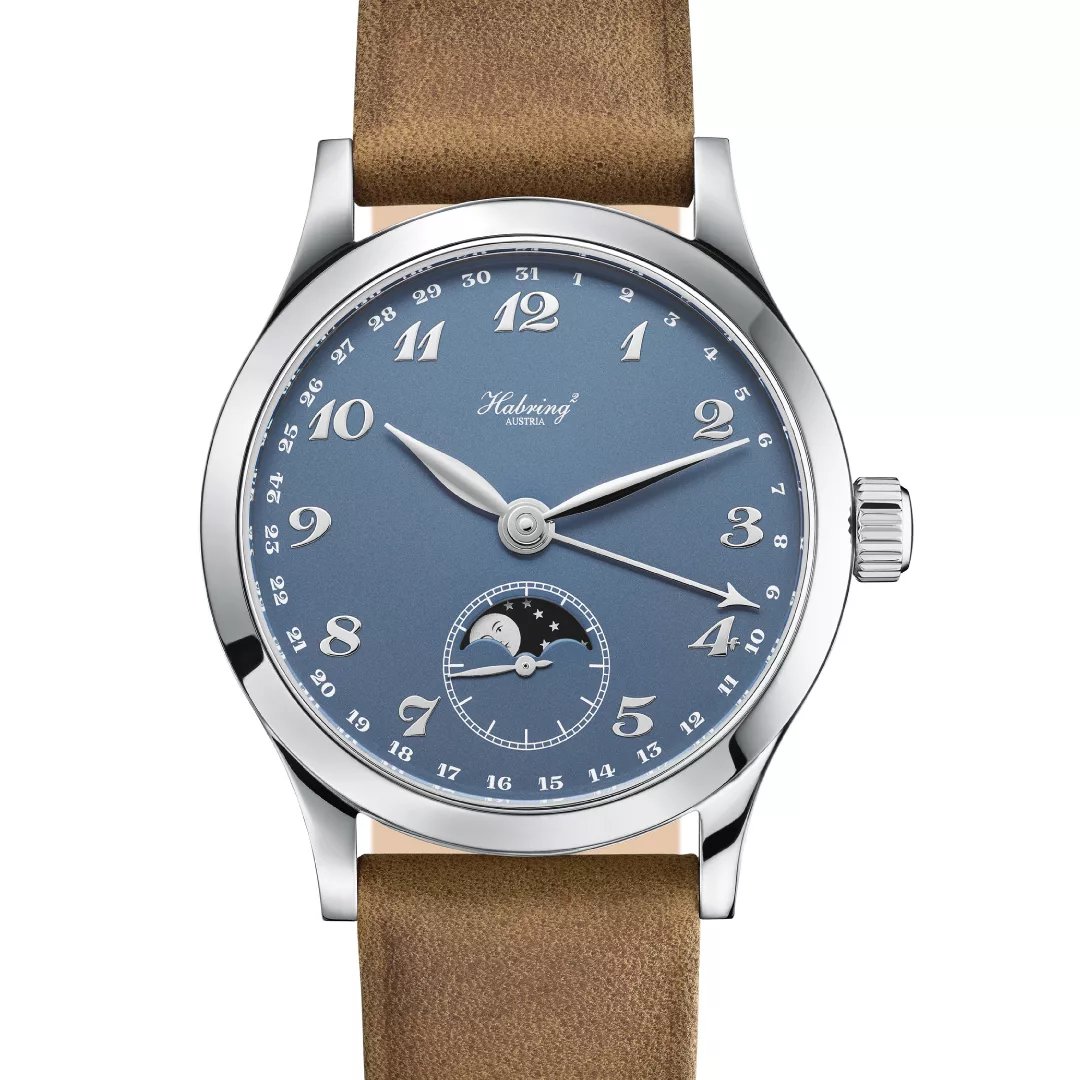
A time-only Austrian indie with real collector appeal — but is it a hold?
The Habring² Oskar is not a watch that shouts for attention. It is a time-only piece from one of the most respected small independents in Austria, and it sits in the sweet spot where genuine watchmaking craft meets daily wearability. For younger collectors who have moved past logo-driven buying, the Oskar is the kind of watch that rewards knowledge: it says more about the wearer than a steel sports watch at twice the price.
But this is Vivir.com, and we do not review independent watches as pure romance. The Oskar has to justify itself on movement, finishing, wearability, and secondary-market behavior. Habring² has a devoted collector base, limited production, and a reputation for modifying reliable base calibers with real horological intelligence. The question is whether the Oskar is a long-term hold or a charming detour.
My take is that the Oskar is a hold for the right collector — specifically, the buyer who wants a restrained, mechanically honest dress watch and is comfortable with the liquidity profile of a small independent. It is not a flip. It is not a status object. It is a quiet connoisseur’s watch, and that is exactly why it works.
Brand Context: Why Habring² Matters
Habring² was founded in 2004 by Richard and Maria Habring in Austria. Richard Habring’s CV includes time at IWC and A. Lange & Söhne, and that background shows in the brand’s approach: small-series production, modified base calibers, and a preference for mechanical solutions over marketing theater. Habring² is best known for complications such as jumping seconds and split-seconds chronographs, but the Oskar is the brand’s more accessible, time-only side.
That matters for collectors because Habring² is not trying to be a mainstream luxury house. It is a workshop. Production is limited, distribution is narrow, and the watches are bought by people who know what they are looking at. The Oskar therefore carries a certain insider credibility. It is not a watch you buy to impress a dinner party. It is a watch you buy because you understand the difference between a modified caliber finished by a small team and a mass-produced movement in a shiny case.
Movement and Build
The Oskar runs a Habring²-modified automatic base, assembled and finished in Austria. The brand does not chase COSC certification here, and that is fine. What matters is the quality of regulation, the finishing, and the serviceability of the architecture. The Oskar is a time-only watch, so the movement does not need to carry a complicated module or a delicate chronograph mechanism. That simplicity is a strength. It means fewer things to go wrong and a movement that is easier to maintain over the long term.
The stainless steel case is paired with sapphire crystal and a leather strap on a pin buckle. There is no lume, which is appropriate for a dress watch. The Oskar is not pretending to be a sports watch. It is a mechanical object for people who want a clean dial, a reliable automatic movement, and the satisfaction of wearing something made in small numbers by a team that actually cares about horology.
Wrist Feel and Wearability
The Oskar wears like a traditional dress watch should: light on the wrist, balanced on a leather strap, and unobtrusive under a shirt cuff. It does not try to dominate the wrist with bulk or shine. The stainless steel case gives it enough everyday durability, while the sapphire crystal and clean dial keep it practical rather than precious.
For collectors used to sports watches, the first sensation is likely to be how little the Oskar asks of you. It sits close, it does not rotate or catch on cuffs, and it disappears into the day. That is not a criticism. It is the point. The watch is designed for people who want a mechanical object they can wear without thinking about it, yet still notice when they check the time.
In terms of presence, I would rate it 3.5 out of 5. It is a connoisseur’s watch, not a room-commanding piece. The presence comes from dial restraint and independent-brand signal rather than size or polish. If you need a watch that announces itself, this is not it. If you want a watch that rewards a second look, the Oskar is very good at that.
Accuracy and Daily Performance
Habring² regulates and tests its movements, but the Oskar is not COSC-certified. Real-world accuracy should be within a handful of seconds per day, with normal variation depending on wear, position, and temperature. For a small-series independent, that is entirely acceptable. Buyers should ask for timing documentation at delivery and avoid treating the Oskar as a chronometer-grade tool watch. It is a precision mechanical object, not a lab instrument.
Day to day, the Oskar is the kind of watch you set once and wear for weeks. The automatic movement means you do not have to wind it every morning, and the time-only layout makes it easy to read at a glance. It is not a travel watch with a GMT or a sports watch with a date, but that is not what it is for. It is a daily dress watch with a mechanical heart, and it performs that role well.
Occasions and Wardrobe Fit
The Oskar is at its best with formal and smart-casual clothing. It works with a suit, a jacket, a knit polo, or a clean shirt. It is not the watch I would take to the beach or the gym, and it does not pretend to be. It is a dress watch in the traditional sense, but it is also versatile enough for daily wear if your daily wardrobe leans tailored rather than technical.
For collectors building a small, focused collection, the Oskar makes sense as the quiet watch. It is the piece you wear when you do not want to wear a sports watch but still want something mechanically interesting. It pairs well with a Nomos Tangente, a Grand Seiko SBGW231, or a vintage dress watch. It is not redundant if you already have a sports watch, because it serves a different purpose.
Variants and Family References
Habring² does not run the Oskar like a mass-market reference catalog. The watch is configuration-specific, and the brand does not publish a single reference number for every dial and strap combination. That can be frustrating for collectors who like tidy spreadsheets, but it is also part of the independent experience. You confirm the final specification directly with the brand or dealer, and the watch is built to order.
Within the Habring² family, the Oskar sits alongside the Felix, Erwin, and Zeitflug. The Felix is another time-only option, the Erwin is known for its jumping-seconds complication, and the Zeitflug adds a travel-friendly GMT. The Oskar is the most restrained of the group. It is the one you choose when you want the Habring² philosophy without a complication that demands attention.
Other notable Habring² models include the Doppel 2.0, the Chrono ZM, and the Foudroyante. These are complications watches with strong collector followings, but they operate in a different price and liquidity tier. The Oskar is the entry point, and that is not a bad thing. It is the model that introduces you to the brand without asking you to jump straight into a split-seconds chronograph.
Similar Watches and Alternatives
If you are considering the Oskar, you are probably also looking at the Nomos Tangente, the Grand Seiko SBGW231, the Dornblüth & Sohn 99.1, and the Stowa Antea. The Nomos is the closest in spirit: German time-only design, in-house calibers, and a similar intellectual appeal. The Grand Seiko offers superior finishing and a more established secondary market, but it is a different aesthetic and often a different price point. The Dornblüth & Sohn is another small independent with modified movements and a classic layout. The Stowa is the more accessible German alternative.
For buyers who want the look without the independent premium, the Seiko Presage Cocktail Time and the Orient Bambino are the usual budget stand-ins. They are not Habring², and they do not pretend to be. But they can satisfy the desire for a restrained dress watch while you save for the real thing.
Investment Value and Secondary Market
The Oskar is not a hype watch, and that is reflected in its secondary-market behavior. It trades in a narrow band, with pre-owned examples generally in the mid-four-figure to low-five-figure range depending on specification, condition, and included accessories. The trend is stable rather than appreciating. That is typical for small independents with limited production and a dedicated but narrow collector base.
My hold recommendation is simple: hold if you bought it to wear and appreciate independent watchmaking. Sell only if you need liquidity or have moved on from time-only dress watches. The Oskar is not a fast-flip asset. It is not going to double in value overnight, and it is not going to be easy to sell in a hurry if you need cash. But it should hold value better than most small-brand time-only watches, because Habring² has a real reputation and a real collector network.
There is no major auction history for the Oskar. Habring² pieces trade mainly through private sales, specialist dealers, and collector networks. That means you should buy from a reputable source, keep the box and papers, and be prepared to wait for the right buyer if you ever sell. The watch is liquid enough for a patient seller, not for a panic seller.
Service and Ownership
Service should go through Habring² or an authorized partner. The brand is small, so lead times can be longer than with a major Swiss house. Confirm current turnaround and costs directly with the brand before you buy. The good news is that the Oskar uses a modified automatic base, which is generally serviceable by a skilled watchmaker. The bad news is that independent service networks are narrower, and you should not assume that any local watchmaker can work on it.
For long-term ownership, keep the original box and papers, service it on the brand’s recommended schedule, and avoid unnecessary polishing. The Oskar is a watch that will last decades if treated properly. It is not a disposable luxury object. It is a mechanical tool with a small-team provenance, and that deserves a certain level of care.
Pros and Cons
Pros: genuine independent pedigree, small-series production, clean time-only design, modified automatic movement with Habring² assembly and finishing, strong collector recognition within the independent community, and versatile formal-to-daily wearability.
Cons: limited secondary-market liquidity, no formal reference-number system for every configuration, narrower service network, and a subtle presence that will not satisfy buyers who want a status object.
Final Verdict
The Habring² Oskar is a serious collector’s time-only watch, not a hype piece. It delivers the quiet satisfaction of independent watchmaking, wears beautifully, and should hold value for patient owners. Buy it to wear and hold; do not buy it to flip.
If you want a watch that announces your success, look elsewhere. If you want a watch that rewards your knowledge, the Oskar is a very strong choice. It is the kind of piece that makes sense in a focused collection, and it is the kind of piece that you will still enjoy wearing years after the initial novelty has worn off.