Harry Winston Ocean Biretrograde: A Collector's Market Review
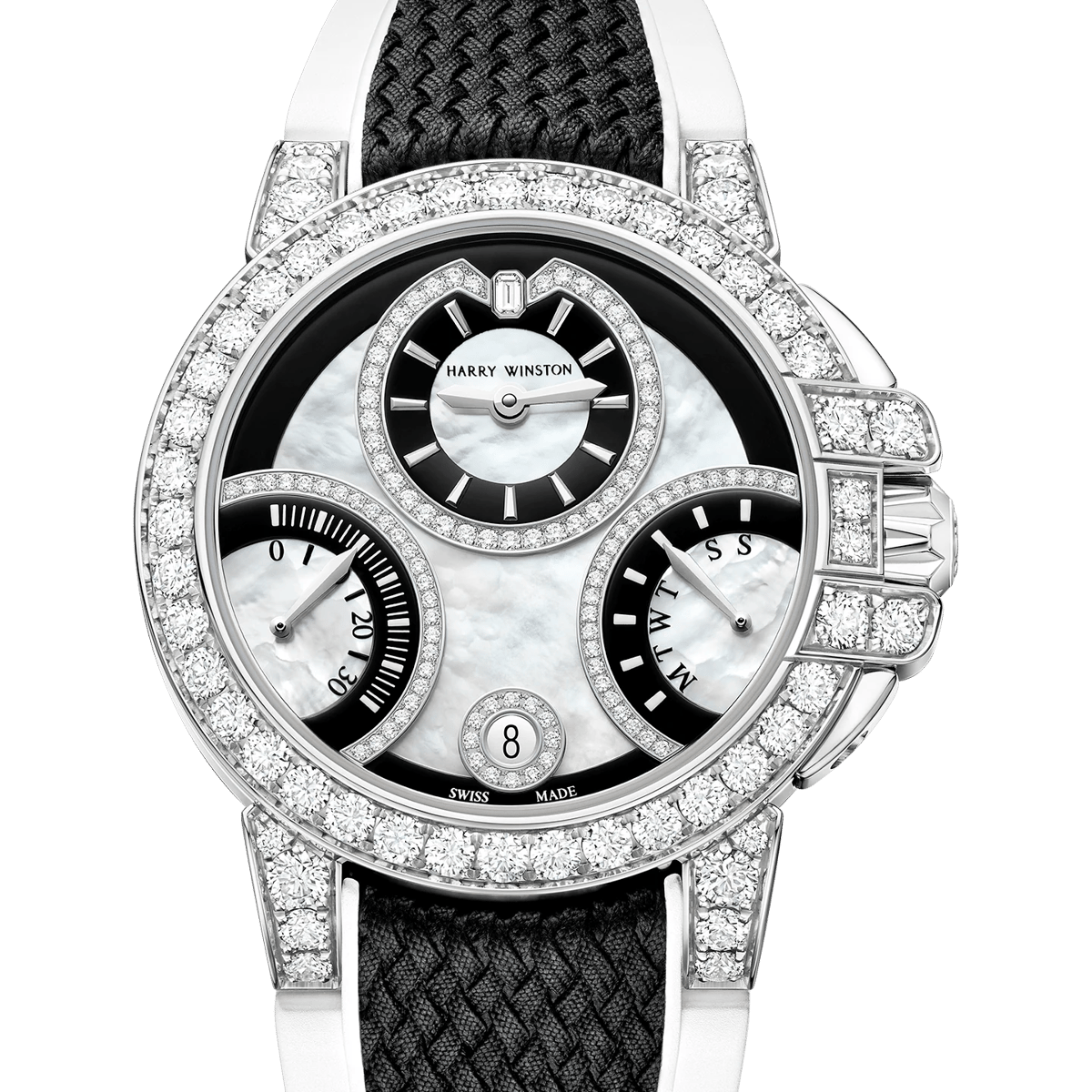
The Harry Winston Ocean Biretrograde is not a watch for the collector who wants the safest possible place to park capital. It is for the collector who wants a high-horology complication, a jewellery-house name and a sport-luxury case that does not look like everyone else's weekend watch. The Biretrograde pairs a 42mm rose-gold case with a self-winding movement and two retrograde displays: a date and a seconds indication that sweep across arcs and snap back. It is visually engaging, technically interesting and commercially niche.
That combination is exactly why the secondary market needs careful handling. Harry Winston is a serious name, but its watch collections do not enjoy the same collector depth as Patek Philippe, Audemars Piguet or Rolex. The Ocean Biretrograde trades in low volume, and many listings sit for weeks or months. For a sophisticated young collector, that means opportunity and risk in equal measure. You can buy a lot of watch for pre-owned money, but you should not assume you can sell it quickly.
Brand context: diamonds first, watchmaking second
Harry Winston was founded in New York in 1932 and built its reputation on exceptional diamonds and high jewellery. That heritage still shapes the brand's image. When you wear a Harry Winston watch, you are wearing a piece from a house that is more naturally associated with red-carpet stones than with movement architecture. The Ocean collection was the brand's move into sport-luxury, and the Biretrograde sits at the dressier end of that family.
Since 2013, Harry Winston has been part of Swatch Group. That matters for service and continuity, but it has not turned the brand into a mass-market collector phenomenon. The watches remain relatively rare, and the Ocean line has a devoted but small following. The Biretrograde is therefore a watch you buy for its own qualities, not because the brand is on a hot streak.
Movement and complication
The Ocean Biretrograde Automatic 42mm uses the HW2201, a self-winding caliber with a 42-hour power reserve and a frequency of 28,800 vph. The headline functions are the two retrograde displays: the date and the seconds. Instead of a conventional date window and a conventional small seconds hand, the Biretrograde uses hands that travel across arcs and return to the start. It is a playful way to present information, and it gives the dial a technical, open feel that suits the Ocean case.
The movement is not COSC-certified, so this is not a watch you buy for chronometer paperwork. Finishing is clean and appropriate for the price point, but the HW2201 is not a movement-collector centrepiece in the way a hand-finished independent caliber might be. What matters is that the retrograde modules work crisply. When you inspect one, watch the date hand at the end of its arc and the seconds hand at the top of its cycle. Both should snap back cleanly without hesitation.
Case, dial and daily practicality
The case is 42mm in rose gold, with a sapphire crystal and water resistance rated to 100m. That is a useful level of protection for a luxury sports watch, and it means the Biretrograde can handle daily wear without being treated like a fragile dress piece. There is no lume, so this is not a night watch. The rubber strap and deployant clasp suit the Ocean brief and make the watch more comfortable in warm weather than a leather strap would.
The dial is the reason to choose this model over a simpler Ocean. The two retrograde arcs give the face a sense of theatre, and the layout is legible once you are used to it. The gold case adds warmth, while the rubber strap keeps the overall look from becoming too formal. It is a hybrid in the best sense: dressy enough for a suit, sporty enough for a casual weekend, and unusual enough to start a conversation with another collector.
How it wears
The 42mm rose-gold case gives the Biretrograde real presence on the wrist. It does not wear like a thin dress watch, but the Ocean lugs and curved profile keep it from feeling like a block. The rubber strap is comfortable and integrates neatly with the case, and the deployant clasp keeps the tail secure. On a medium or larger wrist, the watch balances well. On a smaller wrist, it will feel substantial, so try before you buy.
This is a watch that makes itself known. The gold case, the open dial and the retrograde action draw the eye, and the deployant clasp adds a little weight to the underside of the wrist. It is not tiring for a desk day, but it is not a featherweight either. If you are used to a 40mm steel sports watch, the Biretrograde will feel like a step up in presence and a step away from stealth wealth.
Accuracy and ownership expectations
Because the HW2201 is not COSC-certified, you should not expect chronometer-grade accuracy. A healthy example should run within a few seconds per day in normal use, but older watches can drift. The bigger issue is the retrograde mechanism. If the date or seconds hand does not snap back cleanly, or if the watch has inconsistent power delivery, budget for service before you negotiate. A complete service history is a strong positive on this model.
Ownership is not difficult, but it is specialized. Harry Winston service is best handled by authorized centers or the brand, and independent watchmakers may be able to service the base movement while struggling with module parts. That is not a reason to avoid the watch, but it is a reason to buy a complete example with known history rather than the cheapest loose watch on the market.
Variants and references
The reference most often seen on the secondary market is OCEABI42RR001, the rose-gold version with a silver-toned dial and black rubber strap. It is the warmer, more jewellery-oriented expression of the Biretrograde and the one most collectors picture when they think of the model. The white-gold OCEABI42WW001 offers a cooler, more discreet alternative with a slate grey dial. Both use the same HW2201 movement and share the same retrograde layout.
Condition and completeness matter more than variant on this watch. A full set with box and papers, a clean strap and a documented service history will always be easier to sell than a loose watch. The white-gold version may appeal to collectors who want something less flashy, but the rose-gold version has more immediate presence and is likely to be the easier reference to place with a dealer.
Family and alternatives
Within the Ocean family, the Biretrograde sits alongside the Ocean Sport, Ocean Dual Time, Ocean Chronograph and Ocean Tourbillon. The Sport is the more casual, more obviously athletic option. The Dual Time is the traveler's choice. The Chronograph is the traditional sport-luxury pick. The Biretrograde is the complication-led, dressier alternative, and that is exactly why it stands out.
Outside the brand, the competitive set includes the Breguet Marine 5517, the Chopard L.U.C Quattro, the Ulysse Nardin Marine Torpilleur and the Girard-Perregaux Laureato. Each offers a different balance of movement credibility, brand recognition and liquidity. The Breguet and Chopard have stronger movement-collecting narratives. The Ulysse Nardin is a lower-entry nautical alternative. The Laureato has deeper liquidity and broader demand. The Harry Winston wins on rarity and retrograde theatre, not on resale speed.
Investment case and resale
The original retail for the rose-gold Ocean Biretrograde was roughly in the high-$30,000s, and current retail is not applicable because the model is no longer a standard catalogue item. Pre-owned examples generally trade in the high-teens to high-$20,000s, depending on condition, completeness and seller. That is a steep depreciation from retail, which is typical for a niche luxury watch outside the first tier of collector demand.
The trend is best described as stable but soft. There is a small pool of buyers who want a Harry Winston complication, and the Biretrograde is rare enough to stand out. But the bid-ask spread is wide, and dealers will price in the difficulty of resale. Auction history is not a useful benchmark for this reference. Harry Winston complications appear privately more often than at auction, so dealer listings and completed private sales are the better comparison.
The hold-versus-sell judgment is straightforward. If you bought the watch pre-owned at a sensible price, there is no urgency to sell. Hold it if you enjoy the complication and the brand's jewellery-house character. Sell it if you need liquidity, if you overpaid at retail, or if the service history is unclear. Do not buy it as a short-term trade. The market is too thin for that.
Service and ownership
Harry Winston does not publish a universal service interval for this model, so owners should follow condition and factory guidance. Authorized service is the safest route, especially for the retrograde modules. Independent watchmakers can handle the base movement, but module parts can be scarce. The practical advice is to buy the best-documented example you can find and keep the service paperwork with the watch.
Pros and cons
The pros are clear. The Biretrograde offers a distinctive complication, a rare alternative to mainstream sport-luxury watches and the prestige of a high-jewellery house. It is also more practical than its dressy appearance suggests, with 100m water resistance and a comfortable rubber strap. The cons are equally clear. Liquidity is thin, retail depreciation is steep and service is specialized. This is not a watch for someone who needs to know they can sell it next week.
Final verdict
The Harry Winston Ocean Biretrograde is a collector's watch in the truest sense: it rewards knowledge, patience and a willingness to own something outside the obvious. Buy a complete, well-serviced example at a pre-owned discount, enjoy the retrograde date and seconds, and treat the watch as a pleasure rather than a portfolio position. If you pay retail or chase it as an investment, you will likely be disappointed. If you buy it right, it offers a lot of character for the money.