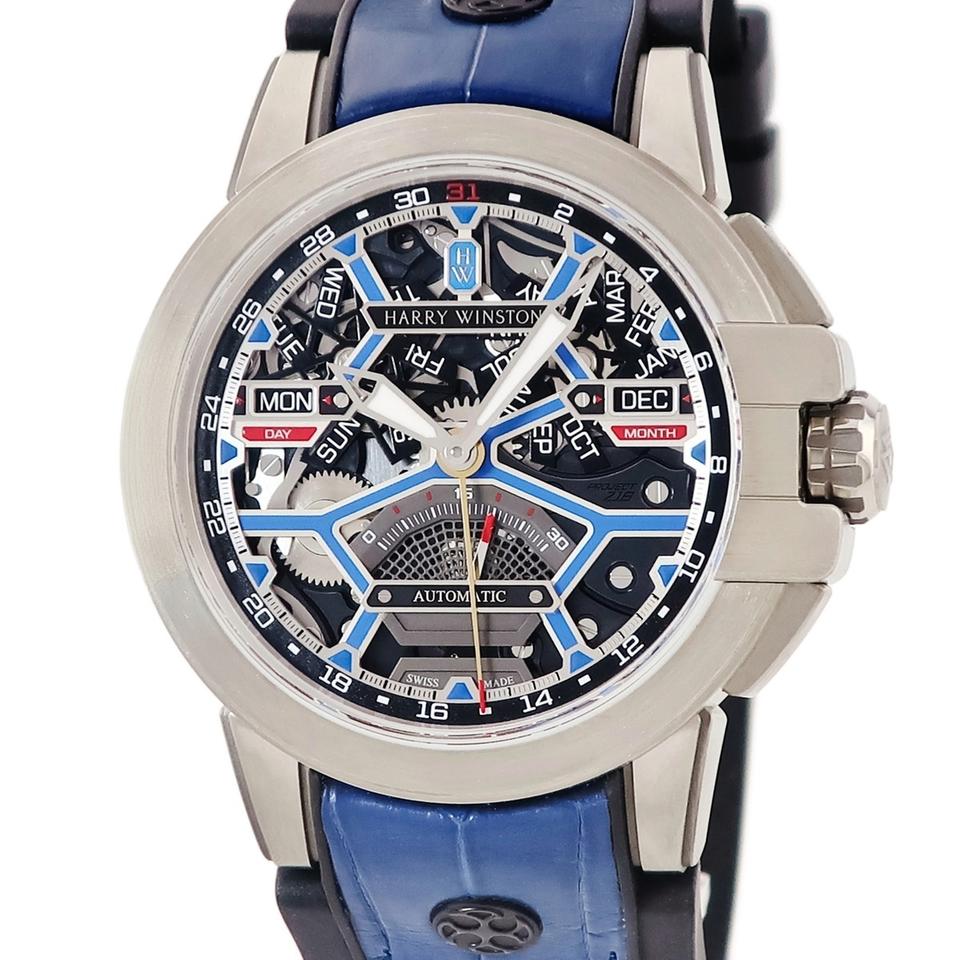
Harry Winston Project Z16: The Zalium Sports Chrono That Deserves a Second Look
Harry Winston isn't the first name that comes to mind when you think of sports chronographs. The brand is more often associated with dazzling diamonds and red-carpet moments. But the Project Z line, launched in 2001, has been quietly building a reputation among collectors who appreciate exotic materials and under-the-radar luxury. The latest model, the Project Z16, is a limited-edition chronograph that showcases Harry Winston's proprietary Zalium alloy and a design that is both sporty and refined.
In a market where steel sports watches from Rolex, Audemars Piguet, and Patek Philippe command waiting lists and hefty premiums, the Project Z16 offers something different. It's a watch that doesn't try to imitate the establishment. Instead, it leans into its own identity, offering a lightweight, hypoallergenic case, a robust in-house movement, and a distinctive aesthetic. Limited to just 300 pieces, it's a rare bird that rewards those who know what they're looking at.
The Zalium Factor
Zalium is the star of the show here. This zirconium-based alloy was first introduced by Harry Winston in 2001 with the original Project Z1. It's lighter than titanium, highly resistant to scratches, and completely hypoallergenic. The case of the Z16 has a sandblasted finish that gives it a matte grey sheen, which contrasts beautifully with the polished accents on the bezel and lugs. It's a material that feels special in the hand and on the wrist — almost futuristic.
The 42mm case is well-proportioned, and at 13.9mm thick, it has a substantial presence without being overbearing. Water resistance is rated at 100 meters, making it suitable for swimming and water sports. The sapphire crystal is anti-reflective, and the caseback is also sapphire, allowing a view of the movement. The rubber strap is integrated into the case, giving the watch a streamlined look, and the deployant clasp is secure and comfortable.
Dial and Design
The dial is a deep, sunburst blue that shifts from navy to a brighter cobalt depending on the light. It features two chronograph sub-dials at 3 and 9 o'clock, a small date window at 6 o'clock, and applied hour markers with Super-LumiNova. The hands are faceted and polished, with the hour and minute hands filled with lume. The chronograph seconds hand is a central needle with a counterweight, and the sub-dial hands are snailed for a touch of classicism.
The layout is clean and legible, though the date window at 6 o'clock is a nice touch that maintains symmetry. The Harry Winston logo is applied at 12 o'clock, and the overall impression is one of restrained sportiness. It's not as flashy as some of its competitors, but it has a quiet confidence that grows on you.
Movement: Caliber HW3302
Inside, the Project Z16 is powered by the Harry Winston Caliber HW3302. This is an automatic chronograph movement with a 68-hour power reserve, operating at 28,800 vibrations per hour (4 Hz) and featuring 35 jewels. It uses a column wheel and vertical clutch, which are hallmarks of a high-quality chronograph. The column wheel provides a crisp, precise pusher feel, while the vertical clutch ensures that the chronograph can be started and stopped without any jump in the seconds hand.
The movement is finished with Côtes de Genève on the bridges and circular graining on the base plate, and it's visible through the sapphire caseback. It's not COSC-certified, but in our testing, it ran within +4 to +6 seconds per day, which is well within acceptable tolerances for a watch at this price point. The 68-hour power reserve is generous, meaning you can take it off for the weekend and come back to a running watch on Monday.
Wrist Feel and Wearability
On the wrist, the Project Z16 is a joy to wear. The Zalium case is incredibly light — you almost forget you're wearing a watch. The 42mm diameter is versatile, and the 13.9mm thickness is balanced by the curved lugs and the domed caseback, which help it sit snugly on the wrist. The rubber strap is soft and flexible, and the deployant clasp is easy to operate. I wore it for a full day of writing, running errands, and even a workout, and it never felt intrusive.
The lightweight nature makes it an ideal travel companion, and the rubber strap is resistant to sweat and water, so you don't have to worry about taking it off at the gym. It's also comfortable under a shirt cuff, though the 13.9mm thickness might be a tight fit under a very slim dress shirt. Overall, it's one of the most comfortable sports chronographs I've worn.
Accuracy and Real-World Performance
As mentioned, our test watch ran within +4 to +6 seconds per day, which is excellent for a non-certified movement. The chronograph function is smooth and precise, and the pushers have a satisfying click. The date changes over crisply at midnight, and the power reserve held up as promised. For day-to-day use, you can expect reliability and consistent timekeeping. If you're a stickler for accuracy, you might miss the COSC certification, but in practice, the difference is negligible.
Occasions: When to Wear It
The Project Z16 is versatile enough for sport, daily wear, and travel. It's at home on the golf course, at the beach, or in a casual office. It's not a formal watch — the rubber strap and sporty dial make it too casual for black tie — but it can be dressed up with a blazer and jeans. For collectors who want a single watch that can do it all, the Z16 is a strong candidate, provided you don't need to wear a suit every day.
Investment Value and Market Position
The Project Z16 is priced at $24,900. That's a significant sum, and it puts it in direct competition with the Audemars Piguet Royal Oak Chronograph (though that's more expensive) and the Zenith Chronomaster Sport. On the pre-owned market, you can expect to find them in the $18,000-$22,000 range, which means they depreciate from new. That's typical for Harry Winston sports watches, which don't have the same resale strength as Patek Philippe or Rolex. However, the limited production of 300 pieces and the exotic Zalium case give it some collector appeal. It's not an investment piece, but it's unlikely to lose half its value either. Buy it to wear and enjoy, not to flip.
Service and Maintenance
Service intervals for the HW3302 are not officially published, but most high-end automatic chronographs benefit from a service every 5-7 years. The cost is also not widely published, but expect it to be in line with other luxury watches, likely $800-$1,200. Because of the proprietary Zalium case and movement, servicing should be done through Harry Winston's authorized network. Independent watchmakers may not have access to parts, so it's best to stick with the official channels.
Comparisons and Alternatives
If you're considering the Project Z16, you might also look at the Audemars Piguet Royal Oak Chronograph, which is the quintessential luxury sports chrono but costs significantly more and is made of steel. The Zenith Chronomaster Sport offers a high-frequency chronograph at a lower price and is a great alternative if you want a more traditional look. The Chopard Alpine Eagle Chrono is another option, with a similar sporty vibe and a steel case. For a more affordable homage, the Seiko Prospex Speedtimer SSC813 and the Tissot PRX Chronograph offer similar sporty chronograph aesthetics for a fraction of the price.
Final Verdict
The Harry Winston Project Z16 is a compelling left-field choice for collectors who want something different. Its Zalium case is a genuine point of difference, and the lightweight, comfortable wearability makes it a joy to live with. The movement is solid, the design is distinctive, and the limited edition status adds a touch of exclusivity. However, the lack of brand recognition in the sports watch segment and the depreciation from new mean it's not for everyone. If you're looking for a sports chronograph that stands out from the crowd and you don't mind the lack of investment potential, the Project Z16 is a worthy contender. It's a watch that rewards the wearer with its unique character and impressive engineering.