Brand history and context
Jaeger-LeCoultre was founded in 1833 in Le Sentier, Switzerland. The brand is often called the watchmaker's watchmaker because it has supplied movements to other houses for generations. Its own collections are relatively small, but they are deeply considered. The Master Control line arrived in 1992, and it was built around the idea of the 1000 Hours Control: a series of tests that every watch must pass before it leaves the manufacture. That name is not marketing fluff. It is a real internal protocol that covers precision, water resistance, and general reliability.
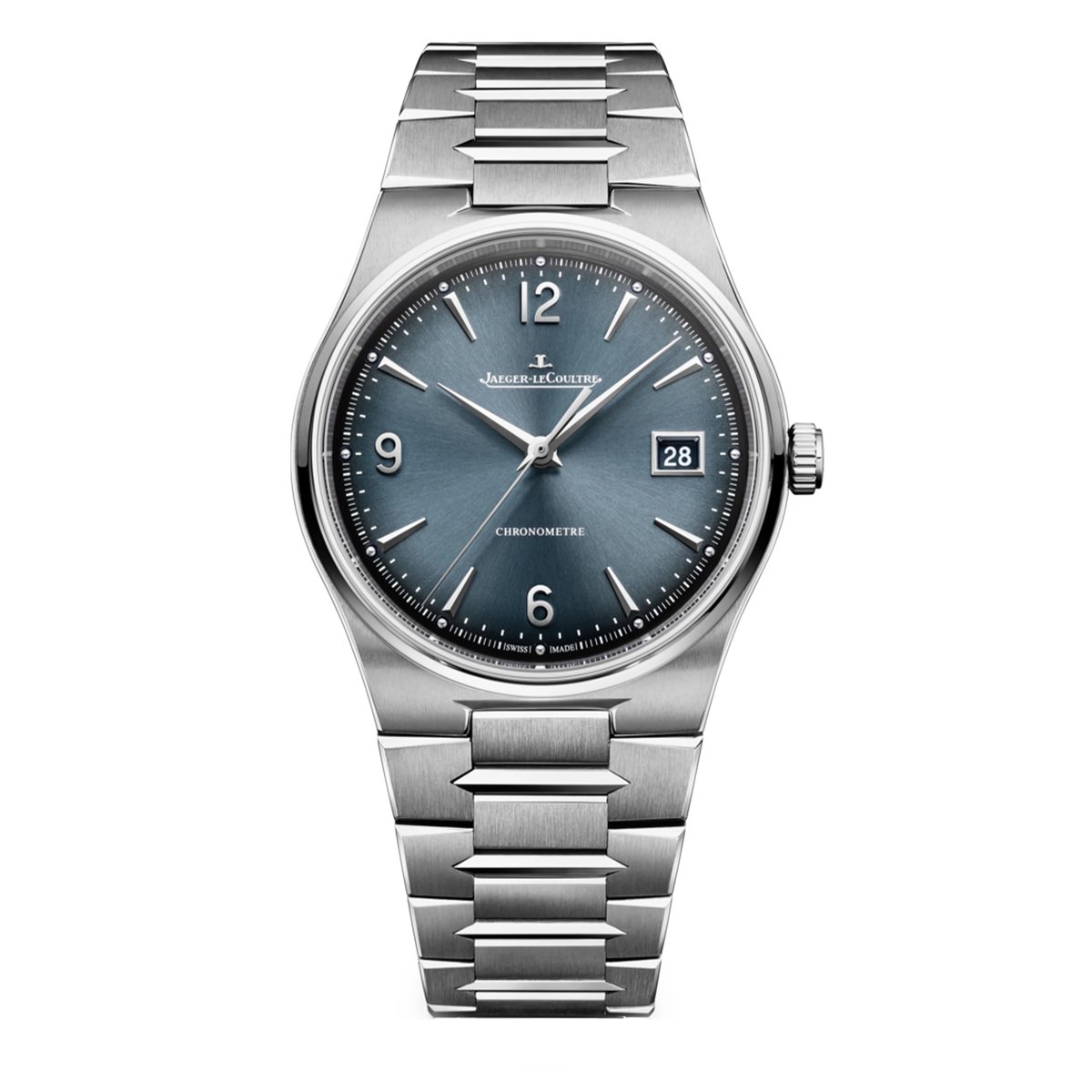
The Master Control Chronometre sits within that tradition. It takes the classic Master Control formula—round case, clean dial, automatic movement—and adds chronometer certification. The reference I tested is Q4088420, a steel model with a silver dial on a black alligator strap. It is a current production piece, not a limited edition. That matters for buyers who want to wear a watch without worrying about scarcity or auction hype.
Movement and technical details
The watch is powered by the Jaeger-LeCoultre Calibre 899/1. This is an automatic movement with a 70-hour power reserve, a frequency of 28,800 vibrations per hour, and 32 jewels. It is an in-house movement, which is increasingly rare at this price point. The finishing is what you would expect from JLC: Geneva stripes on the bridges, blued screws, and a rotor that is decorated but not overly flashy. The movement is visible through a sapphire caseback, and it is worth looking at from time to time.
The key detail is the chronometer certification. JLC has had this movement certified by TIMELAB, an independent Swiss laboratory. That means the watch has been tested in a variety of positions and temperatures, and it meets a defined standard for precision. It is not a COSC certificate, but it serves the same purpose: it gives the buyer a reasonable expectation that the watch will keep good time. In daily use, I found it to be accurate to within a few seconds per day. I did not measure it on a timing machine, but I did compare it to a reference clock over the week. It held steady.
The date is a simple aperture at 3 o'clock. It is not a big date, and it does not have a quick-set pusher. You set it through the crown. The crown is easy to grip, and the winding action is smooth. The movement hacks, so you can set the time precisely. The power reserve is generous enough that you can take the watch off for a weekend and put it back on Monday without having to reset it. That is a practical detail that matters in real life.
Case, dial, and strap
The case is stainless steel, 40mm in diameter. That is a size that works on a wide range of wrists. It is not a small watch, but it is not a large one either. It has a round shape with a thin bezel, which gives the dial plenty of room. The lugs are curved and polished, and they taper down to the strap. The case is water-resistant to 50 meters, which is enough for daily life but not for swimming. I would not take it into the pool. The crystal is sapphire, and the caseback is also sapphire.
The dial is silver, with applied baton indices and a date window at 3. The hands are polished, and the seconds hand is blued. The contrast is good. Legibility is excellent in most lighting conditions. There is no lume, so this is not a watch for reading in the dark. But for a dress watch, that is an acceptable trade-off. The dial has a subtle sunray finish that catches the light without being distracting. The text is minimal: the JLC logo at 12, the words Master Control below it, and Chronometre above the date. It is a clean, balanced design.
The strap is black alligator leather with a pin buckle. The leather is supple from the start, and it did not require a long break-in period. The pin buckle is simple and secure. I would have preferred a deployant clasp for daily wear, because it saves the strap from creasing, but the pin buckle is lighter and less fussy. The strap is 20mm at the lugs, which is a standard size, so you can easily swap it for a different leather or a suede strap if you want a more casual look.
Wrist feel and comfort
On the wrist, the Master Control Chronometre feels balanced. The case is not too heavy, and the strap distributes the weight well. The watch sits flat on the wrist, and it does not slide around. The lugs curve down nicely, so there is no gap between the case and the wrist. I have a 7-inch wrist, and the 40mm case looked proportionate. It slipped under a shirt cuff without any trouble. That is not always the case with automatic watches, especially those with a date and a sapphire caseback.
The watch is comfortable enough to forget you are wearing it. That is a high compliment. I wore it for a full day of typing, meetings, and commuting, and I never felt the need to take it off. The crown does not dig into the back of the hand, and the caseback is smooth. The only minor issue is the leather strap: it can get a little warm in summer, but that is true of any leather strap. A quick swap to a fabric or rubber strap would solve that, but it would change the character of the watch. This is a dress watch, and it is happiest on leather.
Accuracy and real-world performance
Chronometer certification is not a guarantee of perfect timekeeping, but it is a good starting point. Over the week, the watch gained about three seconds per day. That is well within the chronometer standard, and it is more than accurate enough for daily wear. I did not notice any significant variation between positions. The power reserve held up as expected: after a full wind, it ran for about 70 hours. I did not test it to the minute, but it was still running after a weekend off the wrist.
If you are the kind of person who checks their watch against a radio-controlled clock every morning, you will be satisfied. If you are not, you will never notice. The date changes over cleanly at midnight, and the crown operates smoothly. The only thing to remember is that the date is not quick-set, so you need to be careful when setting it near midnight. The movement has a hacking seconds, which makes precise setting easy.
Occasions and wrist presence
This is a watch that works for formal occasions, daily wear, dressy events, and travel. It is not a sports watch. I would not wear it to the beach or the gym. But for everything else, it is appropriate. It looks smart with a suit, and it looks perfectly fine with a sweater and jeans. It is not a statement piece. It does not have a flashy bezel or a bright dial. Its wrist presence is moderate: it is noticeable to someone who knows watches, but it does not draw attention from across the room. I would rate it 3 out of 5 on wrist presence. That is not a criticism. It is a deliberate choice.
For travel, the date is useful, and the power reserve means you can leave it in a safe for a weekend without it stopping. The lack of a GMT function means you have to reset the time when you change time zones, but that is a minor inconvenience. The watch is light enough to wear on a plane, and the strap is comfortable for long periods.
Reference variants and family
The reference I tested is Q4088420, with a silver dial and a black alligator strap. I am not aware of other current variants at the time of writing. The Master Control family includes the Master Control Date, the Master Control Calendar, the Master Control Chronograph Calendar, the Master Control Geographic, and the Master Control Memovox Timer. Each of these offers a different complication set, but they share the same round case and classic design language. If you want a moonphase, the Calendar is the obvious choice. If you want a chronograph, the Chronograph Calendar is there. The Chronometre is the purist's option.
Other notable models from Jaeger-LeCoultre include the Reverso Classic, the Master Ultra Thin Moon, the Polaris Date, the Duometre, and the Reverso Tribute. The Reverso is the brand's most famous design, but it is a very different watch. The Master Ultra Thin Moon is dressier and more romantic. The Polaris is sportier. The Duometre is a high-horology piece with a very different price point. The Master Control Chronometre sits in the middle of the collection: it is more affordable than the Duometre, more versatile than the Reverso, and more classic than the Polaris.
Similar watches and alternatives
If you are considering the Master Control Chronometre, you might also look at a few other watches. The Grand Seiko SBGW231 is a hand-wound dress watch with a similar purity and a very high level of finishing. It has a different character because it is manual-wind, but it is a worthy alternative. The Omega De Ville Trésor is a slim, understated dress watch with a chronometer-certified movement. It is a bit more modern in its design, but it offers a similar experience. The IWC Portugieser Automatic 40 is another round dress watch with an in-house automatic movement. It has a slightly more nautical feel, but it is comfortable and well-made. The Cartier Santos-Dumont is a more design-forward alternative. It is not a round watch, but it has a similar dressy-casual versatility.
If you want a more affordable homage, the Seiko Presage Cocktail Time captures the dressy, silver-dial look at a fraction of the price. The Tissot Le Locle Powermatic 80 is a classic round dress watch with an automatic movement and a clean dial. The Orient Bambino is an affordable entry into the no-date dress watch formula. These are not direct copies of the JLC, but they share the same spirit. They are worth considering if you want the look without the price.
Investment value and ownership
The MSRP for the Master Control Chronometre is around $11,700. That is a significant sum, but it is in line with other Swiss dress watches with in-house movements and chronometer certification. On the secondary market, you can expect to find them for between $8,000 and $10,000, depending on condition and box and papers. The trend is stable to slightly depreciating. This is not a watch that will appreciate in value. It is a watch that you buy to wear. If you are looking for an investment, you should look elsewhere. If you are looking for a beautifully made daily wearer, this is a good candidate.
Service is available through Jaeger-LeCoultre and authorized service centers. I would recommend using an authorized center, especially for a watch with a chronometer-certified movement. The service interval is not something I can state precisely, but JLC recommends regular maintenance. The cost will depend on the work required. It is not a cheap watch to service, but that is true of any high-end mechanical watch. The good news is that the movement is well-known and parts should be available for a long time.
Pros and cons
Pros: The movement is beautifully finished and chronometer-certified. The dial is clean and legible. The case is comfortable and versatile. The watch is easy to wear every day. Cons: The lack of lume means it is not useful in the dark. The date is not quick-set. The watch is not a sports watch. The leather strap requires care. The resale value is not strong. These are not dealbreakers for the right buyer. They are simply the trade-offs of a classic dress watch.
Final verdict
The Jaeger-LeCoultre Master Control Chronometre is a quietly excellent watch. It does not try to be everything to everyone. It is a dress watch with a date, a comfortable case, and a movement that has been independently certified for precision. It is the kind of watch you can wear for a decade without getting tired of it. If you want a daily wearer that looks good with a suit and feels special on the wrist, it is worth trying on. If you want a sports watch or an investment, keep looking. For the discerning buyer who values understatement and craftsmanship, it is a strong choice.