Konstantin Chaykin Atomic Heart Twins: A Collector's Guide to the Licensed Wristmon
Konstantin Chaykin's Atomic Heart Twins is the kind of watch that makes sense only in the current independent market. It is a licensed collaboration between a Russian independent watchmaker known for turning dials into faces and a video game that treats Soviet-era robotics as pop mythology. The result is not a conventional luxury watch. It is a collector object with a very specific audience: people who know Chaykin's Wristmon series, people who played Atomic Heart, and people who like the idea of wearing a piece of game lore that happens to tell time.
The watch is scarce, visually loud, and technically opaque. Chaykin has not published the full specification sheet that a serious collector would normally expect—case dimensions, water resistance, exact caliber, and service intervals are not part of the public record for this exact collaboration. That does not make the Atomic Heart Twins a bad watch. It makes it a watch you must underwrite differently. You are buying the concept, the maker, and the scarcity first; the movement and case details are secondary until you can confirm them with the brand or a trusted dealer.
This review is therefore a market-driven guide rather than a spec-sheet recitation. We will look at what the Atomic Heart Twins is, where it sits in Chaykin's catalogue, how it wears in principle, what the investment case looks like, and what a sophisticated young collector should demand before writing a check.
Why the Atomic Heart Twins Matters
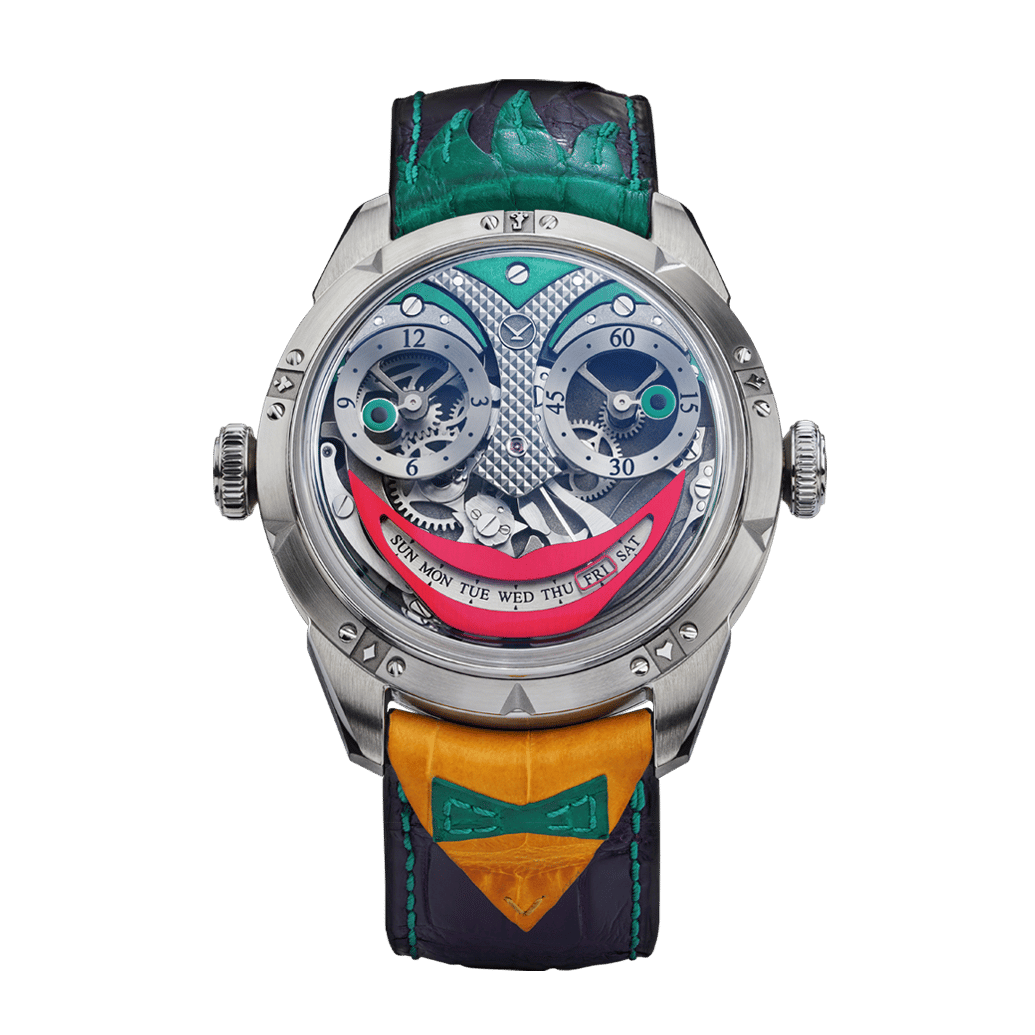
Most watch collaborations with video games are merchandise. They put a logo on a dial and call it a day. The Atomic Heart Twins is different because Chaykin's entire brand is built on character watches. His Joker, Minotaur, and Kolobok are not minimalist timekeepers; they are animated faces with eyes, mouths, and tongues that read the time. When Chaykin takes on a game like Atomic Heart, the collaboration has a natural visual language to work with. The game's twin-robot mythology gives him a reason to build a dial that is not just branded but sculptural.
That is the first reason the piece matters. It sits at the intersection of two collector bases that rarely overlap: independent watchmaking and gaming culture. The second reason is scarcity. Chaykin's character watches are already produced in small numbers, and a licensed collaboration is likely to be even more limited. The third reason is timing. Atomic Heart became a cult title, and Chaykin is one of the few independent watchmakers with a recognizable pop-culture footprint. The combination gives the watch a story that most $10,000-plus watches do not have.
Brand Context: Chaykin's Moscow Manufacture
Konstantin Chaykin founded his Moscow-based manufacture in 2003. He built his reputation on astronomical and complication pieces—clocks, tourbillons, and unusual calendar mechanisms—before the Joker turned him into a cult figure in independent watchmaking. That matters because the Atomic Heart Twins is not the work of a fashion brand licensing a game. It comes from a watchmaker with real horological credibility, even if the collaboration itself is playful.
The Wristmon series is the closest context. Chaykin's character watches use a display module to animate the dial, and they are collected as much for the design as for the mechanics. The Atomic Heart Twins should be understood in that lineage. It is a licensed Wristmon, not a conventional dress watch with a game logo. That distinction is important for resale: Chaykin collectors will judge it as a Chaykin first and a game watch second.
Design and the Atomic Heart Twins Concept
The Atomic Heart Twins takes its name from the game's twin-robot characters, and the design leans into that duality. This is not a subtle watch. It is a statement piece that uses the dial as a stage. The exact dial architecture is best confirmed with official images, but the concept is clear: Chaykin's character-watch language meets Atomic Heart's retro-futurist aesthetic. The result is a watch that reads as sculpture first and timekeeper second.
For a collector, the design question is not whether it is tasteful. It is whether the concept holds together. Chaykin's best work has a sense of humor and a strong graphic identity. The Atomic Heart Twins has both. It is also a piece that will polarize. Some collectors will see a brilliant crossover; others will see a novelty. That polarization is part of the investment case. Watches that everyone likes rarely become cult objects. Watches that a specific tribe loves can develop a strong secondary market.
Movement and Technical Transparency
The exact caliber for the Atomic Heart Twins has not been publicly disclosed. Chaykin's character watches typically use an automatic base with a proprietary display module, and the brand is known for building unusual mechanisms rather than off-the-shelf time-only movements. But collectors should not assume that the Atomic Heart Twins uses the same caliber as the Joker or any other Wristmon. A licensed collaboration can use a different base, a different module, or a different finishing package.
What we can say is that the watch is automatic, and it is not COSC-certified. Chaykin does not position his character watches as chronometers. The movement is there to support the display, not to win a timing competition. That is fine for this kind of watch, but it means buyers should ask for a timing sheet and a service history. Independent watchmakers can regulate a movement beautifully, but the exact performance depends on the individual piece.
The lack of published caliber information is the biggest frustration in this review. A serious collector wants to know the base caliber, the power reserve, the frequency, the jewel count, and the finishing. None of that is part of the public record for this exact reference. That does not mean the information is unavailable; it means you have to ask. For a watch at this level, a direct conversation with the brand or an authorized dealer is mandatory.
Specs: What Is Known and What Is Not
The public specification sheet for the Atomic Heart Twins is incomplete. Chaykin has not published case diameter, case thickness, lug-to-lug length, or water resistance for this exact collaboration. Collectors should not substitute figures from the Joker or other Wristmons. The case may be similar, but it may not be identical. The only responsible approach is to confirm the dimensions with the brand before buying.
What is known is that the watch uses a sapphire crystal, a leather strap, and a pin buckle. The case material is understood to be stainless steel, though the full alloy and finishing details should be confirmed. There is no lume. That makes sense for a character watch: the dial is the point, not low-light legibility. The watch is also not designed as a sports watch, so water resistance should be treated as splash-resistant at best until the brand states otherwise.
This is not a watch for someone who needs a full spec sheet before falling in love. It is a watch for someone who accepts that independent art watches often come with incomplete public information. But even art watches need to be technically sound, and that is why the missing data matters. You are not buying a painting; you are buying a mechanical object that will need service.
On the Wrist
Without published dimensions, the safest way to think about the Atomic Heart Twins is as a dial-first watch. Chaykin's character watches are built around the face, not the case. They tend to sit flat and let the strap do the work. The Atomic Heart Twins should follow that logic. It is not a slab-sided sports watch; it is a piece that wants to be seen from across the room.
The twin-dial concept adds visual weight. That means balance matters more than absolute size. A watch with a busy dial can feel larger than its measurements suggest, and a watch with a strong graphic identity can feel smaller because the eye is drawn to the design rather than the case. The best way to judge the Atomic Heart Twins is to wear it with a cuff and see how it sits. If it feels top-heavy or unstable, the concept is fighting the case. If it sits close and lets the dial do the talking, Chaykin has done his job.
Comfort will depend on the strap. A leather strap with a pin buckle is the right choice for this kind of watch. It keeps the piece from feeling too technical and lets the case remain the focus. Collectors who prefer deployant clasps can usually change them, but the original configuration should be preserved for resale.
Accuracy and Daily Use
The Atomic Heart Twins is not a daily beater. It is a collector piece with a character dial, no lume, and unconfirmed water resistance. That does not mean it cannot be worn regularly, but it should be worn with care. The automatic movement will keep running as long as it is on the wrist, and the lack of a date or other complications keeps the dial clean. For a collector who rotates watches, a winder or a regular winding routine is sensible.
Accuracy will depend on the undisclosed base caliber. Chaykin's movements are not COSC-certified, so buyers should expect typical mechanical variation rather than chronometer precision. A well-regulated independent watch can run within a few seconds per day, but the exact figure should be confirmed with a timing machine. If you are buying pre-owned, ask for a recent service record and a timing report. If you are buying new, ask the dealer to regulate the watch before delivery.
Occasions and Wrist Presence
The Atomic Heart Twins is a formal and dress-casual piece. It is not a sports watch, and it is not a travel watch. It is a conversation starter for gallery openings, collector dinners, and events where people expect to see something unusual. The wrist presence is five out of five. It is not subtle. It is a sculpture on the wrist, and it will dominate a cuff.
That is both the appeal and the risk. If you want a watch that disappears under a shirt, this is not it. If you want a watch that makes people ask questions, this is exactly it. The best owner is someone who enjoys explaining the collaboration and does not mind the attention. The worst owner is someone who buys it as an investment and then worries about every scratch.
Variants, Family References, and Alternatives
There are no publicly documented variants of the Atomic Heart Twins. It appears to be a single collaboration piece rather than a full collection. That makes it harder to value than a production watch with a known reference number. Collectors should confirm the exact reference and production number with the brand. If the watch is a unique piece or a small limited edition, the provenance matters more than the spec sheet.
The closest family references are Chaykin's Wristmon character watches: the Joker, the Minotaur, and the Kolobok. These are not direct predecessors, but they share the same design language. Collectors who like the Atomic Heart Twins should study those pieces to understand Chaykin's approach to dial animation and case design. Other notable Chaykin models include the Lunokhod, the Thin King, and the Martian Tourbillon. Each shows a different side of the brand, from astronomical complications to minimalist dress watches.
If you want a similar watch from another brand, the MB&F HM10 Bulldog is the obvious comparison. It is a character-driven independent watch with a playful, sculptural case. The Urwerk UR-100V is another option for collectors who want a sci-fi display and independent credibility. The Hublot MP-09 Tourbillon Bi-Axis is a more aggressive statement piece with high-horology mechanics. None of these are direct substitutes, but they occupy the same mental space: watches that are bought for design and concept as much as for timekeeping.
There is no meaningful homage market for the Atomic Heart Twins. The design is a licensed collaboration, and the production is too niche for mainstream homage brands to copy. That is good for owners. It means the watch will not be diluted by cheap imitations. It also means the secondary market will be thin. You cannot rely on a broad audience of buyers who want the look but cannot afford the original.
Investment Case
The investment case for the Atomic Heart Twins is not straightforward. On the positive side, it is a Chaykin, it is a licensed collaboration, and it is likely to be scarce. Chaykin has a cult following, and his character watches have held value better than most independent art watches. The Atomic Heart connection adds a second collector base, which could support demand. On the negative side, the public information is incomplete, the secondary market is thin, and game collaborations can date quickly. A watch that feels culturally relevant today can feel like a period piece in five years.
The right way to underwrite it is as art with optional upside. If you buy it at issue and love it, hold it. If you buy it as a flip, you are taking a risk on a very specific buyer. The watch is not liquid. It will not sell in a day. It will sell to a Chaykin collector or an Atomic Heart fan who wants the ultimate piece of merchandise. That is a narrow audience, but it is a passionate one.
There is no major auction history for this reference. That is not surprising. The watch is too new and too niche for the auction houses to have established a track record. Collectors should rely on dealer pricing and private sales rather than auction comps. If you see one for sale, ask why it is being sold. Provenance and condition matter more than a theoretical market price.
Service and Ownership
Service should be routed through Konstantin Chaykin or a trusted independent watchmaker with experience in Chaykin movements. The brand is based in Moscow, which can complicate service for international owners. Parts for a collaboration piece are not commodity items. That means service can be slow and expensive. Collectors should factor that into the cost of ownership.
The good news is that the watch is automatic and relatively simple in principle. It does not have a perpetual calendar or a tourbillon that requires specialized service. The bad news is that the display module may be proprietary. If something goes wrong with the character mechanism, you need someone who knows the brand. That is not a watch you take to a mall kiosk.
Price Range and Value Verdict
The price for the Atomic Heart Twins is not publicly established. It is a collaboration piece, and Chaykin's pricing varies widely depending on the model and the complexity. The value verdict is therefore conditional: the price buys a licensed independent art watch with extreme scarcity and a strong story. Whether it holds value depends on Chaykin's continued cult following and the durability of the Atomic Heart fan base. If you can buy it at a fair independent price and you love the design, it is a reasonable collector purchase. If you are paying a hype premium, you are taking a risk.
Pros and Cons
Pros: extreme rarity and conversation value; Chaykin's independent credibility; a licensed Atomic Heart design that crosses watch and gaming collectors; a strong wrist presence that is impossible to ignore.
Cons: opaque technical specifications; niche resale liquidity; service and parts dependency; a design that will polarize and may date. The watch is not for everyone, and that is the point.
Final Verdict
The Atomic Heart Twins is not a rational first watch. It is a collector's crossover object. Chaykin's credibility gives it more horological weight than most game collaborations, but the lack of published specs and the thin secondary market mean you should buy it because you love the object, not because you expect a quick profit.
If you are a Chaykin collector, an Atomic Heart fan, or a young collector who wants a piece that starts conversations, it is worth pursuing. If you need a daily watch, a safe investment, or a full spec sheet before you commit, look elsewhere. The Atomic Heart Twins is a trophy, and trophies are bought with emotion as much as analysis.