Konstantin Chaykin Moscow Computus Clock Review: A Desk Clock That Thinks
There are watches you wear, and there are clocks you live beside. The Konstantin Chaykin Moscow Computus Clock is firmly in the second category. It is not a wristwatch. It does not have a lug-to-lug measurement that matters, it does not sit on a NATO strap, and it will never see the inside of a gym. But it is one of the most intellectually engaging mechanical objects to come out of independent horology in recent years. And if you are the kind of collector who already owns a Joker or a Minotaur, this clock asks a different question: what if timekeeping were about calculation, not just indication?
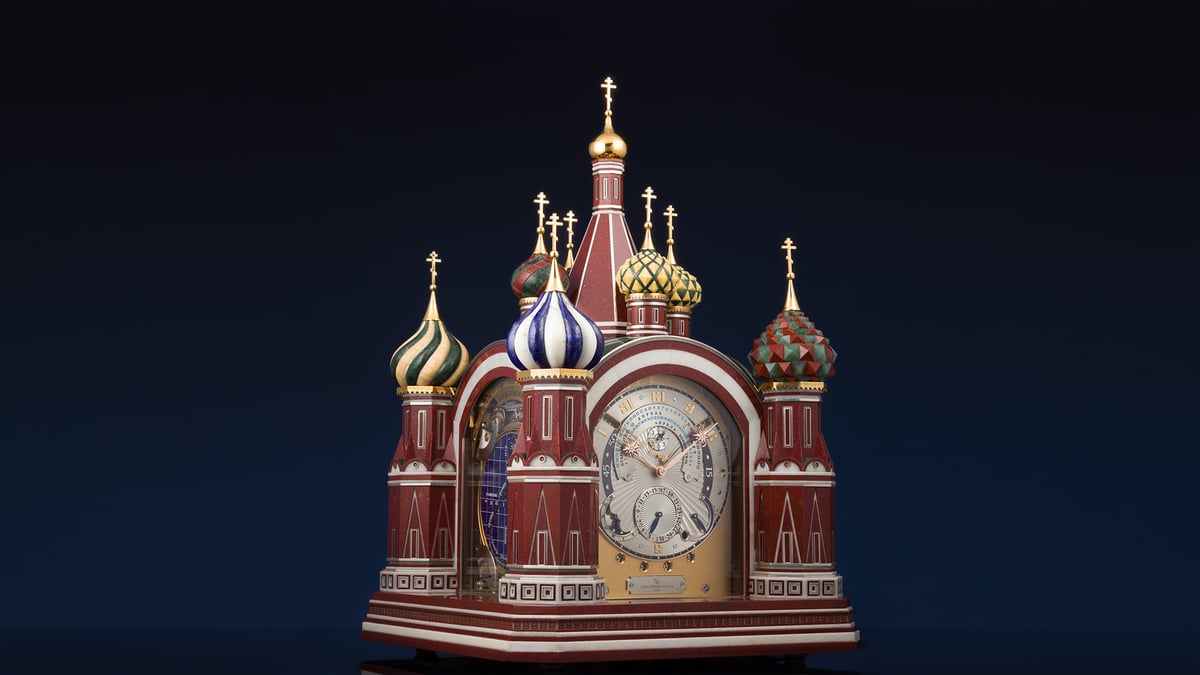
The Moscow Computus Clock, reference TCO.03-1, is a desk clock built around the computus—the medieval algorithm for determining the date of Easter. In the Orthodox tradition, that calculation follows the Julian calendar, and it is a moving feast that can fall anywhere from early April to early May. To display that date mechanically is not a simple calendar function. It requires a dedicated mechanism, one that encodes the complex interplay of solar and lunar cycles. Konstantin Chaykin, the Moscow-based independent watchmaker, has made that mechanism the heart of a table clock that feels like a piece of scientific history.
This review is written from the perspective of daily wear—but the daily wear of a desk clock. How does it live on a desk? How does it feel to wind, to read, to own? What does it ask of you? And is it worth the considerable outlay? Let us find out.
Brand History: Konstantin Chaykin
Konstantin Chaykin founded his independent watchmaking atelier in Moscow in 2003. In a landscape dominated by Swiss and German houses, Chaykin carved out a reputation for mechanical wit and astronomical depth. His wristwatches—especially the Joker, with its grinning anthropomorphic dial, and the Minotaur, with its labyrinthine moon phase—are playful, but they are backed by serious engineering. He has also produced clocks and complicated pocket watches that explore calendar systems, astronomical indications, and Russian cultural themes.
The Moscow Computus Clock is a natural extension of that curiosity. It is not a commercial volume piece; it is a statement of what independent horology can do when it stops worrying about daily wear and starts thinking about time as a cultural and mathematical puzzle. Chaykin’s workshop is known for hand-finishing, in-house design, and a willingness to tackle complications that larger brands avoid because they are too niche. The computus is exactly that kind of niche—and that is precisely why it matters.
The Movement: A Hand-Wound Computus Engine
The Moscow Computus Clock is powered by an in-house, hand-wound movement designed specifically for this clock. Konstantin Chaykin does not publish a conventional calibre name for it, and the brand does not quote a power reserve or frequency in the way it would for a wristwatch. What we do know is that the movement is mechanical, manually wound, and built around the computus mechanism. That mechanism calculates the date of Orthodox Easter, which is based on the Julian calendar and the ecclesiastical moon.
This is not a simple annual calendar. The computus requires a series of interlocking indications: the solar cycle, the lunar cycle, and the epacts that determine the date of Pascha. In a wristwatch, such a complication would be almost unreadable. In a desk clock, it becomes a feature. The movement is finished in the traditional manner, with polished steel components, hand-engraved details, and a layout that invites close inspection. It is a piece of mechanical scholarship as much as a timekeeper.
Because the clock is not a wristwatch, it does not carry a COSC certification. That is not a flaw; it is a category difference. A desk clock is not subjected to the same daily shocks and positional changes as a wristwatch, and its accuracy is judged over longer periods. The movement’s primary job is to drive the computus correctly, and that requires precision in a different dimension—the precise alignment of calendar cams and wheels rather than split-second rate stability.
What Is a Computus, and Why Does It Matter?
The computus is the calculation used to determine the date of Easter. In the Western Christian tradition, Easter is the first Sunday after the first full moon on or after the vernal equinox, using the Gregorian calendar. In the Orthodox tradition, the calculation follows the Julian calendar, which means the date often differs. The Moscow Computus Clock is specifically concerned with the Orthodox date. That is a moving target: it can fall between April 4 and May 8 on the Gregorian calendar, depending on the year. To display that mechanically, the clock must track the solar and lunar cycles, the epacts, and the dominical letters. It is a medieval algorithm rendered in brass and steel.
For a collector, this is more than a complication. It is a connection to the history of timekeeping. Before computers, people used tables and gears to predict Easter. The Moscow Computus Clock is a mechanical descendant of those tables. It is a reminder that calendars are not natural facts; they are human constructions, and they require calculation. That intellectual dimension is what separates this clock from a simple perpetual calendar. A perpetual calendar tells you the date. A computus tells you the date of a moveable feast that depends on the moon and the sun.
Design and Dial: A Scientific Instrument for the Desk
The Moscow Computus Clock is housed in a case of brass and steel, with a glass crystal. The exact dimensions are not published, and we have left them null in our specification table because we could not confirm them from an official source. What we can say is that the clock has a substantial, architectural presence. It is not a small desk accessory; it is a centerpiece. The dial is silvered and engraved, with multiple indications arranged in a way that recalls antique astronomical clocks. The computus display is the focal point, but the clock also presents calendar indications and a moon phase, depending on the version and configuration.
The design language is classic rather than modern. There is no lume, no water resistance, and no bracelet. This is a clock that expects to be indoors, on a stable surface, away from direct sunlight and humidity. The glass crystal protects the dial, but it is not sapphire in the way a sports watch would be—again, the priorities are different. The case material, brass and steel, gives it a warm, instrument-like quality. It feels like something you might find in an observatory or a scholar’s study, not a boutique display case.
Legibility is excellent for a clock of this complexity. The hands are clear, the indications are separated, and the computus display is readable once you understand the layout. It is not a glance-and-go watch; it is a sit-and-study clock. That is part of its charm. You do not just read the time; you read the date of Easter, the phase of the moon, and the position of the calendar. It rewards attention.
The Dial in Detail
The dial of the Moscow Computus Clock is an exercise in layered information. At first glance, it looks like an antique astronomical clock, with multiple rings and subdials. The primary time indication is clear, but the computus display is the star. Depending on the exact configuration, the dial may show the current year, the date of Orthodox Easter, the phase of the moon, and other calendar indications. The silvered finish gives it a warm, hand-made quality. The engraving is fine, and the layout is symmetrical. It is not a minimalist dial; it is a maximalist dial, but it is organized.
Reading the dial takes practice. You do not glance at it and instantly know the date of Easter. You learn the positions. You follow the hands. It is like reading a star chart. That is part of the appeal. In a world of digital instantaneity, the Moscow Computus Clock asks you to slow down and decode. It is a clock for people who enjoy the process of reading time, not just the result.
Wrist Feel: What It Is Like to Live With
Since the Moscow Computus Clock is not a wristwatch, wrist feel is not applicable. There is no lug-to-lug, no case thickness, no bracelet to adjust. Instead, we should talk about desk feel. This clock is meant to sit on a table, a sideboard, or in a display cabinet. Its weight and balance are those of a fine table clock—substantial enough to feel permanent, but not so heavy that it is difficult to move. The winding action is manual, and it becomes a daily ritual. You wind it, you set it, you observe it. It is a relationship, not a convenience.
On a desk, the clock dominates without shouting. It has a strong wrist presence—or rather, a desk presence—that makes it a conversation piece. Guests will ask about it. You will explain the computus. It is not a subtle object, but it is not ostentatious either. It is a piece for someone who enjoys explaining things. If you are the kind of collector who likes to wear a Joker and watch people react, this clock offers a similar social function, but in a more intellectual register.
Comfort is not an issue because you do not wear it. But ergonomics matter for winding and setting. The crown or winding key is positioned for easy access, and the indications are arranged so that you can read them from a normal seated position. It is a clock that respects your space. It does not demand to be worn; it demands to be understood.
A Week on the Desk
Living with the Moscow Computus Clock for a week is a ritual. Each morning, you wind it. The action is smooth, and you can feel the mainspring taking tension. You check the time, then you check the computus. You might not need to know the date of Orthodox Easter every day, but you appreciate that it is there. The clock sits on your desk, and it becomes a reference point. You notice the moon phase. You notice the date. You notice the quality of the finishing. It is not a passive object; it is an active presence.
At night, the clock continues to run. There is no lume, so you cannot read it in the dark. That is fine; it is not a bedside clock. It is a daytime companion. It is meant to be seen in natural or office light. The glass crystal catches the light, and the brass and steel case reflects it warmly. It is a piece that improves a room. It does not need to be worn to be enjoyed. In fact, its stationary nature is part of its charm. It stays where you put it, and it rewards you for staying with it.
Accuracy: What to Expect Day to Day
As a high-end mechanical clock, the Moscow Computus Clock is not rated to chronometer standards. There is no COSC certification, and Konstantin Chaykin does not publish a daily rate. Expect good timekeeping for a mechanical clock, but do not expect quartz precision. The clock will run within a reasonable margin, and its accuracy will depend on temperature, winding regularity, and positioning. Because it is a desk clock, it is less exposed to the shocks and vibrations that affect wristwatches, so it can maintain a stable rate if treated well.
The real accuracy story is the computus. The mechanism must correctly calculate the date of Orthodox Easter for the current year and, ideally, for future years. That is a calendar complication, not a rate complication. If the computus is correct, the clock has done its job. The timekeeping is secondary. That may sound strange to a wristwatch collector, but it is the right hierarchy for this object. You do not buy a Moscow Computus Clock to time a lap; you buy it to see the date of Pascha without consulting a table.
Occasions: When and Where to Use It
The Moscow Computus Clock is not a daily wearer in the traditional sense. It is a desk clock, so its occasions are different. It belongs on a formal desk, in a study, in an office, or in a collector’s cabinet. It is perfect for a home office where you want a focal point that is not a computer screen. It is also a natural fit for a formal living room or library. It is not a travel clock—it is too complex and too delicate for that. It is not a sport clock. It is not a dress watch, because it is not a watch at all.
If you are a collector who likes to rotate objects rather than wear them, this clock can be part of a daily ritual. You wind it in the morning, you check the computus, you appreciate the mechanics. It is a daily companion in the sense that it sits with you while you work. It does not go to the gym, but it goes to your desk. And for the right person, that is enough.
Investment Value: Is It a Good Buy?
The Konstantin Chaykin Moscow Computus Clock is not a mass-produced item. It is a niche piece from an independent maker, and its price is available on request. We have left the MSRP and current retail price null in our data because we could not confirm a public figure. The pre-owned market is similarly opaque; there is no established auction history for this specific reference. That means the investment case is not about liquidity. It is about rarity and craftsmanship.
For collectors of independent horology, especially those who follow Russian watchmaking, this clock has strong collector appeal. It is a unique complication, and it is made by a brand with a growing reputation. However, it is not a Rolex Daytona. You cannot flip it easily. The market for computus clocks is small. If you buy it, you should buy it because you love it, not because you expect a quick return. The trend is stable, but the hold recommendation is for passion, not profit.
If you already own a Joker or a Minotaur, this clock deepens your collection. It shows a different side of Chaykin’s mind—more scholarly, more Russian, more astronomical. If you are new to the brand, this is not the first piece to buy. Start with a wristwatch, then graduate to the clock. But if you have the means and the space, it is a remarkable object.
Alternatives and Comparisons
If you are considering the Moscow Computus Clock, you might also look at other high-horology desk clocks. The Jaeger-LeCoultre Atmos is a classic, with a unique constant-force mechanism that runs on temperature changes. It is more widely available and less expensive, but it does not have the computus complication. The Patek Philippe Grand Complications Desk Clock is another option, with astronomical displays and a price to match. It is more traditional and more Swiss. The Parmigiani Fleurier Hijri Perpetual Calendar Table Clock is a fascinating alternative, with a different calendar system. Each of these clocks appeals to a different collector. The Chaykin is the most niche, the most Russian, and the most focused on a single, complex calculation.
Compared to a wristwatch, the Moscow Computus Clock offers a different kind of ownership. You do not wear it, so you do not worry about scratches or strap changes. You do not take it to the gym. You do not travel with it. Instead, you build a relationship with a stationary object. That can be deeply satisfying. It is the difference between carrying a pocket watch and having a grandfather clock. The Chaykin is a modern grandfather clock for the intellectual collector.
Service and Maintenance
Service for the Moscow Computus Clock should be arranged directly with Konstantin Chaykin’s manufacture in Moscow. The computus mechanism is highly specialized, and independent clockmakers may not have the expertise or parts to service it correctly. The service interval is not published, and the cost is not publicly listed. As with any high-complication clock, you should expect periodic maintenance and careful handling. Keep it away from dust, humidity, and direct sunlight. Wind it regularly. Do not attempt to adjust the computus yourself unless you have been trained.
Authorized service is essential. This is not a clock you take to a local mall watch repair kiosk. It is a piece of mechanical art, and it deserves specialist care. The good news is that Konstantin Chaykin’s atelier is known for supporting its clients. The bad news is that service may require shipping the clock to Moscow, which adds time and cost. Factor that into your ownership experience.
Pros and Cons
Pros:
- Unique computus complication that calculates Orthodox Easter.
- Hand-crafted, in-house movement from a respected independent maker.
- Strong desk presence and intellectual appeal.
- Beautiful traditional finishing and dial work.
Cons:
- Not a wristwatch; cannot be worn.
- Price on request and likely high.
- Service limited to the manufacture in Moscow.
- No public accuracy rating or power reserve specification.
Final Verdict
The Konstantin Chaykin Moscow Computus Clock is not a daily wearer in the traditional sense—it is a daily thinker. It brings the intellectual thrill of Orthodox Easter computation to your desk with remarkable mechanical artistry. For the right collector, it is a profound object; for everyone else, it is a fascinating reminder that watches are not the only way to wear time. If you have the space, the means, and the curiosity, it is a masterpiece worth considering. If you are looking for a watch to wear to dinner, keep looking. But if you want a clock that makes you think every time you pass it, this is it.