The Renaissance of the Independent Maker
In the current horological climate, we are witnessing a profound shift. The 'hype cycle'—that frantic, FOMO-driven rush for the same three integrated-bracelet sports watches—is finally cooling. In its place, a new generation of collectors is emerging. These are individuals who don't care about resale value on a Submariner; they care about the person who sat at a bench for eighty hours to carve a bridge. This is the world of Stefan Kudoke, and the White Flower is his most poetic offering.
Kudoke, a member of the prestigious Académie Horlogère des Créateurs Indépendants (AHCI), operates on a level of intimacy that the big Swiss conglomerates simply cannot replicate. When you buy a White Flower, you aren't just buying a reference number; you are buying a piece of Stefan’s time. The 'White Flower' is part of his 'Handmade' collection, a series that focuses on the traditional crafts of skeletonization and engraving—techniques that are increasingly rare in an era of CNC machines and laser etching.
The Anatomy of a Bloom: Dial and Case
At first glance, the Kudoke White Flower (ref. white-flower) is a dizzying display of depth. There is no dial in the traditional sense. Instead, the viewer is treated to a front-row seat of the movement's architecture, which has been painstakingly hollowed out and transformed into a garden of steel. The floral motifs are not stamped; they are relief-engraved, meaning the metal is cut away to leave the flower patterns raised against a textured background.
The case is a classic 42mm stainless steel affair, polished to a mirror finish. While 42mm might sound large for a 'dress' watch, the thinness of the bezel and the 10.5mm profile allow it to sit elegantly under a shirt cuff. The lugs are short and curved, ensuring that the watch hugs the wrist rather than overhanging it. But the real magic happens under the sapphire crystal. The heat-blued hands, a signature of high-end German watchmaking, provide a sharp contrast to the rhodium-plated movement. The hour hand features the iconic Kudoke 'infinity' loop, a subtle nod to the timeless nature of the craft.
Mechanical Art: The Modified Unitas 6498
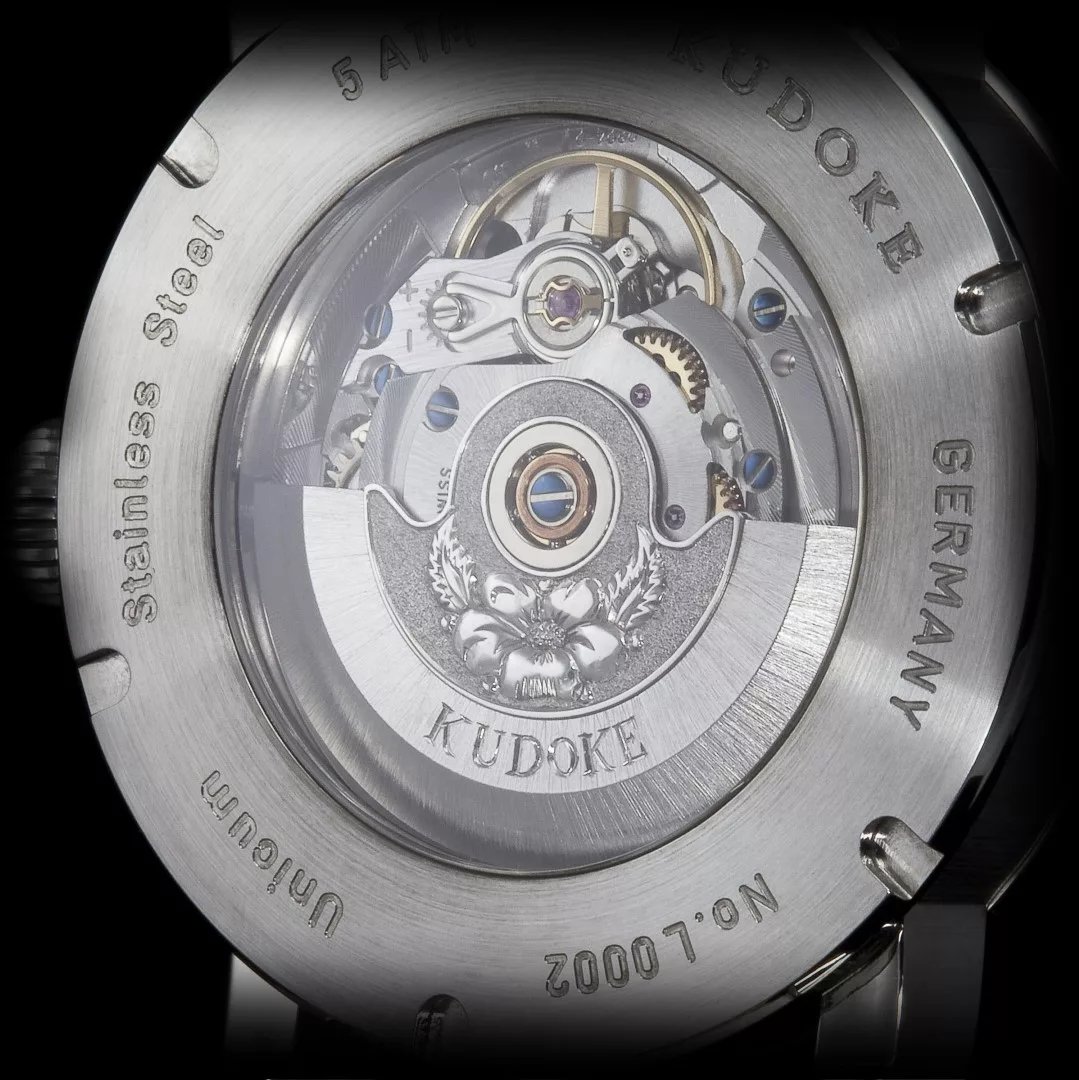
Underpinning this artistic display is the Caliber Kaliber 1, which finds its roots in the legendary Unitas 6498. For the uninitiated, the Unitas is a pocket-watch movement that has become a favorite for independent watchmakers due to its large size and robust architecture. It provides a massive 'canvas' for engraving.
However, calling this a Unitas is like calling a Pagani a Mercedes just because it uses an AMG engine. Stefan Kudoke strips the movement down to its bare essentials and rebuilds it. Every bridge is reshaped. The click and ratchet wheels are skeletonized. The screws are flame-blued to a deep, consistent cornflower blue. The frequency of 18,000 vph gives the watch a slow, hypnotic beat—a heartbeat that feels appropriate for a piece that was created at a human pace.
Wrist Presence and Cultural Context
Wearing the White Flower in a city like New York or London is a different experience than wearing a gold Daytona. You won't be spotted from across the room by a 'watch spotter' looking for the latest trend. Instead, you'll find yourself in long conversations with people who notice the light catching the hand-engraved petals on the bridges. It is a 'quiet luxury' piece, but one that is loud in its technical execution.
In the context of the 'Vivir' lifestyle, the White Flower is the watch you wear to the Frieze Art Fair or a private dinner at a Michelin-starred restaurant in Berlin. It signals that you are someone who understands the difference between 'expensive' and 'valuable.' It’s a watch for the athlete who collects rare vinyl, or the tech founder who spends their weekends in a woodshop. It’s for the person who values the soul of the object.
The Investment Perspective
From an investment standpoint, Kudoke is in a very healthy position. Unlike brands that produce tens of thousands of watches a year, Stefan’s output is measured in the dozens or low hundreds. This scarcity, combined with his GPHG win for the Kudoke 2, has created a backlog of orders. On the secondary market, Kudoke pieces rarely sit for long. While you shouldn't buy a White Flower solely to flip it, you can take comfort in the fact that you are putting your money into a piece of horological history that is likely to appreciate as the 'Indie' scene continues to explode.
Final Thoughts
The Kudoke White Flower is a rare beast. it manages to be incredibly ornate without being gaudy, and technically impressive without being cold. It is a testament to what one man can achieve with a set of burins, a loupe, and a vision. If you are looking to step away from the mainstream and into the world of true artisanal horology, there is no better place to start than with this blooming masterpiece from Saxony.