Brand context: Kurono Tokyo’s small-batch philosophy
Kurono Tokyo was founded in 2019 by Hajime Asaoka, a Japanese independent watchmaker known for his refined, hand-finished creations. Kurono is the more accessible arm of his world: limited releases, Japanese movements, and dials that often draw on traditional color names and graphic simplicity. The brand does not operate like a conventional watch company. Releases are announced in small batches, often sold directly, and frequently disappear quickly.
The Diver’s is important because it moves Kurono into a category it had not really occupied before. The brand’s earlier watches were elegant three-handers and chronographs with a strong dress-casual bias. A dive watch asks different questions about legibility, durability, bezel action, and water resistance. The Diver’s answers those questions without abandoning the house style. It is not a generic Submariner clone, nor is it a pure desk-diver caricature. It is a Kurono interpretation of a tool watch, which means clean lines, a distinctive dial, and a case that is meant to be worn rather than admired in a display case.
Movement: Miyota 9015
The Diver’s uses the Miyota 9015, a Japanese automatic caliber that has become a staple for small brands that want a thin, reliable, serviceable movement without pretending to be in-house. It is a three-hand automatic with a date, running at 28,800 vph and offering around 42 hours of power reserve. The jewel count is 24. It is not COSC-certified, and it is not a movement you buy for decorative finishing. It is a movement you buy because it works, it is thin enough to keep a dive watch wearable, and almost any competent watchmaker can service it.
That last point matters more than it used to. As microbrands and independent brands proliferate, serviceability is a real ownership cost. A Miyota 9015 is not exotic. It does not require a pilgrimage to a specialist. It also has a reasonable reputation for stability once it has settled in. The Diver’s is not a chronometer, and you should not expect chronometer behavior. But for a daily-wear watch in this price class, the 9015 is a sensible choice. It keeps the case from becoming a brick, and it gives the watch a level of practicality that fits the Diver’s brief.
The date is placed at three o’clock, which is the right call for a watch like this. It preserves symmetry on the dial without forcing a cyclops or an oversized aperture. The movement’s winding feel is acceptable rather than luxurious, and the rotor is not going to win any beauty contests. But the Diver’s is not a display-back watch in spirit, even if the caseback is sapphire. The movement is there to be used.
Case, crystal, and water resistance
The case is stainless steel, the crystal is sapphire, and the watch is rated to 200 meters. Those are the core numbers that matter for a modern diver. The sapphire crystal is a practical choice for daily wear, especially if you are the kind of person who knocks a watch against a doorframe without thinking. The 200-meter rating gives you more than enough margin for swimming, snorkeling, and the sort of water exposure most owners will actually encounter. It is not a professional saturation-diving instrument, but it is honest about its capabilities.
The case design is where the Diver’s earns its keep. It does not try to be a chunky tool watch. The profile is designed to sit close to the wrist, and the lugs are shaped to avoid the dinner-plate effect that ruins so many otherwise good divers. I am not going to quote dimensions here because the point is not the number; the point is the relationship between the case, the bezel, and the wrist. The Diver’s feels compact and balanced. It tucks under a cuff. It does not rotate around the wrist when you gesture. That is a more meaningful endorsement than a millimeter measurement on a spec sheet.
The bezel is the other half of the dive-watch equation. A good bezel should have clear alignment, enough grip to turn with wet fingers, and a ratchet that feels deliberate rather than vague. The Diver’s bezel is designed to be used, not just admired. It has the visual weight to balance the dial, and the markings are easy to read at a glance. The action is not the last word in luxury ratcheting, but it is satisfying in the way a good Japanese tool should be. It clicks with purpose.
Dial and legibility
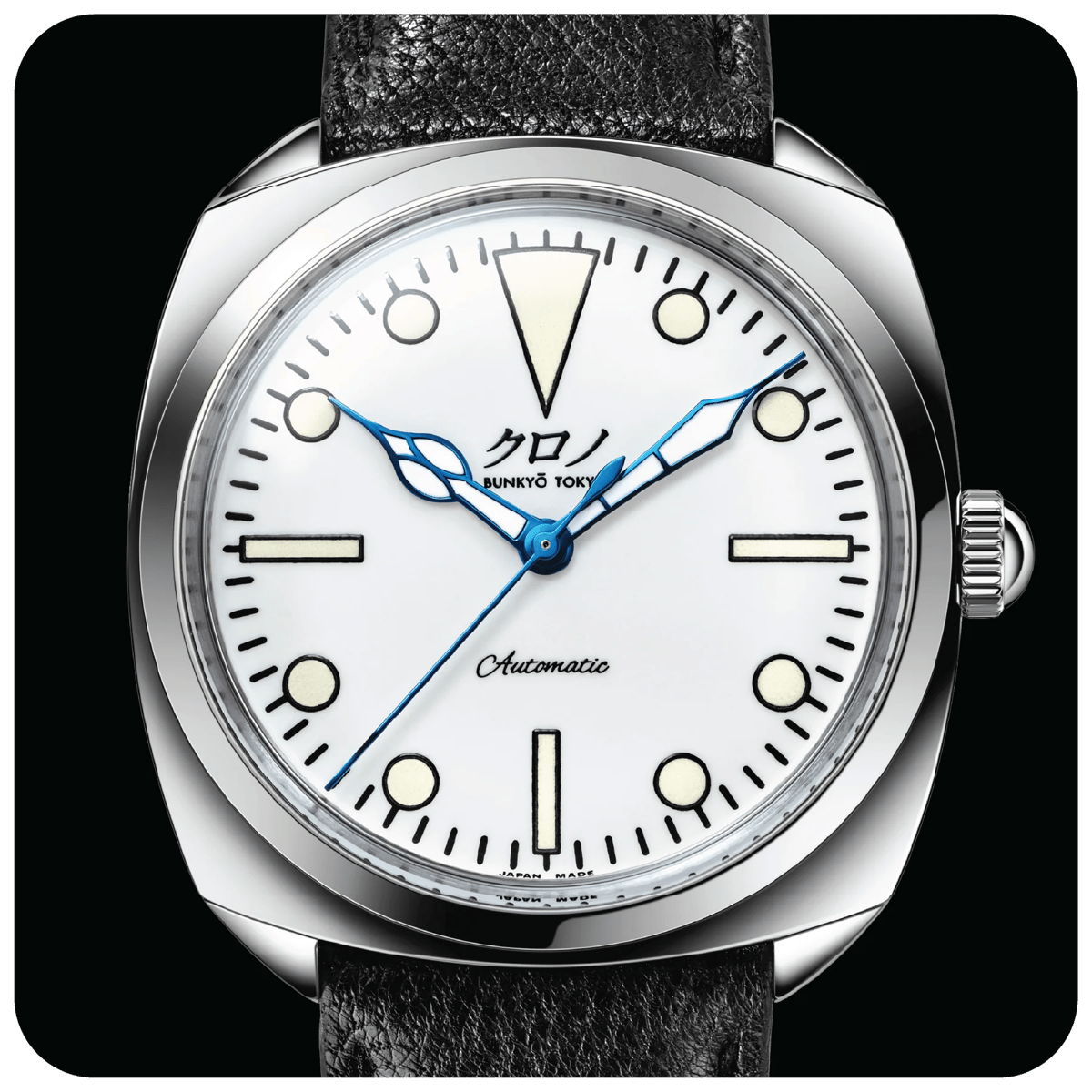
Kurono Tokyo is a dial-led brand, and the Diver’s does not disappoint. The dial has the graphic clarity the brand is known for, with a layout that reads instantly. The hour markers are bold enough to register at a glance, and the hands are shaped to separate from the background without creating a cluttered look. The date at three o’clock is discreet. The bezel markings are legible without overwhelming the face.
The lume is Super-LumiNova, and it does what you need it to do. It charges reasonably quickly and remains readable in the dark for the duration of a normal evening. It is not a searchlight. It is not meant to be. The Diver’s is a daily-wear watch, not a night-dive instrument. The important thing is that the hands and markers are distinguishable in low light, and the bezel pip is easy to locate. It passes that test.
The dial also has a strong sense of identity. This is not a watch that looks like a catalog part. The typography, the marker shapes, and the handset all feel like they belong to the same design family. That matters in a market full of vintage-inspired divers that are technically competent but visually anonymous. The Diver’s has a face you remember. It is legible, but it is also charming. That combination is harder to find than it should be.
On the wrist: comfort and balance
The Diver’s is a watch that disappears on the wrist in the best way. The case sits low, the lugs do not overhang, and the weight is distributed evenly. I wore it for a full week of normal life: desk work, commuting, school pickup, a few dinners, and a weekend swim. It never felt like a burden. It never felt like I was wearing a tool watch for the sake of it. It felt like a watch that happened to be ready for more than the day was asking of it.
The bracelet is stainless steel and closes with a folding clasp. The bracelet matters because a dive watch lives or dies by its integration. A stiff bracelet can make a good case feel clumsy. A well-tapered bracelet can make an average case feel refined. The Diver’s bracelet is not the most elaborate on the market, but it is comfortable and visually coherent. It does not rattle. It does not pull hair excessively. It makes the watch feel like a complete object rather than a case waiting for a better strap.
If you prefer rubber or leather, the Diver’s is the kind of watch that will take either without losing its character. But the steel bracelet is the most natural fit. It gives the watch the everyday versatility that the Diver’s is clearly aiming for. The folding clasp is secure and unobtrusive. The whole package feels considered. That is not always the case with small-batch watches, which sometimes feel like a great dial attached to a generic case. The Diver’s feels designed as a whole.
Accuracy and daily reliability
The Miyota 9015 is not a chronometer, and the Diver’s is not sold as one. In real-world wear, you should expect a rate somewhere in the range of minus ten to plus twenty seconds per day, with many examples settling closer to the middle after a break-in period. That is normal for this movement. It is not going to match a COSC-certified Swiss automatic, and it is not meant to. What matters is stability. A watch that runs consistently at plus eight seconds per day is easier to live with than a watch that swings wildly but averages out on paper.
My sample kept a steady rate over the week, with no dramatic positional variation. I did not baby it. I wore it through temperature changes, desk work, and a swim. It kept going. That is the kind of reliability you want from a daily wearer. The 42-hour power reserve is adequate rather than generous. If you rotate watches, you will need to set it, but the date and time are easy to adjust. The screw-down crown is accessible and feels secure. The watch does not ask for special treatment.
Occasions: where it fits
The Diver’s is at its best as a daily watch. It is sporty enough for a weekend, restrained enough for a casual office, and durable enough for travel. It is not a formal watch, and it does not pretend to be. If you need a watch for a black-tie event, this is not it. But if you want one watch that can handle most of your life without looking out of place, the Diver’s is a strong candidate. It pairs well with denim, chinos, and a casual jacket. It also works with a swimsuit, which is more than can be said for most of the watches in Kurono’s catalog.
For travel, the combination of sapphire, 200-meter water resistance, and a legible dial is reassuring. It is not a GMT, so you will be adjusting the time by hand, but that is a small trade-off for the watch’s simplicity. The date is useful without being intrusive. The bezel can be used as a simple timer for parking meters, cooking, or the length of a meeting. It is a watch that invites use.
Reference variants and family context
The Kurono Diver’s is a small-batch release rather than a sprawling collection. The first release is the one most collectors know: a black dial, stainless steel bracelet, date at three, and a rotating dive bezel. Kurono has not turned the Diver’s into a dozen-reference family, and that scarcity is part of its appeal. If you are looking for a catalog of dial colors and bracelet options, you will be disappointed. If you are looking for a specific design statement, the focus is a feature.
Within the wider Kurono Tokyo family, the Diver’s sits alongside models such as the Mori, Toki, Grand Akane, Seiji, and Chronograph 1. Those watches share the brand’s dial-first design language, but they serve different purposes. The Mori and Toki are more dress-casual. The Grand Akane and Seiji lean into elegant, graphic dials. The Chronograph 1 adds a complication and a more complex case. The Diver’s is the most tool-oriented of the group, but it is not a radical departure. It is a Kurono for people who need their watch to survive a real week.
Similar watches to consider
If you are drawn to the Diver’s, you are probably looking for a compact, vintage-inspired diver with a strong design point of view. The Tudor Black Bay 54 is the obvious step up: it has a similar compact dive-watch brief, but with a more robust bracelet, a manufacture movement, and a much higher price. The Seiko Prospex SPB143 is a Japanese alternative with a vintage silhouette and a proven automatic, though its case wears differently and its dial is less idiosyncratic. The Oris Divers Sixty-Five is another compact vintage-inspired diver with a more traditional Swiss feel. The Christopher Ward C60 Trident Pro 300 offers a more modern tool-watch package and a lot of specification for the money, but it lacks the Kurono’s design charm. The Baltic Aquascaphe is a microbrand option with a vintage dive aesthetic and a lower entry price.
The Diver’s does not beat all of these on specification. It beats them on personality. That is the honest way to frame it. If you want the best bracelet, the most accurate movement, or the strongest water-sports credentials, there are alternatives. If you want a Japanese dive watch that looks like nothing else in its price range and feels comfortable enough to wear every day, the Diver’s is compelling.
Homage and budget alternatives
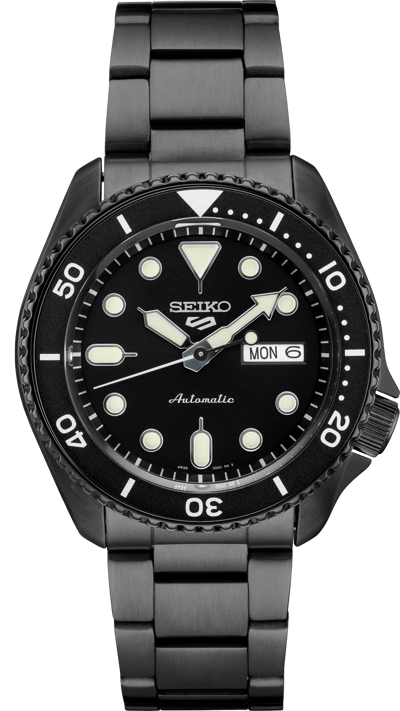
For buyers who like the Diver’s silhouette but are not ready to pay the secondary-market premium, there are several affordable dive watches that capture part of the mood. The Seiko 5 Sports SRPD51 is a versatile, affordable automatic with a dive-style bezel and a reliable movement; it is not a substitute for the Kurono’s design, but it is a good everyday entry point. The Casio Duro MDV106 is a budget legend with a clean dial and surprising water resistance for the money. The Orient Ray II is another accessible automatic diver with a classic look and a strong value proposition. None of these will feel like a Kurono, but they can scratch the dive-watch itch while you save.
It is worth saying that the Diver’s is not a watch you buy because it is the most rational choice per dollar. It is a watch you buy because you like the way it looks and wears. The budget alternatives are rational. The Kurono is emotional. That is not a criticism. It is the point of small-batch watchmaking.
Investment value and ownership
The Diver’s was originally positioned around the $1,850 mark, and direct retail availability has been limited. On the secondary market, examples have traded above retail, which is typical for Kurono releases. The pre-owned range is roughly $1,900 to $2,600 depending on condition, completeness, and timing. The trend is stable rather than frothy. This is not a watch with a long auction history, and it is not a blue-chip investment. It is a scarce modern release with a dedicated following.
My advice is to buy it to wear. If you are looking for a safe deposit box asset, there are better choices. If you are looking for a watch that will hold most of its value while you enjoy it, the Diver’s is reasonable. The limited availability supports prices, but the real driver is design. Kurono collectors tend to be loyal, and the Diver’s is distinctive enough to remain desirable. That said, do not pay a massive premium for a watch you are afraid to scratch. A dive watch should be worn.
Service and long-term ownership
The Miyota 9015 is widely serviceable, which is a genuine advantage. You are not locked into a single service center. That said, case parts, bracelets, and original components are best handled through Kurono Tokyo or a trusted specialist who knows the brand. The watch does not require unusual care. Rinse it with fresh water after saltwater exposure, avoid harsh chemicals, and have it serviced when the rate becomes unstable or the crown feels rough. There is no need to invent a service interval that the brand has not published. Treat it like a mechanical watch and it will treat you well.
Pros and cons
The pros are clear. The Diver’s is comfortable, legible, and distinctive. It has a proven automatic movement, sapphire crystal, 200-meter water resistance, and a bracelet that makes it feel like a complete daily wearer. It is the kind of watch that works with more of your wardrobe than a pure dress watch or a pure tool watch. The cons are equally clear. It is not a chronometer. It is not widely available. The secondary market can be frustrating. And if you want a traditional Swiss dive-watch experience, the Miyota movement and small-batch support network may not appeal.
None of those cons are deal-breakers for the right buyer. They are simply the trade-offs that come with a design-led independent release. The Diver’s is not trying to be everything to everyone. It is trying to be a Kurono Tokyo dive watch, and it succeeds at that.
Final verdict
The Kurono Tokyo Diver’s is a rare thing: a dive watch that feels like a Kurono. It has the brand’s dial discipline, a wearable case, and enough real-world capability to justify the bezel and the water resistance. It is not the most capable diver on paper, and it is not the most accurate. But it is comfortable, legible, and satisfying in a way that matters more than spec-sheet bragging rights. If you want a daily-wear Japanese diver with a point of view, put it on your shortlist. If you want a safe, mass-produced alternative, there are many. The Diver’s is for the person who wants the watch that feels like theirs.