The Asaoka Aura: More Than Just a Drop
In the digital age of horology, the 'drop' has become a double-edged sword. For many, it represents the frustration of bots and instant sell-outs. But for Kurono Tokyo, the drop is a ritual. When Hajime Asaoka announced the 'Structure' Chronograph S1, the watch world didn't just check their bank accounts; they checked their clocks. This isn't just about owning a watch; it's about owning a piece of a specific philosophy. Asaoka, a member of the Académie Horlogère des Créateurs Indépendants (AHCI), is a man who usually builds watches by hand that cost as much as a mid-sized sedan. Kurono is his gift to the rest of us—a way to experience his obsession with Art Deco and Japanese precision without the decade-long waitlist.
The 'Structure' S1 marks a departure from the previous Chronograph 1 and 2. Where those models were exercises in smooth, flowing lines and 'tuxedo' dials, the S1 is about layering. It feels more industrial, more architectural, and perhaps more confident. It’s the watch for the collector who has moved past the 'hype' phase and into a deeper appreciation for how a dial is actually constructed.
Deconstructing the 'Structure' Dial
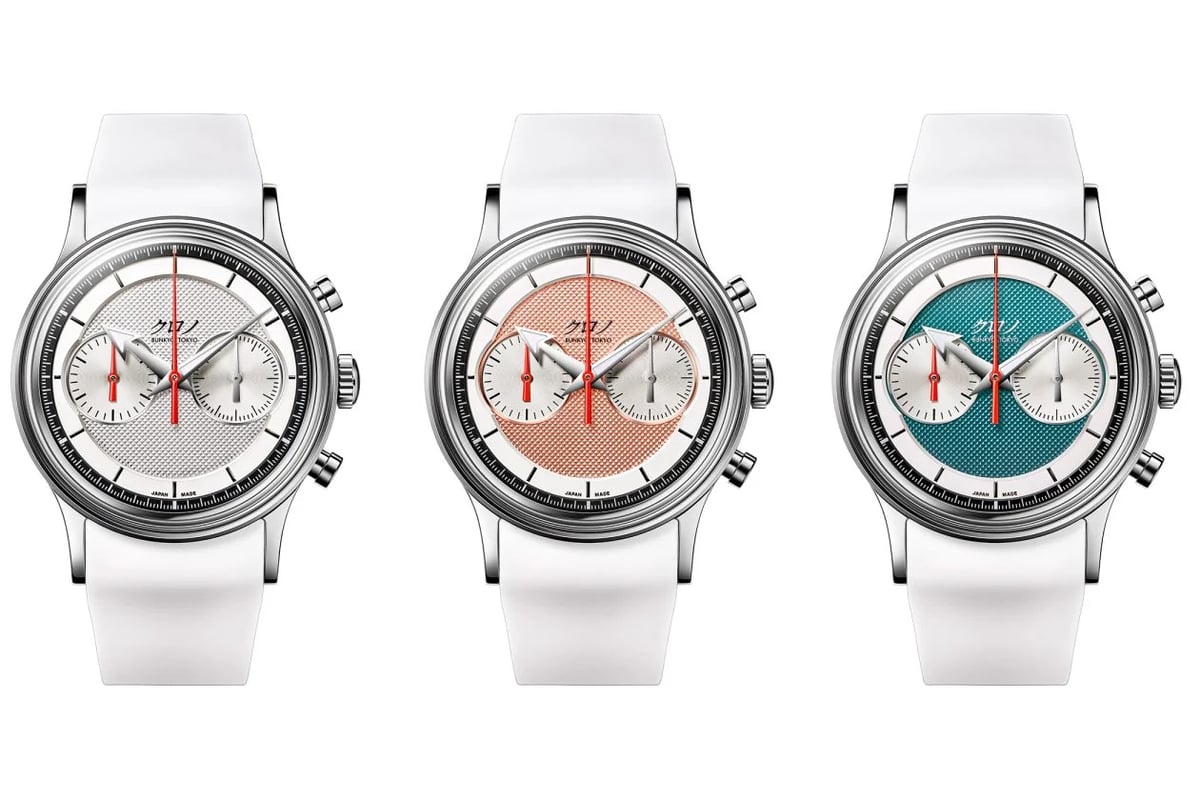
The name 'Structure' is not a marketing gimmick; it is a literal description of the dial's intent. The S1 features a multi-part construction that creates a sense of three-dimensional depth rarely seen at this price point. The central dial is recessed, while the sub-dials at 3 and 9 o'clock are further sunken, creating a stepped effect that catches the light from every angle. The tachymeter scale on the periphery isn't just printed; it feels integrated into the very frame of the watch.
One of the most striking elements is the use of high-polish surfaces against matte textures. The hands, a signature Asaoka design, are traditionally curved and polished to a mirror finish. In the right light, they appear to float above the 'structure' of the dial. The color palette is quintessentially Kurono—sophisticated, muted, yet commanding. It’s a watch that looks just as good in a dimly lit jazz club in Aoyama as it does in a boardroom in Manhattan.
Critics often point to the date window at 6 o'clock as a point of contention. However, in the S1, the placement feels intentional. It provides a vertical anchor to the dial, balancing the two horizontal sub-dials and completing the 'crosshair' aesthetic that many vintage enthusiasts crave. It is a functional addition that doesn't sacrifice the watch's symmetry.
The Engine: Seiko’s NE86
While the dial is the heart of the Kurono's beauty, the NE86 movement is its muscle. The reference NE86PWT utilizes Seiko's top-tier automatic chronograph caliber. For the uninitiated, the NE86 is a significant step up from the more common NE88 or the ubiquitous Valjoux 7750 found in many Swiss competitors. What sets it apart is the inclusion of both a column wheel and a vertical clutch.
The column wheel ensures that the pusher feel is crisp and tactile—there is no 'mush' when you start or stop the chronograph. The vertical clutch is even more important for the purist; it eliminates the 'jump' of the chronograph seconds hand when engaged. It also allows the chronograph to be left running indefinitely without causing additional wear on the movement. This level of engineering is typically reserved for movements like the Rolex 4130 or the Zenith El Primero, making its presence in a $3,450 watch a minor miracle.
The trade-off for this technical prowess is thickness. The NE86 is a relatively tall movement, which dictates the 13.9mm case height. However, Kurono has mitigated this by using a dramatically domed sapphire crystal. This 'box' crystal draws the eye upward and softens the profile of the case, making the watch feel more like a vintage piece and less like a modern 'brick' on the wrist.
Wrist Presence and Ergonomics
There is a specific joy in wearing a 38mm chronograph. In an era where 42mm and 44mm cases have become the standard for 'sport' watches, the Kurono S1 feels like a return to elegance. The 46.7mm lug-to-lug distance is the secret sauce here. It ensures that the watch sits centered on the wrist, with the lugs following the natural contour of the arm. For those with smaller wrists, it is a godsend; for those with larger wrists, it offers a 'neo-vintage' look that is currently the height of fashion.
The strap is another area where Kurono doesn't skimp. Often, watches in this range come with 'placeholder' leather that needs immediate replacement. The S1 arrives on a high-quality, supple leather strap that complements the dial's tones. The pin buckle is simple, elegant, and branded, keeping the focus where it belongs: on the watch head.
The Cultural Context: Why It Matters
To understand the Kurono 'Structure' S1, you have to understand the community around it. Kurono has implemented strict anti-flipping policies, including blacklisting known resellers. This has created a unique ecosystem where the people wearing these watches are almost exclusively genuine enthusiasts. When you see someone with an S1 on their wrist, there is an immediate unspoken connection—a shared appreciation for Japanese craft and Hajime Asaoka’s vision.
The S1 isn't trying to be a 'Paul Newman' Daytona or a 'Speedy.' It isn't chasing a ghost. Instead, it is creating a new legacy. It’s a watch that feels connected to the tech-forward, design-conscious culture of modern Tokyo. It’s the watch you wear to an art gallery opening or a high-end sushi omakase. It signals that you are a collector who values the 'how' and the 'why' as much as the 'who.'
Investment and Value Proposition
At an MSRP of $3,450, the Kurono S1 sits in a competitive bracket. You could buy a Tudor Black Bay, a Longines Spirit, or even a pre-owned Omega for similar money. However, none of those options offer the same level of exclusivity or the direct DNA of an AHCI master. The secondary market has remained remarkably stable for Kurono. While the initial 'insanity' of 3x markups has cooled, the S1 continues to trade above its retail price, a testament to the brand's enduring appeal.
For the young collector, the S1 is a 'safe' investment in the sense that it is unlikely to ever be worth less than you paid for it. But more importantly, it is an investment in your own taste. It’s a watch that grows with you, its complexity revealing new details the longer you own it.
The Final Verdict
The Kurono Tokyo 'Structure' Chronograph S1 is a triumph of design over marketing. It takes the technical foundation of a world-class Japanese movement and wraps it in a dial that is nothing short of a work of art. While the thickness might give some pause, the sheer beauty and 'wrist-presence-per-dollar' ratio make it one of the most compelling releases of the decade.
If you are looking for a chronograph that tells a story, that connects you to the pinnacle of independent watchmaking, and that looks like nothing else in your collection, the S1 is the blueprint. Hajime Asaoka has once again proven that you don't need a six-figure budget to own a masterpiece. You just need to be fast enough to catch the drop.