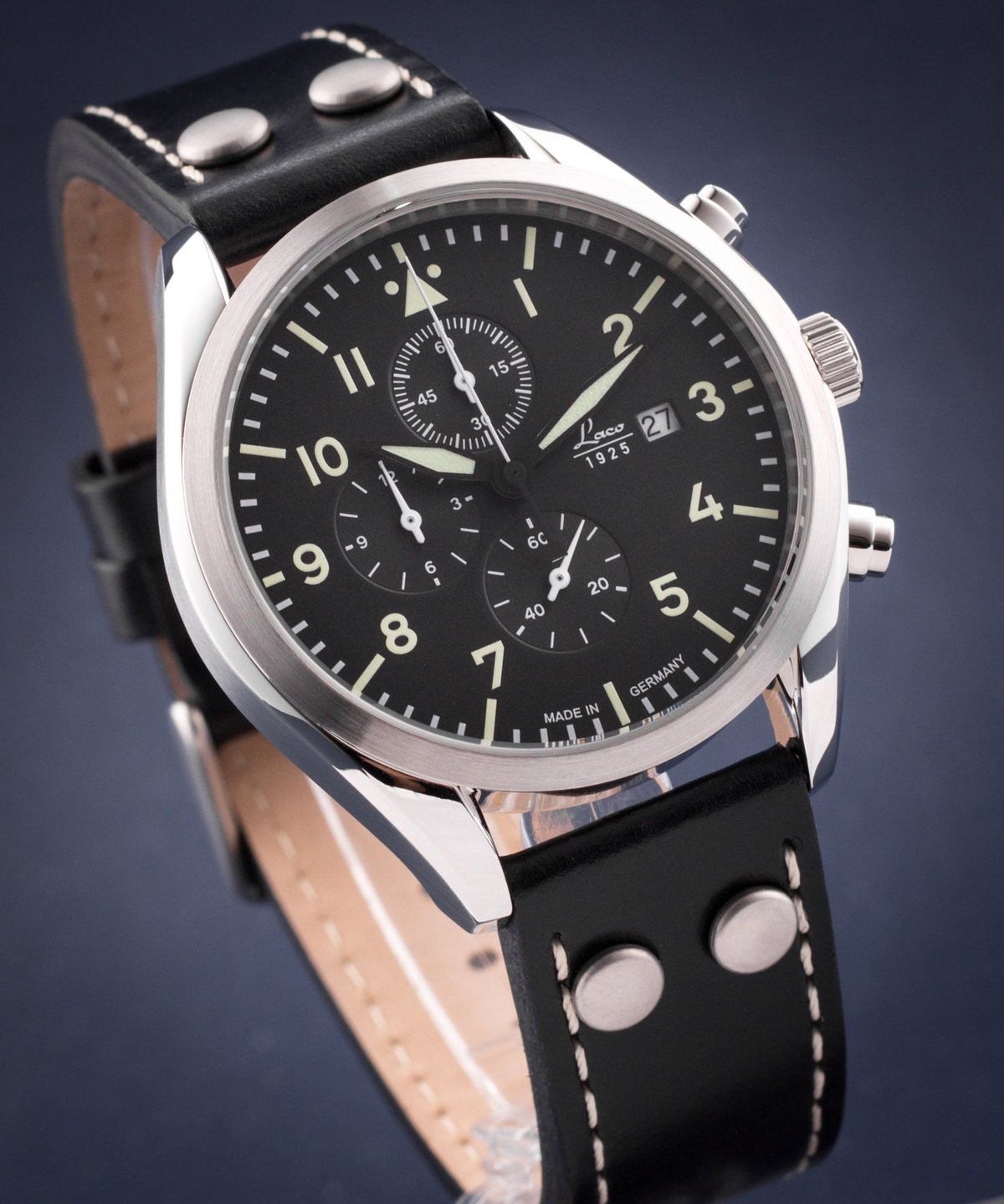
Laco Trier 861915 Review: The Quartz Chrono for the Modern Maverick
Sharp aesthetics meet robust functionality in Laco's value-driven pilot chronograph.
By Rina Park, Watch Trend Spotter, Vivir.comIn the fast-paced world of horology, where every drop and auction record is meticulously tracked, it's easy to overlook the quiet powerhouses. Laco, a brand steeped in genuine pilot watch heritage, consistently delivers timepieces that resonate with purpose and style. The Laco Trier (ref. 861915) is a prime example, a quartz chronograph that doesn't just tell time; it tells a story of German precision and no-nonsense utility.
For the sophisticated young collector, the Trier isn't just another watch; it's an accessible entry point into a legendary lineage, offering the crisp functionality of a chronograph with the grab-and-go convenience of quartz. It's the kind of piece you see on the wrist of someone who values authenticity, whether they're navigating a bustling city street or charting a weekend escape. This isn't about flexing; it's about owning a piece of history re-engineered for today's demands, a subtle nod to those who know.
A Legacy Forged in the Skies: Laco's Enduring Heritage
Before diving into the Trier, it's essential to understand the bedrock from which Laco springs. Founded in 1925 in Pforzheim, Germany, Laco (short for Lacher & Co.) quickly carved out a niche in the burgeoning watch industry. Their defining moment came during World War II when they became one of the select few manufacturers tasked with producing the iconic 'B-Uhr' (Beobachtungsuhr, or observer's watch) for the German Luftwaffe. These weren't just watches; they were precision instruments, critical for aerial navigation. The B-Uhr watches were characterized by their immense size (typically 55mm), highly legible dials, and robust movements, designed to be worn over flight jackets and read at a glance in challenging conditions.
This demanding heritage instilled in Laco a foundational philosophy: watches must be functional, reliable, and legible above all else. While the Trier is a far cry from the colossal B-Uhr in terms of size and movement, it embodies that same spirit. The clean lines, the clear dial layout, and the robust construction are direct descendants of Laco's wartime contributions. It's this authentic, unpretentious history that gives Laco watches, even their more contemporary quartz offerings, an undeniable gravitas that many newer brands simply can't replicate. Owning a Laco isn't just buying a watch; it's tapping into a genuine piece of horological history, a direct line to the pilots who relied on these instruments for their lives.
Design That Commands Attention: The Trier's Visual Blueprint
The Laco Trier (ref. 861915) immediately signals its pilot watch DNA, but with a refined chronograph twist. The 42mm stainless steel case, finished predominantly with a fine satin brushing, exudes a purposeful, tool-like aesthetic. This isn't a watch for polished boardroom bravado; it's for those who appreciate understated strength. The case flanks are clean, leading to well-proportioned lugs that curve gently, ensuring a comfortable fit despite the watch's presence.
The dial is where the Trier truly shines, marrying pilot watch legibility with chronograph functionality. A matte black surface provides the perfect backdrop for the crisp, Arabic numerals and indices. The layout is inspired by classic pilot watches, with large numerals at 12, 3, 6, and 9, and smaller markers in between. Crucially, the indices and hands are generously coated with Super-LumiNova C3, often with a subtle vintage tint, ensuring outstanding readability in low-light conditions. This isn't just a marketing gimmick; it's a direct nod to its functional lineage, where visibility in a cockpit was paramount.
The chronograph sub-dials are thoughtfully integrated: a 60-minute counter at 9 o'clock and a running seconds sub-dial at 3 o'clock. The date window, subtly placed at 6 o'clock, maintains the dial's symmetry and avoids clutter. The central chronograph seconds hand and the sub-dial hands are often in a contrasting color, sometimes red or white, adding a dash of dynamism and enhancing legibility during timing operations. The sword-shaped hour and minute hands are bold and clear, completing a dial that is both aesthetically pleasing and supremely functional.
Protecting this meticulously crafted dial is a flat sapphire crystal. Sapphire is the industry standard for durability, offering superior scratch resistance compared to mineral glass. This detail speaks volumes about Laco's commitment to quality, even in their more accessible price points. The crown, often oversized and knurled, is easy to grip and operate, another design element pulled directly from pilot watches, where ease of use with gloved hands was essential. The chronograph pushers are tactile and responsive, offering a satisfying click that reassures you of the robust movement within.
The Heartbeat: Miyota 6S21 Quartz Chronograph
At the core of the Laco Trier 861915 beats the Miyota 6S21, a Japanese quartz chronograph movement. For some purists, the word 'quartz' might raise an eyebrow, but for the discerning collector who values practicality, reliability, and accuracy, this is a strategic choice. Miyota, part of the Citizen group, is renowned for producing robust, dependable, and highly accurate movements, and the 6S21 is no exception.
One of the standout features of the 6S21, particularly appealing to those who appreciate mechanical chronographs, is the smooth sweep of its central chronograph seconds hand. Unlike many entry-level quartz chronographs that exhibit a jerky, one-tick-per-second motion, the 6S21 typically offers a smoother, more refined sweep, mimicking the fluidity of its mechanical counterparts. This subtle detail significantly elevates the user experience and adds a touch of perceived luxury that belies its quartz nature.
The choice of a quartz movement for the Trier is not merely about cost-effectiveness; it's a deliberate decision that aligns with the watch's identity as a modern tool watch. It offers unparalleled accuracy, requiring minimal to no adjustment, and boasts impressive shock resistance. This 'grab-and-go' convenience means the Trier is always ready for action, a stark contrast to mechanical watches that might need winding or setting after a period of disuse. For someone with a dynamic lifestyle, or a collector who appreciates a reliable daily driver that doesn't demand constant attention, the Miyota 6S21 is an ideal engine.
While it lacks the intricate finishing and horological artistry of an in-house mechanical caliber, the 6S21 prioritizes performance and reliability. Its simple, robust architecture means service is straightforward and inexpensive, primarily involving battery replacements every few years and routine gasket checks. This pragmatic approach to movement selection underscores Laco's focus on delivering a functional, dependable timepiece that honors its heritage without unnecessary complications or inflated costs.
Under the Hood: Key Specifications
- Case Diameter: 42mm – A contemporary size that offers significant wrist presence without being unwieldy.
- Case Thickness: 12mm – A moderate profile that allows for comfortable wear and easy cuff clearance.
- Lug-to-Lug: 50mm – Ensures a good fit on most average to larger wrists, contributing to its balanced feel.
- Case Material: Stainless Steel – Brushed finish for a rugged, utilitarian look that resists minor scratches.
- Crystal: Sapphire – Highly scratch-resistant, ensuring enduring clarity for the dial.
- Water Resistance: 50 meters (5 ATM) – Suitable for daily wear, splashes, and light rain, but not recommended for swimming or diving.
- Lume: Super-LumiNova C3 – Excellent low-light visibility, often with a vintage-inspired tint.
- Bracelet/Strap: Leather (typically riveted pilot style) – Comfortable and authentic, often with quick-release spring bars.
- Clasp Type: Pin Buckle – Simple, secure, and in keeping with the tool watch aesthetic.
On the Wrist: Wearability and Ergonomics
The Laco Trier's 42mm diameter might sound substantial on paper, but its thoughtful design makes it incredibly wearable. The 50mm lug-to-lug distance, while contributing to its robust presence, is mitigated by the downward curve of the lugs, allowing the watch to hug the wrist rather than perch awkwardly on top. This ensures that even on wrists slightly smaller than average, the Trier doesn't feel overwhelming. The 12mm thickness is also a sweet spot, providing enough heft to feel premium without being bulky.
The standard riveted leather strap is a crucial component of the Trier's wearing experience. Laco is known for its high-quality straps, and the one accompanying the Trier is no exception. It's supple from day one, requiring minimal break-in, and the rivets add an authentic pilot watch touch that elevates the overall aesthetic. The pin buckle is secure and unobtrusive. For those who prefer a different look, the 20mm lug width opens up a world of strap possibilities, from NATO straps for a more casual, tactical vibe to dressier leather options for a slightly more formal context.
Weight distribution is excellent, thanks to the stainless steel case and quartz movement. It feels solid and well-balanced, never top-heavy. The oversized crown and tactile pushers are easy to manipulate, even for those with larger fingers, reinforcing its tool watch credentials. Whether you're timing laps, a cooking session, or just enjoying a casual day out, the Trier sits comfortably and confidently on the wrist, a testament to Laco's practical design philosophy.
Performance in the Wild: Accuracy, Water Resistance, and Lume
When it comes to real-world performance, the Laco Trier delivers precisely what you'd expect from a well-made quartz chronograph: unwavering reliability. The Miyota 6S21 movement ensures superb accuracy, typically running within +/- 15-20 seconds per month. This means you can count on the Trier to keep precise time without the need for constant adjustments, making it an ideal daily companion for anyone whose schedule demands punctuality. For those who appreciate the immediate gratification of a 'set it and forget it' timepiece, the Trier is a champion.
The 50 meters (5 ATM) of water resistance is perfectly adequate for the watch's intended purpose. It means the Trier can comfortably handle everyday splashes, rain, and hand-washing without issue. However, it's not designed for swimming, diving, or prolonged submersion. For the modern maverick, this level of water resistance is perfectly suitable for urban adventures and casual outdoor pursuits, aligning with its pilot chronograph persona rather than a dedicated dive watch.
Lume performance is another area where the Trier genuinely impresses. The generous application of Super-LumiNova C3 on the hands, numerals, and indices provides a bright, long-lasting glow in low-light conditions. The legibility, already excellent in daylight, remains outstanding in the dark. This is a direct inheritance from Laco's B-Uhr legacy, where pilots needed to read their instruments instantly, regardless of ambient light. The often vintage-toned lume not only looks fantastic but also performs admirably, ensuring the time is always visible when you need it most.
Market Position & Investment Value: A Smart Play
The Laco Trier 861915 occupies a fascinating space in the market. Priced typically between $400-$550, it sits squarely in the accessible luxury segment, offering tremendous value for its heritage, build quality, and functionality. In an era where watch prices seem to be constantly escalating, the Trier stands out as a sensible, yet stylish, acquisition.
From an investment perspective, like most quartz watches, the Laco Trier is not a piece designed for appreciation. Its value trend is stable; you can expect it to hold a significant portion of its retail price on the pre-owned market, typically ranging from $250-$400, depending on condition and completeness. This stability is a testament to Laco's enduring appeal and the Trier's robust construction. It's a 'buy and enjoy' watch, where the true value lies in its utility, its connection to history, and the sheer pleasure of wearing a well-made timepiece.
For the young collector, this makes the Trier an excellent entry point into German watchmaking and pilot watch heritage without the financial commitment of higher-end mechanical pieces. It's a watch that can be worn daily, without the anxiety of depreciation or exorbitant service costs. In a market often driven by hype and artificial scarcity, the Trier represents an authentic, no-nonsense choice. It's not about being part of an exclusive 'drop' culture; it's about acquiring a piece with genuine provenance and lasting appeal, a quiet confidence that resonates with those who understand intrinsic value.
While the Laco brand itself has a rich history, the Trier 861915, as a modern quartz chronograph, does not have a presence in major auction houses. Its appeal is to the everyday collector and enthusiast, rather than the high-end auction circuit. This reinforces its position as an accessible, high-quality tool watch.
Who Wears the Trier? Culture-Forward Utility
The Laco Trier isn't just a watch; it's a statement about personal style and values. This isn't the flashy piece you'd see on an NBA star making a red-carpet entrance, but rather on the wrist of an athlete during training, a creative director sketching out new ideas, or an adventurer planning their next expedition. It’s for the individual who appreciates authenticity over ostentation, utility over pure luxury.
Imagine it on the wrist of a budding entrepreneur, timing their pitch presentations with precision. Or a photographer, using the chronograph to track exposure times in the field. It’s a watch that pairs effortlessly with a vintage leather jacket and jeans, or a smart casual blazer. Its pilot watch roots lend it an air of rugged capability, while its clean design keeps it versatile enough for daily wear, travel, and even more active pursuits. It's the kind of watch that signals confidence and a discerning eye, a subtle nod to those who understand that true style lies in substance.
For the young collector, the Trier offers a unique blend of historical cool and modern reliability. It’s a watch that connects you to a storied past but is perfectly equipped for the demands of the present. It embodies a culture-forward approach to collecting: valuing heritage and design, but also demanding practicality and accessibility. It's for those who appreciate the story behind the object, but also expect it to perform flawlessly in their dynamic lives.
Service & Maintenance: Effortless Longevity
One of the often-overlooked advantages of a quality quartz watch like the Laco Trier is its minimal maintenance requirements. Unlike mechanical watches that typically require a full service every 5-7 years, the Trier's Miyota 6S21 movement primarily needs a battery replacement every 3-5 years, depending on usage. This is a straightforward and inexpensive procedure, usually costing around $50-$100, which often includes a check of the gaskets to ensure water resistance is maintained.
Crucially, this service can be performed by virtually any competent watchmaker, not just an authorized service center. This flexibility significantly reduces both the cost and the turnaround time for maintenance, making the Trier an incredibly low-hassle timepiece to own. Its robust construction also means it's less susceptible to shock-induced damage compared to more delicate mechanical movements, further contributing to its long-term reliability and ease of ownership.
Pros & Cons: A Balanced Perspective
Pros:
- Authentic pilot watch heritage and design, rooted in Laco's B-Uhr legacy.
- Robust sapphire crystal for superior scratch resistance and enduring clarity.
- Reliable and accurate Miyota quartz chronograph movement with a smooth seconds sweep.
- Excellent legibility in all conditions, thanks to a matte dial and generous Super-LumiNova C3 application.
- Affordable price point for its quality, brand history, and functional features.
- Comfortable and versatile on the wrist, suitable for a wide range of occasions.
- Low maintenance and inexpensive servicing costs.
Cons:
- Quartz movement might deter mechanical purists who prefer traditional horology.
- 50m water resistance is adequate for daily life but not sufficient for serious aquatic activities.
- Relatively large 42mm size might not suit very small wrists, though the lug design helps.
- The date window at 6 o'clock, while symmetrical, can be a bit small for some users.
Final Verdict: Ready for Takeoff
The Laco Trier 861915 is a compelling proposition for anyone seeking a blend of historical gravitas, modern reliability, and undeniable cool factor. It’s a workhorse chronograph that doesn't demand exorbitant sums, making it a smart acquisition for new and seasoned collectors alike. Its sharp aesthetics, robust build, and the grab-and-go convenience of its quartz engine make it an ideal daily companion that can handle whatever life throws at it. If you appreciate sharp design and a practical, robust timepiece with a genuine story, the Trier is ready for takeoff.
For the sophisticated young collector, the Trier isn't just a watch; it's a statement of pragmatic style. It embodies the spirit of adventure and precision, a piece that resonates with a culture that values authenticity and performance. It’s a watch that earns its place on your wrist, not through hype, but through its unwavering commitment to utility and heritage. The Laco Trier is more than just timekeeping; it's about living life on your own terms, with a reliable co-pilot strapped to your wrist.