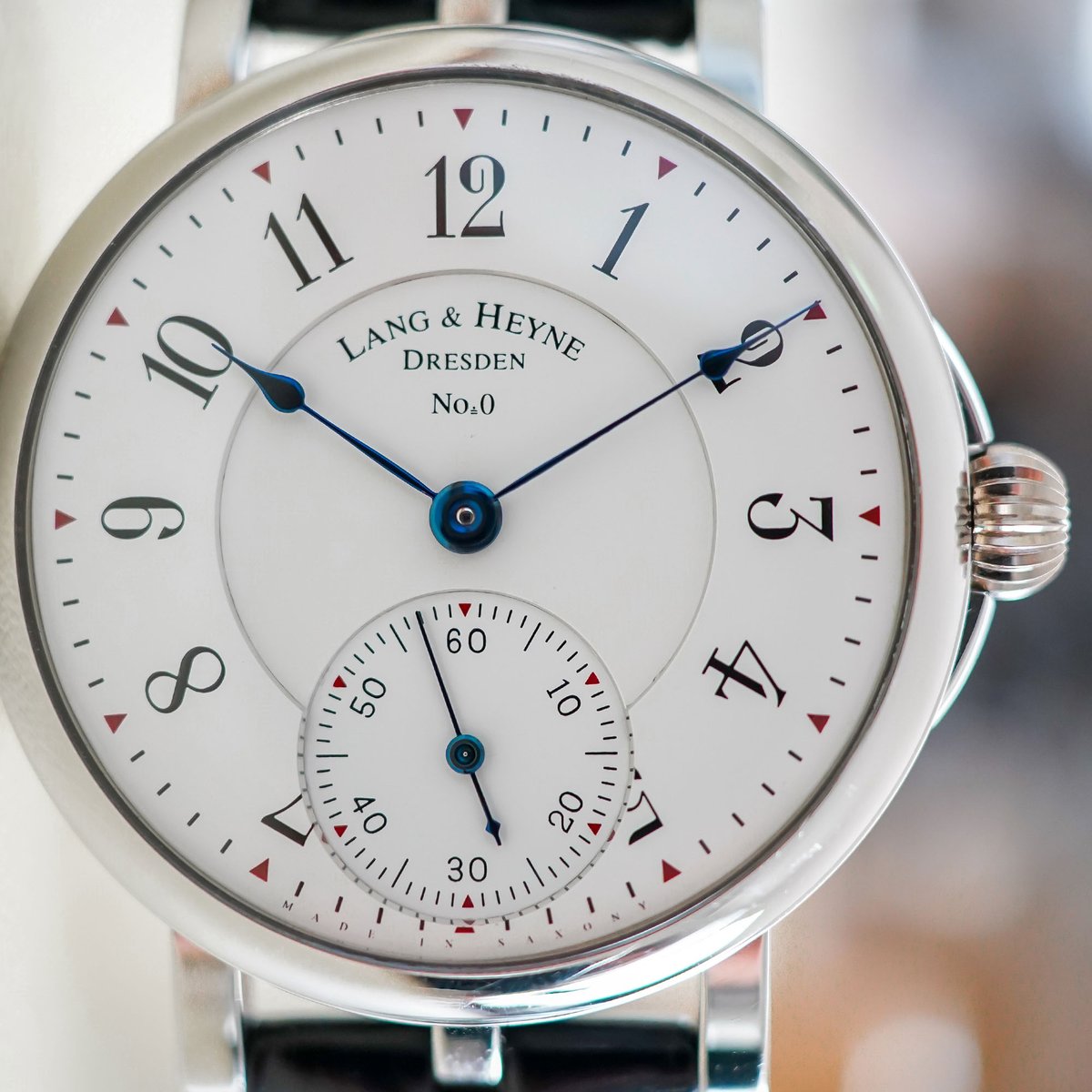
Lang & Heyne Friedrich II Review: The Rectangular Collector's Case
The Lang & Heyne Friedrich II is a watch that makes more sense the longer you collect. On paper, it is a rectangular dress watch with a hand-wound movement and a big date. In practice, it is a statement about Saxon hand-finishing, low production, and the kind of old-school watchmaking that does not chase mass appeal. That makes it deeply attractive to a certain buyer and frustrating to another.
The buyer who should pay attention is the collector who already has the predictable round sports watches and wants something with craft, rarity, and formal character. The buyer who should look elsewhere is the one who needs daily water resistance, easy resale, or a watch that a non-enthusiast will immediately recognize as expensive. The Friedrich II does not do those jobs.
Brand context: Dresden, small series, long memory
Lang & Heyne was founded in Dresden in 2001 by Marco Lang and Mirko Heyne. The brand belongs to the modern Saxon revival, but its identity is not built on volume. It is built on small-series production, hand-finished movements, and a very specific idea of what a luxury watch should be.
That matters for the Friedrich II because the watch is not competing directly with a Patek Philippe Calatrava or a Cartier Tank on brand recognition. It competes on connoisseurship. The person who knows Lang & Heyne usually knows why the brand matters: the finishing, the architecture, the relatively tiny output, and the sense that the watch was made by people who care about the inside as much as the dial.
For collectors, this is both the strength and the risk. The strength is that you are buying something genuinely uncommon. The risk is that the market for uncommon German independents is thin. Demand cycles are driven by specialist collectors, not by broad luxury spending. When the niche is hot, good pieces find buyers. When the niche is quiet, the watch sits.
Movement and finishing: the real reason to buy
The Friedrich II is a hand-wound watch with a big date. That combination tells you most of what you need to know. This is not an automatic convenience watch. It is a ritual watch. You wind it, you set it, and you wear it with a little more intention than you would a steel sports piece.
Lang & Heyne's core value is finishing. The brand operates in a space where the movement is meant to be looked at, not hidden behind a solid caseback. The rectangular calibre architecture is part of the appeal, and the hand-finishing is the reason collectors pay independent prices. The big date adds a practical complication without turning the dial into a instrument panel.
We have deliberately left exact movement frequency and jewel counts out of the specification because public data for this model is not consistent enough to treat as gospel. That is not a criticism of the watch. It is a warning to buyers: verify the exact configuration, service history, and timing performance with Lang & Heyne or a specialist dealer rather than relying on forum summaries.
The important point is that the Friedrich II is not a chronometer-certified watch. It is a hand-finished independent. You should expect good regulation after service, but you should not expect COSC paperwork to be the reason you buy it. The reason you buy it is the finishing, the low production, and the rectangular case that gives the movement a different architectural challenge from the usual round calibre.
Case, dial, and wrist feel
The Friedrich II is a gold dress watch with a sapphire crystal, a leather strap, and no lume. That specification already tells you how it should be used. It is for offices, dinners, weddings, and the kind of daily wear where you are not planning to swim or climb. It is not a sports watch, and it should not be treated like one.
Publicly available dimension data for the Friedrich II is not consistent enough to quote precise case measurements here, so we have left those figures null. That is the honest approach. If you are buying, ask for exact measurements from the seller or from Lang & Heyne, because rectangular watches wear differently from round watches. A case that sounds small on paper can feel substantial on the wrist, and a case that sounds large can disappear under a cuff.
What can be said confidently is that the Friedrich II wears as a formal rectangular watch. The gold case gives it presence, the leather strap keeps it comfortable, and the big date gives the dial a focal point. The watch is not trying to be stealthy in the way a thin time-only dress watch can be. The rectangular shape is distinctive, and the big date makes it legible and recognizable to collectors.
The strap-and-clasp arrangement is traditional dress-watch fare, and that is appropriate. This is a watch that benefits from a good leather strap in black or dark brown. It is not a bracelet watch, and it should not be forced into one. The pin buckle keeps the package classic, though buyers who prefer a deployant should confirm what is available for their exact configuration.
In terms of wrist presence, the Friedrich II is not a flashy watch. Most people will not know what it is. Collectors will. That is the right balance for this kind of piece. It has enough visual identity to feel special without becoming a logo display.
Accuracy and daily use
Real-world accuracy for a hand-wound independent should be judged after service, not from a spec sheet. A well-regulated Friedrich II should keep time within a few seconds per day in normal wear, but that depends on consistent winding and how the watch is treated. If you are buying pre-owned, ask for timing-machine results and a service invoice.
Daily use is possible, but it requires a certain kind of owner. You need to wind the watch, you need to avoid water exposure, and you need to accept that the watch is not designed around convenience. For a collector with a rotation, that is fine. For someone who wants one watch to do everything, the Friedrich II is the wrong tool.
The big date is the practical complication. It makes the watch more useful than a pure time-only dress piece, and it gives the dial a technical accent that balances the formal case. But it is still a dress watch at heart. Do not buy it for travel across time zones, and do not buy it for sports.
The market: demand cycles and hold-versus-sell judgment
Lang & Heyne sits in the independent German niche, and that niche behaves differently from the mainstream luxury market. Demand is driven by collectors who understand the brand, not by walk-in traffic. That means the secondary market is narrow and dealer-led. There is no broad auction record for the Friedrich II to point to, and that is important to understand before you buy.
Pricing is best described as on request at retail and dealer-negotiated on the secondary market. We have not inserted precise MSRP or pre-owned figures because they are not reliably published for this exact model and would create a false sense of precision. What matters is the direction: independent dress watches from small German brands tend to trade below retail unless they are rare, early, or have exceptional provenance. The Friedrich II is not a liquidity machine.
The hold recommendation is straightforward. If you bought the watch below current retail and you value the hand-finishing, the rectangular design, and the low production, hold it. It is a collector's piece, and the ownership experience is the return. If you need capital, or if you own a common gold variant without provenance, the buyer pool is small enough that you should price realistically and work with a specialist dealer.
The trend is stable rather than appreciating. That is not a criticism. Stable is a good outcome for an independent dress watch with a narrow audience. It means the market is not frothy and the watch is not being hyped. But it also means you should not buy the Friedrich II as a short-term trade. The spread between dealer buy and sell prices will eat any quick profit.
Comparisons and alternatives
The most obvious comparison is the A. Lange & Söhne Cabaret. Both are rectangular Saxon dress watches with in-house movements and serious finishing. The Lange has more auction visibility and a broader collector base, but it is out of production and its pricing reflects that. The Friedrich II is the more niche, more independent choice.
The Jaeger-LeCoultre Reverso Tribute Monoface is another rectangular manual-wind dress watch, and it has much better liquidity. The Reverso is an icon, and its collector base is deeper. If resale ease matters more than hand-finishing from a small Saxon workshop, the Reverso is the safer answer.
The Cartier Tank Louis Cartier is the rectangular formal benchmark. It has stronger brand recognition and easier resale, but it does not offer the same independent hand-finishing story. The Patek Philippe Gondolo is a higher-priced established alternative with deeper auction records. The Vacheron Constantin Historiques American 1921 is a dressy alternative with a different layout and a strong collector following.
For lower-cost alternatives, the Seiko SUP880 offers a rectangular dress-watch silhouette at a few hundred dollars. It is not a Friedrich II, and it does not pretend to be. The Frederique Constant Classics Carree is a step up in finish and price, but it still does not deliver the independent Saxon craft story.
Service and ownership
Service should go through Lang & Heyne or a proven specialist with experience in independent Saxon watchmaking. The exact interval and cost depend on the movement condition, case condition, and whether parts need to be remade. Buyers should ask for service history and should not assume that a local watchmaker can handle an independent rectangular calibre without prior experience.
This is a watch that rewards a relationship with a dealer or the brand. Because production is small and distribution is limited, the ownership experience is not as frictionless as a mainstream luxury watch. That is part of the deal. You are buying into a small workshop, and the service experience reflects that.
Final verdict
The Lang & Heyne Friedrich II is a collector's dress watch first and an investment second. It is beautiful in the way that independent watchmaking can be beautiful: not through marketing, but through finishing, proportion, and scarcity. The rectangular case and big date give it a distinct identity, and the hand-wound movement makes it a watch you interact with rather than just wear.
Buy it if you want one of the most distinctive rectangular dress watches from the independent German scene. Hold it if you value the craft and you bought it sensibly. Sell it if you need liquidity, or if you are treating it like a short-term trade. The Friedrich II rewards patience, not speculation.