Lang & Heyne Friedrich II – A Hand‑Wound Tribute to German Art‑Deco Elegance
The Friedrich II arrives as a quiet proclamation that haute‑horlogerie can be both reverent and daring without shouting…
By Vivir··Updated
In this review# Lang & Heyne Friedrich II – A Hand‑Wound Tribute to German Art‑Deco Elegance
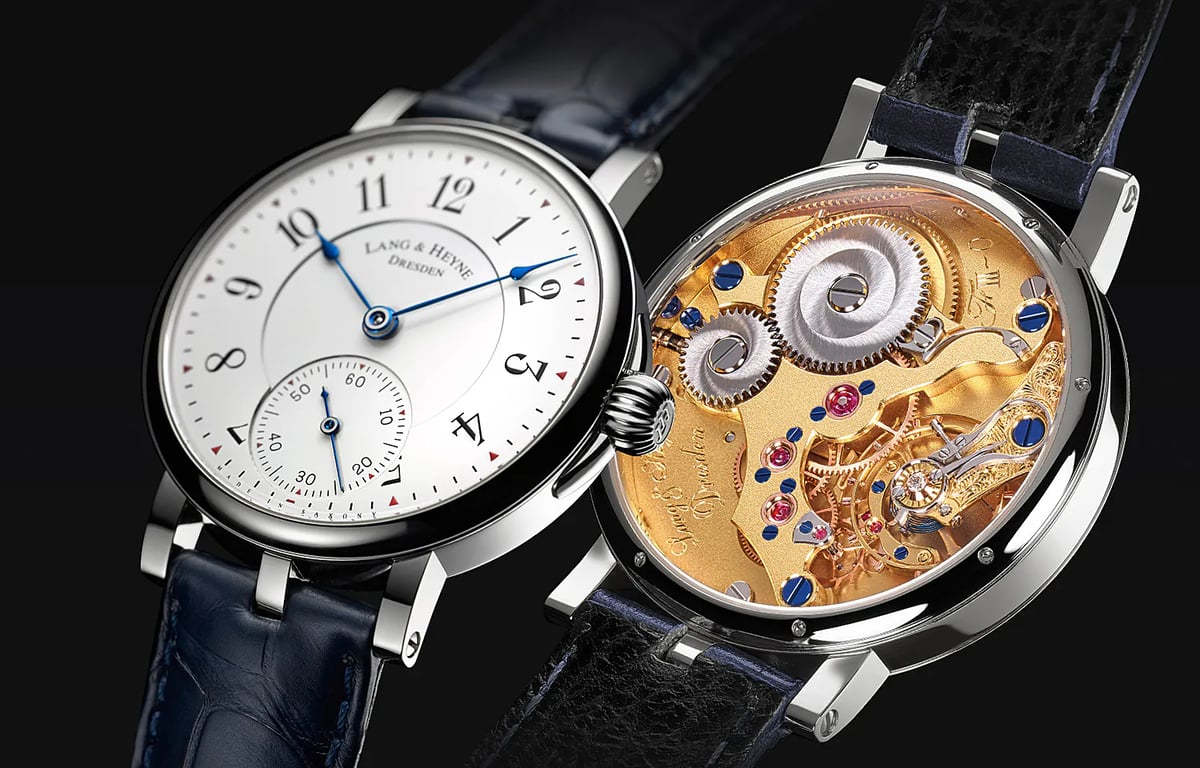
The Friedrich II arrives as a quiet proclamation that haute‑horlogerie can be both reverent and daring without shouting for attention. From the moment the polished case is set on the wrist, the watch whispers of a lineage that values meticulous hand‑finishing, a love of historic design cues, and an insistence on in‑house movement development. At 39.2 mm in diameter, the piece sits comfortably in the sweet spot for today’s dress watches, while its double‑sunk white enamel dial, Art Deco numerals and flame‑blued hands give it a visual gravitas that feels more museum‑piece than mere accessory. Priced at US $42,700 for the platinum version, it sits squarely in the upper‑tier of independent German watchmaking, a segment where the price‑to‑value conversation is often as heated as the debates over dial styling. In this review we’ll unpack where the Friedrich II sits within Lang & Heyne’s portfolio, dissect its design and engineering, and decide whether its lofty price is justified for the modern connoisseur.
---
## Heritage — the model's place in the brand's line and its launch context
Lang & Heyne, a boutique manufacturer rooted in Saxony, has built its reputation on marrying classical German watchmaking traditions with contemporary aesthetic sensibilities. The Friedrich series—named after the Prussian monarchs who championed the arts—represents the brand’s most refined dress‑watch offerings. While the exact launch year of the Friedrich II remains undocumented in public sources, the model is clearly positioned alongside its sibling, the Friedrich III, sharing the same 39.2 mm rounded case and a 10.5 mm thickness. Both watches embody the brand’s “simplified to its core elements” philosophy, stripping away superfluous complications in favor of pure, timeless design.
The Friedrich II is the second iteration in this line, following the Friedrich I (not detailed here) and preceding the Friedrich III, which is classified as a tier‑1 dress piece (source: brand model list). By offering the Friedrich II in a palette of materials—polished stainless steel, rose gold, white gold, and platinum—Lang & Heyne signals its intent to cater to a spectrum of collectors, from those who favor a more understated steel version to those seeking the ultimate prestige of a platinum case. The watch’s launch context is therefore less about a headline‑making debut and more about solidifying the brand’s standing in the high‑end, hand‑wound dress‑watch niche, a space dominated by Swiss giants yet increasingly populated by German independents who prize mechanical purity.
---
## Design & Case — case dimensions, materials, dial
### Case
The Friedrich II’s case measures 39.2 mm in diameter with a modest 10.5 mm thickness, a proportion that feels both contemporary and comfortably classic. Its silhouette is a softened round, echoing the “rounded case design” shared with the Friedrich III (source). The case is finished in a high‑gloss polish, whether in stainless steel, rose gold, white gold, or platinum, each material offering a distinct visual weight. The polished stainless steel version is described as “robust, contemporary materials with a classic design,” while the platinum edition is lauded as “a perfect symbiosis of time‑honoured Saxony watchmaking and contemporary horologic prowess.”
Three polished lugs extend from the case, each bearing a subtle curvature that adds a touch of Art Deco drama without compromising the watch’s overall sleekness. The lugs are paired with a satin‑finished strap (typically alligator or high‑grade leather in the brand’s official presentations), allowing the case to sit elegantly on the wrist without appearing over‑engineered.
A sapphire crystal crowns the dial, offering scratch resistance and a clear view of the dial’s intricate finishing. The water resistance is modest at 30 m, sufficient for everyday wear but not intended for swimming or diving—a typical limitation for dress watches that prioritize thinness and aesthetic over ruggedness.
### Dial
The dial is the Friedrich II’s most striking feature. It is a “double‑sunk” white enamel (or lacquered) surface, providing a deep, lustrous background that catches light in a way that only hand‑applied enamel can achieve. Art Deco numerals—stylized, geometric, and spaced with deliberate restraint—encircle a central hour‑minute display. The numerals are applied in a contrasting shade that enhances legibility while reinforcing the period‑specific vibe.
A small seconds sub‑dial sits at the 6 o’clock position, its modest size keeping the overall dial uncluttered. The hands are flame‑blued, a hand‑finishing technique that produces a vivid, slightly iridescent hue, adding a pop of color against the white field. The hour markers are either applied indices or simple baton markers, both executed with the same meticulous hand‑polishing that defines the rest of the watch.
The overall effect is described by reviewers as “exemplary in craftsmanship” and a “visual delight,” confirming that the dial’s execution lives up to the lofty expectations set by its design language.
---
## Movement & Performance — caliber, power reserve, accuracy
At the heart of the Friedrich II lies Lang & Heyne’s in‑house Caliber VI, a manual‑wind movement that showcases the brand’s commitment to independent mechanical development. The calibre operates at 18,000 vibrations per hour (5 Hz), a frequency that strikes a balance between smoothness of the seconds hand and longevity of the mainspring.
Key technical highlights include:
* **Hand‑wound, manual winding** – The watch requires daily winding (or a full wind every two days) to maintain its power reserve, an experience that many purists cherish for the tactile connection it creates.
* **55‑hour power reserve** – This is generous for a hand‑wound calibre of this size, allowing the watch to sit idle for over two days without losing power.
* **Hacking seconds** – The movement stops the seconds hand when the crown is pulled, facilitating precise time setting—a feature not always found on traditional hand‑wound watches.
* **Trigonal bridge** – The bridge architecture provides structural rigidity while also serving as a decorative element, visible through the case back.
* **Hand‑engraved balance cock** – A hallmark of fine watchmaking, the balance cock is hand‑engraved, adding a layer of artisanal detail that is visible under magnification.
While official chronometer certification or measured accuracy figures are not supplied in the source material, the movement’s in‑house status and the brand’s reputation for meticulous finishing suggest a performance that meets the expectations of a high‑end dress watch. The combination of a relatively high beat rate, a respectable power reserve, and a hacking function places the Caliber VI comfortably within the performance envelope of comparable hand‑wound movements from other boutique manufacturers.
---
## On the Wrist — wearability, lug‑to‑lug, comfort notes
The Friedrich II’s 39.2 mm case diameter and 10.5 mm thickness make it a quintessential “dress‑watch” silhouette that sits nicely under a shirt cuff while still being noticeable enough to command attention. Although exact lug‑to‑lug measurements are not disclosed, the triple‑lug design and modest case size suggest a lug‑to‑lug spread in the vicinity of 45–48 mm, a range that typically offers a comfortable fit on most wrist sizes without excessive overhang.
Weight varies considerably across material options. The stainless steel version is relatively light, making it an excellent daily driver for those who prefer a subtler wrist presence. The platinum edition, by contrast, carries a noticeable heft that many wearers interpret as a sign of quality and prestige; however, the added mass can become tiring during prolonged wear, especially for those unaccustomed to heavier watches.
The flame‑blued hands and the enamel dial are both delicate surfaces. While the sapphire crystal protects the face, owners should treat the watch with the same care afforded to fine jewelry—avoid hard impacts, and keep the watch away from chemicals that could tarnish the metal or degrade the enamel.
Comfort is further enhanced by the modest 30 m water resistance, which, while not suitable for swimming, does protect the movement from splashes and rain—practical for everyday urban life. The polished case, while visually striking, can be prone to fingerprints; a quick polish with a microfiber cloth restores its brilliance.
Overall, the Friedrich II feels like a watch that was designed to be worn, not merely displayed. Its dimensions, finishing, and the tactile satisfaction of winding a hand‑wound movement combine to create a genuinely engaging wrist experience.
---
## When to Wear — occasion, setting and dress‑code fit
The Friedrich II is unmistakably a dress watch. Its understated case size, elegant enamel dial, and refined Art Deco numerals make it an ideal companion for formal occasions: black‑tie events, gala dinners, high‑end business meetings, and ceremonial gatherings. The watch’s aesthetic leans toward classic sophistication rather than sporty flamboyance, so it pairs best with tailored suits, tuxedos, or even a crisp white shirt and a silk tie for a semi‑formal office setting.
Because the dial is white and the case finishes range from steel to precious metals, the Friedrich II can be dressed up or down within the realm of smart‑casual attire. A steel version with a leather strap works well for a weekend brunch at a high‑end restaurant, while the platinum or rose‑gold variants elevate an evening cocktail into a statement of refined taste.
The modest 30 m water resistance and lack of chronograph or GMT complications keep the watch firmly in the “dress‑only” category; it is not suited for active pursuits, sporty outings, or environments where durability is paramount. In short, the Friedrich II shines brightest when the dress code calls for elegance, poise, and a touch of historic flair.
---
## Value & Verdict — price‑positioning + final take
At a price of US $42,700 for the platinum edition (approximately $34,000 for the gold versions), the Friedrich II occupies a niche that directly competes with high‑end Swiss independents and the entry‑level models of established marques such as A. Lange & Söhne. One reviewer’s criticism—“wondering who exactly this is for when you can get a Lange for half the price”—highlights the inevitable price‑comparison that any German boutique faces when stepping into the six‑figure realm.
**What the watch offers:**
* **In‑house movement** – The Caliber VI is a fully developed, hand‑wound calibre with a 55‑hour reserve, hacking, and hand‑engraved components, a rarity at this price point for a brand of Lang & Heyne’s size.
* **Exquisite dial work** – The double‑sunk enamel (or lacquer) dial with Art Deco numerals is described as “exemplary in craftsmanship,” a level of finishing that few watches achieve without a comparable price.
* **Material variety** – Offering steel, rose gold, white gold, and platinum gives buyers flexibility to choose a version that matches their budget and aesthetic preference.
* **Heritage and exclusivity** – As a limited‑run piece from a boutique German house, the Friedrich II carries a sense of rarity that mass‑produced Swiss models cannot replicate.
**Where the watch falls short:**
* **Limited brand recognition** – Lang & Heyne is still a niche name outside of dedicated collector circles, which can affect resale value and long‑term prestige.
* **Modest water resistance** – 30 m is adequate for daily wear but may feel restrictive for owners accustomed to the higher ratings of many Swiss dress watches.
* **Price vs. competition** – The price gap with established Swiss rivals is narrow, and some potential buyers may favor the broader service network and brand cachet of a Lange or Patek.
**Verdict**
The Friedrich II is a masterclass in German watchmaking elegance. Its hand‑finished enamel dial, flame‑blued hands, and in‑house Caliber VI movement combine to create a watch that feels both historically grounded and freshly contemporary. For collectors who value mechanical purity, artisanal dial work, and the prestige of owning a piece from a true independent house, the Friedrich II justifies its price.
However, the watch is not for the casual enthusiast who simply wants a high‑end dress watch without the boutique narrative. If you are already comfortable with the service infrastructure and brand heritage of a Swiss giant, the Friedrich II may feel like a niche curiosity rather than a logical upgrade.
In the end, the Friedrich II stands as a bold statement: Lang & Heyne can produce a watch that competes on craftsmanship and movement originality with the best in the world, even if it must contend with the weight of Swiss branding. For the right buyer—one who appreciates the tactile ritual of a hand‑wound calibre, the visual poetry of a double‑sunk enamel dial, and the allure of German Art Deco heritage—the Friedrich II is not just a watch; it is a wearable piece of horological art.