By Rina Park, Watch Trend Spotter at Vivir.com
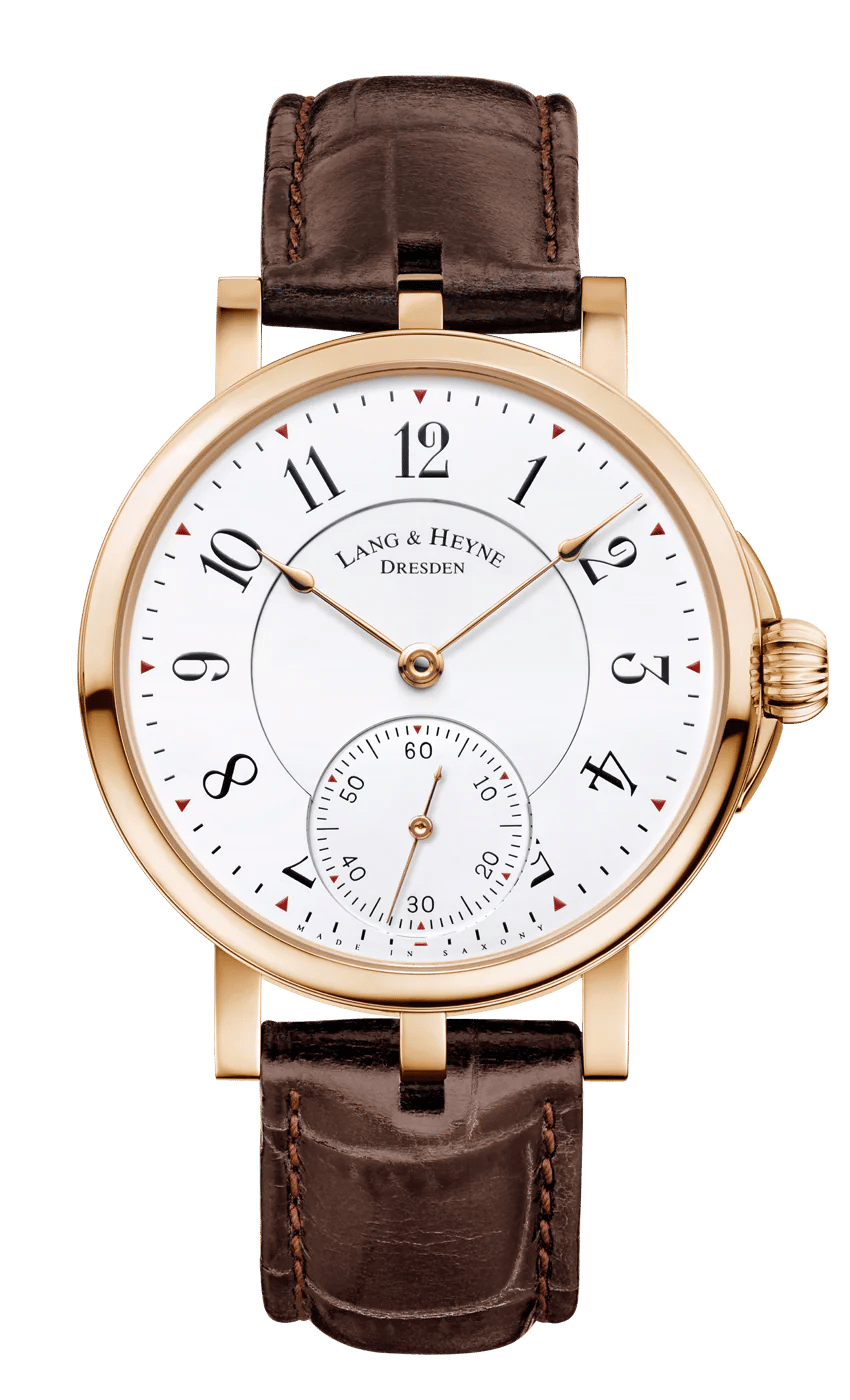
Let's get the awkward part out of the way: Lang & Heyne 'Home' is not a catalogued watch reference. It is the brand's website entry point, the digital front door to one of Saxony's most interesting independent houses. If you arrived expecting a single case, dial, movement, and reference number, there is no such object here. What 'Home' actually represents is the Lang & Heyne universe: Dresden craftsmanship, small-series production, hand-finished in-house movements, and a classical design language that feels closer to a private commission than a mass-market drop.
That distinction matters. Lang & Heyne collectors do not chase a single hyped model the way they might chase a steel sports watch from a larger maison. They choose a reference, specify details, wait, and then live with a piece that rewards close looking. The brand's identity is built on movement architecture, finishing, and the quiet confidence of a watch that does not need to shout across a room. So this review treats 'Home' as what it is: a gateway to the house, not a wearable object with a spec sheet. From there, we can assess the brand's history, movement culture, collector appeal, service reality, and what a discerning buyer should actually do next.
What 'Home' Means in the Lang & Heyne Universe
In most watch reviews, the model name is the anchor. Here, the anchor is a website label. 'Home' is where a curious collector lands before clicking into Friedrich August, Georg, Moritz, Anton, or one of the brand's other families. That makes the page useful, but it also makes it impossible to quote a single case diameter, water resistance, movement caliber, or reference number as if 'Home' were a watch. The honest answer is that those details are model-dependent and must be confirmed for the specific Lang & Heyne reference you are considering.
This is not a loophole. It is the correct way to read an independent brand whose production is small, whose models can be specified in different metals and dial treatments, and whose collectors tend to care more about the exact movement and finishing than about a one-size-fits-all product page. Lang & Heyne's 'Home' is a signpost, not a SKU.
Manufacture History: Dresden, Not Glashütte by Default
Lang & Heyne was founded in Dresden in 2001 by Marco Lang and Mirko Heyne, helping revive independent Saxon watchmaking with a focus on hand-finished, in-house calibres. The house produces small-series classical watches named after Saxon figures and royals, with an emphasis on movement architecture and finishing rather than trend-driven case shapes. That origin matters because Dresden is not simply a marketing backdrop. It places Lang & Heyne in a Saxon tradition of precision work, decorative finishing, and movement construction that collectors associate with the best of German independent watchmaking.
The brand's references tend to be classical in proportion and restrained in dial design. The names Friedrich August I, Friedrich August II, Friedrich August III, Johann, Heinrich, Albert, Georg, Moritz, Anton, Hektor, and König Johann point to a house that is comfortable with history, but the watches are not costume pieces. They are modern independents with old-school finishing discipline. That combination is why Lang & Heyne sits in the same conversation as other small Saxon makers even though its production is far below the volume of a larger Glashütte brand.
Movement and Finishing Culture
If you are going to understand Lang & Heyne, you have to start with the movement. The house is known for hand-wound, in-house calibres with a strong emphasis on hand finishing. That means bridges, levers, screws, and other components are treated as part of the watch's visual identity, not hidden away as industrial afterthoughts. For collectors, this is the main event. A Lang & Heyne is not purchased because it has the most complicated dial or the loudest case; it is purchased because the movement rewards a loupe and a slow afternoon.
Because 'Home' is not a reference, there is no single caliber to name, no single power reserve to quote, and no single frequency to list. The relevant movement depends on the model. What can be said is that the brand's catalogued watches are predominantly hand-wound and built around in-house calibres. This is a house that leans into the ritual of winding and the tactile relationship between owner and watch. If you prefer the convenience of an automatic and never want to think about a crown, Lang & Heyne is probably not your first stop. If you like the idea of a movement that feels like a small mechanical landscape, it is exactly the right neighborhood.
Specs and the Problem With a Single Sheet
This is where a brand-page review has to be disciplined. There is no 'Home' case diameter, no 'Home' thickness, no 'Home' lug-to-lug, and no 'Home' water resistance. Those numbers belong to specific references, and they should be verified for the exact watch you are buying. Lang & Heyne's catalogued watches use sapphire crystals and leather straps in the classical dress-watch idiom, and the brand's pieces generally avoid luminescence because they are not designed as sport or dive watches. But even those broad statements should not be treated as a substitute for a model-specific spec sheet.
What a buyer should do is simple: choose a reference, request the current specification, confirm the case material and dial variant, and ask for timing data and service history if buying pre-owned. Lang & Heyne's small-series production means that two watches with the same family name can differ in details that matter to a collector. The 'Home' page is useful for orientation; the reference sheet is what you actually buy.
Wrist Feel, Accuracy, and Daily Reality
Because 'Home' is not a wearable object, there is no single wrist feel to report. Across Lang & Heyne's catalogued watches, the house prioritizes classical dress-watch balance, precious-metal warmth, and straps that keep the profile close to the wrist. The exact experience depends on the reference, case shape, and movement, so a buyer should treat wrist feel as a model-by-model decision rather than a brand-wide assumption.
What can be said is that Lang & Heyne's design language tends toward restraint rather than wrist presence through bulk. These are watches for people who enjoy looking down at a dial and turning a movement over, not for collectors who want a room to notice the case before the person wearing it. In daily wear, that means the brand fits best with tailored clothing, quiet weekends, and a collector who is comfortable with a dress watch that does not pretend to be a sports watch.
Accuracy follows the same logic. There is no single 'Home' rate to quote. Lang & Heyne's hand-wound in-house calibres are finished and adjusted to a high standard, and owners should expect excellent mechanical timekeeping for a small-series independent. The brand is not positioned around COSC certification, so ask for timing data and service history on the exact reference you are considering. That is not a knock; it is simply the correct due diligence for an independent watch at this level.
Variants and Family Context
The Lang & Heyne family tree is deep enough that 'Home' functions as a lobby rather than a destination. The Friedrich August line is a flagship classical family, with Friedrich August I, II, and III representing different chapters in the brand's evolution. Georg and Moritz are core round dress-watch families with in-house hand-wound movements and the house's finishing language. Anton is another classical model in the brand's restrained idiom, while Hektor and König Johann add further collector options depending on availability and specification.
For a new buyer, the smart move is not to pick a name because it sounds the most historical. It is to decide what kind of Lang & Heyne you actually want: a round dress watch, a more architectural case, a particular dial treatment, or a specific movement architecture. The family names are helpful, but they are not a substitute for understanding the exact reference. This is a house where the details are the point.
Similar Watches and the Homage Question
Lang & Heyne sits in a specific collector lane: independent Saxon watchmaking with hand-finished, in-house movements and a classical dress-watch orientation. The closest comparisons are not mass-market dress watches. A. Lange & Söhne Saxonia Thin shares the Saxon finishing culture and restrained silhouette. Moritz Grossmann Benu is a Glashütte independent rival with hand-wound movements and a collector-first approach to finishing. F.P. Journe Chronomètre Bleu occupies a different aesthetic lane, but it shares the independent collector appeal and the emphasis on movement finishing over trend cycles.
As for homages, there is no direct 'Home' homage because there is no 'Home' watch. More broadly, Lang & Heyne's specific combination of Dresden independent identity, in-house hand-wound movements, and small-series finishing is not something the affordable homage market replicates with any seriousness. A buyer looking for a cheap stand-in will find Saxon-inspired dress watches from other brands, but they will not find the same movement culture. That is not a criticism of accessible watches; it is simply a category distinction.
Investment, Service, and Collector Logic
Lang & Heyne is not a hype-driven investment asset, and 'Home' is certainly not one. The brand's value proposition is built on craftsmanship, rarity, and collector knowledge. Specific references can hold value well because production is limited and the audience is dedicated, but the market is narrow. If you are buying a Lang & Heyne, buy the reference you can identify, verify, and afford to service. Do not buy a brand page and expect a return.
Service is another area where the independent reality matters. Intervals and costs should be confirmed with Lang & Heyne or an authorized partner for the exact reference. The brand's small-scale production means authorized-only service is the safe path. For a collector, that is part of the ownership contract: you are not buying a disposable product, you are buying into a small house with a specific way of doing things.
Pros and Cons
The pros are clear. Lang & Heyne offers deep in-house, hand-finished movement culture, a rare Saxon independent identity, and a classical design language that avoids trend-chasing. For a collector who wants something beyond the usual luxury dress watch, the brand has real substance.
The cons are equally clear. There is no 'Home' watch, so this page cannot give you a single specification. Specific model data, pricing, and availability require direct confirmation. And the service network is narrow and authorized-only. Those are not deal-breakers for the right buyer, but they are reasons to do homework rather than impulse-buy.
Final Verdict
Lang & Heyne 'Home' is not a watch to review in the usual sense; it is a doorway into a Dresden house that rewards collectors who care about movement finishing, small-series production, and classical design. If you want a single reference to chase, start with Friedrich August III, Georg, Moritz, or Anton and verify the exact specification. If you want a brand with a genuine independent point of view, the Home page is the right place to begin.