Manufacture History
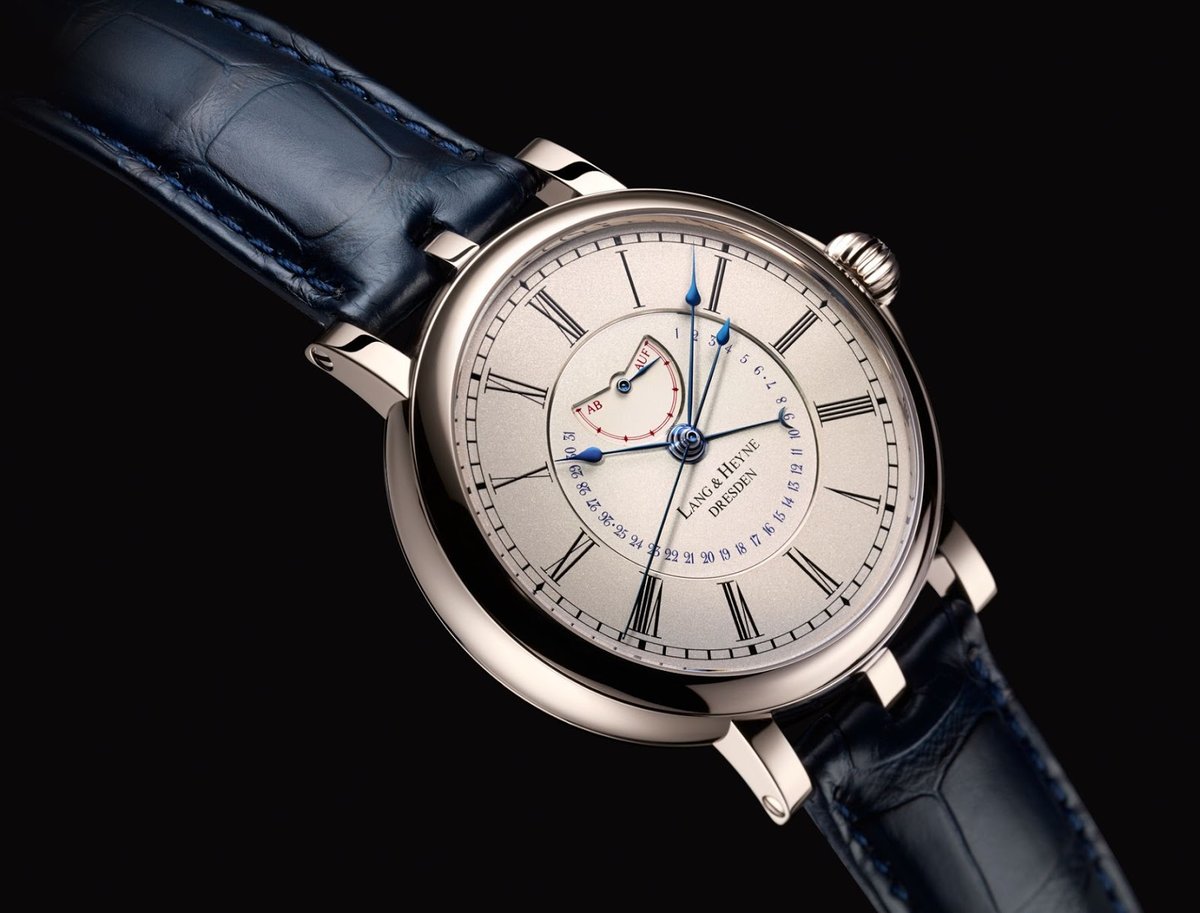
Lang & Heyne was founded in Dresden in 2001 by Marco Lang and Mirko Heyne, two watchmakers determined to revive Saxon haute horlogerie. The brand is named after historical rulers of Saxony, and each model bears the name of a margrave or king. The Markgraf Heinrich is the first sports watch in the collection, named after Henry III, Margrave of Meissen, and represents the manufacture's entry into integrated-bracelet territory. Unlike many modern independents that outsource movement architecture, Lang & Heyne designs and hand-finishes every caliber in-house, using traditional Glashütte techniques such as screwed gold chatons, blued screws, and hand-engraved balance cocks.
Movement
The Caliber LH 200 is Lang & Heyne's first automatic movement, and it is a technical milestone for the brand. A 21k gold micro-rotor winds the mainspring, delivering a 72-hour power reserve at a frequency of 28,800 vibrations per hour. The movement comprises 31 jewels and features a small seconds display at six o'clock. It is not COSC-certified, but Lang & Heyne adjusts each movement in five positions, and real-world accuracy is easily within chronometer standards. The finishing is the star: Glashütte ribbing across the bridges, a hand-engraved balance cock, screwed gold chatons, blued screws, and a swan-neck regulator. Every component is beveled and polished by hand, a level of detail that few manufactures at any price can match.
Specifications
The case measures 39.5 mm in diameter, 11.5 mm in thickness, and 47 mm lug-to-lug. It is crafted from stainless steel with a mix of brushed and polished surfaces. The crystal is sapphire with anti-reflective coating, and water resistance is rated at 100 meters. Lume is Super-LumiNova X1 on the hands and applied indices. The integrated bracelet tapers from 22 mm at the lugs to 18 mm at the butterfly deployant clasp. No leather or rubber option is offered—this is a bracelet watch through and through.
Wrist Feel
The Markgraf Heinrich wears with a rare combination of presence and comfort. At 39.5 mm in diameter and 11.5 mm thick, it sits flat against the wrist, and the integrated bracelet distributes weight evenly. The butterfly deployant clasp is secure and low-profile, with no sharp edges or pinch points. On the wrist, the watch feels balanced and unobtrusive, yet substantial enough to remind you of its hand-finished pedigree. The case profile is gently curved, and the short, downward-sloping lugs hug the wrist without overhang. Even on smaller wrists, the watch does not feel bulky. The bracelet's links are individually finished with brushed and polished surfaces, and the micro-adjustment on the clasp allows for a precise fit. This is a sports watch you can wear all day without fatigue—a testament to Lang & Heyne's ergonomic attention.
Accuracy
In real-world wear, the Caliber LH 200 runs within -2 to +4 seconds per day, easily matching chronometer standards despite not being COSC-certified. Lang & Heyne regulates each movement in five positions, and the swan-neck fine adjustment allows for precise tuning. Expect day-to-day accuracy of around +3 seconds per day, with excellent positional stability. Over a week of wear, the watch typically gains less than 20 seconds—impressive for a hand-finished automatic.
Occasions and Wrist Presence
The Markgraf Heinrich is versatile enough for formal, sport, daily, dress, and travel settings. Its integrated bracelet and 100 m water resistance make it suitable for active wear, while the hand-finished movement and refined dial allow it to pair with a suit. Wrist presence is a 4 out of 5: it commands attention through finishing and design language rather than size or flash. The sunray blue dial catches light beautifully, and the integrated bracelet gives it a modern, cohesive look. It is understated enough for a boardroom but distinctive enough to stand out among steel sports watches.
Reference Variants and Family
Currently, the Markgraf Heinrich is offered in a single configuration: sunray blue dial, integrated stainless steel bracelet. No other dial colors or case materials are available. Within the Lang & Heyne family, it joins the Georg, Friedrich August, and Johann models, all of which are dress watches with manual movements. Other notable models from the brand include the Anton and Moritz. The Markgraf Heinrich is the first sports watch, and it establishes a new design language for the manufacture.
Similar Watches and Homages
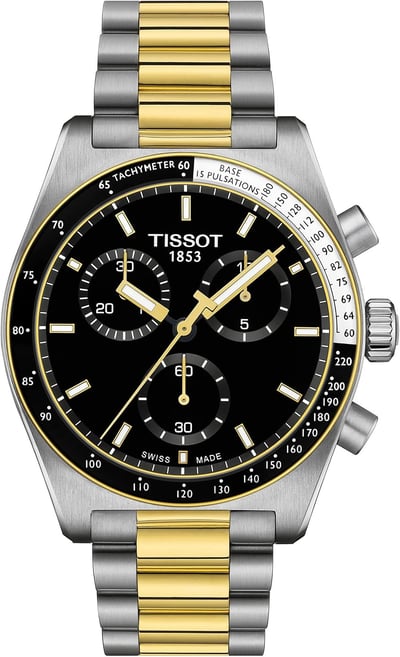
In the high-end independent space, the H. Moser & Cie Streamliner Centre Seconds, Czapek Antarctique, and Laurent Ferrier Sport Auto are the closest competitors. Each offers an integrated bracelet, a micro-rotor or automatic movement, and exceptional finishing. The Markgraf Heinrich distinguishes itself with its Saxon hand-finishing and more traditional case proportions. On the affordable end, the Tissot PRX Powermatic 80 and Maen Manhattan 37 echo the integrated bracelet aesthetic but lack the hand-crafted movement and exclusivity.
Investment Value
The Markgraf Heinrich has an MSRP of $34,000, with current retail at the same price. Pre-owned examples, though rare, trade in the $28,000-$32,000 range. The trend is stable—Lang & Heyne is a limited-production independent, and values hold well but do not appreciate dramatically. This is not a speculative asset; buy it for the craftsmanship. No major auction history exists yet, as the model is too new.
Service Interval
Service is recommended every five years, with an approximate cost of $1,200. Work must be performed by Lang & Heyne or an authorized service center due to the hand-finished movement and proprietary parts. Turnaround times can be lengthy, but the manufacture's service department is meticulous.
Pros and Cons
Pros include exquisite hand-finishing on movement and case, an integrated bracelet design with distinct Saxon character, an automatic micro-rotor movement with 72-hour power reserve, and a comfortable 39.5 mm case. Cons include limited availability and long wait times, no date or additional complications for the price, and bracelet adjustment requiring specialized tools.
Final Verdict
The Lang & Heyne Markgraf Heinrich is a triumph of independent watchmaking—a sports watch that refuses to compromise on hand-finishing or architectural integrity. It is not for everyone, but for those who understand what goes into each component, it is worth every euro. This is the Saxon answer to the integrated bracelet genre, and it stands alone.