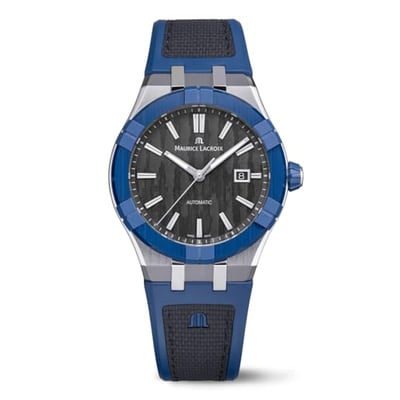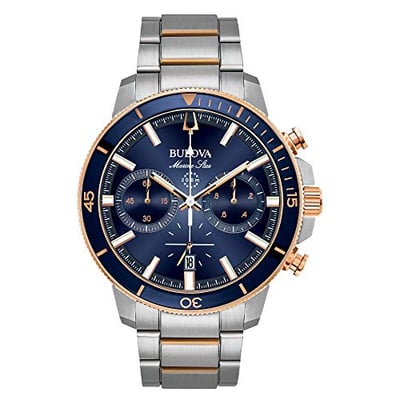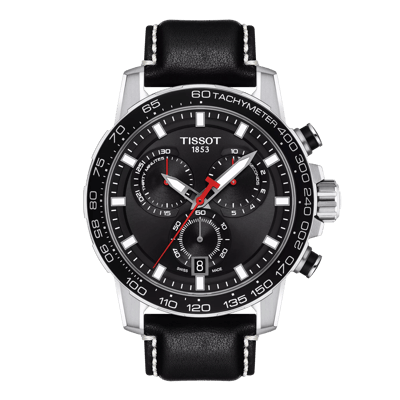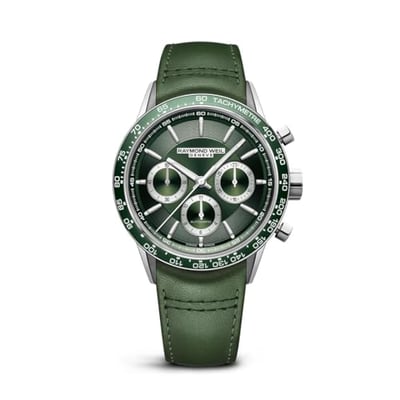
The sub-$1,000 chronograph space is the most crowded corner of the watch world, and most of what fills it is disposable. The Lorier Olympia SII is not disposable — but it is also not the second coming that the microbrand commentariat likes to pretend. It is a deliberately vintage-proportioned racing chronograph built around a Seiko meca-quartz movement, priced where a serious collector can buy it without convening a committee, and finished with the small-batch charm that has made Lorier one of the few microbrands with genuine staying power.
What makes the Olympia SII worth a full review rather than a paragraph is the tension it creates. Here is a watch with an acrylic crystal, a quartz heartbeat and a New York postal address — three things that traditionally kill resale value — that nonetheless sells out on every restock. That is a demand cycle worth understanding, because it tells you more about where the entry-level market is heading than any spec sheet will.
This review covers movement architecture, how the watch actually wears, real-world accuracy expectations, the ownership-cost math, and the only question that matters to a collector with capital deployed: if you buy one, what happens to your money?
A New York Microbrand With a Vintage Compass
Lorier was founded in 2016 by Lorenzo and Lauren Ortega, a husband-and-wife team operating out of New York. The founding thesis was narrow and, in hindsight, correct: vintage proportions and acrylic crystals should not be reserved for people who can afford actual vintage. Rather than chasing complications or spec-sheet one-upmanship, Lorier has spent nearly a decade refining a single design language — slim cases, domed crystals, warm dials, restrained branding — across a catalogue that now includes the Neptune, Falcon, Hyperion, Safari, Zephyr, Astra and Gemini.
The Olympia line is the brand's entry into the racing-chronograph category, a segment where design coherence matters far more than technical innovation. Chronographs at this price point are not solving a timing problem; nobody buys a mechanical-feel chrono because they need to measure a lap. They buy it because the dial layout, the pusher action and the case profile deliver a specific emotional register that a smartwatch cannot. Judged on that basis, Lorier's brief was to build something that looks like it fell out of a 1968 rally car without tipping into costume. The Olympia SII succeeds at that more convincingly than most watches at three times the price.
The Movement: Seiko VK64 Meca-Quartz
Inside the Olympia SII sits the Seiko VK64, one of the most important movements in modern affordable watchmaking. It is a hybrid: timekeeping runs off a quartz oscillator, while the chronograph module is mechanical. The practical result is a movement that keeps quartz-accurate time but engages with the crisp, positive snap of a mechanical chronograph. Press the top pusher and the central seconds hand advances in 1/5-second increments with an actual mechanical impulse behind it. Press the bottom pusher and everything snaps back to zero without the sluggish hesitation that defines cheap quartz chronographs.
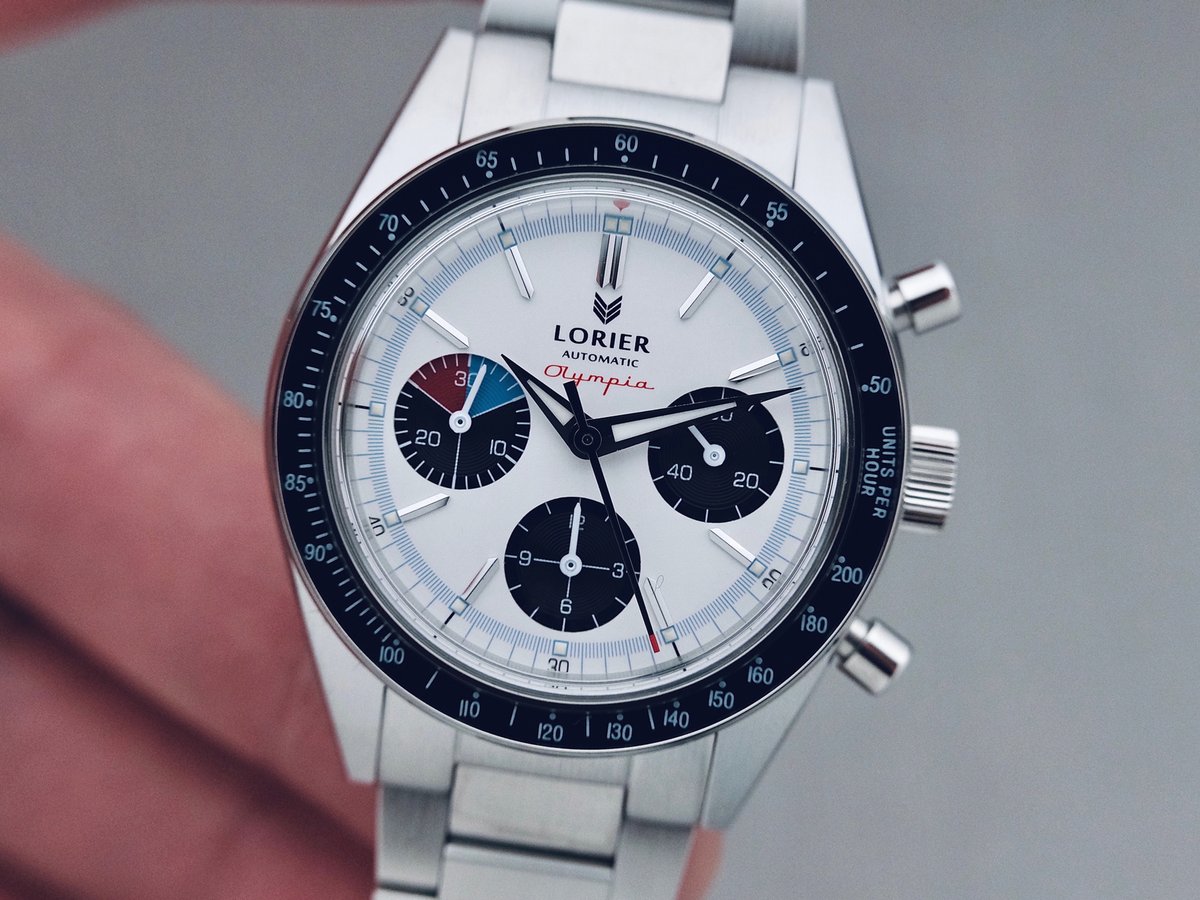
The layout is a classic three-register arrangement: a 24-hour indicator, a small running-seconds subdial and a 30-minute chronograph counter. That is a genuinely useful configuration — the running seconds confirms the watch is alive, the 24-hour register adds a layer of visual depth, and the 30-minute counter is the practical one for anyone timing anything short of a football match.
Is the VK64 a movement to romanticise? No. It is a mass-produced Seiko unit found in dozens of watches, it has no finishing worth photographing, and it will never be the reason someone buys the watch. But that is precisely the point. The meca-quartz architecture is what allows Lorier to deliver a chronograph with proper pusher feel at a low four-figure price while sidestepping the servicing liabilities that come with an entry-level mechanical chronograph. A mechanical chrono at this price point is a maintenance obligation waiting to happen. The VK64 is not.
Case, Crystal and Wrist Feel
Lorier's case philosophy is the brand's strongest asset, and the Olympia SII is a clean expression of it. The stainless-steel case is compact by modern standards and shaped with slim, tapering lugs that curve downward toward the wrist. It does not wear like a tool watch and it does not wear like a dress watch; it wears like the mid-century racing chronographs it draws from, which is to say it sits politely and stays out of the way.
The acrylic crystal is the most divisive decision in the whole watch, and it is unambiguously the right one. Acrylic is softer than sapphire, it scratches, and it will need polishing at some point in its life. It also has a warmth and a domed, slightly distorting optical quality that sapphire can never replicate. Look at the dial from a shallow angle and you get that gentle compression at the edges that every vintage watch owner recognises. If you want crystal clarity and scratch resistance above all else, this is the wrong watch for you, and you should stop reading now.
On the wrist, the Olympia SII is light. Coming from a steel sports watch, the first day feels almost insubstantial, and there is a brief adjustment period while you confirm it is actually still there. By the end of the first week you will have stopped noticing it, which is the highest compliment a daily-wear chronograph can receive. The watch is balanced close to the case rather than flopping forward, and the leather strap keeps the whole assembly compact. For anyone with a wrist on the smaller side of average, this is one of the few chronographs in the category that will not look like borrowed equipment.
Dial, Legibility and the Detail Work
The dial is where the Olympia SII justifies its existence. Subdial proportions are the single hardest thing to get right on a vintage-styled chronograph, and Lorier has clearly spent time on the ratios — the registers are large enough to read at a glance without dominating the dial, and the negative space between them is generous rather than cramped. Applied indices catch light without sparkling, and the printing is crisp at a level that embarrasses watches costing significantly more.
Legibility is strong in daylight, and the Super-LumiNova treatment on the hands and indices means the watch remains readable in low light — though it is worth being clear that this is a chronograph, not a dive watch, and the lume application is designed accordingly. Thin hands and elongated indices keep the dial feeling airy. Nothing here is shouting.
The sub-$1,000 segment is full of watches that look superb in a press photo and disappoint in person, usually because the dial lacks depth. The Olympia SII does not have that problem. The combination of domed acrylic, layered subdials and subtle contrasting registers creates genuine dimensionality, and the dial changes character substantially between direct sunlight and interior lighting. That is the mark of a well-designed face rather than a well-photographed one.
Accuracy and Daily Expectations
Seiko's published tolerance for the VK64 family sits at roughly plus or minus twenty seconds per month under normal conditions, and real-world examples typically land comfortably inside that band. That is dramatically better than any mechanical watch at this price and dramatically worse than a radio-synced digital — which is the correct trade-off to make for a vintage-styled chronograph.
The more interesting measure is chronograph function. The mechanical module engages cleanly, resets decisively, and does not develop the mushy pusher feel that cheap quartz chronos inevitably acquire. If you use the chrono regularly rather than leaving it as dial furniture, expect the battery to run toward the shorter end of its life cycle. Battery replacement is a routine job that any competent watchmaker can handle in an afternoon, and the movement itself is inexpensive enough that replacement is often more sensible than repair. That removes the single biggest ownership anxiety of mechanical chronographs: the moment the pusher stops returning and the service estimate arrives.
Occasions and Wrist Presence
This is a four-out-of-five watch on presence, and the missing point is deliberate. The Olympia SII is not a statement piece — it reads as taste rather than wealth, which is exactly what a vintage-inspired chronograph should do. It works with a suit and it works with a t-shirt. It works as a travel watch, because a quartz movement means it survives time zone changes better than a mechanical watch that has to be reset and re-wound at every airport. It is a genuinely versatile daily piece in a way that most chronographs at this price are not, largely because Lorier resisted the temptation to make the dial busy.
The one place you should not take it is into water with any confidence. This is a fair-weather chronograph — a watch for offices, dinners, road trips and long weekends, not for swimming and not for the beach if you can help it. Treat it accordingly and it will age gracefully.
Buying, Resale and the Hold-Versus-Sell Judgment
Here is the part most microbrand reviews skip. The Olympia SII retails at roughly the $500 mark and, like most Lorier releases, sells out and restocks in cycles. That artificial scarcity inflates the perceived desirability of the watch and creates a brief window in which pre-owned examples trade close to retail — but the underlying fundamentals do not support appreciation.
Quartz movements do not age into collector status. Acrylic crystals do not survive in investment-grade condition. Microbrands, with a few notable exceptions, do not build the kind of heritage narrative that supports long-term value. The realistic pre-owned range for an Olympia SII sits somewhere around $300 to $450 depending on condition and dial variant, which means a buyer flipping within a year should expect to lose roughly a third of their money. The panda-dial variants hold value best, the slate dials move slowest, and none of them will ever appear at a major auction house.
The right way to think about this watch is as consumption rather than allocation. You are paying for design, for wearability and for a specific emotional experience that a spec comparison cannot capture. Judged on that basis, the value proposition is strong. Judged as an investment, it is a non-starter. Buy it to wear it, and you will never be disappointed by its performance.
Alternatives Worth Considering
If you want a similarly styled chronograph with more conventional ownership credentials, the Seiko Prospex Speedtimer solar chronograph is the obvious step up — solar charging, a steel bracelet and near-identical vintage racing intent, at a price premium. If you want the genuine heritage, Nivada Grenchen's Chronomaster offers the authentic design language at several multiples the cost. If you need a mechanical movement and Swiss provenance, the Hamilton Intra-Matic Auto Chrono is the entry point, though it sits three to four times higher.
Below the Olympia, the homage market is well served. Pagani Design's speedmaster-esque chronographs deliver the silhouette for under a hundred dollars, Sugess proves how much of the Olympia's value is design rather than hardware, and Baltany offers closer case finishing than the price suggests. None of them have the cohesive dial design that Lorier does, and that coherence is the entire argument for buying the original.
The Verdict
The Lorier Olympia SII is the rare microbrand chronograph that earns its reputation through design discipline rather than spec-sheet inflation. It is not an investment, it is not an heirloom, and it will not survive a decade of careless wear. But as a daily-wear, vintage-styled chronograph at a price that respects your intelligence, it is very hard to beat. Buy it with your eyes open about the depreciation, wear it hard, and it will return more per dollar than almost anything else in the category.