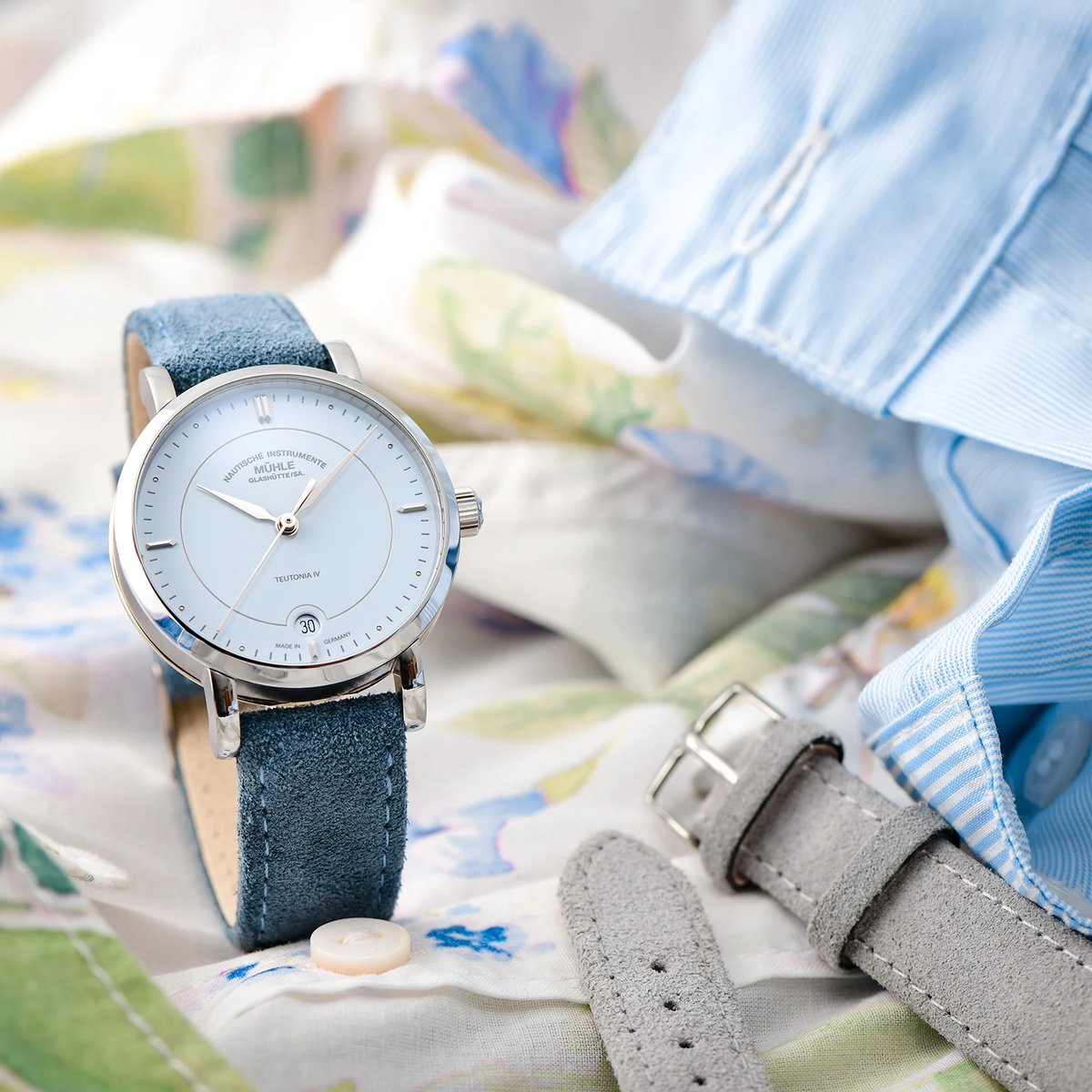
The Saxon Proposition: Why the Teutonia IV Lady Matters
In the world of luxury watch collecting, the name Glashütte acts as a seal of quality that rivals the Swiss Made hallmark. For Mühle-Glashütte, a brand that has weathered the storms of German history for over 150 years, the Teutonia IV Lady is more than just a smaller watch; it is a statement of intent. As an analyst, I often see brands compromise on the 'guts' of a watch when they scale down for the female market. Mühle has done the opposite, retaining the rugged mechanical soul that has made their nautical timers legendary.
Mechanical Integrity: The Woodpecker Neck Advantage
The heart of the Teutonia IV Lady is the Mühle-version of the SW 200-1. While the base caliber is a known quantity in the industry, Mühle’s modifications are what drive its value. The patented 'woodpecker neck' regulation is a masterclass in functional engineering. Unlike a standard regulator, this system is designed to prevent the regulator arm from moving even under significant shock. From a resale perspective, this adds a layer of 'mechanical story' that collectors look for—a reason for the watch to exist beyond its aesthetic appeal.
Furthermore, the movement is finished with Glashütte-specific flourishes: the Mühle rotor and the characteristic surface treatments. This allows the watch to satisfy the 'Glashütte Rule,' ensuring that over 50% of the value of the movement is added locally. For the investor, this provenance is a hedge against the devaluation often seen in mass-produced Swiss alternatives.
Design and Ergonomics: The 33.5mm Sweet Spot
The case design of the Teutonia IV Lady is a study in restrained German classicism. The vertical brushing on the case sides provides a visual contrast to the polished bezel, a detail that becomes more apparent the longer one owns the piece. The 33.5mm diameter is a deliberate choice. It avoids the 'petite' classification, which can often limit a watch's appeal on the secondary market, and instead sits in a contemporary unisex-adjacent space that is currently seeing a resurgence in demand.
The dial—available in a crisp white or a deep sunray blue—features applied indices and a date window at 6 o'clock. This symmetry is vital for long-term aesthetic appeal. The blued hands on the white dial version are a particular highlight, offering a pop of color that is achieved through traditional heating processes, further cementing its status as a 'real' watchmaker's watch.
Market Analysis: Resale and Demand Cycles
When we look at the numbers, the Teutonia IV Lady performs with remarkable stability. In the $2,000 price bracket, many watches lose 40-50% of their value the moment they leave the boutique. The Teutonia, however, tends to bottom out at around 65-70% of MSRP on the secondary market, provided it is kept in good condition. This is due to the brand's relatively low production volume and the loyal following that German watchmaking enjoys.
Demand cycles for Mühle-Glashütte are less volatile than those of 'hype' brands. You won't see a 300% markup on the grey market, but you also won't see the floor fall out from under the reference. For a collector looking to park capital in a wearable asset, this predictability is a significant asset.
The Verdict for the Sophisticated Collector
Is the Teutonia IV Lady an investment in the sense of a speculative stock? No. But is it an investment in quality, heritage, and mechanical reliability? Absolutely. It is a watch that rewards the owner every time they look at the 'woodpecker' through the sapphire caseback. It is a piece that says the wearer understands that true luxury isn't about the loudest brand name, but about the finest engineering. My recommendation: buy it for the engineering, hold it for the heritage, and enjoy the fact that you own a piece of Saxon history that is built to outlast the next dozen fashion trends.